
What Ataxia Really Feels Like
Imagine trying to walk down a hallway, but your feet don’t seem to know where to land. Every step feels like walking on ice you can’t see. You reach for a coffee cup, and it slips-not because your grip is weak, but because your hand doesn’t move where you think it should. Your words stumble out, too, as if your tongue is out of sync with your thoughts. This isn’t clumsiness. This is ataxia.
Ataxia isn’t a disease itself. It’s a symptom. A breakdown in the brain’s ability to coordinate movement. The culprit? Usually the cerebellum, a small, wrinkled structure at the back of the brain that holds about 69 billion neurons-80% of all the neurons in your brain. When it’s damaged, timing gets thrown off. Signals that should be crisp and precise become sloppy. The result? Loss of coordination in walking, speaking, even eye movements.
People with ataxia don’t just feel unsteady. They live with constant uncertainty. A simple task like buttoning a shirt becomes a puzzle. Standing still feels risky. Falls aren’t rare-they’re expected. And because ataxia doesn’t show up on a typical MRI like a tumor or a stroke, many are told they’re just ‘awkward’ or ‘getting older’-until the symptoms get too severe to ignore.
Types of Ataxia: Why the Cause Matters
Not all ataxia is the same. The way it starts, how fast it worsens, and what treatments help depend entirely on the type. There are three main categories:
- Hereditary ataxia: These are genetic. Friedreich’s ataxia is the most common, often starting between ages 5 and 25. Symptoms slowly get worse over decades. Spinocerebellar ataxias (over 45 types) follow a similar pattern, with symptoms appearing in adulthood and progressing unpredictably.
- Acquired ataxia: This hits suddenly. A stroke, head injury, infection, or vitamin B12 deficiency can trigger it. The good news? If you catch the cause fast-like fixing a B12 deficiency-symptoms can vanish completely.
- Idiopathic late-onset cerebellar ataxia (ILOCA): This one’s a mystery. It shows up after age 50 with no known cause. Doctors see it often, but they still don’t know why it happens.
Knowing which type you have changes everything. Hereditary ataxia needs lifelong management. Acquired ataxia might be reversible. ILOCA falls somewhere in between. Misdiagnose the type, and you risk wasting months on the wrong therapy-or worse, making things worse.
Why Standard Physical Therapy Often Fails
Too many people with ataxia start physical therapy with a generic plan: leg lifts, balance beams, maybe some walking on a treadmill. It sounds logical. But it doesn’t work-and sometimes it makes things worse.
Studies show that traditional therapy helps only 15-20% of patients improve their motor scores. Why? Because ataxia isn’t about weak muscles. It’s about broken timing. You can’t strengthen your way out of a brain signal that’s out of sync.
Even worse, some common techniques for other conditions actually harm ataxia patients. Constraint-induced movement therapy, used for stroke survivors, forces one side of the body to work harder. But in ataxia, that forces the brain to rely on faulty signals even more. One 2022 study found 68% of ataxia patients got worse after this approach.
Therapists who haven’t trained specifically in ataxia often don’t know this. A 2022 survey by the American Physical Therapy Association found only 22% of community clinics had staff with specialized ataxia training. That means most patients are getting therapy designed for strokes or spinal injuries-not cerebellar dysfunction.
What Actually Works: Evidence-Based Rehabilitation
Real progress comes from therapy that targets the brain’s timing problem directly. The most effective methods share three traits: they’re repetitive, task-specific, and use real-time feedback.
- Task-specific training: Instead of generic balance exercises, you practice the exact movements you struggle with. Reaching for a glass. Stepping over a curb. Turning around in a tight space. You do it over and over, until your brain starts rewiring the pathway.
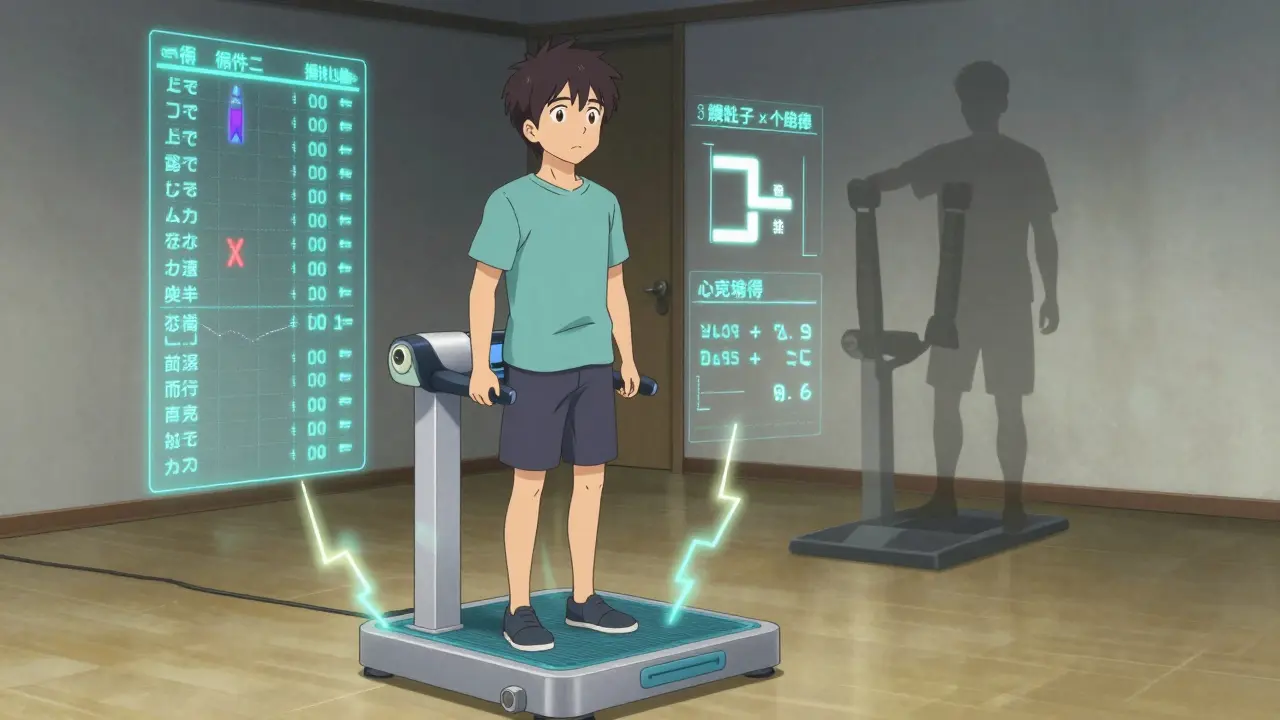
- Computerized balance systems: Tools like the NeuroCom SMART Balance Master give instant feedback. You stand on a platform that moves slightly under you. A screen shows you how your body shifts. You learn to correct your posture before you fall. Patients using this system improved their balance scores by 8.2 points on average-almost double the gain from standard therapy.
- Biofeedback and wearable sensors: Devices like the APDM Opal sensors track your gait in real time-step length, timing, symmetry. Therapists use this data to adjust your movements on the spot. Patients who used these tools improved their SARA scores (a standard ataxia rating) by 30-45%, compared to 15-20% with regular care.
One patient, ‘AtaxiaWarrior87’ on Reddit, went from a SARA score of 18 (severe) to 12 (moderate) in just 10 weeks-not with generic PT, but with a therapist certified in CRED (Cerebellar Rehabilitation and Evaluation Dynamics). That’s the difference between a generalist and a specialist.
Technology Is Changing the Game
Rehab isn’t just happening in clinics anymore. New tools are bringing therapy home.
The Cerebello wearable, cleared by the FDA in 2023, uses tiny electrical pulses to reduce tremors in the arms. In trials, users saw a 32% improvement in hand function. Virtual reality systems like CAREN simulate real-world challenges-crossing a busy street, walking on uneven ground-without the risk of falling. Patients stay engaged longer: 28% more than with traditional therapy.
Even simple tech helps. Wearable sensors can now track your daily steps, balance attempts, and fall risks at home. Therapists get data between sessions, so they can adjust your plan before you hit a plateau.
But these tools aren’t everywhere. Only 15% of rehab centers have them. And they’re expensive-$120,000 to $350,000 per system. That means most patients still rely on low-tech, high-effort methods: home exercises, aquatic therapy, and telehealth visits.
Home Programs and Aquatic Therapy: The Quiet Heroes
Not everyone can afford weekly clinic visits. Or live near a specialist. But progress is still possible.
Aquatic therapy is one of the most underrated tools. Water supports your body, reducing the fear of falling. You can practice walking, reaching, and turning with less strain. In a 2023 patient survey, aquatic therapy got a 4.3 out of 5 for effectiveness.
Home exercise programs work too-if they’re designed right. One study found 68% of patients who stuck with daily home routines saw measurable gains in balance and mobility. The key? Specificity. Not just ‘do 10 squats.’ But ‘stand on one foot while reaching for the sink, 5 times a day.’
Telehealth has become essential, especially for rural patients. In one survey, 70% of those using virtual sessions reported satisfaction. They got personalized feedback, video demonstrations, and progress tracking-all without driving hours to a clinic.

The Hidden Struggles: Insurance, Access, and Mental Health
Even the best therapy fails if you can’t get it.
Medicare and private insurers often cap therapy visits at 10-20 per year-even when doctors recommend 40 or more. One patient, ‘BalanceStruggles,’ paid $3,200 out of pocket after insurance cut off coverage. That’s not rare. In a 2022 survey, 63% of patients faced denials for necessary sessions.
There’s also a workforce gap. Only 327 physical therapists in the U.S. are certified in CRED. In rural areas, that’s one therapist for every 458 patients. In cities, it’s one per 87. That’s not just inconvenient-it’s life-changing.
And then there’s the mental toll. Ataxia doesn’t just affect movement. About 70% of patients also struggle with executive function-planning, remembering, staying focused. That makes sticking to therapy harder. Depression and anxiety are common. Yet few rehab programs include mental health support.
What’s Next: Research, Hope, and Realistic Expectations
There’s no cure for most forms of ataxia. But that doesn’t mean there’s no hope.
New research is pushing boundaries. A 2024 study showed combining non-invasive brain stimulation (ctDCS) with physical therapy improved motor scores by 22% more than therapy alone. The Ataxia Global Research Consortium is testing intensive vs. distributed practice schedules across 15 sites-with results expected in 2025.
AI-powered home therapy systems are in development. These could one day adapt exercises in real time based on your movements, using your smartphone or smartwatch.
But here’s the truth: progress isn’t linear. In acquired ataxia, recovery can be dramatic-up to 60% improvement. In hereditary forms, gains are smaller: 10-20%. And they fade if therapy stops. That’s why consistency matters more than intensity.
Ataxia doesn’t go away. But with the right therapy, it doesn’t have to control your life.
How to Find the Right Help
- Ask your neurologist: ‘Do you refer patients to therapists with CRED certification?’
- Check the National Ataxia Foundation’s directory for certified clinics.
- Request a SARA score before and after therapy-it’s the only way to measure real progress.
- Ask about telehealth options if travel is hard.
- Join a patient community (like Ataxia UK or r/ataxia). You’ll learn what works-and what to avoid.
The goal isn’t to be ‘cured.’ It’s to walk without fear. To eat without spilling. To speak without stumbling. That’s possible. But only if you get the right care.
Can ataxia be cured?
Ataxia itself can’t be cured in most cases, especially hereditary forms. But acquired ataxia-caused by things like vitamin B12 deficiency, alcohol use, or stroke-can improve significantly or even resolve completely if the root cause is treated quickly. For chronic forms, the goal of treatment is to manage symptoms and maximize independence, not to eliminate the condition.
Is physical therapy worth it for ataxia?
Yes-but only if it’s specialized. Generic physical therapy often doesn’t help and can even make symptoms worse. Effective therapy must be task-specific, use real-time feedback, and be led by therapists trained in cerebellar disorders. Look for CRED-certified providers. Studies show these programs improve functional ability by 30-45%, far more than standard care.
Why do some therapies make ataxia worse?
Therapies designed for other conditions, like constraint-induced movement therapy (used for stroke), force the brain to rely on damaged motor pathways. In ataxia, the problem isn’t muscle weakness-it’s timing. Forcing one side to work harder overloads the brain’s faulty coordination system. One study found 68% of ataxia patients worsened after this approach. Always confirm your therapist understands cerebellar dysfunction.
How long does neurological rehabilitation take to show results?
Most people see measurable improvements within 6-8 weeks of intensive therapy, especially with task-specific training and biofeedback. For example, patients using computerized balance systems often show gains in balance scores within 4-6 weeks. However, long-term progress requires consistent practice-typically 3-5 sessions per week for at least 6-8 weeks. Maintenance therapy is needed to preserve gains, especially in progressive forms.
Can I do rehabilitation at home?
Yes, and many patients benefit from home programs-especially when combined with telehealth check-ins. Simple, consistent exercises like standing on one foot while holding onto a counter, stepping over small objects, or practicing reaching for items while balancing can improve coordination. The key is specificity and repetition. Use apps or wearable sensors to track progress, and work with your therapist to design a safe, personalized routine.
Does insurance cover ataxia rehabilitation?
Most insurance plans cover medically necessary rehabilitation, but they often limit the number of visits-sometimes to just 10-20 per year, regardless of need. Medicare and private insurers may deny coverage if they don’t consider your condition ‘progressing’ fast enough. Always get a written recommendation from your neurologist and appeal denials. Out-of-pocket costs can reach $2,450 per year on average.
What’s the difference between ataxia and Parkinson’s?
Ataxia and Parkinson’s both affect movement, but they’re very different. Ataxia is caused by cerebellar damage and leads to uncoordinated, clumsy movements-like stumbling, slurred speech, or shaky hand motions. Parkinson’s stems from dopamine loss in the basal ganglia and causes tremors at rest, stiffness, and slow movement. Ataxia patients often have trouble with balance and timing; Parkinson’s patients struggle with starting movement and freezing. Treatments differ significantly.
dana torgersen
January 23, 2026 AT 21:20Andrew Smirnykh
January 24, 2026 AT 05:25Sue Stone
January 24, 2026 AT 22:57Stacy Thomes
January 26, 2026 AT 20:09Susannah Green
January 27, 2026 AT 07:09Kerry Moore
January 28, 2026 AT 19:06Oladeji Omobolaji
January 29, 2026 AT 12:10Janet King
January 29, 2026 AT 23:20Laura Rice
January 31, 2026 AT 01:37charley lopez
February 1, 2026 AT 05:30