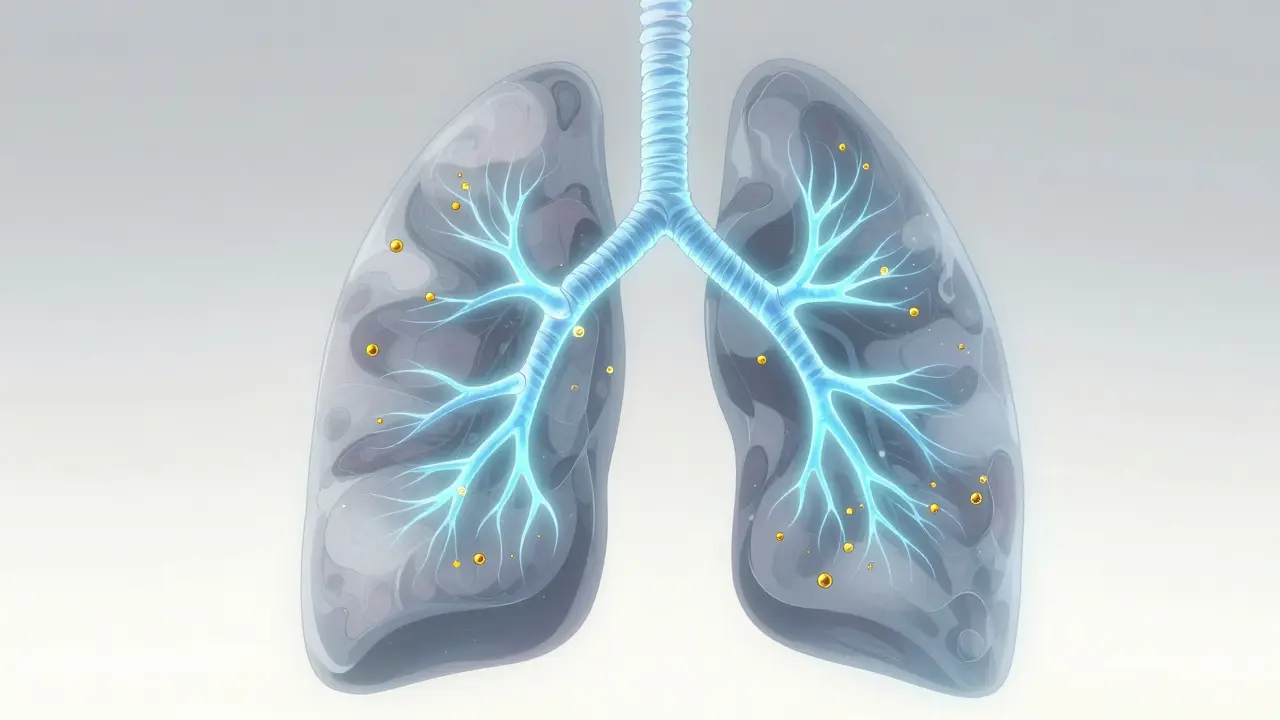
When a generic company wants to release a version of a standard pill, the process is relatively straightforward. But what happens when the drug isn't a pill? When you're dealing with a device that sprays medicine into the lungs, a patch that seeps drug through the skin, or a nanoparticle injection, the rules change. You can't just measure how much drug is in the blood and call it a day. This is the world of bioequivalence standards for special delivery systems, where the "how" of the delivery is just as important as the drug itself.
The core problem is that for these complex products, the site of action is often local. If a steroid is meant to treat inflammation in the lungs, knowing the concentration of the drug in the bloodstream doesn't actually tell you if the drug reached the bronchial tubes effectively. To solve this, regulatory agencies have moved toward a "totality-of-the-evidence" approach. This means developers must prove a product is equivalent using a mix of laboratory tests (in vitro) and human studies (in vivo).
Key Takeaways for Complex Bioequivalence
- Standard blood markers (Cmax and AUC) aren't enough for local-acting drugs.
- Inhalers require strict particle size distribution (usually 1-5 micrometers) to ensure the drug reaches the deep lungs.
- Transdermal patches must prove identical release rates and skin adhesion to avoid "dose dumping."
- Complex injectables, like liposomes, require precise physicochemical mapping, including zeta potential and polydispersity index.
- Development costs for these systems are significantly higher, often ranging from $25 to $40 million.
The Challenge of Inhalers: More Than Just a Mist
Inhalers are some of the hardest generics to get approved. According to industry data, they have the lowest approval rate among complex generics, sitting around 38%. This is because a Metered Dose Inhaler (MDI) or a Dry Powder Inhaler (DPI) is a combination of a drug and a medical device. If the plume temperature is off by just a couple of degrees or the particle size is slightly too large, the drug hits the back of the throat instead of the lungs.
To prove bioequivalence, companies must use Cascade Impactors to measure particle size. For a drug to be effective in the pulmonary system, 90% of those particles typically need to be between 1 and 5 micrometers. If the particles are too big, they don't travel deep enough; too small, and they are exhaled right back out. Beyond the chemistry, regulators like the FDA and EMA look at "plume geometry" and delivered dose uniformity. In some cases, instead of blood tests, developers must use pharmacodynamic endpoints, such as measuring Forced Expiratory Volume (FEV1) to see if the patient's lung function actually improves.
Transdermal Patches: Managing the Slow Leak
A Transdermal Patch is designed to provide a steady, controlled release of medication through the skin. The biggest risk here is consistency. If a generic patch releases the drug too quickly, the patient could overdose; too slowly, and the treatment fails. Because of this, the FDA's guidance on transdermal systems focuses heavily on in vitro release rates.
Developers often use Franz Diffusion Cells to simulate how the drug moves through a membrane. For a patch to be considered bioequivalent, the release rate must generally be within a 10% difference from the reference product at all time points. Interestingly, while the standard 80-125% rule for AUC (Area Under the Curve) usually applies, the Cmax (peak concentration) is less critical because these products are meant for sustained release rather than a sudden spike.

Complex Injectables: Precision at the Molecular Level
Injectables aren't always simple liquids. Many modern drugs use Liposomes or nanoparticles to protect the drug and target specific cells. For these, the "sameness" of the product is measured by its physicochemical properties. It's not just about the active ingredient; it's about the shell it's wrapped in.
Regulators look for a Polydispersity Index (PDI) of less than 0.2, which basically means the particles are all roughly the same size. They also check the Zeta Potential-the electrical charge of the particle-to ensure it stays stable and doesn't clump together. For drugs with a narrow therapeutic index, like enoxaparin, the margin for error is tiny. While most drugs use the 80-125% bioequivalence window, these high-risk injectables often require a much tighter limit of 90-111% for both AUC and Cmax.
| Delivery System | Primary In Vitro Tool | Critical Metric | Avg. Approval Rate |
|---|---|---|---|
| Inhalers (MDI/DPI) | Cascade Impactor | Particle Size (1-5μm) | 38% |
| Transdermal Patches | Franz Diffusion Cell | Release Rate (±10%) | 52% |
| Complex Injectables | Particle Characterization | Zeta Potential / PDI | 58% |
The Real-World Cost of Complexity
Developing these products is a massive financial gamble. A standard oral generic might cost $5-10 million to develop, but a complex system can easily jump to $40 million. This isn't just because of the lab equipment; it's the iterative nature of the work. One formulation scientist reported needing 17 different iterations just to get the particle size distribution right for a generic insulin product.
The risks are high. In 2019, a generic version of Advair Diskus was rejected because, although it met standard bioequivalence metrics, the fine particle fraction was off. More recently, a generic Bydureon BCise failed not because of the drug, but because the auto-injector mechanism differed slightly from the original, altering the delivery profile. This highlights a growing trend: the device is now part of the drug. You cannot separate the chemistry from the mechanical delivery.

Future Trends: PBPK and Biocreep
The industry is moving away from simple "snapshot" tests and toward Physiologically-Based Pharmacokinetic (PBPK) modeling. This uses computer simulations to predict how a drug will behave in a human body based on its physical properties. In 2022, about 65% of complex generic submissions included these analyses, a huge jump from just 22% a few years prior.
There is also a concern regarding "biocreep." This happens when a second or third generation of generics is based on a previous generic rather than the original reference product. Small, acceptable differences in each version can accumulate over time, eventually leading to a product that doesn't work as well as the original. To fight this, the Global Bioequivalence Harmonization Initiative is pushing for standardized, product-specific guidelines across the US and Europe.
Why can't we just use blood tests (pharmacokinetics) for inhalers?
Many inhaled drugs, like corticosteroids, act locally in the lungs. Because very little of the drug enters the bloodstream, plasma concentrations are too low to accurately measure if the drug reached the target site in the correct amount. This is why regulators require lung deposition studies and particle size analysis.
What is the "80-125% rule" in bioequivalence?
It is the standard regulatory window where the 90% confidence interval for the ratio of the generic's average Cmax and AUC to the reference product's average must fall between 80% and 125%. It essentially means the generic must perform almost identically to the original.
What happens if a generic patch has a slightly different adhesive?
Adhesion is a critical quality attribute. If the patch doesn't stick properly, the drug cannot migrate through the skin at the intended rate. Regulatory agencies require the demonstration of equivalent skin adhesion properties as part of the bioequivalence package.
How do nanoparticles in injectables affect bioequivalence?
Nanoparticles change how a drug is absorbed and distributed. Bioequivalence for these products requires proving "sameness" in particle size distribution, polydispersity index (uniformity of size), and zeta potential (surface charge), as these factors dictate how the drug interacts with cell membranes.
Is a generic complex drug as safe as the original?
Yes, provided they pass the stringent "totality-of-the-evidence" requirements. Because the barriers to entry are so high (both in cost and scientific rigor), approved complex generics must demonstrate a high level of therapeutic equivalence.
Next Steps for Developers
If you're moving into the complex generics space, the first step is a gap analysis of your physicochemical characterization. Don't wait until the clinical phase to find out your particle size is off. Invest in high-end characterization tools or partner with specialized CROs who have experience with the FDA's Complex Generic Drug Products portal.
For those working with auto-injectors or novel devices, focus on the human-factor engineering. The device is not just a container; it is the delivery mechanism. Any change in the spring tension or needle gauge can trigger a rejection, regardless of how pure the drug inside is.
Justin Crice
April 27, 2026 AT 02:48The emphasis on PBPK modeling is particularly salient given the current shift toward in silico trials to mitigate the volatility of in vivo outcomes in complex pulmonary delivery systems. Integrating mechanistic models with the totality-of-the-evidence framework seems to be the only viable pathway for streamlining the regulatory pipeline for high-risk nano-formulations.
Jarrett Jensen
April 27, 2026 AT 13:33It is frankly exhausting to witness the pedestrian nature of these discussions when the fundamental challenge is not the tooling, but the intellectual inadequacy of the generic developers themselves. One would assume that a basic understanding of fluid dynamics would preclude the need for seventeen iterations of an insulin product, yet here we are, treating a basic failure of engineering as a systemic industry hurdle.
prince king
April 27, 2026 AT 22:56Love seeing this breakdown! It really puts into perspective how the delivery method is essentially a part of the medicine itself 🌟. It's kind of a beautiful synergy between physics and pharmacology when you think about it 🧪✨.
Dale Kensok
April 29, 2026 AT 12:17The obsession with the 80-125% window is such a reductive heuristic for those who don't grasp the stochastic nature of nanoparticle distribution. If you're not analyzing the polydispersity index through a lens of thermodynamic stability and surface kinetics, you're basically just playing with chemistry sets while pretending to do science. It's a systemic failure of analytical rigor.
Timothy Brown
May 1, 2026 AT 01:16Typical corporate nonsense. They make it sound so complicated just to justify why the generic version costs way more than it should.
Amber McCallum
May 1, 2026 AT 16:13Everything is just energy and flow. If the drug doesn't work, it's because the vibe of the device isn't right with the body.
Peter Minto
May 3, 2026 AT 05:20Amercian pharma is the best and we shud stop letting other countrys try to copy our tech with cheap knockoffs that dont even stick to the skin right!! Get out of our market if u cant do it right!!
Raymond Lipanog
May 4, 2026 AT 14:54The concept of biocreep presents a profound ethical dilemma regarding the long-term degradation of therapeutic efficacy across successive generations of generic products. It is imperative that we maintain a steadfast commitment to the original reference product to ensure that patient safety is not compromised by a cumulative series of negligible deviations.
Jean Robert
May 5, 2026 AT 02:20I just want to say that for anyone currently working in these labs and feeling overwhelmed by those seventeen failed iterations, please remember that every single mistake is just a stepping stone toward that final breakthrough and you are doing an incredible job bringing these life-saving medications to people who really need them, so keep your head up and just keep pushing through because the world truly benefits from your persistence and your passion for science even when the regulators make it feel like an uphill battle!
Nigel Gosling
May 6, 2026 AT 15:35Absolutely tragic! We are essentially gambling with human lives in a high-stakes casino of "approximate" equivalence! The mere thought of a patch releasing a dose too quickly is enough to induce a panic attack! How can we trust a system where a 10% variance is considered acceptable? It is an absolute mockery of medical precision and a slap in the face to anyone who values actual quality over corporate profit margins! This is a disaster waiting to happen on a global scale!
Jenna Riordan
May 8, 2026 AT 01:01I wonder if the people making these patches actually test them on themselves before selling them to us.
lalit adesara
May 9, 2026 AT 10:59Western standards are overrated. Truth is found in the result, not the paper.
Steve Grayson
May 10, 2026 AT 21:07This is very helpful. I think the focus on human-factor engineering is the most important part here since the user experience determines the actual dose delivered.
Angela Cook
May 12, 2026 AT 12:40USA should be the only one setting these rules and we should stop letting the EMA have any say in how our medicine is made!