
You’ve probably seen the numbers 120/80 floating around your doctor's office or in health articles. For years, this has been the "gold standard" for a healthy heart. But if you ask three different medical organizations what your actual target should be, you might get three different answers. Some say get it as low as possible; others argue that pushing too hard can do more harm than good. This tug-of-war between universal targets and personalized goals is at the center of how we manage blood pressure targets today.
| Organization | Primary Target | Philosophy | Key Focus |
|---|---|---|---|
| AHA/ACC (2025) | <130/80 mm Hg | Aggressive | Early intervention for all adults |
| JSH (2025) | <130/80 mm Hg | Universal | Single target regardless of age |
| AAFP (2022) | 140/90 mm Hg | Conservative | Balancing benefit vs. side effects |
| ESH | Varies by age | Tiered | Age-specific tolerance |
The Battle of the Numbers: 120/80 vs. 140/90
To understand the debate, we first need to define the players. Hypertension is a condition where the long-term force of the blood against your artery walls is high enough that it may eventually cause health problems. When doctors talk about targets, they are looking at the systolic (top number) and diastolic (bottom number) pressures.
On one side, you have the American Heart Association (AHA) and the American College of Cardiology (ACC). In their 2025 updates, they pushed for a systolic target below 130 mm Hg for most adults. They argue that lower is better. Why? Because the SPRINT trial, a massive study with over 9,000 participants, showed that targeting a systolic pressure below 120 mm Hg reduced major cardiovascular events by 25% and overall mortality by 27% compared to a 140 mm Hg target.
On the other side is the American Academy of Family Physicians (AAFP). They aren't saying high blood pressure is okay, but they are worried about "over-treating." Their 2022 review suggests a target of 140/90 mm Hg. Their reasoning is practical: reaching those ultra-low numbers often requires an extra medication, which increases costs and the risk of side effects without providing a massive jump in survival rates for everyone.
Why One Size Doesn't Fit All
If the evidence says lower is generally better for the heart, why the hesitation? It comes down to the trade-off. When you push blood pressure too low, you risk Symptomatic Hypotension, which is just a fancy way of saying your blood pressure drops so low that your brain doesn't get enough oxygen. This leads to dizziness, fainting (syncope), and a much higher risk of falls-which can be catastrophic for an 80-year-old.
The European Society of Hypertension (ESH) handles this by using age brackets. They suggest 120-129/70-79 mm Hg for people under 64, but they allow a much more lenient 140-150 mm Hg for those over 80. This acknowledges that as we age, our arteries stiffen and our bodies handle medication differently.
Then there is the bold approach from the Japanese Society of Hypertension (JSH). Their 2025 guidelines moved away from age-based leniency, recommending a universal target of <130/80 mm Hg for everyone. They believe that with very close monitoring, the heart benefits outweigh the risks, even in the elderly. They back this up with data showing that every 5-mmHg drop in systolic pressure reduces the risk of major heart events by about 10%.

The Role of Risk Calculators and Personal History
Modern medicine is moving away from a simple chart and toward a more data-driven approach. One of the biggest tools right now is the PREVENT risk score. This is a calculator used by clinicians to predict the 10-year risk of a cardiovascular event. Instead of just looking at your blood pressure, it looks at your whole picture.
If you have a PREVENT score of 7.5% or higher, or if you already have Chronic Kidney Disease or diabetes, the AHA/ACC suggests starting medication even if your pressure is only 130/80 mm Hg. However, if you are "low risk" (low PREVENT score, no other diseases), they might suggest just changing your diet and exercise habits for 3 to 6 months before ever touching a pill.
This is where "individualized goals" come in. Your target isn't just a number on a screen; it's a decision based on:
- Your age and fall risk.
- Whether you have kidney issues or diabetes.
- How many medications you are already taking.
- Your quality of life (do you feel dizzy or tired on current meds?).
The Practical Side: Medications and Monitoring
Getting to 120/80 is often harder than it sounds. For many people with Stage 2 hypertension (140/90 or higher), a single pill isn't enough. To hit these aggressive targets, the AHA/ACC recommends using two different classes of medication in a single-pill, fixed-dose combination. This makes it easier to stick to the plan, but it also increases the potential for side effects.
The AAFP warns that the "number needed to harm" (NNH) is 33. This means for every 33 people pushed toward a lower target, one person will likely experience a significant adverse event like a fainting spell or a sudden drop in blood pressure. For a primary care doctor, that's a real risk to manage.
If you are aiming for a lower target, you can't just check your pressure once a year. You need a system. This includes:
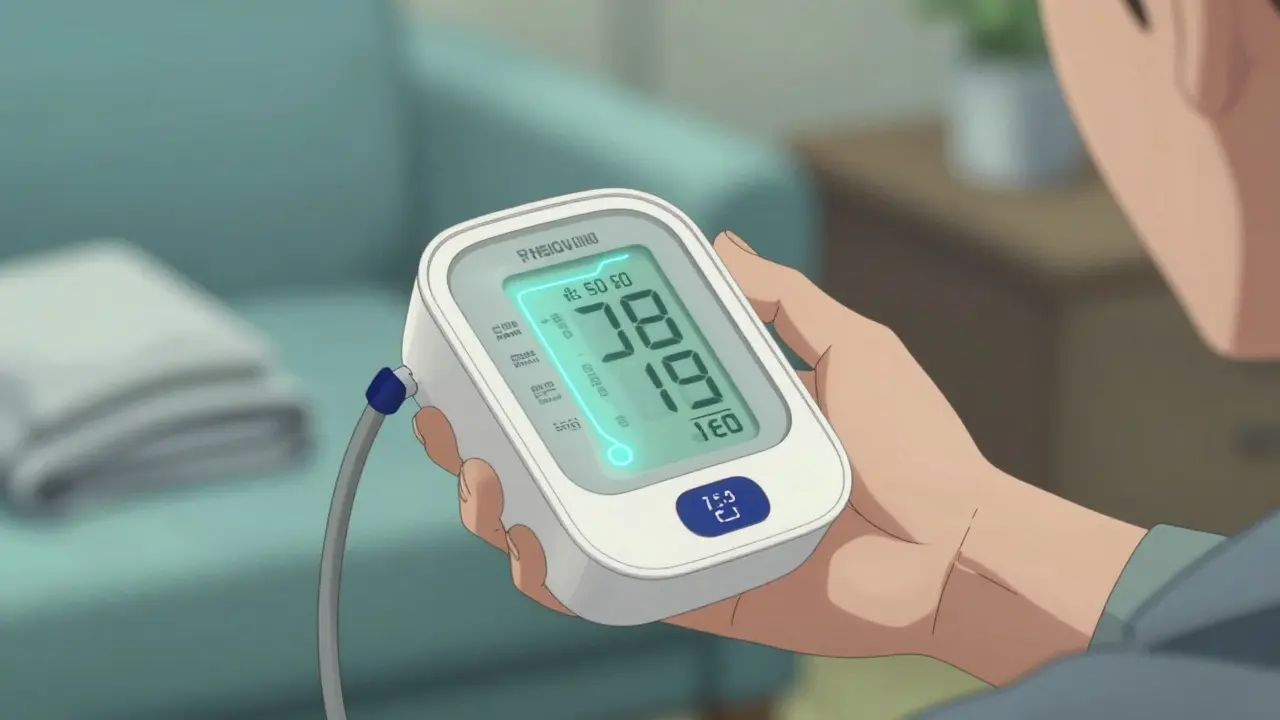
- Home Monitoring: Using a validated arm cuff to track trends, not just single readings.
- Kidney Function Tests: Ensuring that aggressive lowering isn't causing Acute Kidney Injury (AKI).
- Electrolyte Checks: Watching for hyperkalemia (too much potassium), which can happen with certain blood pressure meds.
Where Do We Go From Here?
The medical community is still debating. In fact, the NIH has launched a new study called SPRINT-2, funded through 2028, to see how these intensive targets work in a more diverse, "real-world" group of people-including those with diabetes and those who are prone to falling. We are moving toward a future where machine learning might eventually tell us exactly which target is right for your specific genetic makeup.
For now, the best approach is shared decision-making. Your doctor brings the guidelines, and you bring the knowledge of how your body feels. If a target of 120/80 makes you feel like you're walking through fog, it might not be the "healthy" choice for you, even if the chart says so.
Is 120/80 really the ideal blood pressure for everyone?
Not necessarily. While 120/80 is often cited as the ideal for young, healthy adults, it may be too aggressive for older adults or those with certain health conditions. For some, targeting this level can increase the risk of dizziness and falls. Many doctors now use individualized goals based on age and overall health risk.
What is the risk of pushing blood pressure too low?
Pushing blood pressure too low can lead to symptomatic hypotension, which manifests as lightheadedness, fainting (syncope), and increased fall risk. There is also a risk of acute kidney injury (AKI) and electrolyte imbalances, such as hyperkalemia, depending on the medications used.
Why do different organizations have different targets?
It depends on how they weigh the benefits versus the risks. Organizations like the AHA/ACC prioritize the reduction of heart attacks and strokes (based on trials like SPRINT). Organizations like the AAFP focus more on the quality of life and the potential for medication side effects in a general primary care setting.
What is the PREVENT risk score?
The PREVENT score is a cardiovascular risk calculator developed by the AHA/ACC. It helps doctors determine if a patient needs medication based on their 10-year risk of a heart event, considering factors beyond just blood pressure, such as kidney function and diabetes status.
Should I start medication if my blood pressure is 135/85?
This depends on your individual risk profile. For some, lifestyle changes (diet and exercise) are the first line of defense. However, if you have diabetes, chronic kidney disease, or a high PREVENT risk score, guidelines from the AHA/ACC suggest that medication may be necessary even at these levels.
Next Steps for Managing Your Pressure
If you're unsure where you stand, start by keeping a blood pressure log for two weeks, taking readings in the morning and evening. Bring this data to your next appointment. If you're currently on medication and feeling dizzy or fatigued, don't just stop the meds-discuss a "target adjustment" with your provider. Whether you aim for 120/80 or 140/90, the most important factor is consistency and a plan that fits your actual lifestyle, not just a textbook.
william wang
April 16, 2026 AT 10:11The SPRINT trial really changed the game for how we look at these numbers, but the trade-off with symptomatic hypotension is a huge factor that often gets overlooked in the broad guidelines. It's awesome that we're moving toward a more data-driven approach like the PREVENT score instead of just treating everyone like a number on a spreadsheet.
Anmol Garg
April 18, 2026 AT 07:31It's kind of wild how medicine is just one giant experiment in real-time. We spend decades believing one number is the 'gold standard' only for a new study to come along and flip the script. I think it's important to remember that our bodies aren't machines; we're all just trying to find a balance that lets us live a full life without feeling like we're walking through a cloud of brain fog every day.
ira fitriani
April 19, 2026 AT 10:39This is so eye-opening! 😱 I had no idea there was such a huge difference between these organizations! 📈 Always gotta advocate for ourselves at the doctor's office! ✨
Joshua Nicholson
April 21, 2026 AT 08:13Eh, feels like they just keep moving the goalposts to sell more pills. 🤷♂️
Nikki Grote
April 22, 2026 AT 03:07From a clinical perspective, the shift toward individualized targets is essentially a move toward precision medicine. When we talk about the 'number needed to harm,' we're really analyzing the iatrogenic risks associated with aggressive pharmacological intervention, especially in geriatric populations where orthostatic hypotension can lead to catastrophic fractures. The ESH tiered approach is much more aligned with the physiological reality of arterial stiffness and reduced compliance in aging vasculature.
Bonnie Piersall
April 22, 2026 AT 08:28Listen up, everyone! It is absolutely crucial to keep that blood pressure log the post mentioned. Don't just walk into your appointment and say 'I think it's fine.' Get your data in order, be your own cheerleader, and push for a plan that actually fits your life, not some generic chart from a textbook! Let's get those numbers right the healthy way!
Theresa Griffin MEP
April 24, 2026 AT 07:02Personalized medicine is the only viable path forward. Consistency is paramount.
Michael Lewis
April 24, 2026 AT 13:04Exactly! Stop settling for 'good enough' and start demanding a target that actually works for your specific body. If you're feeling sluggish, speak up! Your health is your responsibility, not just your doctor's. Get a validated cuff, track your trends, and take charge of your heart health right now!
Heer Malhotra
April 25, 2026 AT 03:54It is truly disappointing that we rely so heavily on Western standards when indigenous practices in India have managed holistic health for millennia. The obsession with these rigid numerical targets is a symptom of a fragmented healthcare system that prioritizes pharmaceutical intervention over fundamental lifestyle and dietary discipline which is far more sustainable for our people.
Josephine Wyburn
April 25, 2026 AT 10:58Omg you guys I literally cannot even handle the stress of this because my doctor told me 120/80 was the goal and I've been stressing for months and then I read this and now I'm wondering if I've been over-medicated this whole time and honestly it's just so overwhelming how confusing the medical world is and I just feel like I'm drowning in numbers and no one ever tells you how you're actually supposed to feel 😭💔
Randall Barker
April 26, 2026 AT 23:39The sheer arrogance of assuming a single number can define health is staggering. We live in a society that worships the metric while ignoring the human. If you are blindly following the AHA guidelines without considering your own quality of life, you are essentially a slave to a chart. Wake up and realize that the 'science' is often just a consensus of people who are paid to agree with each other. True health is a philosophical pursuit, not a clinical checklist.
Adele Shaw
April 27, 2026 AT 21:37I can't believe people are actually debating this while our healthcare system is basically a joke compared to other countries. It's just another way to keep us dependent on meds and drained of our money while we just hope we don't faint in the middle of the street because some guideline decided 120 was the magic number for everyone regardless of their actual life situation.