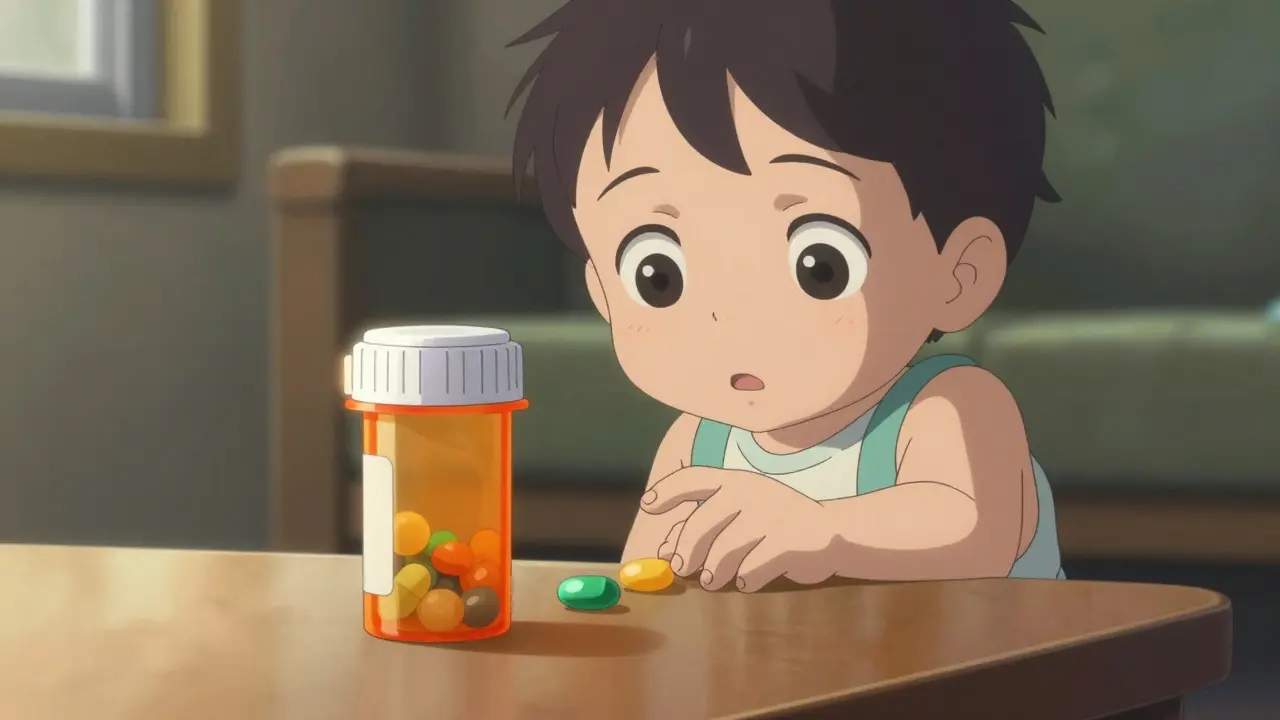
Imagine a toddler's curiosity meeting a bottle of colorful pills. For a three-year-old, a pill bottle looks like a jar of candy; for a parent, it's a potential nightmare. This is why child-resistant packaging exists. It isn't about making a bottle impossible to open-that would be a disaster for a grandparent with arthritis-but about creating a cognitive and physical barrier that a small child can't solve quickly. While many of us struggle with these caps daily, they are one of the most effective public health tools ever designed to prevent accidental pediatric poisoning.
The Difference Between Child-Resistant and Child-Proof
First, let's clear up a common misconception: no container is truly "child-proof." If a child is determined enough or has a lot of time, they might eventually get into almost anything. This is why the U.S. Consumer Product Safety Commission is the federal agency responsible for regulating hazardous product packaging to protect the public from unreasonable risks of injury (CPSC) uses the term "child-resistant."
Child-resistant (CR) means the packaging is designed to be significantly difficult for children under five to open within a reasonable amount of time. It's a game of seconds and minutes. If a child can't get the bottle open in ten minutes, they likely lose interest or get frustrated and stop. The goal is to buy adults enough time to intervene or to store the medication where it can't be found.
How Safety Caps Actually Work
Most safety caps rely on "dissimilar motions." A child can usually push or pull, but they struggle to do two different things at once. Common mechanisms include:
- Push-and-Turn: You have to apply downward pressure while rotating the cap. This requires a level of hand strength and coordination that most toddlers lack.
- Squeeze-and-Turn: These require squeezing the sides of the cap to disengage a locking tab before twisting.
- Interlocking Designs: Some bottles use a cap that must be aligned with a specific marker on the bottle before it can be pushed up.
These designs are usually made from High-Density Polyethylene (HDPE), a durable, impact-resistant plastic used in medical containers to ensure the locking mechanisms don't wear down over time . To be certified, these containers must pass rigorous tests. For example, a group of children aged 42-51 months is given the package; if more than 15% of them can open it within ten minutes, the design fails.
| Packaging Type | Child Resistance Rate | Senior Success Rate | Common Use Case |
|---|---|---|---|
| Standard Push-and-Turn | High (~85-97%) | Moderate | Prescription Vials |
| Squeeze-and-Turn | High | Lower (Difficult for Arthritis) | OTC Pain Relief |
| Senior-Friendly CR/SF | Moderate-High | Very High (>90%) | Chronic Meds for Elderly |
| Standard Blister Packs | Low (unless foil-backed) | High | Daily Dose Packs |
The Challenge of Liquid and Nasal Medications
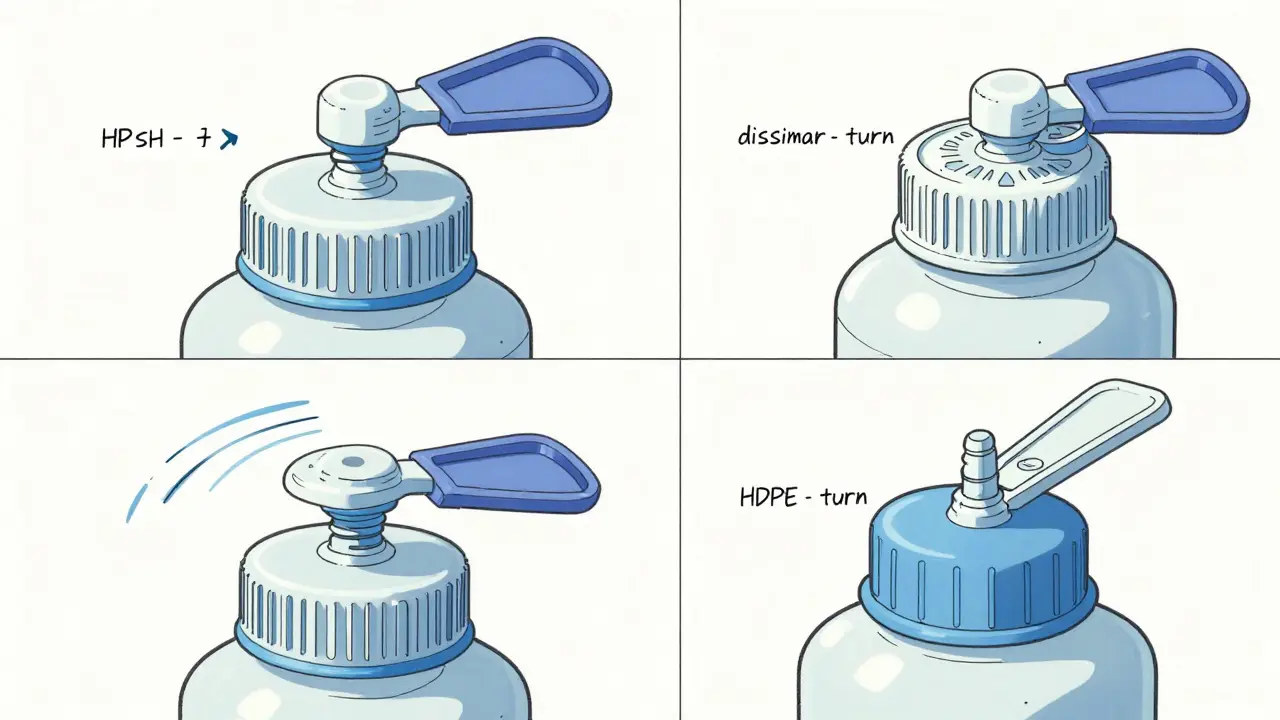
Not all medications are as easy to secure as a plastic pill bottle. Liquid formulations are a major pain point. According to FDA data, nearly 39% of non-compliant packaging incidents involve liquids. Why? Because liquid bottles often require pumps or droppers that are inherently easier for children to manipulate.
Nasal sprays are particularly tricky. The CPSC has pointed out that the pump action itself usually isn't child-resistant. Even if the pump is crimped onto the bottle, a child can still spray it. This has led to the development of specialized CR Metering Spray Pumps, advanced delivery systems that integrate child-resistant locking mechanisms directly into the pump head . These are much harder to design because they have to deliver an exact dose of medicine while remaining locked to a toddler.
The "Seniors' Dilemma": Safety vs. Accessibility
There is a natural conflict between keeping a child out and letting a senior in. Many adults over 65 suffer from arthritis or reduced grip strength, making a standard safety cap a daily battle. If a cap is too hard to open, a patient might leave the lid off entirely or move their meds to an unsealed container-which ironically makes the home *less* safe if grandchildren visit.
To solve this, the industry has moved toward Senior-Friendly (SF) packaging designs that meet CPSC safety standards for children while remaining accessible to at least 90% of seniors mechanisms. These often use "easy-grip" textures or levers that require less raw force but still require the complex motion a child can't figure out. For instance, some newer systems achieve over 90% success for seniors while keeping child access below 10%.
Why the First Opening is the Most Dangerous
Here is a scary fact: the safety of a bottle drops by about 15% after the first time you open it. How is that possible? Human error. Most of us don't screw the cap back on perfectly straight or tight enough. A "half-closed" safety cap is often no longer child-resistant.
If you're using a push-and-turn cap, you need to feel that final "click" or lock. If the cap spins freely without resistance, it isn't locked. This is why the American Academy of Pediatrics, a professional association of pediatricians that provides guidance on child health and safety emphasizes that packaging is only one layer of defense. You still need to store medications in a high, locked cabinet.
Looking Forward: Smart Caps and Future Tech
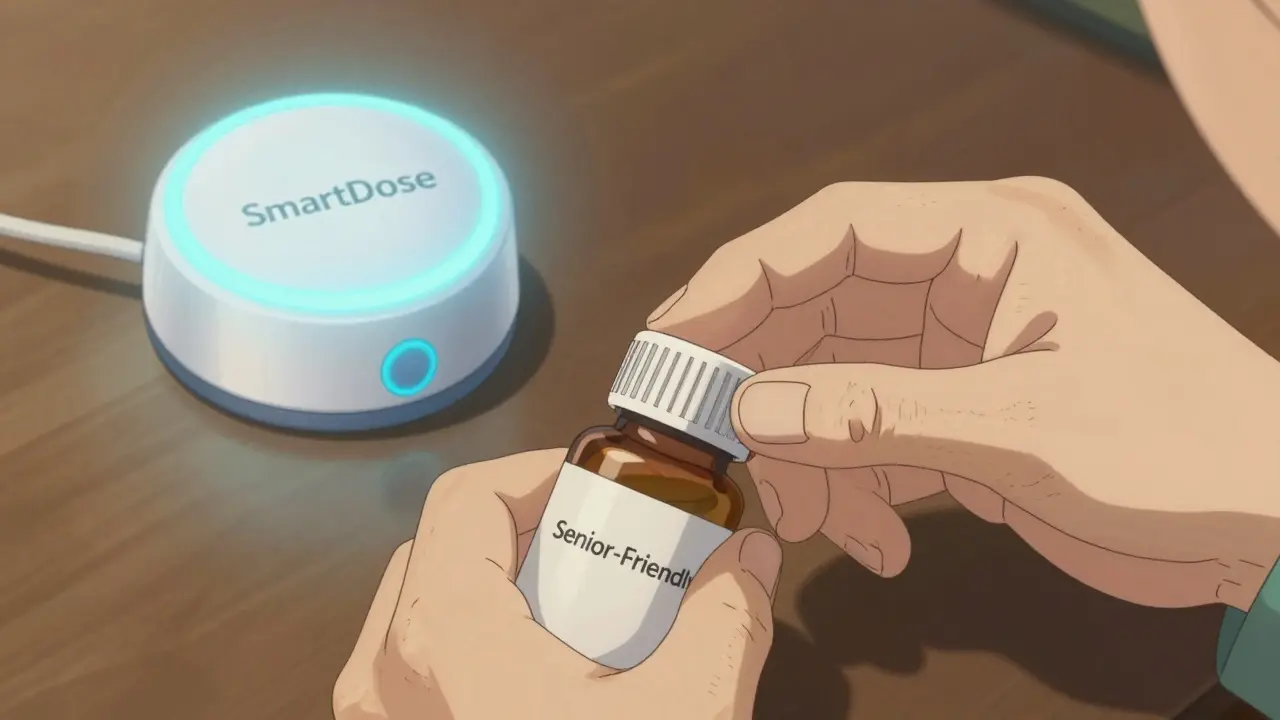
We are entering the era of "smart" packaging. In 2023, we saw the launch of connected caps that use Bluetooth to track when a bottle is opened. These SmartDose connected child-resistant caps that record opening events to monitor medication adherence systems don't just protect children; they help patients remember if they took their meds.
We're also seeing a regulatory shift toward other hazards. The CPSC is now cracking down on high-concentration THC edibles and laundry detergent pods, requiring them to meet the same rigorous CR standards as prescription drugs. As our homes fill with more complex chemicals and medications, the "lock and key" logic of the safety cap will only become more important.
Can I ask my pharmacist for non-child-resistant caps?
Yes, you can. If you have arthritis or other mobility issues, you can request "easy-open" caps. However, you will usually have to sign a waiver or provide informed consent, acknowledging that you understand the risk if children are in your home. Many pharmacies keep both styles in stock for this reason.
Are blister packs considered child-resistant?
Generally, no. Standard "push-through" blister packs are not child-resistant. To be classified as CR, a blister pack must have a peelable foil backing that requires significant force (at least 15 pounds) to breach, making it difficult for a child's smaller fingers to open.
Why do some medications not come with safety caps?
Certain medications aren't designated as "hazardous' enough to require CR packaging by the CPSC, or they may be in a form that doesn't allow for a safety cap. In these cases, the packaging should include a warning stating it is not child-resistant and should be kept away from children.
How do I know if my safety cap is actually locked?
The best way is to give it a quick test. Try to open the bottle using only a simple twisting motion (without pushing down or squeezing). If the cap spins or doesn't budge, it's likely locked. If it opens easily, you didn't engage the locking mechanism properly.
Do child-resistant caps expire or wear out?
While the plastic doesn't "expire," the mechanical threads and locking tabs can wear down over time. High-quality CR packaging is typically tested to withstand over 50 opening and closing cycles while maintaining its resistance. If a cap starts to feel "loose" or doesn't click into place, it's time to transfer the meds to a new container.