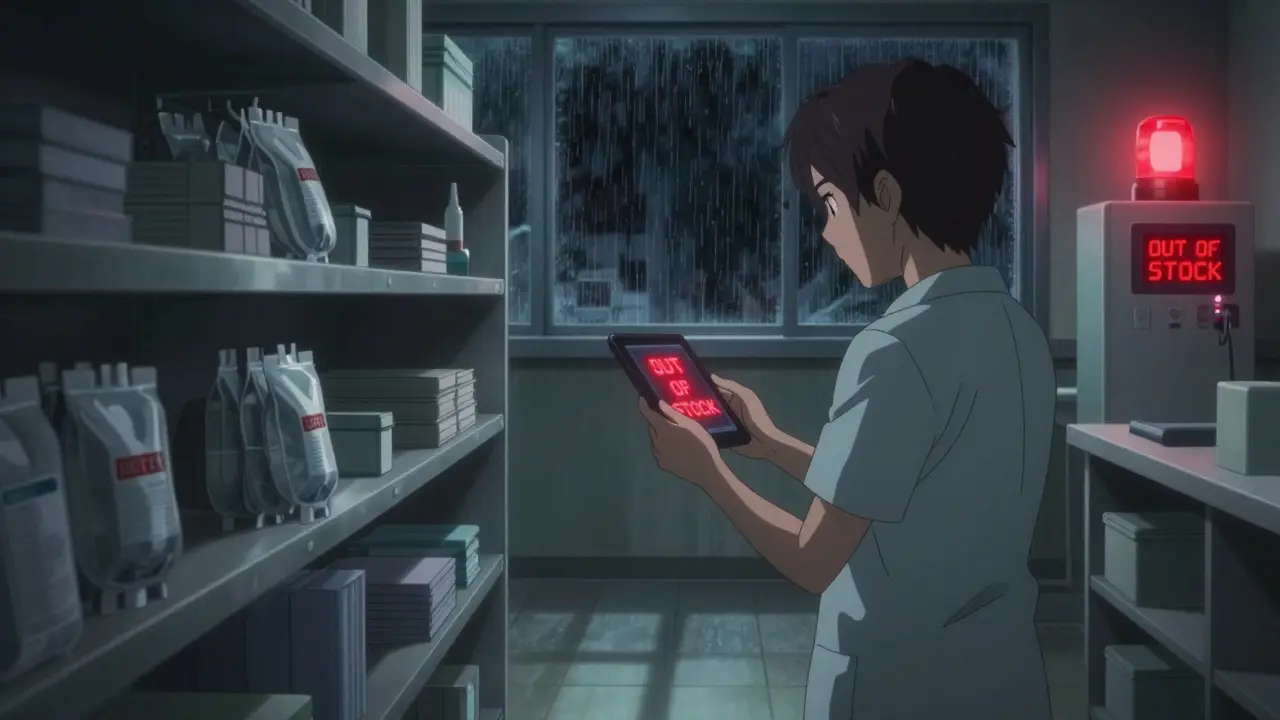
By the end of 2025, over 270 medications are still in short supply across the United States - a number that may seem lower than last year’s peak, but still represents a dangerous level of instability in the healthcare system. Patients are getting delayed treatments. Hospitals are rationing life-saving drugs. Pharmacists are spending hours each week just trying to find alternatives. This isn’t a temporary glitch. It’s a systemic crisis rooted in global supply chains, low profits, and regulatory gaps that haven’t been fixed.
What’s Actually Running Out?
The most critical shortages aren’t obscure niche drugs. They’re the ones you’d expect to be easy to find: saline bags, dextrose solutions, chemotherapy agents, and antibiotics. Here’s what’s still hard to get as of December 2025:- 5% Dextrose Injection (small volume bags) - Shortage started in February 2022. Expected to last until August 2025. Used for IV hydration, blood sugar control, and as a carrier for other drugs.
- 50% Dextrose Injection - Shortage since December 2021. Resolution expected September 2025. Critical for treating severe hypoglycemia in diabetic emergencies.
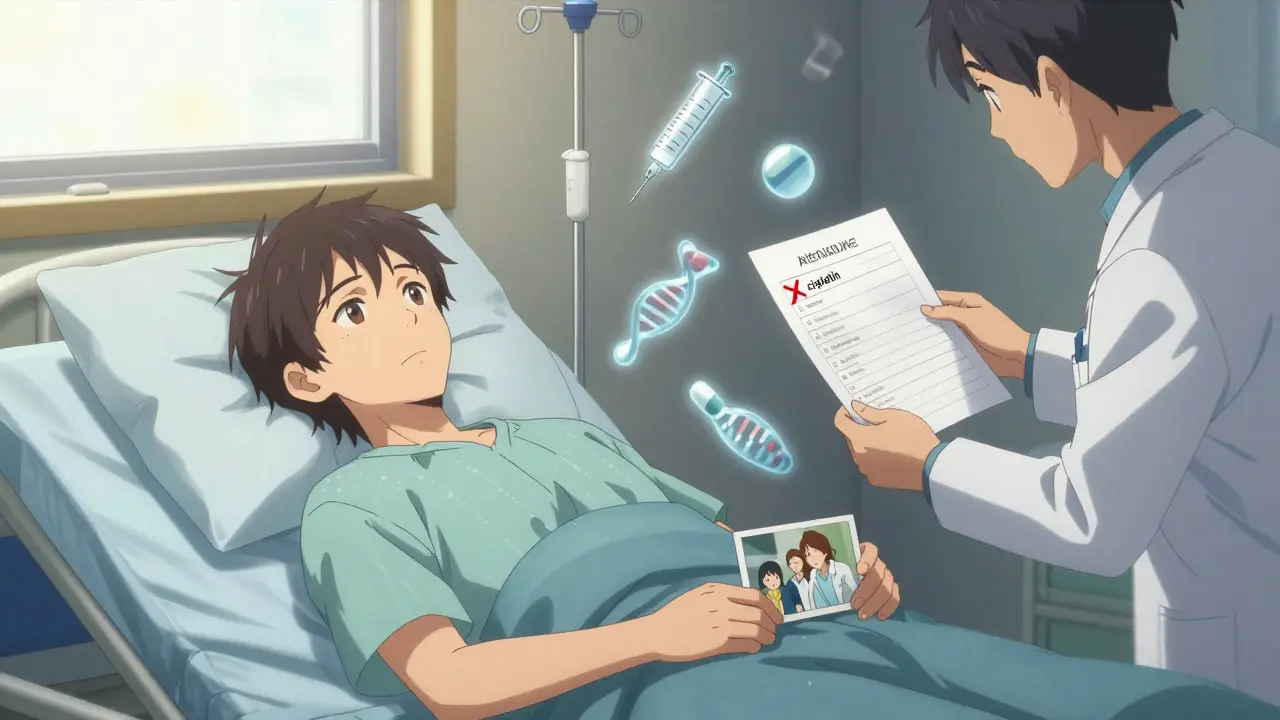
- Cisplatin - A frontline chemotherapy drug for testicular, ovarian, and lung cancers. Production halted in 2022 after an Indian manufacturer failed FDA inspections. Hospitals now ration it, prioritizing patients with the best chance of survival.
- Vancomycin - A last-resort antibiotic for MRSA and other resistant infections. Shortages have returned in 2025 after a brief recovery in late 2024.
- Levothyroxine - The most common thyroid medication. Demand has surged 35% since 2020, and manufacturers can’t keep up. Patients report switching brands or going weeks without refills.
- GLP-1 agonists (e.g., semaglutide, liraglutide) - Used for weight loss and type 2 diabetes. Demand exploded after these drugs went mainstream. Production hasn’t scaled fast enough, leading to multi-month waits.
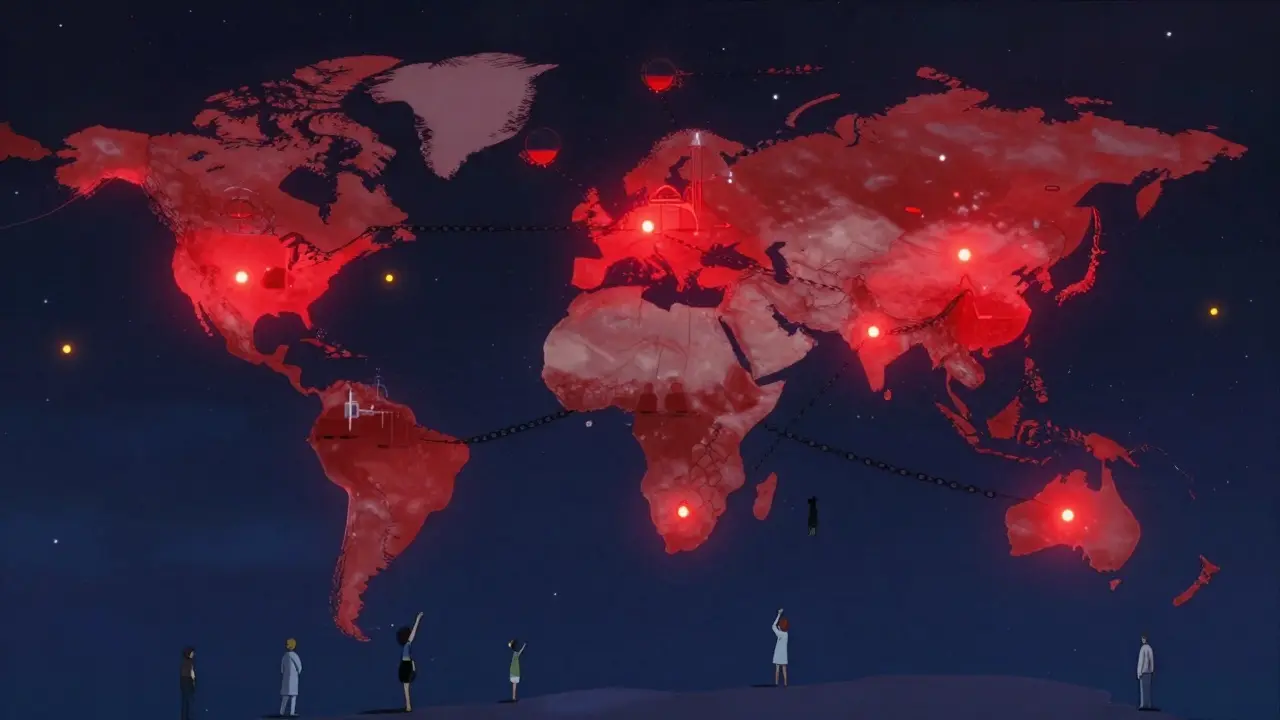
These aren’t random outliers. They’re symptoms of a deeper problem. About 60% of the active ingredients in U.S. drugs come from just two countries: India and China. When a single plant in India fails an FDA inspection - like the one that made half the country’s cisplatin - the ripple effect hits every hospital in America.
Why Are Generic Drugs the Biggest Problem?
You might assume brand-name drugs are harder to get. But it’s the opposite. Generic drugs make up 90% of all prescriptions filled in the U.S., yet they account for nearly 85% of current shortages. Why?It’s simple: profit margins. Generic drug makers operate on 5-8% margins. Brand-name drugs? 30-40%. That means when a generic manufacturer faces a spike in raw material costs, a regulatory delay, or a production hiccup, they don’t have the financial cushion to absorb it. They just stop making it.
Compare that to a brand-name drug like Ozempic. Even with massive demand, the manufacturer has the resources to build extra production lines, stockpile ingredients, and even pay premium prices to keep supply flowing. Generic makers don’t have that luxury. They compete on price - and that’s exactly why they’re the first to drop out when things get tough.
Who’s Getting Hurt the Most?
It’s not just hospitals. It’s patients. A 2024 survey by the American Medical Association found that 78% of doctors had to delay treatment because a drug wasn’t available. Nearly half had to switch patients to less effective alternatives.In cancer care, the impact is brutal. Patients for Affordable Drugs reported that 31% of cancer patients experienced treatment interruptions in 2024. The average delay? Nearly 15 days. For someone with aggressive cancer, that’s not just inconvenient - it’s life-threatening.
Diabetics are struggling too. With levothyroxine and insulin supplies stretched thin, some patients are cutting doses or skipping refills. One Ohio pharmacist told Reddit users they had to ration cisplatin so only patients with testicular cancer - where it’s most effective - got it. Others had to wait or try less proven drugs.
And it’s not just about getting the drug. It’s about safety. When pharmacists substitute one drug for another - even if they’re technically “therapeutically equivalent” - errors spike. ASHP found that 67% of hospital pharmacists have seen medication errors directly tied to substitutions during shortages. A wrong dose, a wrong route, a wrong interaction - all possible when you’re scrambling to fill a gap.
Why Can’t the FDA Fix This?
The FDA says it prevents about 200 potential shortages every year by stepping in early - warning manufacturers, helping them fix issues, or fast-tracking inspections. But here’s the catch: they can’t force anyone to make more of a drug.FDA Commissioner Robert Califf told Congress in February 2025 that the agency lacks the legal power to require production increases. They can’t tell a company, “You must make 20% more of this saline solution.” They can only ask. And if a company decides it’s not profitable enough, they walk away.
Even the new FDA public portal - launched in January 2025 to let providers report shortages not yet listed - has only processed 1,247 reports in its first three months. That’s helpful, but it’s reactive, not preventative. It’s like having a smoke alarm that only goes off after the fire’s already burning.
What’s Being Done to Fix It?
Some states are trying. New York is working on a public online database that shows which drugs are in short supply and which pharmacies still have stock. Hawaii passed a rule in 2025 allowing Medicaid to use foreign-approved versions of drugs during shortages - something the FDA normally blocks.Hospitals are doing what they can. Some are keeping 30-day stockpiles of critical drugs. But only 28% can afford it. The rest are flying blind, relying on last-minute calls to distributors.
At the federal level, two bills are being pushed: the Drug Shortage Prevention Act and the End Drug Shortages Act. Both aim to make manufacturers report production problems earlier - before they become full-blown shortages. But neither has passed. And even if they do, they won’t fix the core issue: low profits for generics.
What You Can Do
If you’re a patient:- Ask your doctor or pharmacist: “Is this drug currently in short supply?”
- If your medication is unavailable, ask: “Is there a therapeutically equivalent alternative?” Don’t accept “We don’t have it” as the final answer.
- Keep a list of your meds, dosages, and why you take them. It helps if you need to switch.
- Don’t skip doses or split pills without talking to your provider. It’s dangerous.
If you’re a caregiver or family member:
- Check the ASHP Drug Shortages Database regularly. It’s free and updated weekly.
- Call ahead to your pharmacy before picking up prescriptions - especially for IV fluids, insulin, or chemo drugs.
- Advocate. Tell your state representative you’re worried about drug access. This isn’t just a medical issue - it’s a policy failure.
The Bigger Picture
The U.S. imports 80% of its active pharmaceutical ingredients. Most of that comes from India and China. That’s not just a supply chain issue - it’s a national security risk. A geopolitical event, a natural disaster, or a factory shutdown halfway across the world can leave American hospitals empty.The solution isn’t just better reporting or more inspections. It’s rebuilding domestic manufacturing capacity. It’s paying generic drug makers enough to stay in business. It’s creating mandatory stockpiles for life-saving drugs - not just for hospitals, but for communities.
Right now, we’re treating drug shortages like a temporary inconvenience. But they’re not. They’re a slow-moving public health emergency - and the people paying the price aren’t CEOs or politicians. They’re the elderly, the chronically ill, the cancer patients, the diabetics - the ones who need these drugs just to live.
What are the most common drugs in short supply in 2025?
As of late 2025, the most commonly scarce drugs include 5% and 50% Dextrose injections, cisplatin (a chemotherapy drug), vancomycin (an antibiotic), levothyroxine (for thyroid conditions), and GLP-1 agonists like semaglutide used for weight loss and diabetes. These shortages are driven by manufacturing issues, supply chain delays, and surging demand.
Why are generic drugs more likely to be in shortage than brand-name drugs?
Generic drugs have much lower profit margins - typically 5-8% - compared to 30-40% for brand-name drugs. When manufacturing costs rise or demand spikes, generic manufacturers often stop producing drugs that aren’t profitable enough. Brand-name companies can absorb losses, invest in extra capacity, or raise prices. Generics can’t.
Can pharmacists substitute drugs during a shortage?
Yes, in 47 states, pharmacists can substitute a therapeutically equivalent drug during a shortage. But only 19 states allow them to do so without a doctor’s approval. Even when substitutions are allowed, they carry risks - wrong dosage, interactions, or reduced effectiveness - which is why medication errors rise during shortages.
Is the FDA doing enough to prevent drug shortages?
The FDA prevents about 200 potential shortages each year through early warnings and inspections, but they can’t force manufacturers to produce more. They lack legal authority to require production increases or mandate transparency from suppliers. Their tools are reactive, not preventative, which limits their ability to stop shortages before they happen.
How do drug shortages affect cancer patients?
Cancer patients are among the hardest hit. In 2024, 31% experienced treatment delays due to drug shortages, with average delays of nearly 15 days. Drugs like cisplatin and doxorubicin are critical for survival in certain cancers. When they’re unavailable, hospitals must ration them - often prioritizing patients with the best prognosis - leaving others without timely care.
Are there any new solutions being tested to fix drug shortages?
Yes. Hawaii now allows Medicaid to use foreign-approved versions of drugs during shortages. New York is developing a public database to show which pharmacies have scarce drugs in stock. The U.S. Pharmacopeia recommends financial incentives for domestic manufacturing, mandatory stockpiles, and a national early warning system. But none of these are nationwide yet - and progress is slow.
What Comes Next?
Without major policy changes - like funding domestic API production, creating financial incentives for generic manufacturers, or requiring minimum stockpiles - the number of shortages will stay above 250 through at least 2027, according to the Congressional Budget Office. If new tariffs on Chinese and Indian pharmaceuticals are imposed, that number could jump past 350.This isn’t about politics. It’s about survival. People need their medications. And right now, the system is failing them - not because of a lack of science or skill, but because of a lack of will.
Stewart Smith
January 1, 2026 AT 11:46Man, I just got off the phone with my pharmacist. They said my levothyroxine batch is from a different plant, and they’re not sure if it’ll last past next month. I’m 62, have been on this for 12 years - and now I’m scared to run out. No one’s talking about how this feels like being abandoned by the system.
But hey, at least we’ve got TikTok influencers selling ‘natural thyroid cures’ now. Progress, I guess.
Retha Dungga
January 2, 2026 AT 17:21so we import 80% of our meds from china and india 🤔 and then we wonder why people die when a factory closes 😭
we built a house on sand and call it capitalism 🏖️💸
someone get me a dextrose bag before i faint from reality
Darren Pearson
January 4, 2026 AT 09:40It is patently evident that the structural deficiencies in the pharmaceutical supply chain are symptomatic of a broader neoliberal regression wherein profit maximization supersedes public health imperatives. The commodification of essential therapeutics - particularly generics - represents a catastrophic failure of regulatory governance and market oversight.
One must question the ethical viability of an economic model wherein life-saving medications are subject to the whims of marginal profitability. The FDA’s impotence in mandating production levels is not merely bureaucratic inertia - it is complicity.
Branden Temew
January 5, 2026 AT 05:23Let’s be real - we’re not dealing with a shortage. We’re dealing with a choice. We chose to outsource our medicine to the lowest bidder. We chose to let corporations decide who lives and who waits.
And now we’re surprised when the system breaks?
It’s not broken. It’s working exactly as designed.
Meanwhile, Big Pharma is raking in billions on Ozempic while grandma skips her thyroid med because ‘it’s not urgent.’
What’s more tragic? The shortage… or the fact that we’ve all just learned to live with it?
Frank SSS
January 7, 2026 AT 00:09So… we got a bunch of rich guys making billions off weight loss drugs while people with cancer can’t get cisplatin?
Yeah. That’s the American dream. I’m just here for the popcorn.
Also, my cousin’s mom had to switch to a cheaper chemo drug. She’s in remission now. So… good job, capitalism? 🤷♂️
Paul Huppert
January 7, 2026 AT 00:25Just wanted to say I saw this post and immediately checked my prescription status. My vancomycin refill is flagged as ‘limited availability.’ Called my pharmacy - they’re holding one vial for me next week. Grateful, but terrified it won’t last.
Thanks for laying this out. I didn’t realize how many others are in the same boat.
Hanna Spittel
January 7, 2026 AT 23:21COVID didn’t cause this. The shadow government did. They let the pills dry up so we’d all get chipped. You think they care if you live? They want you dependent. Watch the next ‘emergency’ - they’ll force you to buy ‘FDA-approved’ smart insulin pens. 🧠💉 #MindControl
Brady K.
January 8, 2026 AT 02:53Let’s stop pretending this is about ‘supply chains’ - it’s about monopoly power and regulatory capture. The FDA doesn’t lack authority - they lack the will to challenge Big Pharma’s lobbying machine.
Here’s the real solution: nationalize the production of essential generics. Create a public pharmaceutical trust. Fund it like defense. Treat medicine like infrastructure - because it is.
And if you’re still arguing about ‘market efficiency’ while someone’s kid misses chemo… you’re not a capitalist. You’re a moral coward.
Time to stop being polite. Time to demand action.