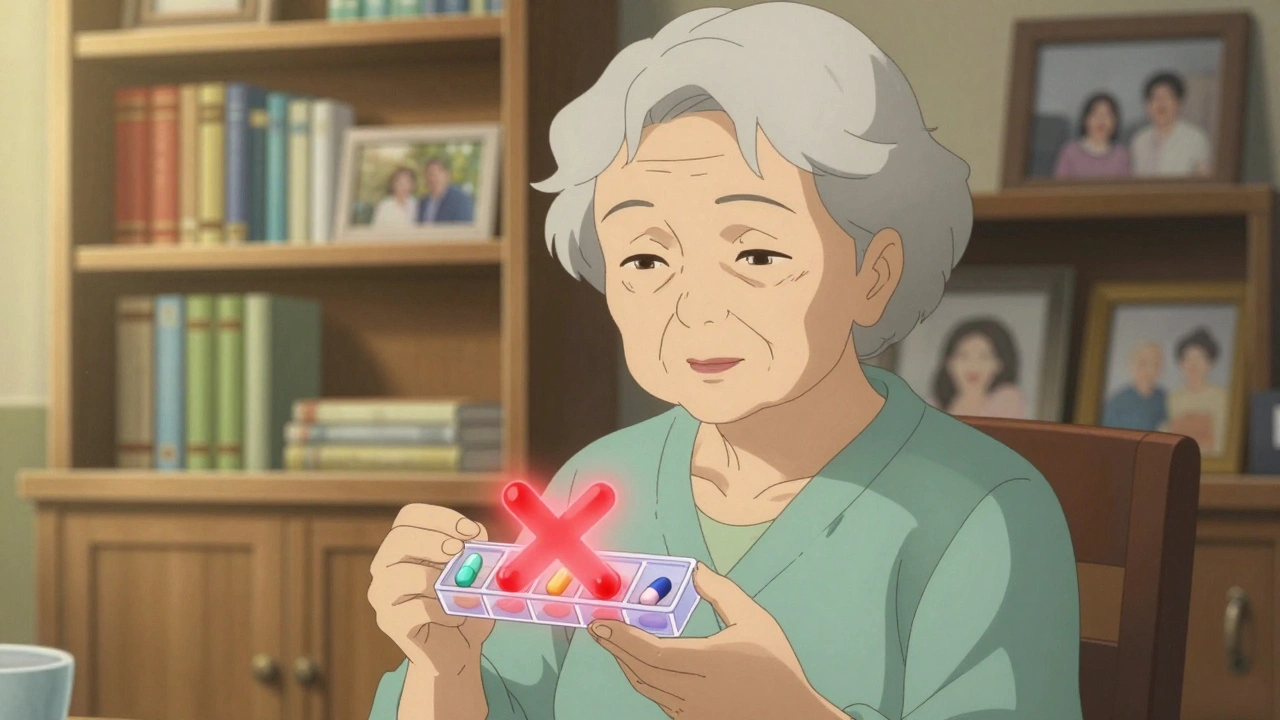
More than 40% of older adults in the U.S. take five or more prescription drugs every day. For many, that number climbs to ten or more. These aren’t just pills for high blood pressure or cholesterol-they’re sleep aids, acid reducers, muscle relaxants, antidepressants, and more, often prescribed by different doctors over years. But what happens when you start taking some of them away? That’s the central question behind deprescribing-a growing movement in clinical practice focused not on adding drugs, but on carefully removing them.
What Exactly Is Deprescribing?
Deprescribing isn’t just stopping a pill because it’s old or unused. It’s a deliberate, step-by-step process guided by evidence and patient goals. According to the American Geriatrics Society, it’s defined as the planned and supervised reduction or stopping of medications that may be causing harm or no longer offering benefit. This isn’t about cutting corners-it’s about precision medicine in reverse. The process starts with asking: Is this drug still helping, or is it just adding risk? For someone in their 70s or 80s with multiple chronic conditions, a medication that made sense at 55 might now be doing more harm than good. A statin for primary prevention? A daily proton pump inhibitor for heartburn that hasn’t been an issue in years? A benzodiazepine for sleep that’s increasing fall risk? These are exactly the kinds of drugs that deprescribing targets. It’s not a one-size-fits-all approach. A 72-year-old with advanced dementia and limited life expectancy doesn’t need the same drugs as a 70-year-old who’s active, lives alone, and wants to stay independent. Deprescribing looks at life expectancy, current function, and-most importantly-the patient’s own priorities.The Five Steps of a Safe Deprescribing Plan
You don’t just stop a medication cold. That can be dangerous. Safe deprescribing follows five clear steps:- Identify potentially inappropriate medications. Tools like the Beers Criteria, updated by the American Geriatrics Society in 2023, list drugs that carry higher risks for older adults-like anticholinergics, long-acting benzodiazepines, or NSAIDs in people with kidney issues.
- Determine if stopping or reducing is possible. Not every drug can come off right away. Some need slow tapering. Others, like blood pressure meds, may need to be replaced with non-drug strategies first.
- Plan the taper. For drugs like antidepressants or opioids, stopping suddenly can cause withdrawal. A slow reduction over weeks or months is safer and more comfortable.
- Monitor closely. Patients are checked for rebound symptoms, worsening conditions, or new side effects. Did the sleep improve? Did the dizziness go away? Did the fall risk drop?
- Document everything. What was stopped? When? What happened? This isn’t just paperwork-it’s critical for future care, especially if the patient sees a new doctor or ends up in the hospital.
What Does the Research Show?
A major 2023 review in JAMA Network Open analyzed 42 studies on deprescribing in community-dwelling older adults. The results were clear: on average, patients reduced their medication count by about one drug per person. That might sound small-but scale it up. A family doctor with 2,000 patients, half of whom are on five or more drugs, could safely remove around 140 unnecessary medications in a year. That’s not just a number. It’s fewer side effects. Fewer falls. Fewer hospital trips. And less money spent on pills that don’t help. But here’s the catch: most studies only tracked how many pills were stopped-not what happened to the patient afterward. Did they live longer? Did they move better? Did their quality of life improve? Some trials didn’t find big differences in hospitalizations or death rates. But researchers point out why: many studies were too short, too small, or didn’t follow patients long enough to see real benefits. One 2013 Canadian study noted that while medication use dropped, clinical outcomes like mobility or cognition didn’t change-likely because the follow-up was only a few months. That’s why leading experts like Dr. Dan Gnjidic are calling for longer, larger studies that measure real outcomes: falls, fractures, mental clarity, hospital stays, and even survival. The goal isn’t just fewer pills-it’s better days.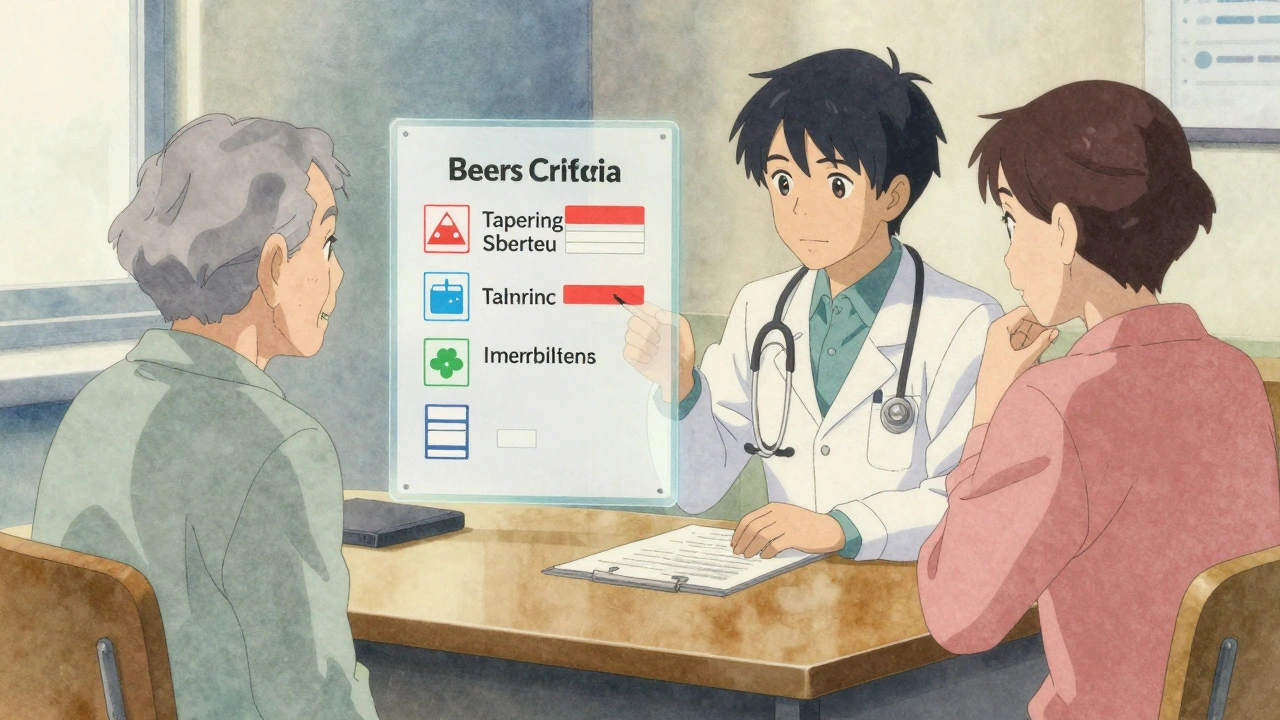
Why Patients Don’t Ask to Stop Medications
Here’s something surprising: most patients don’t bring up stopping meds. They assume their doctor knows best. They’re afraid of getting sicker if they stop. Or they think if a pill was prescribed once, it must be needed forever. A 2019 study from the American Academy of Family Physicians found that patients want to take fewer medications-if their doctor starts the conversation. But too often, the doctor never brings it up. Why? Time. Uncertainty. Fear of backlash. Or the mistaken belief that “more is better.” The truth? Many older adults are on drugs that were prescribed for conditions they no longer have-or that were meant to prevent future problems, not treat current ones. A cholesterol-lowering drug for someone with advanced heart failure? A bone density pill for someone with a life expectancy of less than two years? These aren’t helping. They’re just clutter.When Deprescribing Makes the Biggest Difference
Not everyone needs to cut back. But certain groups benefit most:- People with multiple chronic conditions and complex medication regimens
- Those showing new symptoms after starting a drug-like confusion, dizziness, or fatigue
- Patients with advanced dementia or end-stage illness
- People taking high-risk combinations, like an NSAID plus an anticoagulant
- Those on preventive drugs (like statins or aspirin) with no clear short-term benefit
Tools and Resources Making Deprescribing Easier
The field is evolving fast. In 2023, the American Academy of Family Physicians began piloting electronic health record tools that flag potentially inappropriate medications and suggest alternatives. Early results showed a 15% drop in risky prescriptions in clinics using the tool. Websites like deprescribing.org have been downloaded over half a million times since 2015. They offer free patient handouts, clinician guides, and decision aids that make conversations easier. One common message: “Medications that were good then might not be the best choice now.” The Institute for Healthcare Improvement (IHI) has built a four-step model for health systems: assess current practices, set goals, test small changes, then scale up. It’s not about one big overhaul-it’s about small, safe, repeatable steps.The Future of Deprescribing
The biggest challenge ahead? Personalization. Right now, deprescribing guidelines are broad. But the future lies in tailoring recommendations to individual biology. Early research is exploring how genetic differences in drug metabolism affect withdrawal risks-for example, how some people break down benzodiazepines faster than others. Another push? Better tools for shared decision-making. Instead of doctors deciding alone, patients are being given clear, simple information: “This drug reduces your risk of stroke by 2% over 5 years, but increases your chance of falling by 20%. Is that trade-off worth it for you?” As the population ages-with 20% of Americans expected to be over 65 by 2030-the need for deprescribing will only grow. We can’t keep prescribing more and more drugs without asking: Is this helping, or just adding risk?What You Can Do
If you or a loved one is on five or more medications:- Ask your doctor: “Which of these are still necessary?”
- Bring a full list of all meds-including supplements and over-the-counter drugs.
- Ask: “What would happen if we stopped this one?”
- Don’t stop anything on your own. Always work with your provider.
- Track how you feel after a change-better sleep? Less dizziness? More energy?”
Matt Dean
December 1, 2025 AT 21:39Wow, finally someone's talking sense. My grandma was on 12 pills a day and her doctor never asked if any could come off. She started falling every week. After they cut the benzos and the acid reducer, she stopped stumbling and actually remembered my name again. Why is this even controversial?
Walker Alvey
December 3, 2025 AT 03:33Of course the system doesn't want this to catch on. Fewer pills = less revenue. Pharma reps don't show up at clinics to talk about stopping meds. They show up to sell the next miracle drug that costs $500 a month and causes three new side effects. We're not treating patients-we're managing profit margins.
Bee Floyd
December 4, 2025 AT 02:29I've seen this firsthand. My dad was on a statin, a beta-blocker, an SSRI, and a PPI-none of which were actually helping him anymore. He was 81, lived alone, walked every morning. The doc was hesitant but we pushed for a review. Took three months to taper. He's now on three meds. Sleeps better. No more brain fog. And he finally ate a burger without worrying about heartburn. Sometimes less really is more.
Jeremy Butler
December 4, 2025 AT 05:24The epistemological implications of deprescribing are profound. It challenges the Cartesian assumption that pharmacological intervention is inherently beneficial. The medical paradigm has long been predicated upon additive logic: more intervention equals better outcome. Yet, in geriatric populations, this logic collapses under the weight of polypharmacy-induced iatrogenesis. A reductionist approach, therefore, is not merely clinical-it is ontologically necessary.
Courtney Co
December 5, 2025 AT 08:37My mom died last year and I still feel guilty-I didn’t know she was on that many pills. The doctor never said a word. She was on a muscle relaxant that made her zonk out during dinner. She stopped talking. I thought it was dementia. It was just the cyclobenzaprine. I wish I’d asked. I wish someone had told me. I just want to scream at every doctor who doesn’t talk about this.
Shashank Vira
December 6, 2025 AT 14:27One must consider the metaphysical decay of modern medicine. We have transformed healing into a ritual of consumption. Pills are not remedies-they are talismans. The elderly are not patients; they are consumers of pharmaceutical sacraments. Deprescribing is not a medical act-it is an act of spiritual liberation from the altar of the pill bottle.
Adrian Barnes
December 8, 2025 AT 00:13These so-called 'deprescribing' studies are statistically underpowered and methodologically bankrupt. You remove a pill and claim 'improved quality of life' without controlled endpoints? Where's the RCT? Where's the blinding? Where's the IRB-approved protocol? This is anecdotal nonsense masquerading as science. We need longitudinal, double-blind, placebo-controlled trials before we start dismantling standard care.
Jaswinder Singh
December 9, 2025 AT 12:53Bro, my uncle in Delhi was on 8 meds. He had diabetes, high BP, and a bad knee. We took him to a local geriatric clinic-they cut his sleep pill, his acid reducer, and his aspirin. He started walking again. No more dizziness. He’s 78 and now plays chess every Sunday. It’s not magic. It’s just common sense. Why is this so hard in the US?
Eric Vlach
December 9, 2025 AT 23:57My sister’s a nurse in a nursing home. She says the biggest problem isn’t the meds-it’s the charting. Every time someone gets a new med, it gets added. No one ever goes back to check. It’s like a snowball. One doc adds a statin, another adds a sleep aid, another adds a muscle relaxant. Nobody’s looking at the whole picture. It’s not malpractice-it’s just systemic neglect.
Souvik Datta
December 11, 2025 AT 07:21This is the quiet revolution medicine needs. Not more drugs-but more dialogue. Not more prescriptions-but more presence. The goal isn’t to remove pills. It’s to restore dignity. To let someone wake up without a fog, walk without fear, eat without worry. I’ve seen it. I’ve lived it. Deprescribing isn’t about stopping treatment. It’s about starting life again. And that’s worth every conversation, every taper, every risk.