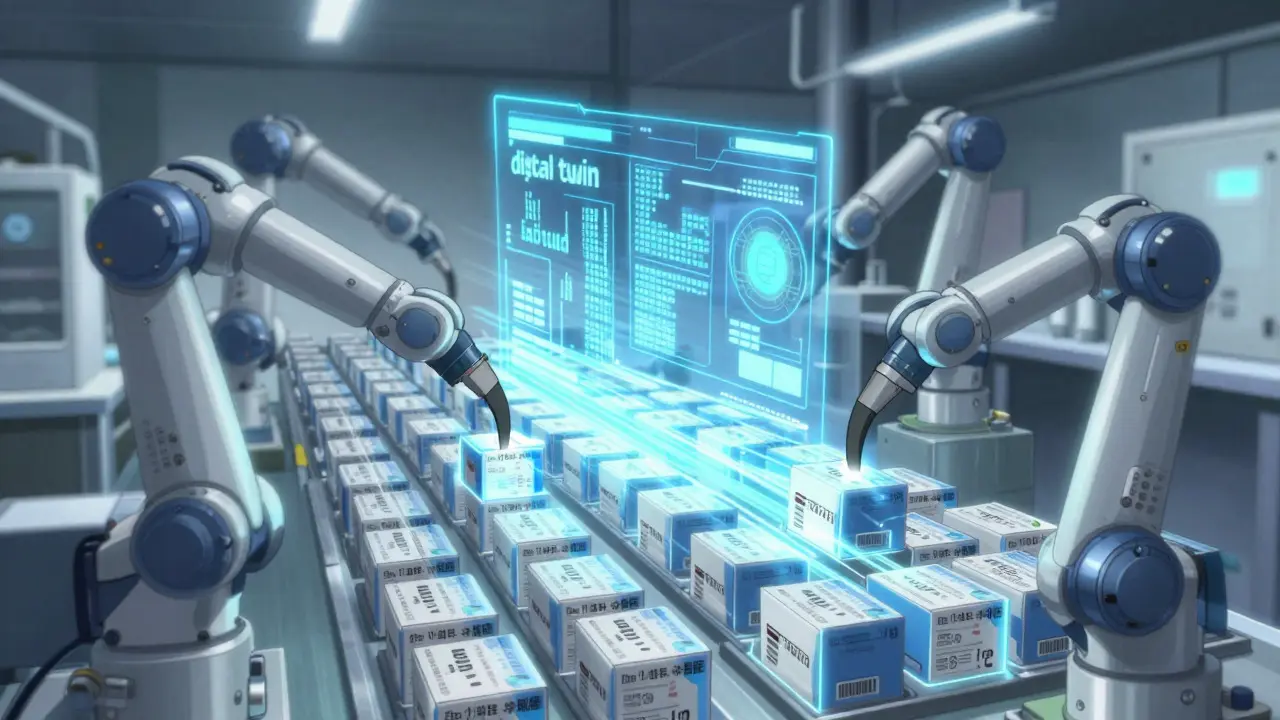
Fake drugs are not just a nuisance; they are a global health emergency. According to the World Health Organization, one in ten medical products in low- and middle-income countries is substandard or falsified. In high-income nations, the threat persists through sophisticated supply chain infiltrations. The stakes are life-and-death. A counterfeit antibiotic might treat nothing but leave you vulnerable to sepsis. A fake cancer medication wastes precious time and hope. As regulations like the U.S. Drug Supply Chain Security Act (DSCSA) and the EU Falsified Medicines Directive (FMD) tighten their grip, the industry is racing to deploy technologies that make counterfeiting nearly impossible.
The Shift from Barcodes to Digital Identities
For years, the industry relied on simple barcodes. They were cheap, easy to print, and incredibly easy to copy. If a fraudster could scan a legitimate box, they could replicate its code and flood the market with fakes. This vulnerability led to massive recalls, including a notable $147 million incident in late 2025 where unprotected QR codes were cloned by criminals. The solution? Mass Serialization is a system that assigns a unique identifier to every single unit of medication, creating a digital twin for physical tracking from factory to patient.
Serialization has become the dominant force in anti-counterfeit packaging, capturing 34% of the market share in 2025. It works by generating a unique serial number for each pack, blister, or bottle. These numbers are linked to an enterprise resource planning (ERP) system. When a pharmacy scans a box, the system checks if that specific serial number has been scanned before, at which location, and whether it matches the expected distribution path. This level of granularity reduces recall execution time by nearly 60%. Instead of pulling all batches of a product, manufacturers can pinpoint exactly which boxes are compromised.
- Unit-Level Traceability: Tracks individual items rather than whole pallets.
- Regulatory Compliance: Meets DSCSA requirements for full interoperability by November 2025.
- Audit Trail: Creates an immutable record of custody changes.
However, serialization alone isn't enough. It requires significant infrastructure investment. A warehouse manager in Europe reported that implementing serialization under EU rules took 14 months and cost €2.3 million, initially reducing throughput by 37%. But once optimized, it became a critical shield against diversion and counterfeiting.
NFC Technology: The Smartphone Shield
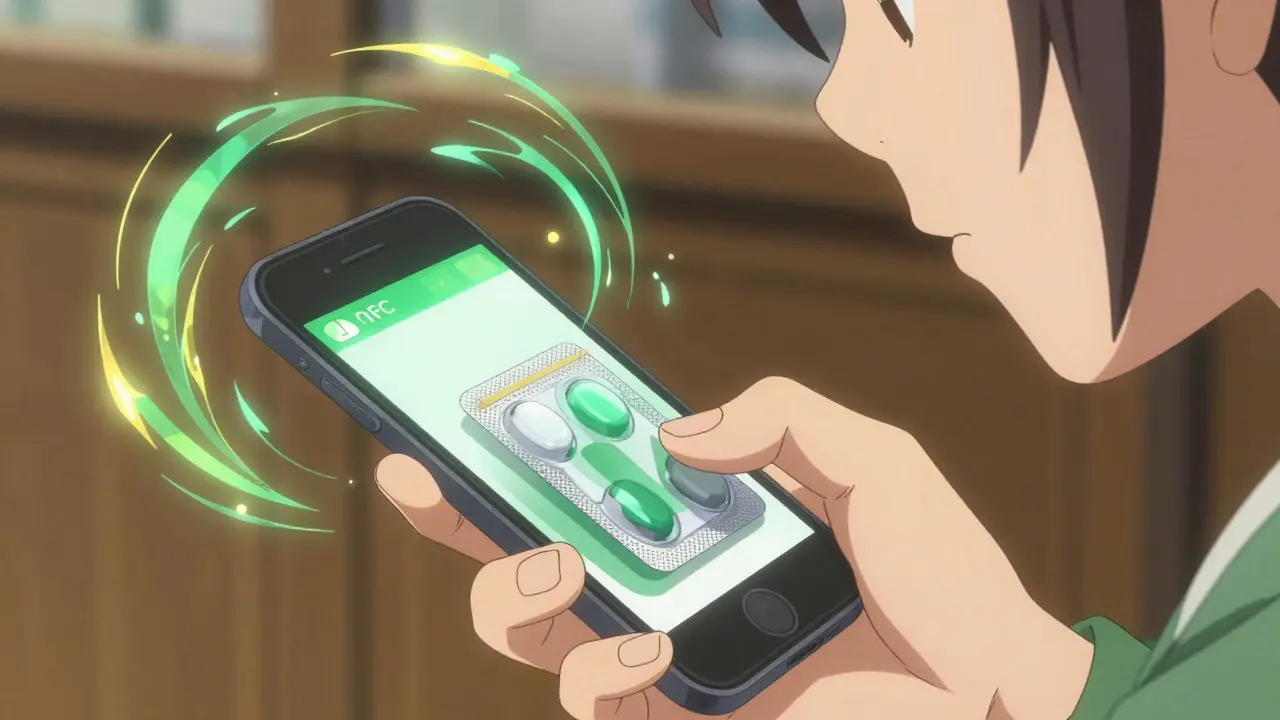
If serialization is the backbone, Near Field Communication (NFC) is the muscle that empowers the end-user. You likely have an NFC chip in your phone right now. It’s what lets you tap to pay or unlock doors. Pharmaceutical companies are leveraging this ubiquity to turn every smartphone into a drug authenticator.
Unlike QR codes, which can be photographed and replicated, NFC chips store data cryptographically. When you tap your phone to a package with an NFC tag, it doesn’t just read a static URL. It performs a handshake with a secure server, verifying the chip’s unique cryptographic signature. According to ForgeStop’s 2025 data from CPHI Frankfurt, this process takes under two seconds and boasts a 99.98% accuracy rate.
This technology bridges the gap between complex backend tracking and consumer trust. In Latin America, pharmacy chains using NFC authentication saw a 98% reduction in counterfeit incidents within six months. Pharmacists verified over 1,200 products daily, adding only three to five seconds per check. For patients, it means peace of mind. You don’t need a special scanner; you just need your phone.
| Technology | Security Level | Verification Speed | User Device Required | Cost Per Unit |
|---|---|---|---|---|
| QR Code | Low (Easily Cloned) | Fast | Any Smartphone Camera | $0.01 - $0.02 |
| Standard Barcode | Very Low | Instant | Scanner App | $0.005 |
| NFC Chip | High (Cryptographic) | < 2 Seconds | NFC-Enabled Phone (Android 8+/iOS 11+) | $0.05 - $0.10 |
| RFID (Passive) | Medium-High | Batch Scan | Specialized Reader | $0.02 - $0.05 |
| DNA Markers | Extreme | Hours/Days (Lab Test) | Lab Equipment | $0.15 - $0.25 |
Blockchain: The Unbreakable Ledger
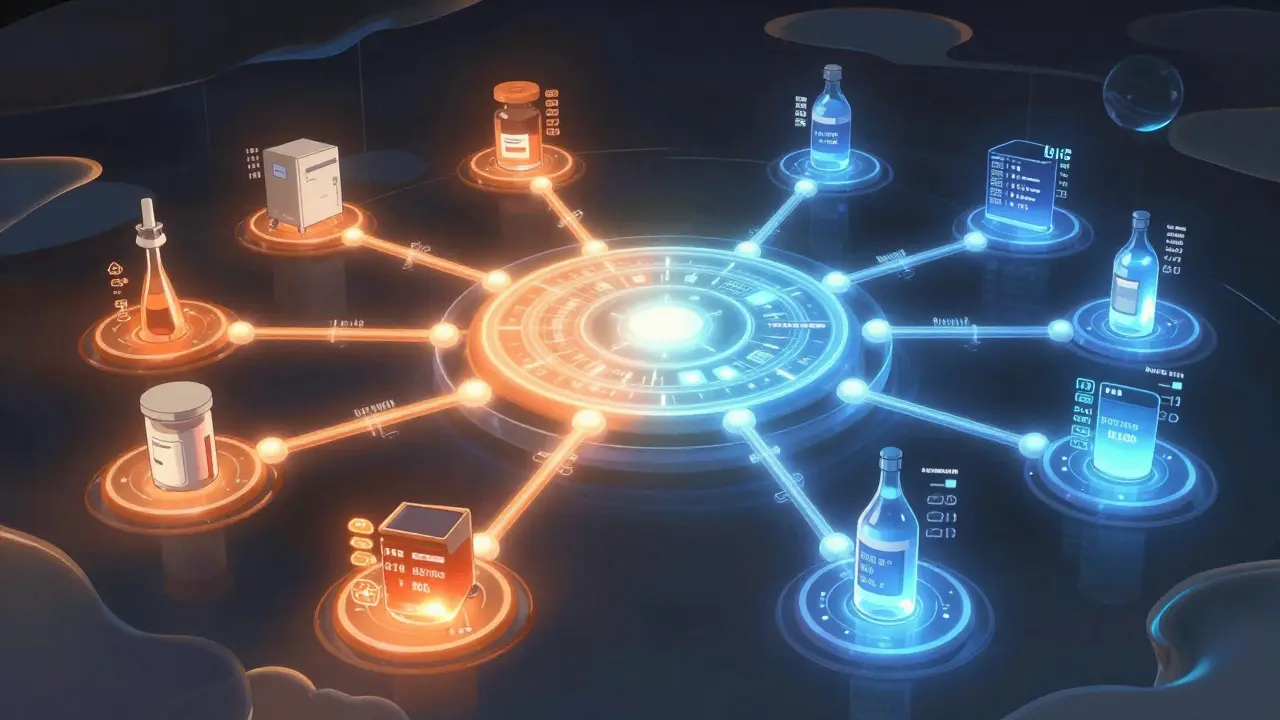
While NFC verifies the package in your hand, blockchain secures the journey it took to get there. Blockchain is often misunderstood as just cryptocurrency tech, but in pharma, it serves a different purpose: creating an immutable provenance record. Think of it as a shared notebook that no one can erase from. Every time the drug changes hands-from manufacturer to wholesaler to distributor to pharmacy-a new entry is added. Once written, it cannot be altered.
This transparency is vital for cold-chain medications like insulin or vaccines. IoT sensors attached to shipments record temperature and humidity data. This data is hashed and stored on the blockchain alongside the movement logs. If a shipment sits in a hot truck for too long, the blockchain records it. The pharmacy receiving it knows immediately that the drug may be degraded, even if the packaging looks perfect.
De Beers successfully used a similar platform called Tracr for diamonds, and pharmaceutical giants are adapting this model. However, implementation is challenging. Gartner estimates that full enterprise blockchain integration takes 18 to 24 months, compared to 6-12 months for traditional serialization. It requires consensus among all supply chain partners, which is notoriously difficult to achieve. Yet, as regulatory pressure mounts, blockchain is becoming the gold standard for audit capabilities.
Covert and Forensic Features: The Hidden Layers
Not all security features are digital. Many rely on physical properties that are hard to replicate without specialized equipment. These are categorized into overt, covert, and forensic features.
Overt features are visible to the naked eye. Tamper-evident seals, shrink bands, and induction seals show clear signs if a package has been opened. Color-shifting inks change hue when viewed from different angles. Holograms, particularly kinegram types, create moving images that are expensive to produce accurately.
Covert features require simple tools to detect. UV-reactive inks glow under blacklight. Thermochromic inks disappear when heated by a finger. These are useful for pharmacists who want a quick secondary check beyond the digital scan.
Forensic authentication is the heavy artillery. DNA-based authentication involves embedding unique biological markers into the ink or packaging material. To verify, a lab extracts a sample and runs it against a database. While this offers the highest security level, it is cost-prohibitive for mass-market drugs, costing $0.15-$0.25 per unit. It is typically reserved for high-value biologics or orphan drugs where the margin for error is zero.
AI and Visual Inspection: The Watchful Eye
Artificial Intelligence is entering the fray as a complementary layer. AI-driven visual inspection systems use cameras and machine learning algorithms to scan packaging lines at high speeds. They look for micro-defects, misalignments, or subtle variations in color that human inspectors might miss.
In controlled environments, these systems boast a 99.2% counterfeit detection accuracy. They can identify if a hologram is slightly off-center or if the font weight on a label differs by a fraction of a point-signs that a generic printer was used instead of industrial equipment. However, real-world variability remains a challenge. Lighting conditions in warehouses differ, and packaging materials can vary slightly between production runs. Companies are refining these models, with accuracy improving from 89.7% in 2024 to 94.3% in mid-2025.
Implementation Challenges and Real-World Friction
Adopting these technologies is not plug-and-play. The transition involves significant friction. First, there is the cost. The global anti-counterfeit packaging market is projected to grow to USD 345.93 billion by 2030, driven largely by compliance mandates. For small and mid-sized manufacturers, the adoption rate lags at 43%, compared to 97% for top-tier companies. The upfront investment in servers, network upgrades, and staff training is steep.
Second, there is the human factor. Staff need training. Basic serialization requires 6-8 weeks of training, while blockchain systems demand 14-16 weeks. User reviews of platforms like TraceLink highlight a "steep learning curve." If pharmacists find the verification process cumbersome, they will bypass it. That’s why speed matters. NFC’s sub-two-second verification is crucial because it fits into the workflow without causing bottlenecks.
Third, geopolitical factors play a role. Tariffs imposed in April 2025 on pharmaceutical inputs from China and India increased production costs by 12-18% and caused supply chain delays. This economic pressure forces companies to balance security spending with cost containment. It also pushes innovation toward sustainable materials, with 62% of new solutions incorporating recyclable components.
The Road Ahead: Multi-Layered Defense
No single technology solves the problem. The future lies in convergence. Experts predict that by 2027, 83% of pharmaceutical executives will implement multi-layered security approaches. This means combining serialization for traceability, NFC for consumer verification, blockchain for supply chain integrity, and covert physical features for immediate visual checks.
As counterfeiters adapt-using AI to generate better fakes or digital fabrication to mimic packaging-the defense must evolve. The EU’s Digital Product Passport regulations, requiring on-pack codes linking to lifecycle data by 2027, will further drive this integration. The goal is a seamless ecosystem where the drug’s identity is protected at every step, ensuring that when you take your medication, you know exactly what it is and where it came from.
How can I verify if my medication is genuine?
Look for tamper-evident seals and check for holograms or color-shifting inks. If the package has an NFC chip or QR code, use your smartphone to scan it. Ensure the app or website you use is official. For NFC, a successful tap should confirm authenticity in under two seconds. If the code doesn’t work or the seal is broken, consult your pharmacist before taking the drug.
Why are QR codes considered less secure than NFC?
What is mass serialization in pharmaceuticals?
Mass serialization assigns a unique identifier to every single unit of medication. This allows regulators and companies to track each box from the manufacturing line to the patient. It prevents diversion and makes it easier to isolate counterfeit batches during a recall.
Does blockchain really help stop fake drugs?
Yes, by creating an immutable record of the drug’s journey. It ensures that the data about where and how the drug was stored (including temperature) cannot be altered. This helps verify that the product hasn’t been diverted from the legitimate supply chain or exposed to conditions that degrade its quality.
Are anti-counterfeit technologies expensive for consumers?
The cost is primarily borne by manufacturers and distributors due to regulatory mandates. While it adds a few cents per unit to the production cost, it rarely results in significant price hikes for consumers. The benefit is vastly improved safety and reduced risk of ineffective treatment.
What should I do if I suspect my drug is counterfeit?
Stop taking the medication immediately. Save the packaging and any remaining pills. Contact your pharmacist or doctor for advice. Report the incident to your national health authority or the FDA (in the US). Do not throw it away until authorities advise, as it may be needed for investigation.