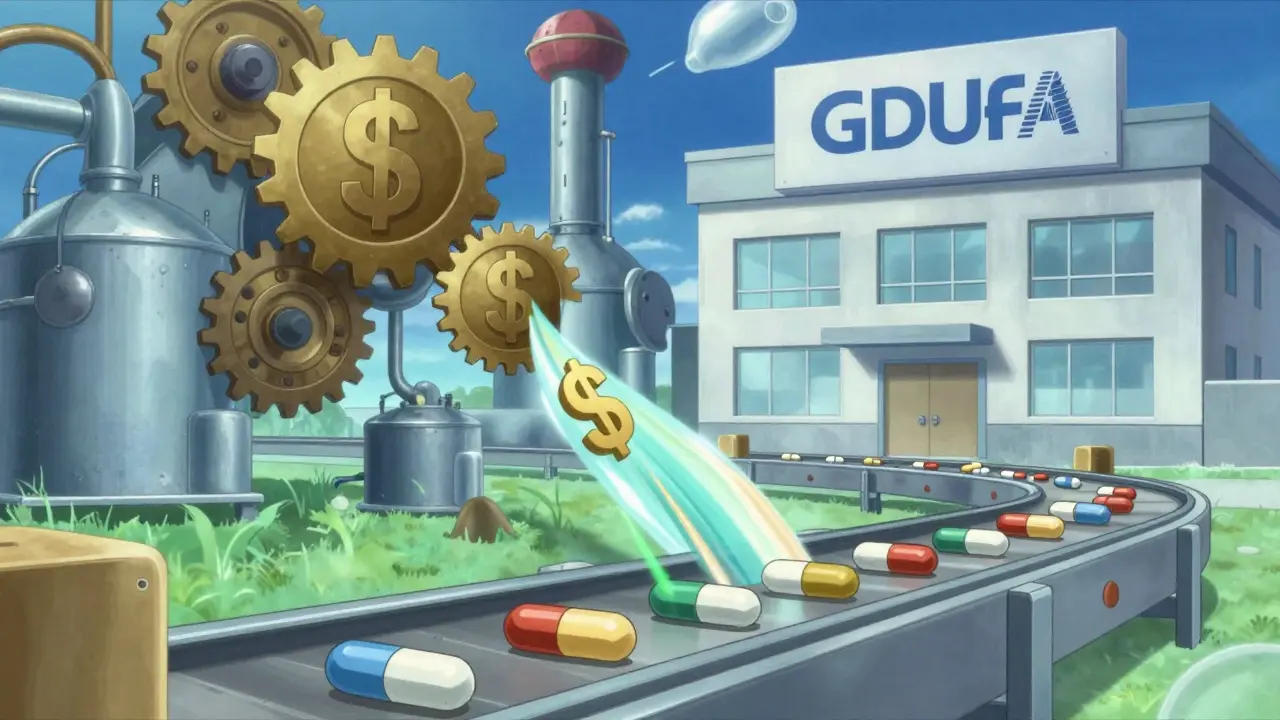
The Generic Drug User Fee Amendments (GDUFA)A legislative agreement between the U.S. Food and Drug Administration (FDA) and the generic drug industry that authorizes the FDA to collect user fees from manufacturers to fund the review of generic drug applications and facility inspections. is a law that keeps affordable medications flowing to Americans. Before GDUFA, the FDA had over 3,000 pending generic drug applications. Today, 90% of all prescriptions filled in the U.S. are for generics. GDUFA ensures these drugs get approved quickly without compromising safety. Let’s break down how it works.
What is GDUFA?
Signed into law in 2012 as part of the Food and Drug Administration Safety and Innovation Act (FDASIA), GDUFA lets the FDA collect fees from generic drug manufacturers. These fees fund the review of Abbreviated New Drug Application (ANDA)The application process for generic drug manufacturers to gain FDA approval without repeating extensive clinical trials. submissions and facility inspections. Without this funding, the FDA would struggle to keep up with demand. Congress requires the FDA to spend user fee money only on generic drug programs-no other activities. This keeps the system focused and accountable.
How GDUFA’s Fee Structure Works
Manufacturers pay fees based on their facilities and applications. The fee structure has evolved across three reauthorizations. For example, under GDUFA III (2023-2027), domestic Finished Drug Formulation (FDF) facilities pay $175,389 annually, while foreign ones pay $190,389. The extra $15,000 for foreign facilities covers higher inspection costs. Active Pharmaceutical Ingredient (API) facilities pay $26,458 domestically and $41,458 overseas. These fees fund the FDA’s review teams, inspections, and technical support.
| Fee Type | Domestic | Foreign |
|---|---|---|
| Finished Drug Formulation (FDF) Facility | $175,389 | $190,389 |
| Active Pharmaceutical Ingredient (API) Facility | $26,458 | $41,458 |
Manufacturers also pay one-time fees for ANDA submissions, Drug Master Files (DMFs), and supplement applications. For instance, a new ANDA costs $337,500 in 2024. These fees ensure the FDA has predictable funding to meet review deadlines.
How GDUFA Has Improved Drug Approval Times
Before GDUFA I, the FDA took over 12 months to review generic drug applications. Now, the average review time is under 10 months. In 2023 alone, the FDA approved over 1,000 generic drugs-up from 500 in 2012. This speed comes from dedicated staff funded by user fees. The FDA also conducts more risk-based inspections: 70% of generic drug facilities are inspected annually, compared to 40% before GDUFA. This means safer drugs reach patients faster.
Challenges in the Generic Drug Market
Not all manufacturers benefit equally. Smaller companies struggle with annual fees. A single facility fee can cost over $175,000, which is a big burden for startups. The Association for Accessible MedicinesThe industry group representing generic drug manufacturers and suppliers. noted during GDUFA II negotiations that fees disproportionately affect small businesses. Foreign manufacturers, especially from India and China, also face criticism for higher fees. They argue the $15,000 difference doesn’t reflect actual inspection costs. Despite this, the FDA says these fees are necessary to maintain global safety standards.
What’s Next for GDUFA?
GDUFA III runs until September 2027. The FDA publishes quarterly reports tracking review times, inspections, and backlog reductions. For example, the FY 2024 Activities Report shows a 15% faster review of complex generic drugs. Stakeholders are already preparing for GDUFA IV. Potential changes include adjusted fees for small businesses, better digital submission tools, and clearer guidelines for complex generics. The Congressional Research ServiceThe nonpartisan agency providing policy analysis to Congress. has warned that future reauthorizations must balance industry costs with public health needs.
Why GDUFA Matters for You
Generic drugs save Americans over $300 billion yearly. Without GDUFA, approval delays would mean fewer affordable options. Imagine waiting months longer for a life-saving generic medication. GDUFA’s system keeps this from happening. It’s not perfect, but it’s working: 9 out of 10 prescriptions are now generics. This law directly supports your access to affordable healthcare.
What is GDUFA?
GDUFA, or the Generic Drug User Fee Amendments, is a law that authorizes the FDA to collect fees from generic drug manufacturers to fund the review process. These fees help speed up approval of generic drugs, ensuring Americans have access to affordable medications.
How does GDUFA affect drug prices?
GDUFA doesn’t directly affect drug prices. Instead, it speeds up approval of generics, which increases competition and lowers prices. More generics in the market means lower costs for consumers.
Why do foreign facilities pay higher fees?
Foreign facilities have higher inspection costs. The $15,000 difference covers the extra work needed to inspect overseas plants. This ensures safety standards are met globally.
What’s the Pre-ANDA Program?
Part of GDUFA III, this program lets companies consult with the FDA before submitting a full application. It helps fix issues early, especially for complex generics like inhalers or injectables.
What happens after GDUFA III expires?
In September 2027, Congress must reauthorize GDUFA. Stakeholders are already discussing GDUFA IV, focusing on fees for small businesses and digital submissions. The FDA will publish new fee rates before the deadline.
Lisa Scott
February 6, 2026 AT 02:32GDUFA is a sham designed to enrich the FDA and big pharma.
Albert Lua
February 7, 2026 AT 03:39Wow! GDUFA is such a game-changer! It's amazing how much it's sped up generic approvals. So happy to see this working!
Katharine Meiler
February 7, 2026 AT 23:53The GDUFA fee structure is a well-designed system that allocates resources efficiently for the review of Abbreviated New Drug Applications. By collecting user fees from manufacturers, the FDA can dedicate specific teams to handle these applications without diverting funds from other critical areas. This targeted funding ensures that the review process is both timely and thorough. Additionally, the fee structure has evolved through multiple reauthorizations to address changing industry needs and regulatory demands. For instance, the GDUFA III agreement includes provisions for better handling of complex generics and improved inspection protocols. The data shows a clear correlation between increased funding and reduced review times, with the FDA now approving over 1,000 generics annually compared to 500 in 2012. This improvement is not just a statistical success but a tangible benefit for patients who rely on affordable medications. Furthermore, the system's accountability mechanisms ensure that fees are used exclusively for generic drug programs, maintaining transparency and trust. While some argue that the fees are burdensome for smaller companies, the overall benefits to public health and market competition far outweigh these challenges. The collaborative approach between stakeholders has been instrumental in maintaining a robust generic drug supply chain. It's important to recognize that without GDUFA, the FDA would struggle to keep up with the demand for generic drug approvals, leading to potential shortages and higher costs. The continuous improvements in the program, such as the Pre-ANDA consultation process, demonstrate a commitment to innovation and efficiency. Ultimately, GDUFA represents a successful public-private partnership that enhances access to safe and affordable medications for millions of Americans. These efforts are crucial for sustaining the nation's healthcare system and ensuring that patients receive the treatments they need without delay.
Johanna Pan
February 8, 2026 AT 11:25GDUFA really helps bring affordable meds to everyone. It's a great program, even if there are some hiccups. Definately helps the economy and patients. Kudos to the FDA!
Brendan Ferguson
February 10, 2026 AT 06:38While the fees can be tough for small businesses, GDUFA overall improves access to generics. It's a balance between industry costs and public health needs. Good work all around.
Rene Krikhaar
February 10, 2026 AT 13:37I think GDUFA is great. It helps get generics approved faster which saves people money. More competition lowers drug prices. It's a win-win for everyone.
Dr. Sara Harowitz
February 11, 2026 AT 18:10GDUFA is absolutely essential for American pharmaceutical integrity-without it, we'd be at the mercy of foreign manufacturers! The fees, though high, are necessary to maintain safety standards. This is why domestic manufacturing must be prioritized!
Elliot Alejo
February 13, 2026 AT 02:01GDUFA has clearly improved approval times. The data shows a significant reduction in review periods. It's a solid system that balances industry needs with public health.