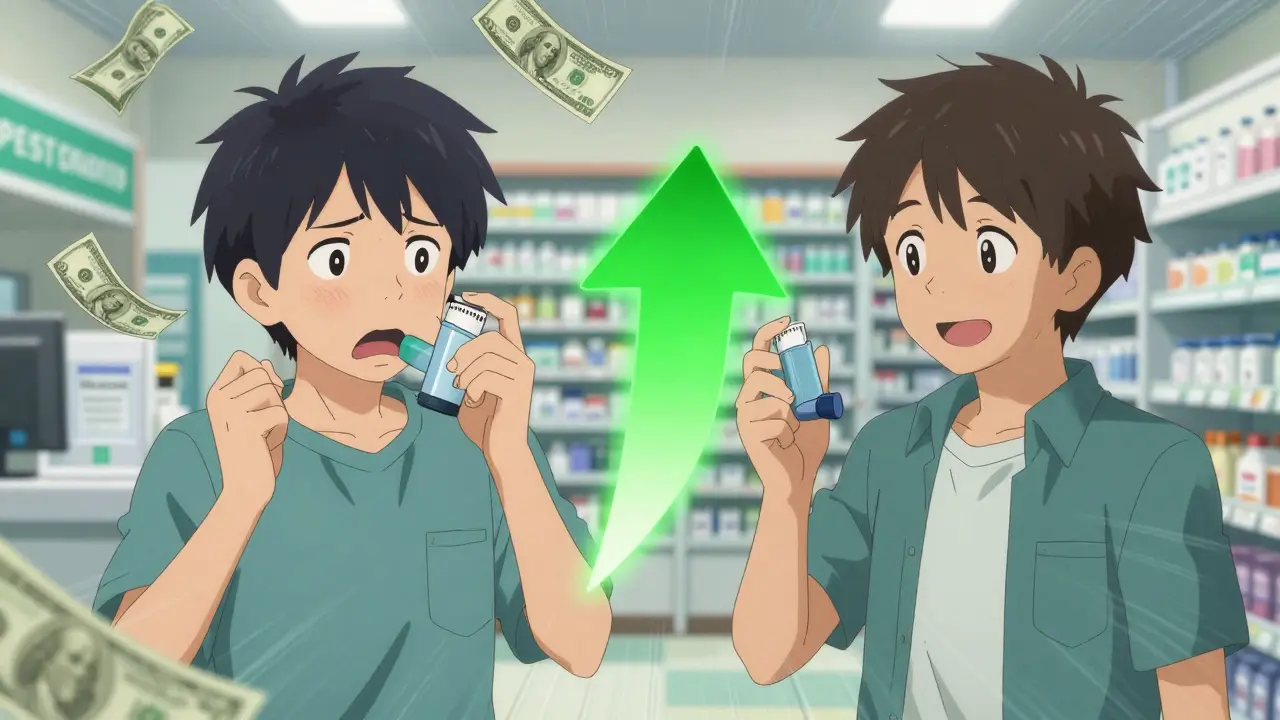
Every year, Americans spend over $700 billion on prescription drugs. But here’s the twist: 90% of all prescriptions filled are for generic medications - and they account for just 12% of that total spending. That’s not a typo. It means generic drugs saved the U.S. healthcare system $482 billion in 2024 alone. That’s more than the entire GDP of Norway. And it’s not slowing down.
Why Generics Cost So Much Less
Generic drugs aren’t cheaper because they’re low quality. They’re cheaper because they don’t have to repeat the billion-dollar clinical trials that brand-name drugs do. Once a patent expires, other manufacturers can produce the same active ingredient. The FDA requires generics to be bioequivalent - meaning they work the same way in the body, at the same dose, with the same safety profile. The only differences are in color, shape, or inactive ingredients like fillers - nothing that affects how the drug works. Take albuterol, a common asthma inhaler. The brand-name version, ProAir, can cost $600 per prescription. The generic? Around $25. One Reddit user in the r/Pharmacy subreddit shared that switching to generic albuterol saved them $300 a month. That’s not rare. For millions of Americans living with chronic conditions like asthma, diabetes, or high blood pressure, generics make the difference between taking medication and skipping doses.The Brand-Name Problem
While generics fill 9 out of every 10 prescriptions, brand-name drugs - just 10% of prescriptions - gobble up 88% of all drug spending. That’s not a coincidence. It’s a system designed to protect profits, not patients. Some brand-name companies use legal tricks to delay generics. One common tactic is called “pay for delay.” A brand-name maker pays a generic company to hold off on launching its cheaper version. According to Blue Cross Blue Shield, these deals cost taxpayers and insurers an average of $1.2 billion a year. In 2024, one such deal delayed a generic version of Humira, a biologic drug for arthritis, for nearly a decade. When the generic finally arrived, prices dropped by over 80%. And it’s not just pills. Biologics - complex drugs made from living cells - are the new frontier of high costs. Drugs like Humira, Stelara, and Ozempic can cost $5,000 to $10,000 a year. But now, biosimilars - near-identical copies of biologics - are starting to enter the market. Seven biosimilars for Stelara hit the U.S. in 2025, priced at more than 80% less than the original. Once fully adopted, they could save $4.8 billion in a single year.Biosimilars: The Next Big Savings
Biosimilars are the logical next step in cost control. They’re not as simple as a generic pill - they’re harder to make, harder to approve, and harder to get doctors to prescribe. But the savings are massive. Since 2015, biosimilars have enabled over 460 million extra days of therapy that patients couldn’t have afforded otherwise. That’s not just money saved - it’s lives improved. Yet here’s the alarming part: 90% of the biologics set to lose patent protection in the next 10 years have no biosimilar in development. That’s a $234 billion missed opportunity, according to the Association for Accessible Medicines. If nothing changes, patients will keep paying premium prices while competitors sit idle. Health plans are starting to act. Private-label biosimilar programs - where insurers partner directly with manufacturers - boosted Humira biosimilar use from just 3% in 2023 to 28% in 2024. That’s because they’re not just lowering prices - they’re changing how prescriptions are handled. Streamlining prior authorizations, paying pharmacists fairly for switching patients, and educating doctors are all key. But these changes require coordination across insurers, pharmacies, and providers. Too often, the system is broken by inertia.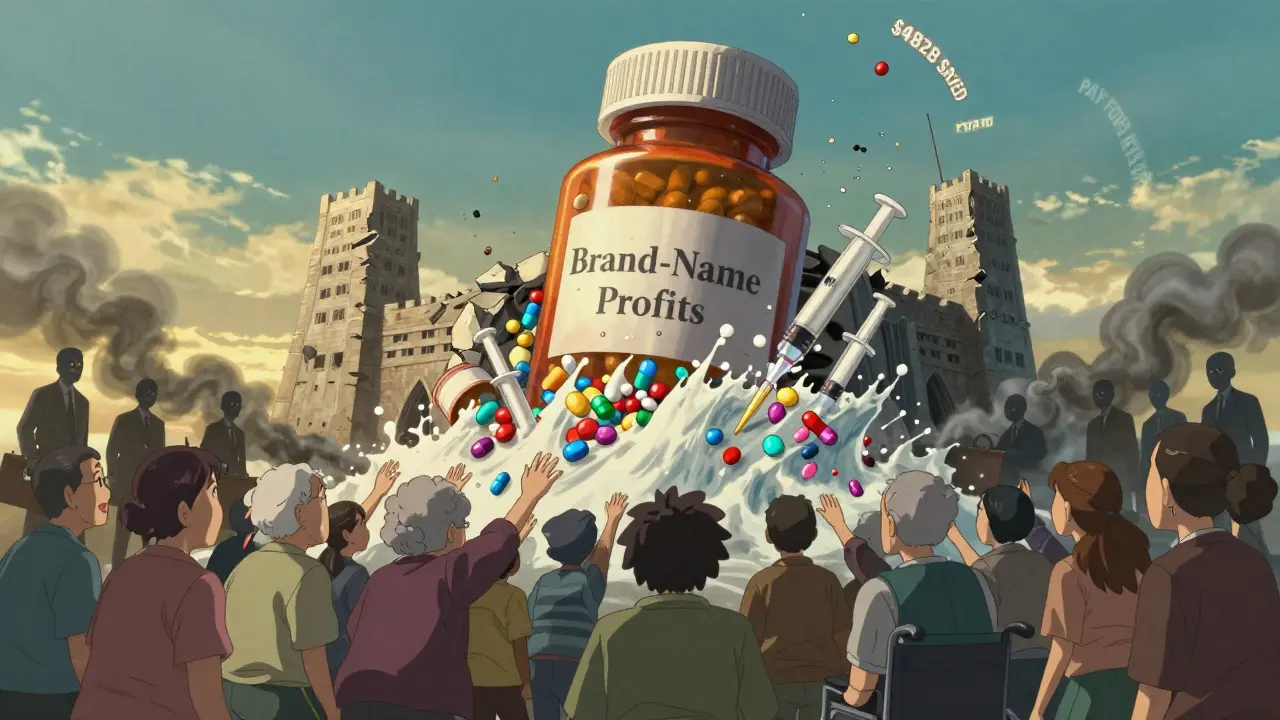
What’s Working: Medicare, Insulin, and Policy Shifts
Policy changes are finally starting to shift the needle. In 2025, Medicare capped insulin costs at $35 per month - a move that saved seniors an average of $240 per year. Eli Lilly, under public pressure, dropped its insulin price from $275 to $25 for non-branded versions. That’s not a fluke. It’s proof that when you apply pressure - whether from patients, politicians, or public scrutiny - prices can drop fast. The Inflation Reduction Act is expanding drug price negotiations. Starting in 2026, Medicare will negotiate prices for 30 drugs a year. Stanford Medicine estimates this could save $450 billion over a decade. If those same negotiated prices were extended to Medicaid and private insurance, total savings could hit $1 trillion. That’s not speculation - it’s a CBO projection backed by real data. And it’s not just about Medicare. The White House’s Most-Favored-Nation initiative struck deals with Eli Lilly and Novo Nordisk to cut the price of Ozempic and Wegovy from over $1,000 to $350 per month. These are not generics - but they show that even the most expensive drugs aren’t immune to price pressure.The Human Cost of High Prices
Behind every dollar saved is a person who didn’t have to choose between rent and medication. GoodRx found that nearly 1 in 12 Americans have medical debt from prescriptions. For seniors on Medicare, less than 1% of those who hit the catastrophic coverage phase use only generics - meaning most are still paying for expensive brand-name drugs. That’s not because they’re choosing them. It’s because they don’t know they can switch, or their doctor didn’t suggest it. Pharmacists often substitute generics automatically - but sometimes they don’t. A patient might get a different generic version of their blood pressure med every month, and the fillers can cause side effects. One patient told a pharmacist, “I feel dizzy every time I get a new bottle.” That’s not the drug’s fault - it’s the system’s. We need better tracking and consistency.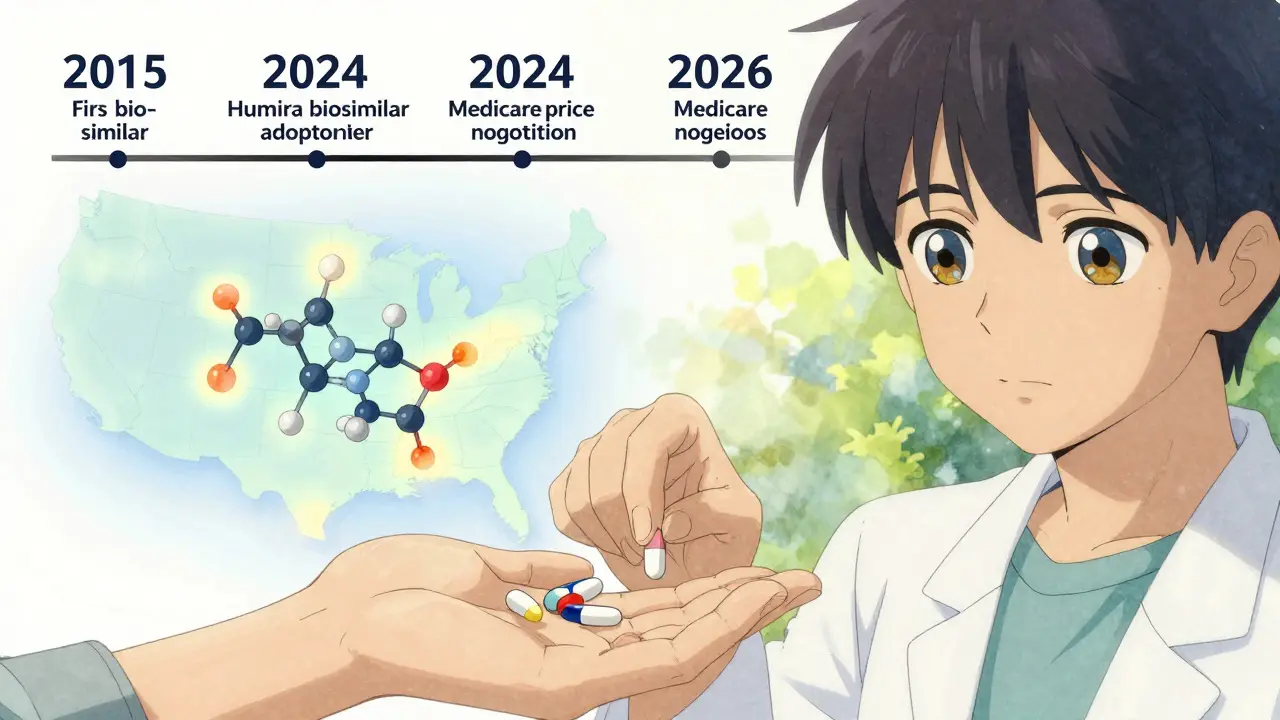
What’s Holding Back More Savings?
The biggest barrier isn’t science. It’s politics and profit. The pharmaceutical industry spent over $300 million lobbying Congress in 2024 alone. That’s more than any other industry. Meanwhile, generic manufacturers - who could be the heroes of cost control - are often small, underfunded, and buried under regulatory red tape. The FDA issued 1,247 Form 483 observations in 2024 - warning letters for manufacturing issues - mostly targeting generic drug plants. That’s not because generics are unsafe. It’s because they’re made in high-volume, low-margin facilities under intense pressure to cut costs. Fixing this requires investment, not punishment. And then there’s the lack of public awareness. Most people don’t know that their $100 prescription could be $10. Or that biosimilars exist. Or that their doctor can prescribe a generic without even asking. Education is missing.Where Do We Go From Here?
The data is clear: generics and biosimilars are the most effective tools we have to control drug costs without sacrificing care. The savings are real, measurable, and massive. But they won’t happen on their own. We need three things:- Stronger enforcement against pay-for-delay deals - with real penalties.
- Faster approval for biosimilars, with clearer pathways for manufacturers to enter the market.
- Public education so patients know they have the right to ask for a generic, and pharmacists know they have the power to switch.
Are generic drugs as safe and effective as brand-name drugs?
Yes. The FDA requires generic drugs to have the same active ingredient, strength, dosage form, and route of administration as the brand-name version. They must also meet the same strict manufacturing standards. Studies show generics work just as well - and are just as safe. The only differences are in inactive ingredients like color or fillers, which don’t affect how the drug works in your body.
Why do some people say generic drugs don’t work as well?
Sometimes, it’s not the drug - it’s the switch. If you’re switched between different generic versions of the same drug, the inactive ingredients (like fillers or dyes) can vary. For most people, this doesn’t matter. But for those with sensitivities or complex conditions, even small changes can cause side effects like nausea or dizziness. Always tell your doctor or pharmacist if you notice a change in how you feel after switching generics.
Can I ask my doctor to prescribe a generic drug?
Absolutely. In fact, most doctors automatically prescribe generics unless there’s a specific medical reason not to. If you’re unsure, just ask: “Is there a generic version available?” or “Would a generic work for me?” Many insurance plans even require generics unless your doctor writes “dispense as written” on the prescription.
What’s the difference between a generic and a biosimilar?
Generics are exact copies of small-molecule drugs - like pills for blood pressure or cholesterol. Biosimilars are copies of complex biologic drugs - like injections for arthritis or diabetes - made from living cells. They’re not identical, but they’re highly similar and work the same way. Biosimilars are harder and more expensive to make, but they still cost 80-90% less than the original biologic.
Why aren’t more biosimilars available in the U.S.?
Because brand-name companies use legal and financial tactics to delay them - like patent thickets and pay-for-delay deals. Plus, the approval process is slow, and many manufacturers don’t invest in biosimilars because the market is uncertain. Right now, 90% of biologics set to lose patents in the next decade have no biosimilar in development. That’s a $234 billion gap in potential savings.
How much can I save by switching to a generic drug?
On average, you save 80-90% - sometimes more. A brand-name statin might cost $200 a month. The generic? $10. For insulin, the difference can be $250 a month. If you take multiple prescriptions, switching to generics can cut your annual drug bill by hundreds or even thousands of dollars. Always check with your pharmacist or use tools like GoodRx to compare prices before filling a prescription.
Blow Job
December 24, 2025 AT 06:54Just got my generic metformin for $4 instead of $150. I could’ve bought a new laptop with what I saved this year. People don’t get it-this isn’t magic, it’s math.
Stop letting Big Pharma laugh all the way to the bank while you skip doses.
Christine Détraz
December 24, 2025 AT 09:21I switched my dad to generic lisinopril last year. He’s 72, on fixed income, and used to cry in the pharmacy aisle because he couldn’t afford it. Now he takes it without thinking twice. It’s not glamorous, but it’s life-changing.
And yeah, I know some people say generics don’t work-but if your blood pressure’s stable and you’re not vomiting every morning, maybe it’s working just fine.
Ajay Sangani
December 25, 2025 AT 18:06you kno wthi s is not just about money right? its about dignity. when you can afford to breathe without choosing between food and inhalers… that’s not a policy win. that’s a human win.
why do we treat health like a luxury? we are all going to get sick. someday. maybe even you.
and yet we let corporations decide who lives and who just… manages.
Pankaj Chaudhary IPS
December 26, 2025 AT 13:02India produces over 60% of the world’s generic drugs. We understand the value of accessibility. The U.S. system is not broken-it was designed this way. Profit before people.
When I worked in a rural clinic in Bihar, we gave out generic antibiotics for less than the cost of a bus ticket. No one died because the pill was cheaper. They lived because it was available.
Stop romanticizing corporate patents. They are not innovation. They are rent-seeking.
Aurora Daisy
December 27, 2025 AT 03:58Oh wow, a 90% savings? How dare they. Next they’ll tell us oxygen is free in the atmosphere and we should all just breathe.
Meanwhile, my insurance still won’t cover my $1,200 migraine med even though the generic exists. But sure, let’s pat ourselves on the back for being ‘smart’ consumers while the system rots.
Paula Villete
December 29, 2025 AT 00:10my pharmacist switched me to a generic version of my antidepressant and i felt like i was drowning in a sea of glitter glue for two weeks.
yeah it’s the same active ingredient. but the fillers? totally different. now i only take the same brand of generic. no more roulette.
also-why does no one talk about how the FDA lets manufacturers change fillers without telling you? that’s not transparency. that’s negligence.
Georgia Brach
December 30, 2025 AT 14:41Let’s not pretend this is about patient care. It’s about market share. Generic manufacturers are just as profit-driven-they just have lower overhead and no R&D to recoup.
The real problem? The FDA approval process for biosimilars is a bureaucratic nightmare designed to protect incumbents under the guise of ‘safety.’
And don’t get me started on how pharmacies get paid more to push brand-name drugs through rebates. It’s not a free market. It’s a rigged casino.
Katie Taylor
December 30, 2025 AT 22:22I used to think generics were ‘good enough.’ Now I know they’re BETTER. My mom was on $800/month biologics. Now she’s on a biosimilar for $120. She’s alive. She’s working. She’s not in debt.
If you’re still buying brand-name because ‘it’s more reliable,’ you’re not being cautious-you’re being manipulated.
Ask your pharmacist. Ask your doctor. Demand the cheaper option. It’s your right. Stop letting them guilt you into paying more.
Isaac Bonillo Alcaina
December 31, 2025 AT 09:47You people are delusional. Generics are fine for the poor. But what about the quality? The purity? The consistency?
I’ve seen patients on generics who had seizures because of impurities. You think the FDA checks every batch? They don’t. They inspect one plant in China every five years.
And biosimilars? They’re not even close to the original. You’re playing Russian roulette with your immune system.
Don’t confuse cost-cutting with healthcare. You’re trading safety for savings-and someone’s going to die because of it.
suhani mathur
January 2, 2026 AT 08:09My cousin in Delhi gets her insulin for $3 a vial. Here? $120. Same drug. Same factory (yes, Eli Lilly makes both).
Why? Because in the U.S., we pay for the marketing, the lobbying, the fancy ads on TV.
Stop pretending this is about science. It’s about who has the most lobbyists.
And if your doctor won’t prescribe a generic? Find a new one. They’re not your friend-they’re paid to push what earns them kickbacks.
Diana Alime
January 3, 2026 AT 06:47i just found out my blood pressure med is generic and i’ve been paying $140 for it for 3 years.
it’s $7 now.
i’m crying in the pharmacy.
why didn’t anyone tell me?
why did i have to google it myself?
why is this so hard?
why is my life this complicated just to stay alive?
Chris Buchanan
January 3, 2026 AT 20:26Let me tell you about my friend who got a generic version of her asthma inhaler. She went from $500/month to $25. She started running again. Got a promotion. Went on vacation.
That’s not a drug change. That’s a life change.
And yet, 70% of patients don’t even know they can ask for generics. Pharmacists? They’re supposed to switch automatically-but most don’t, because they get paid less.
We need a system that rewards switching, not sticking with the expensive junk.
Also, biosimilars are coming. They’re real. They work. Stop acting like they’re sci-fi.
John Pearce CP
January 5, 2026 AT 05:13The U.S. spends more on pharmaceuticals than the next 10 countries combined. And yet, we have the worst outcomes in the OECD. This isn’t capitalism. It’s feudalism with corporate logos.
Generics are not the solution-they are the symptom of a system that commodifies human survival. The real problem is the patent monopoly system, which grants 20 years of monopoly pricing on life-saving drugs.
Until we dismantle the entire structure of pharmaceutical IP, we are merely rearranging deck chairs on the Titanic.
Payson Mattes
January 5, 2026 AT 20:11Did you know the FDA gets its funding from the drug companies they’re supposed to regulate? That’s right. The same companies pay to have their drugs approved.
And the biosimilar delay? That’s not legal trickery-it’s a secret deal between the FDA, the big pharma CEOs, and the White House. They’re all in on it.
That’s why your insulin is still $300. That’s why your asthma inhaler costs $600.
They don’t want you to know. But now you do. And that’s why they’re watching you right now.
Bhargav Patel
January 6, 2026 AT 06:14The economic logic of generics is irrefutable. Yet, the cultural resistance to them reveals a deeper pathology: the American belief that cost correlates with quality. A cheaper pill cannot be as good as an expensive one-this is a myth, not a medical truth.
When a society equates price with virtue, it becomes incapable of rational health policy. We worship the brand, not the molecule.
It is not the science that must change. It is the epistemology of value.
Blow Job
January 6, 2026 AT 23:03Just saw someone say biosimilars are unsafe. Bro, if you’re scared of a drug that’s 90% cheaper and works the same way, you’re not being careful-you’re being scammed.
I’ve been on three different generics for my thyroid. No issues. No seizures. No glitter glue.
Stop letting fear-mongering keep you poor.