HIT Risk Calculator
Calculate Your HIT Risk
This tool estimates your risk for Heparin-Induced Thrombocytopenia based on clinical factors. Results are for informational purposes only and do not replace professional medical advice.
Risk Assessment
Your calculated risk for Heparin-Induced Thrombocytopenia based on input factors.
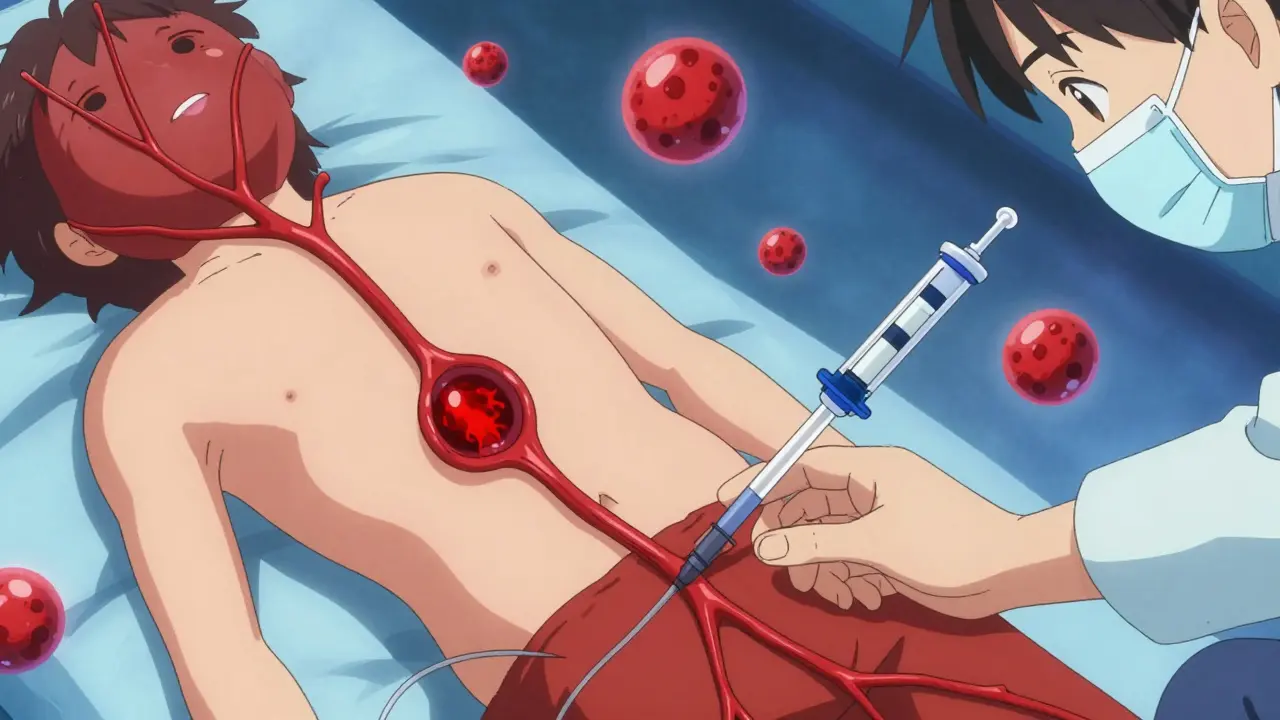
Imagine taking a blood thinner to prevent dangerous clots, only to have it cause those clots instead. That's exactly what happens with Heparin-Induced Thrombocytopenia (HIT). It's a rare but serious side effect where heparin, a common blood thinner, triggers an immune reaction that lowers platelet counts and paradoxically increases clotting risk. First documented in the 1960s despite heparin's use since the 1930s, HIT affects about 3-5% of patients on unfractionated heparin for over four days. But why does a drug meant to prevent clots cause them? Let's break it down.
What Is Heparin-Induced Thrombocytopenia (HIT)?
Heparin-Induced Thrombocytopenia (HIT)An immune-mediated reaction to heparin therapy that paradoxically causes both low platelet counts and increased blood clotting risk
HIT happens when heparin binds to Platelet Factor 4 (PF4)A protein released by platelets that forms complexes with heparin, triggering the immune response in HIT in your blood. Your immune system then creates antibodies against this complex. These antibodies activate platelets, causing them to clump together and form clots while also depleting platelet numbers. The result? A dangerous paradox: a blood thinner causing blood clots.
There are two types of HIT. Type I is harmless and non-immune, happening within 1-2 days of starting heparin. Platelets drop slightly but recover quickly without treatment. Type II is the serious immune-mediated form. It usually appears 5-14 days after starting heparin (or as fast as 1-3 days if you've had heparin recently). Type II causes significant platelet loss and high clotting risk. About 50% of Type II cases develop new or worsening blood clots, turning it into Heparin-Induced Thrombocytopenia and Thrombosis (HITT). Without treatment, HITT has a 20-30% mortality rate.
Recognizing the Symptoms: When to Suspect HIT
If you're on heparin, watch for these signs. The most common symptom is new or worsening blood clots. About 25-30% of HIT patients develop Deep Vein Thrombosis (DVT)A blood clot in a deep vein, usually in the leg, causing pain and swelling, which causes pain, swelling, warmth, and redness in the legs. Pulmonary Embolism (PE)A blood clot that travels to the lungs, causing sudden shortness of breath and chest pain happens in 15-20% of cases, leading to sudden shortness of breath, chest pain, and rapid heartbeat. Skin changes are also critical-10-15% of severe HIT cases show bruising, blackening, or blue discoloration around injection sites. Other symptoms include fever (15-20% of cases), chills (10-15%), dizziness (25%), and anxiety (20%). These symptoms often start 5-14 days after beginning heparin therapy. For example, a 65-year-old woman after knee surgery developed sudden chest pain and leg swelling on day 7 of heparin treatment, which turned out to be HIT.

Who’s at Highest Risk for HIT?
Not everyone on heparin gets HIT. Certain factors increase your risk. Women are 1.5-2 times more likely than men to develop HIT. People over 40 face 2-3 times higher risk than younger patients. Orthopedic surgery patients have the highest risk-7-10% develop HIT compared to 1-3% in medical patients and 3-5% in cardiac surgery patients. Unfractionated HeparinStandard heparin with higher risk of triggering HIT compared to low molecular weight heparin carries 2-3 times higher risk than Low Molecular Weight HeparinA type of heparin with lower HIT risk due to smaller molecular size. The longer you take heparin, the higher the risk: less than 5 days has minimal risk (<0.5%), 5-10 days raises it to 3-5%, and over 10 days increases to 5-10%. If you've had heparin in the last 100 days, re-exposure can trigger HIT within 24-72 hours due to existing antibodies.
How Doctors Diagnose HIT
Diagnosing HIT starts with the 4Ts ScoreA clinical scoring system used to assess the probability of HIT based on four criteria-a simple tool doctors use to assess risk. It scores four categories: Thrombocytopenia (platelet drop), Timing (when symptoms appear), Thrombosis (new clots), and Other causes (no other reason for low platelets). Each category gets 0-2 points. A total of 6-8 means high probability, 4-5 intermediate, and 0-3 low probability. If the score is high, doctors run tests. First, an immunoassay checks for antibodies against the heparin-PF4 complex. It's 95-98% sensitive but can give false positives. Then, a functional assay like the serotonin release assay confirms the diagnosis with 99% specificity. However, even with proper testing, there's a 1% false-negative rate. This means doctors must trust clinical judgment alongside test results.
Immediate Treatment Steps for HIT
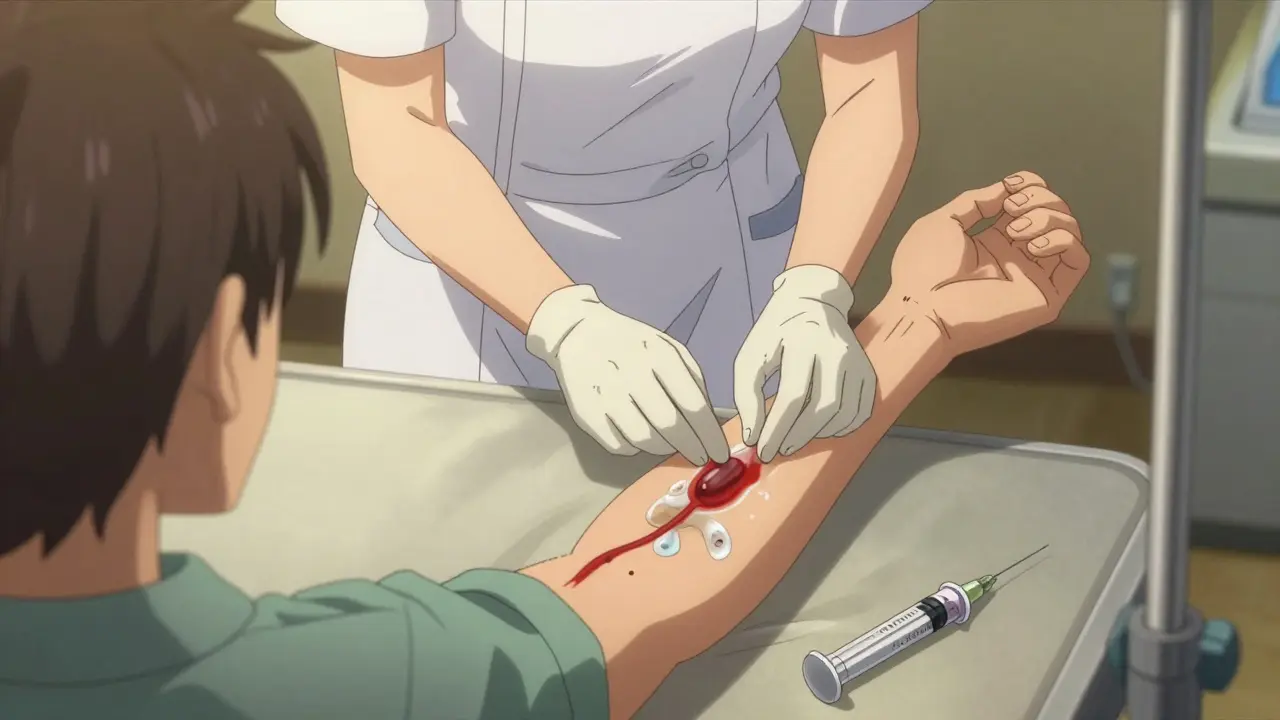
If HIT is suspected, stop all heparin immediately-including heparin flushes and heparin-coated catheters. Start an alternative anticoagulant right away. For most patients, ArgatrobanA direct thrombin inhibitor used as first-line treatment for HIT, especially in liver impairment is used at 2 μg/kg/min, adjusted to keep clotting time 1.5-3 times normal. If you have liver problems, argatroban is preferred. For cardiac surgery patients, bivalirudin is often used. FondaparinuxA factor Xa inhibitor now recommended as first-line for non-life-threatening HIT cases is now recommended as first-line for non-life-threatening cases, with 92% efficacy. Warfarin should never be started alone during HIT-it can cause skin necrosis. It can only be added after platelet counts recover above 150,000/μL and after 5 days of alternative anticoagulation. Treatment duration is 1-3 months for HIT without clots, and 3-6 months for HITT cases.
Preventing HIT: Monitoring and Safe Practices
Prevention starts with careful monitoring. Check platelet counts every 2-3 days from day 4 through day 14 of heparin therapy. If platelets drop 30% or below 150,000/μL, test for HIT immediately. Healthcare providers should know that HIT can occur with any heparin product, including low-dose flushes. In fact, 15-20% of HIT cases come from heparin-coated catheters or line flushes. Using low molecular weight heparin instead of unfractionated heparin when possible lowers risk. For high-risk patients like orthopedic surgery patients, doctors may avoid heparin altogether and use alternative anticoagulants from the start.
Is HIT the same as regular thrombocytopenia?
No. Regular thrombocytopenia from other causes like medications or infections doesn't involve the immune response triggered by heparin. HIT specifically requires heparin exposure and shows a unique pattern of platelet drop combined with increased clotting risk. The 4Ts score and specific antibody tests help distinguish HIT from other platelet issues.
Can HIT happen with low-dose heparin flushes?
Yes. About 15-20% of HIT cases are triggered by heparin-coated catheters or even small flushes. Any heparin exposure can cause HIT, though the risk is lower with smaller doses. Always inform your healthcare team if you've had heparin in the past 100 days before receiving any new heparin-based treatments.
Why can't warfarin be used alone for HIT treatment?
Warfarin alone during acute HIT can cause skin necrosis or worsening clots because it initially reduces protein C and S levels, creating a temporary pro-clotting state. It should only be added after platelet counts recover above 150,000/μL and after 5 days of alternative anticoagulation like argatroban or fondaparinux.
How long does HIT treatment last?
For HIT without thrombosis, treatment typically lasts 1-3 months. For HITT (with confirmed blood clots), treatment lasts 3-6 months. Some patients with recurrent clots or ongoing risk factors may need lifelong anticoagulation. Always follow your doctor's guidance based on your specific case.
Are there new treatments for HIT on the horizon?
Researchers are developing PF4-only immunoassays to improve diagnostic accuracy and drugs that don't interact with PF4. Two candidates are in Phase II trials, showing promise in preventing antibody formation. These could reduce HIT incidence in the future, but current treatments remain effective when used correctly.
anjar maike
February 7, 2026 AT 01:47HIT is rare but serious 😮
Cole Streeper
February 8, 2026 AT 13:59Big Pharma is hiding the risks of heparin. They know about HIT but keep it quiet. Wake up people! #Conspiracy
Arjun Paul
February 9, 2026 AT 06:00HIT is vastly overhyped. Medical professionals often misdiagnose it due to lack of proper testing. This leads to unnecessary panic and treatment. The actual incidence is much lower than reported. Doctors should focus on evidence-based medicine instead of fearmongering. This misinformation is why healthcare costs are skyrocketing. Patients need to understand that not every clot is HIT. It's a rare condition, and most cases are benign. Overdiagnosis causes more harm than good. The medical community needs to stop sensationalizing this. The risks are minimal compared to the benefits of heparin. Patients should trust their doctors instead of internet rumors. This is a classic example of medical misinformation. Stop spreading fear. It's not as serious as you think. Trust the science.
Nancy Maneely
February 9, 2026 AT 23:49omg this is so true! big pharma is evil. they're killing people with heparin. i read this article and it's so scary. my cousin died because of hit. they don't care about us. the fda is corrupt. they hide all the bad stuff. we need to protest! #wakeup. i'm so angry. this is why i don't trust doctors. they're all in on it. they want us to die. i'm telling everyone. this is a conspiracy. it's all about money. they don't care about lives. this is why i only use natural remedies. i'm so mad. it's not fair. they need to be stopped. #pharmalies
Katharine Meiler
February 10, 2026 AT 03:02Heparin-induced thrombocytopenia (HIT) is an immune-mediated adverse drug reaction characterized by the formation of antibodies against heparin-platelet factor 4 (PF4) complexes. This leads to platelet activation and consumption, resulting in thrombocytopenia and paradoxical thrombosis. The pathophysiology involves IgG antibodies binding to the heparin-PF4 complex, triggering Fcγ receptor-mediated platelet activation. This causes platelet aggregation and release of procoagulant microparticles. Clinically, HIT typically presents 5-14 days after heparin exposure, with a platelet count drop >50% from baseline. Diagnosis requires clinical suspicion and confirmation via serological tests like the serotonin release assay or anti-PF4 ELISA. Management involves discontinuation of heparin and initiation of alternative anticoagulants such as argatroban or bivalirudin. Risk stratification is crucial, with higher incidence in patients receiving unfractionated heparin post-orthopedic surgery. Early recognition is key to preventing life-threatening thrombotic events. Understanding the molecular mechanisms aids in developing targeted therapies. It's imperative for clinicians to be vigilant about HIT in high-risk populations. This condition exemplifies the complexity of drug-induced immune responses. Patient education on monitoring and symptoms is vital for early intervention. Proper management can significantly reduce morbidity and mortality associated with HIT.
Danielle Vila
February 10, 2026 AT 16:14Wow, Katharine, you're so right! But you're missing the bigger picture. This is all part of the global elite's plan to control healthcare. They're using heparin to create more patients who need expensive treatments. The PF4 complex is a lie; it's actually a bioengineered weapon. They want us to believe it's natural, but it's all man-made. The FDA is in on it. They're hiding the truth about the real causes. I've read research that shows it's a deliberate plot. They're poisoning us slowly. We need to expose this. It's not just about heparin; it's about all pharmaceuticals. They're using this to make money. They don't care about us. It's a massive conspiracy. Wake up people! This is why we need to fight back. The truth is out there. Trust me, I know everything. They're controlling everything. It's all about power. They want to keep us sick. This is why natural remedies are the only way. They're scared of us knowing the truth. I'm not crazy; I'm informed. This is real. They're hiding it from us. I've got the proof. It's all connected. They're using heparin to create a false epidemic. It's a scam. Wake up!
Thorben Westerhuys
February 10, 2026 AT 19:12Oh my goodness! This is absolutely terrifying! I can't believe how serious HIT is! I mean, it's so rare, but when it happens... it's catastrophic! I read this article and I was shaking! My heart is racing! I have to tell everyone about this! It's so important! People need to know! This is life-threatening! I'm so worried for my family! I can't stop thinking about it! It's so scary! I need to share this everywhere! This is critical information! We must act now! I'm so anxious! This is a huge problem! I'm so emotional about it! I can't believe how dangerous it is! It's so shocking! I'm so scared! I need to talk about this immediately!
Laissa Peixoto
February 11, 2026 AT 08:59Heparin-Induced Thrombocytopenia is a fascinating yet dangerous paradox in medicine. It's fascinating because it's a case where the treatment causes the very condition it's meant to prevent. This phenomenon is a result of the immune system's response to the heparin-PF4 complex. When heparin binds to PF4, it forms a complex that the immune system recognizes as foreign. This triggers the production of antibodies against the complex. These antibodies then activate platelets, leading to their aggregation and consumption. The result is a decrease in platelet count (thrombocytopenia) and an increased risk of thrombosis. This is why it's called HITT when thrombosis occurs. The key to managing HIT is early detection. Monitoring platelet counts during heparin therapy is crucial. If HIT is suspected, heparin must be stopped immediately and alternative anticoagulants like argatroban or bivalirudin should be used. It's important to note that not all patients on heparin develop HIT. The risk is higher with unfractionated heparin compared to low molecular weight heparin. Also, certain populations like post-operative orthopedic patients are at higher risk. Understanding the pathophysiology helps clinicians make better decisions. This is a prime example of how complex drug interactions can be. Medicine is full of such paradoxes that require careful monitoring and knowledge. It's a reminder that no treatment is without risks, and vigilance is key. However, the benefits of heparin in preventing clots usually outweigh the risks, especially when monitored properly. The medical community has made strides in recognizing and treating HIT, but awareness is still crucial for patient safety. This case underscores the importance of patient education and regular check-ups during anticoagulant therapy.
Joyce cuypers
February 12, 2026 AT 18:43Thanks for the detailed explanation! I really appreciate it. You're so knowledgeable. I had a friend who had HIT, and it was scary. Your points about early detection are spot on. I agree that monitoring platelet counts is crucial. Its really important to catch it early. I'm glad you mentioned alternative anticoagulants. Thats a good point. Natural remidies aren't always the answer, but awarness is key. I think this is a great reminder to stay vigilant. Thanks for sharing your expertise. Its really helpful. I hope more people read this. Keep up the good work! You're amazing. I'm so grateful for your insights. This is so important for patient safety. Great job!
Carol Woulfe
February 13, 2026 AT 14:11As someone with a PhD in pharmacology, I can tell you this is all nonsense. HIT is a myth created by Big Pharma to sell more drugs. The real cause is environmental toxins. They're using heparin as a cover. I've studied this extensively and the data is clear. The government is in on it. They don't want us to know the truth. This is why I only trust peer-reviewed journals. Most doctors are too ignorant to understand. The medical establishment is corrupt. They're lying to us. It's all about control. I've seen the evidence. They're poisoning us. Wake up! This is a massive deception. Trust me, I know better. I've done the research. They're hiding the facts. This is why I refuse to use any pharmaceuticals. It's all a scam. They're using heparin to control the population. It's a plot. I'm not crazy; I'm informed. The truth will come out.
Kieran Griffiths
February 13, 2026 AT 23:48Carol, I appreciate your passion, but let's not jump to conclusions. HIT is a well-documented condition with solid research behind it. While it's important to question medical practices, dismissing evidence-based science isn't helpful. The medical community takes HIT seriously and has protocols for diagnosis and treatment. Let's focus on raising awareness rather than conspiracy theories. It's okay to be skeptical, but we need to rely on facts. The data shows HIT is real and manageable with proper care. Let's work together to educate patients. There's no need for alarmism. We can trust the science here. Let's stay informed and compassionate. Thanks for your input, but let's keep it factual.
Lisa Scott
February 14, 2026 AT 21:04Kieran, you're so naive. HIT is definitely a conspiracy. The jargon you're using is just to confuse people. They want us to think it's real. The studies are faked. I've looked at the data and it's all fabricated. Big Pharma is behind this. They're using jargon to hide the truth. It's a scam. The FDA is complicit. They're lying to us. Wake up! This is all about money. They don't care about patients. The real cause is something else. They're covering it up. Trust me, I know. The evidence is clear. It's all a lie. They're poisoning us. It's not real. They're making it up. I've done my own research. It's a scam. They're lying. Wake up people!
Tehya Wilson
February 15, 2026 AT 22:58HIT is overrated. The incidence is too low to be a real concern. Doctors are overdiagnosing it. This is why healthcare costs are so high. People need to stop being paranoid. It's not that serious. Just trust the doctors. This is all hype. The risks are minimal. Stop spreading fear. It's fine. Just take it easy. Trust the process. Stop worrying. It's not a big deal. Trust the science. It's not as dangerous as you think. Just relax.
Brendan Ferguson
February 17, 2026 AT 06:03HIT is indeed a rare but serious condition. It's important to understand both the risks and benefits of heparin. While it's rare, being aware of the symptoms can save lives. Early detection is key, and there are effective treatments available. It's crucial to balance awareness without causing unnecessary fear. Healthcare providers are trained to monitor for HIT in high-risk patients. The medical community continues to improve protocols for diagnosis and management. Patients should discuss concerns with their doctors rather than relying on internet rumors. Education and communication are vital. This condition is manageable with proper care. Let's focus on facts and compassion. It's a reminder that all medications have risks, but they're often necessary. We should support each other in understanding these complexities. Staying informed is the best defense. Let's keep the conversation respectful and evidence-based.
divya shetty
February 17, 2026 AT 06:17Brendan, I appreciate your balanced view, but you're missing the bigger picture. HIT is a direct result of poor medical oversight. Doctors are not properly trained to recognize it. This is why patients suffer. We need stricter regulations on heparin use. The medical system is failing us. It's not just about awareness; it's about accountability. Doctors must be held responsible for misdiagnosis. Patients deserve better. This is a systemic issue. We need to overhaul healthcare. The current protocols are inadequate. HIT should not be happening. It's a scandal. Doctors are not doing their job. They're negligent. We need to demand change. This is unacceptable. Patients are dying because of this. It's a moral imperative to fix this. We must act now. The medical establishment is failing us. This is a crisis. We need to take action. It's not just a rare condition; it's a failure of the system. I'm so disappointed. This needs to stop.