
Think of your body as a busy kitchen. You’re cooking dinner (taking your prescription meds), and suddenly someone else walks in and starts tossing ingredients into the pot without asking. That’s what happens when you mix herbal supplements with prescription drugs. It sounds harmless because herbs are “natural,” but nature is powerful. Some plants contain chemicals that can cancel out your medicine, amplify its effects to dangerous levels, or cause entirely new side effects.
You might be surprised to learn that about half of adults in the U.S. take at least one supplement regularly. Among adults over 65, that number jumps to nearly 70%. Yet, only about a quarter of these people tell their doctors. This silence creates a dangerous gap. The National Center for Complementary and Integrative Health (NCCIH) reports that queries about herb-drug interactions have skyrocketed by 40% year-over-year recently. Why? Because more people are finding out the hard way that "natural" does not always mean "safe."
The Hidden Risks of Popular Herbs
Not all herbs are created equal when it comes to drug interactions. Some are relatively gentle, while others act like heavy machinery in your bloodstream. Let’s look at the big hitters-the ones most likely to cause trouble if you aren’t careful.
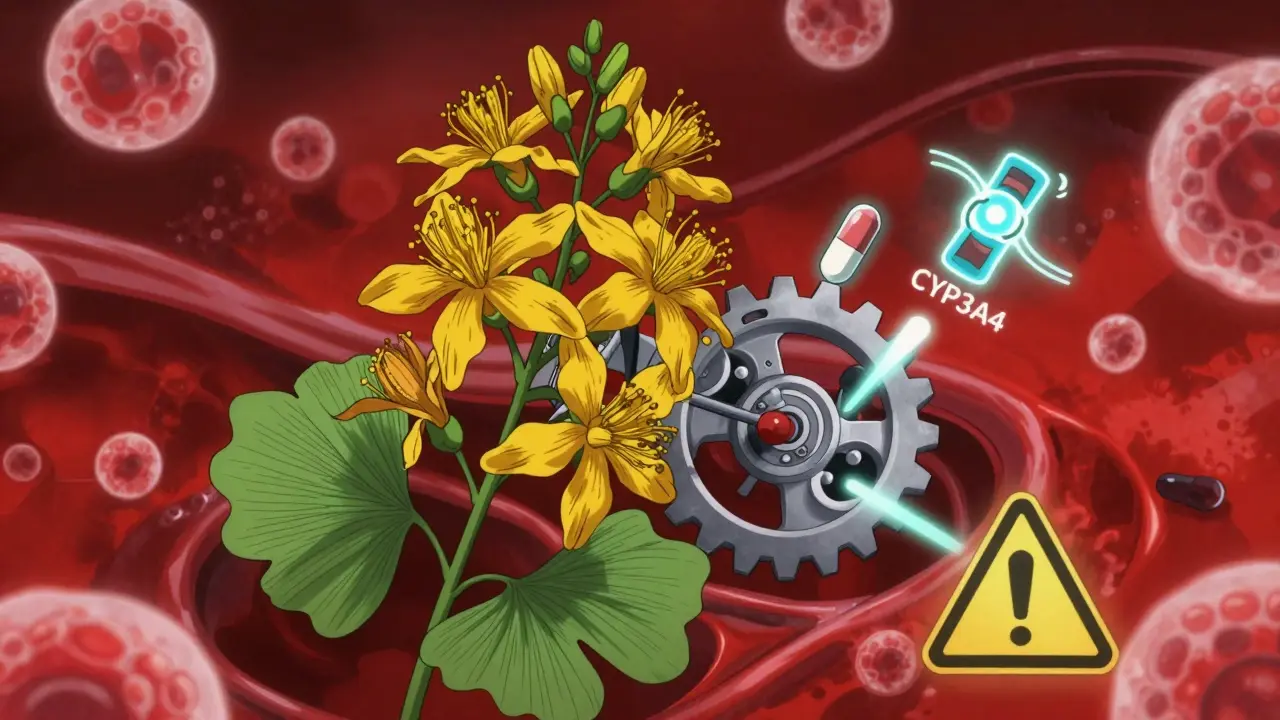
St. John’s Wort is a popular herbal remedy used primarily for mild depression and anxiety. While many reach for it to lift their mood, it is arguably the most problematic herb on the market regarding drug interactions. It acts as an inducer of liver enzymes, specifically CYP3A4, which means it speeds up the breakdown of other drugs in your body. According to the NCCIH, it significantly reduces plasma concentrations of cyclosporine by 50-60% within just two weeks. For organ transplant patients, this isn’t just a side effect; it’s a threat to life, potentially leading to organ rejection. It also slashes the effectiveness of oral contraceptives by 15-30%, which has led to numerous cases of unintended pregnancy documented in clinical forums.
Then there is Ginkgo biloba, often taken for memory support and cognitive function. Its main risk involves bleeding. Ginkgo thins the blood, and when combined with anticoagulants like warfarin (brand name Coumadin), the risk of major hemorrhage spikes. The Mayo Clinic documented 23 cases of severe bleeding between 2010 and 2020 involving this combination, including three fatalities. Even if you aren’t on warfarin, combining Ginkgo with aspirin or ibuprofen can increase your risk of bruising or internal bleeding.
Garlic supplements are widely used for heart health and immune support. While eating garlic is generally safe, concentrated supplements can interfere with HIV medications. A 2019 trial showed that garlic decreased the absorption of saquinavir by 51%. Furthermore, like Ginkgo, high-dose garlic can enhance the effects of blood thinners, raising the stakes for anyone managing clotting disorders.
Who Is Most at Risk?
If you fall into certain categories, the margin for error shrinks considerably. Age plays a huge role. As we age, our liver and kidney functions change, altering how we process both drugs and herbs. The Stony Brook Medicine study found that among Medicare beneficiaries, nearly 15% were using herbal supplements alongside prescription meds, with a significant portion engaging in risky combinations.
Medication complexity is another factor. If you take multiple prescriptions-a condition known as polypharmacy-you have more moving parts in your system. Each additional pill increases the probability of an interaction. People taking antidepressants, blood thinners, immunosuppressants, or HIV protease inhibitors need to be particularly vigilant. St. John’s Wort, for instance, affects over 60 different medications. Combining it with SSRIs (selective serotonin reuptake inhibitors) can trigger serotonin syndrome, a potentially fatal condition characterized by high fever, muscle rigidity, and tremors.
| Herbal Supplement | Prescription Drug Class | Potential Consequence |
|---|---|---|
| St. John’s Wort | SSRIs / Antidepressants | Serotonin Syndrome (life-threatening) |
| St. John’s Wort | Oral Contraceptives | Reduced efficacy, unintended pregnancy |
| Ginkgo biloba | Warfarin / Aspirin | Increased bleeding risk, hemorrhage |
| Hawthorn | Beta-blockers / Digoxin | Severe hypotension (low blood pressure) |
| Licorice Root | Diuretics | Potassium depletion, electrolyte imbalance |
| Goldenseal | CYP3A4 substrates (e.g., Midazolam) | Reduced drug clearance, toxicity |
Why Don’t Doctors Always Know?
This is the elephant in the room. In the U.S., dietary supplements are regulated under the Dietary Supplement Health and Education Act (DSHEA) of 1994. Unlike prescription drugs, supplements do not require pre-market approval for safety or efficacy. The FDA can only step in after harm has occurred. This regulatory gap means that product labels rarely list potential drug interactions.
Moreover, patients often assume that because they didn’t prescribe the herb, their doctor doesn’t need to know about it. A University of Michigan survey found that 76% of supplement users believed "natural means safe," and 63% were unaware that supplements could interact with medications. This mindset leads to the statistic that only 25% of users disclose their supplement use to healthcare providers. When you sit in that exam chair, your doctor is looking at your chart, not your bathroom cabinet. If you don’t mention the bottle of Ginkgo or the daily St. John’s Wort, they can’t protect you from the interaction.
How to Stay Safe: A Practical Checklist
You don’t need to stop taking herbs entirely, but you do need to manage them intelligently. Here is how to navigate this safely:
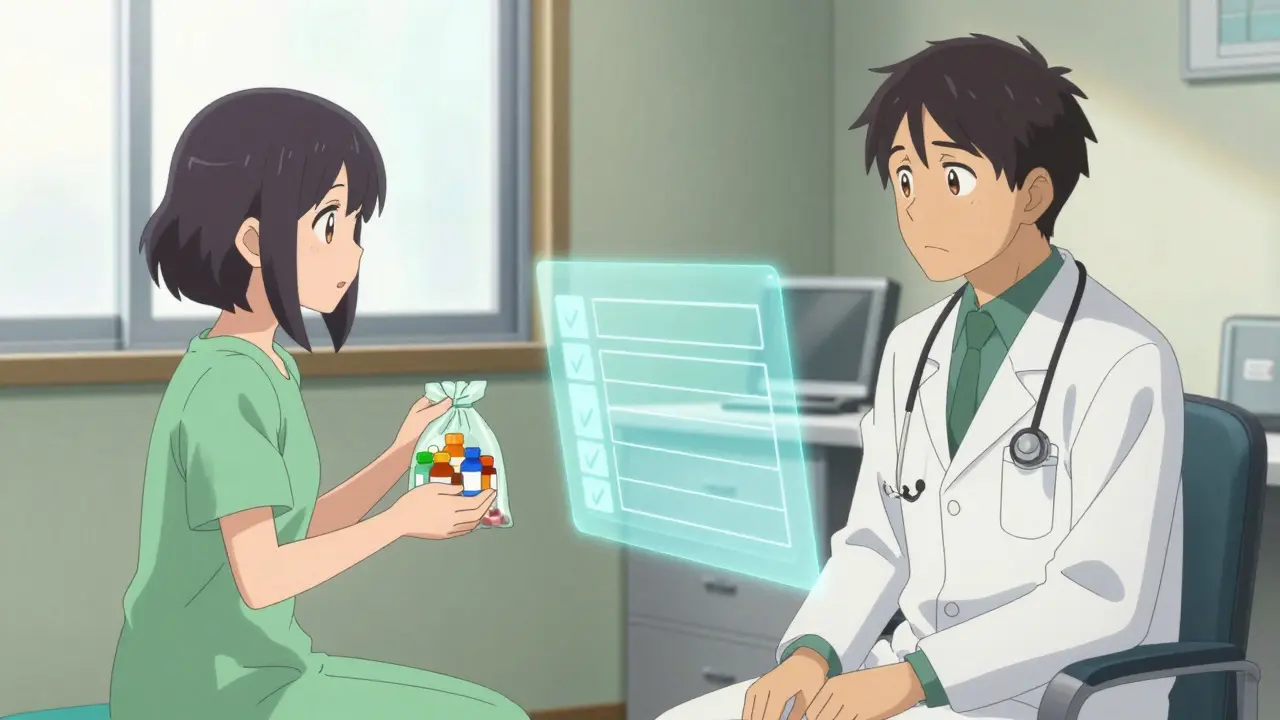
- Disclose Everything: Bring every bottle-prescription, over-the-counter, and herbal-to your next appointment. Be honest. Doctors are not there to judge your lifestyle choices; they are there to keep you alive. Knowing you take garlic pills changes how they monitor your blood thinner levels.
- Use Reliable Tools: Don’t rely on internet forums alone. Use the NCCIH’s Herb-Drug Interaction Checker. It classifies interactions by severity: Life-threatening, Significant, and Moderate. This tool is updated quarterly and provides evidence-based data rather than anecdotal guesses.
- Monitor Your Body: Know the warning signs. If you are on warfarin and start a new herb, watch for unusual bruising, nosebleeds, or dark stools. If you are on blood pressure medication and add hawthorn, monitor for dizziness or fainting. These are signals that an interaction is occurring.
- Space Out Doses: Sometimes, timing matters. While spacing out doses doesn’t eliminate all interactions (especially those involving liver enzymes like St. John’s Wort does), it can reduce the peak concentration of both substances in your bloodstream at the same time. Always ask your pharmacist if staggering doses is a viable strategy for your specific regimen.
- Check for Hidden Ingredients: Many multi-symptom products contain hidden herbs. ConsumerLab testing in 2022 found that 73% of "brain health" supplements contained Ginkgo, even if it wasn’t the first ingredient listed. Read the fine print on "proprietary blends."">
What About Cranberry and CoQ10?
Some interactions are controversial. Take cranberry juice. For years, patients on warfarin were told to avoid it due to fears of elevated INR (International Normalized Ratio, a measure of blood clotting). However, a 2020 meta-analysis in JAMA Internal Medicine reviewed 12 studies and found inconsistent results. Some patients saw slight INR elevations, while others saw no change. The current consensus is that moderate consumption is likely safe, but large quantities should be avoided until more data emerges.
Coenzyme Q10 (CoQ10) is another common supplement, often taken for heart health and energy. Because CoQ10 has a chemical structure similar to vitamin K, it may theoretically counteract warfarin’s effects. Mayo Clinic’s 2022 analysis suggests it could reduce warfarin’s anticoagulant effect by 25-30%. If you are considering adding CoQ10, your doctor will likely want to check your INR weekly during the transition period to ensure your blood remains properly thinned.
The Bottom Line
Your health is a complex ecosystem. Adding a new element, whether it’s a synthetic drug or a plant extract, shifts the balance. The goal isn’t to fear natural remedies but to respect their potency. By communicating openly with your healthcare team and staying informed about the specific herbs you use, you can enjoy the benefits of supplements without compromising the safety of your prescribed treatments. Remember, the most dangerous interaction is the one nobody knows about.
Can I take St. John's Wort with my antidepressant?
Generally, no. St. John's Wort interacts dangerously with most antidepressants, including SSRIs and SNRIs. This combination can lead to serotonin syndrome, a serious condition causing high fever, agitation, and muscle rigidity. The American Academy of Family Physicians explicitly advises avoiding this combination due to documented cases of severe adverse events.
Does Ginkgo biloba really increase bleeding risk?
Yes, especially if you are taking blood thinners like warfarin, aspirin, or clopidogrel. Ginkgo inhibits platelet aggregation, meaning your blood doesn't clot as easily. Studies show this can increase bleeding risk by up to 300% when combined with anticoagulants. If you are scheduled for surgery, you should stop taking Ginkgo at least two weeks prior.
Are all herbal supplements unsafe with prescription drugs?
No, not all herbs carry high risks. Supplements like milk thistle, black cohosh, and saw palmetto are generally considered lower risk for drug interactions according to Memorial Sloan Kettering Cancer Center's database. However, "low risk" does not mean "no risk," and individual reactions can vary. Always verify with your pharmacist.
How soon do herb-drug interactions happen?
It depends on the mechanism. Enzyme-inducing herbs like St. John's Wort may take one to two weeks to significantly alter drug levels in your blood. Direct pharmacodynamic interactions, such as Ginkgo increasing bleeding risk, can occur much faster, sometimes within days or even hours of starting the supplement.
Should I stop my prescription medication to take herbs instead?
Never stop prescribed medication without consulting your doctor. Switching abruptly can lead to withdrawal symptoms or disease progression. If you wish to incorporate herbs, discuss a supervised transition plan with your healthcare provider to ensure safety and efficacy.