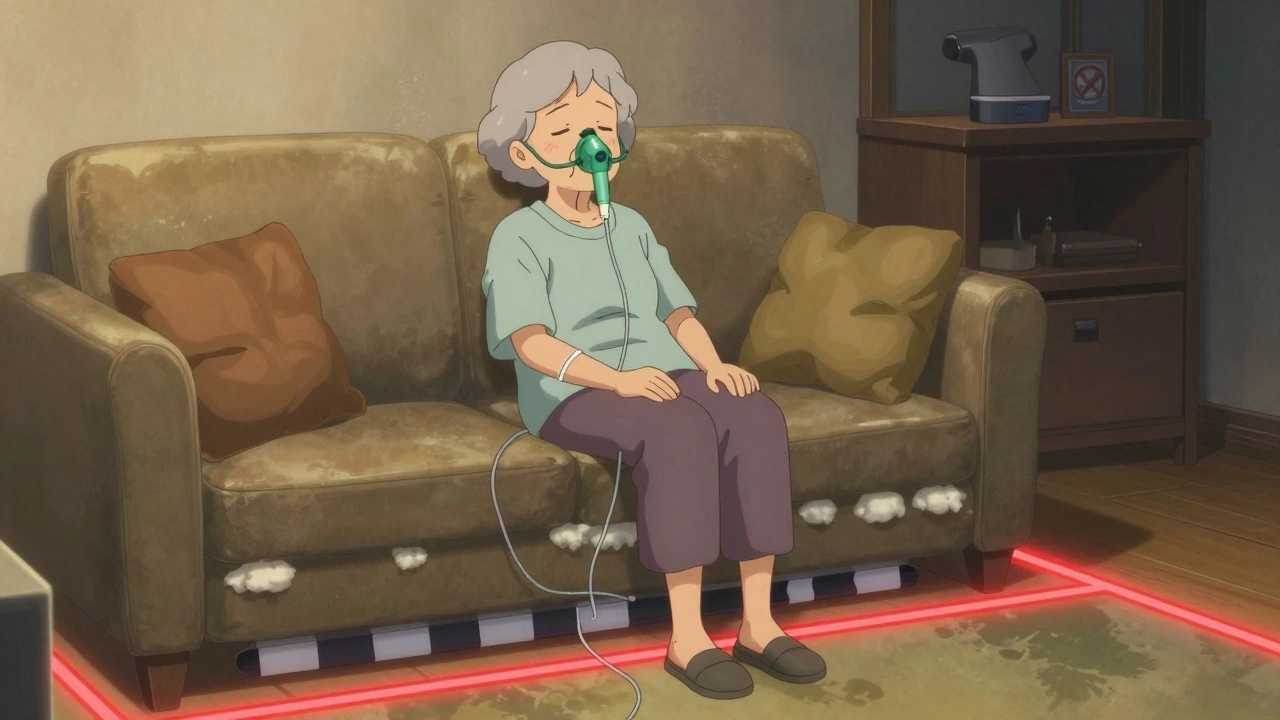
When you’re on home oxygen therapy, your life changes - not because oxygen is dangerous, but because it’s powerful. It keeps you breathing, moving, and living. But if you don’t treat it with respect, it can turn deadly. Every year, more than 2,400 home fires in the U.S. involve oxygen equipment. Most of them are preventable. This isn’t about fear. It’s about knowing what to do - and what not to do - so you stay safe and keep doing the things you love.
Why Oxygen Isn’t Flammable - But Still Causes Fires
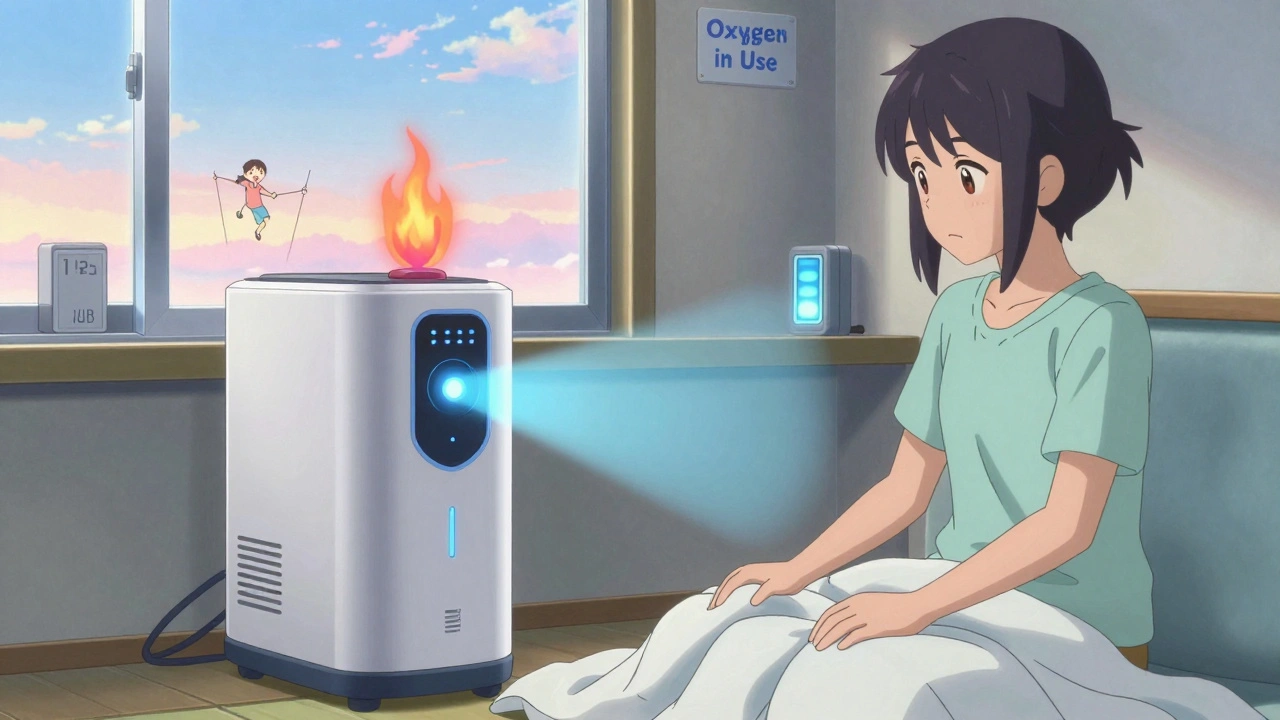
Oxygen itself doesn’t burn. But it makes everything else burn faster, hotter, and harder. Normal air is 21% oxygen. When you’re on therapy, the air around you can jump to 40%, 50%, even 100% oxygen near your nose or tubing. That’s like pouring gasoline on a spark. A cigarette, a spark from a sweater, or even a hot hair dryer can ignite a fire in seconds.
According to the National Fire Protection Association, 92% of oxygen-related deaths happen because someone smoked within 5 feet of their equipment. That’s not a myth. That’s data. And it’s not just cigarettes. Spilled hairspray, aerosol deodorant, or even static electricity from synthetic bedding can start a fire. One user on a COPD forum described how hairspray sprayed near tubing ignited in under a second. No flame. No warning. Just fire.
The Three Types of Oxygen Systems - And Their Hidden Risks
There are three main ways you get oxygen at home: concentrators, gas cylinders, and liquid oxygen. Each has pros and cons - and different dangers.
Oxygen concentrators plug into the wall and pull oxygen from the air. They’re quiet, don’t need refills, and have automatic shut-offs if oxygen purity drops. But they need electricity. If the power goes out, you’re out of luck - unless you have a backup battery. Medicare requires a 30-minute backup for covered devices. Place yours at least 6 inches from walls so air can flow. Don’t put it under a bed or behind curtains. And never, ever use it near a space heater or electric blanket.
Compressed gas cylinders (those metal tanks) are portable but risky. If the valve breaks off, the tank can shoot across the room at 150 mph. They also explode if left in a hot car or near a radiator. Temperatures above 125°F can turn them into bombs. And they’re the most common source of fires - 68% of all oxygen fires come from these tanks.
Liquid oxygen systems store oxygen as a super-cold liquid (-297°F). They’re great for mobility - you can get 40-60 hours of use on a full tank. But if it spills? It can freeze your skin on contact. And like gas tanks, they release oxygen gas quickly when opened - creating a high-risk zone. They’re heavier too. A portable unit can weigh 15-30 pounds, increasing fall risk for older users.
The 10-Foot Rule - And Why 5 Feet Isn’t Enough
You’ve probably heard “stay 5 feet away from flames.” That’s outdated. The American Thoracic Society’s 2021 fire simulations showed fires spread 3.7 times faster in oxygen-rich air. Their new recommendation? 10 feet from any heat source.
That means:
- No smoking - ever - inside your home. Even on the porch if you’re near open windows.
- No candles, fireplaces, or wood stoves within 10 feet.
- No space heaters, electric blankets, or heating pads near your oxygen setup.
- No hair dryers, electric razors, or curling irons within 3 feet. The FDA says 41% of oxygen fires involve these appliances.
- No oil-based lotions or aerosols near your nose. Even perfume can ignite.
Dr. Richard Hodder, former president of the American Thoracic Society, says: “If you’re not sure, step back. Ten feet is the new safety line.”
Bedding, Clothing, and Static Electricity - The Silent Threat
You might not think your sheets matter. But they do.
Static electricity from synthetic fabrics - polyester, nylon, acrylic - can spark at just 1,000 volts. You won’t feel it. But it’s enough to ignite oxygen. Johns Hopkins University found that 100% cotton bedding reduces this risk dramatically. Same goes for clothing. Wear cotton. Avoid wool sweaters or synthetic pajamas when using oxygen.
And don’t forget the carpet. Rubber-soled shoes on synthetic carpet build up static. Walk barefoot or wear leather-soled shoes. Use a humidifier if your home is dry - moisture cuts static buildup.

Keeping Oxygen Moving Without Tripping Over It
Most people on oxygen spend their days moving - to the kitchen, the bathroom, the couch. But oxygen tubing is a trip hazard. A 2023 survey found 76% of users have tripped over it. Falls mean injuries. Injuries mean hospital trips. And that’s the opposite of what oxygen therapy is supposed to do.
Here’s how to fix it:
- Use ceiling-mounted tubing systems. Mayo Clinic data shows they reduce falls by 43%.
- Secure tubing with Velcro straps to the back of chairs or along baseboards.
- Keep extra tubing coiled on a wheeled cart. Many users say this makes it easier to move around without dragging the machine.
- Never run tubing under rugs or across doorways. If you must cross a doorway, use a ramp cover.
Some companies now offer “Oxygen Safety Kits” from the American Lung Association. They include flame-resistant blankets, 10-foot zone markers, and even stickers for windows to warn firefighters. In a 2023 pilot program, 83% of users said these kits reduced their anxiety.
What to Do If You See Smoke or Fire
Act fast. Every second counts.
- Turn off the oxygen source immediately. If it’s a concentrator, unplug it. If it’s a tank, close the valve.
- Get out of the room. Don’t try to put out the fire yourself unless it’s tiny and you have a Class ABC fire extinguisher.
- Call 911. Tell them “oxygen fire” - that tells them to expect a fast-burning, high-risk situation.
- Don’t go back in. Even if the fire seems out, oxygen gas can linger and reignite.
Keep a fire extinguisher labeled ABC near your oxygen setup - but don’t rely on it. Your best tool is prevention.
Daily Maintenance - Keep It Clean, Keep It Safe
Dirty filters and clogged tubing aren’t just inefficient - they’re dangerous. A clogged filter forces the concentrator to work harder, overheating it. That’s a fire risk.
Here’s your simple checklist:
- Wash the air filter every 2-4 weeks. Use mild soap and water. Let it dry completely before putting it back.
- Check tubing weekly for cracks or stiffness. Replace it if it’s brittle.
- Keep the concentrator clean. Wipe dust off with a dry cloth. Never use cleaning sprays near the intake.
- Get professional servicing every 6 months. Even if it seems fine.
Medicare-certified suppliers are required to give you written safety instructions. But a 2022 audit found 31% of them didn’t. If you didn’t get a checklist, ask for one. Don’t assume they’ll tell you everything.
Traveling, Power Outages, and Emergency Prep
What if the power goes out? Or you need to go to the doctor?
For power outages: Make sure your concentrator has a backup battery. Medicare requires 30 minutes - but aim for 2 hours if you can. Charge it daily. Keep extra batteries on hand.
For travel: Use a portable concentrator approved by the FAA. Don’t rely on gas cylinders on planes - they’re banned. Liquid oxygen is allowed but must be in approved containers. Always carry a doctor’s note and your oxygen prescription.
Keep a list of emergency contacts: your oxygen supplier, your doctor, and your local fire department. Some fire departments now offer free home safety checks for oxygen users. Ask.
Technology Is Getting Smarter - But You Still Need to Be Vigilant
New devices are coming. Philips Respironics released a smart concentrator in 2023 that detects flames at 18 inches away and shuts off in under a second. It’s 99.2% accurate. The FDA approved it. But it’s not magic. It doesn’t replace your awareness.
Starting in 2025, Medicare will require all new oxygen equipment to shut off within half a second of flame detection. That’s huge. But it won’t stop you from lighting a cigarette. It won’t stop your cat from knocking over a tank. It won’t stop you from using a hair dryer too close.
Technology helps. But your habits save your life.
Final Thought: Oxygen Gives You Life - Don’t Let Fear Take It Away
People on home oxygen therapy live longer, feel better, and do more. They travel. They play with grandchildren. They garden. They cook. They live.
But it only works if you use it safely. This isn’t about following rules for the sake of rules. It’s about protecting the thing that lets you breathe. Every safety tip - from cotton sheets to the 10-foot rule - is there so you can keep doing what matters.
Ask your provider for a safety review. Watch the free online module from the American Association for Respiratory Care. Talk to other oxygen users on forums. You’re not alone. And with the right knowledge, you’re not at risk - you’re in control.
Can I smoke if I use oxygen therapy at home?
No. Smoking near oxygen equipment is the leading cause of oxygen-related fires and deaths. Even if you’re 5 feet away, oxygen can linger in the air and ignite instantly. The American Association for Respiratory Care reports that 92% of oxygen-related fatalities involve smoking within 5 feet. The only safe option is to quit smoking entirely. If you need help, ask your doctor about smoking cessation programs.
Is it safe to use an electric blanket with oxygen therapy?
No. Electric blankets generate heat and can create sparks, even when turned off. The FDA reports that 9% of oxygen fires involve space heaters and electric blankets. Oxygen makes any heat source far more dangerous. Use warm cotton blankets instead. Keep all heating devices at least 10 feet away from your oxygen setup.
How often should I clean my oxygen concentrator filter?
Clean the air filter every 2 to 4 weeks, depending on dust levels in your home. Wash it with mild soap and water, rinse thoroughly, and let it dry completely before reinstalling. A clogged filter reduces oxygen output and can cause the machine to overheat - increasing fire risk. Always follow your device’s manual, but when in doubt, clean it more often.
Can I use aerosol sprays like hairspray or deodorant while on oxygen?
Avoid aerosol sprays completely while using oxygen. Even a small spray near your tubing can ignite within a second. One user reported a hairspray accident that caused a fire in under 0.8 seconds. Use non-aerosol alternatives like pump sprays or roll-ons. Never spray near your oxygen equipment - even if you think you’re far enough away.
What should I do if my oxygen equipment stops working?
If your concentrator stops, check the power cord and filter first. If it’s a gas or liquid system, check for leaks or empty tanks. If you can’t fix it, call your oxygen supplier immediately. Keep a backup oxygen source on hand - like a portable tank - especially overnight. If you’re having trouble breathing, use your backup and call 911. Never wait to see if it starts working again.
Are there special safety rules for children or pets around oxygen?
Yes. Children and pets can accidentally knock over tanks, pull on tubing, or bring flammable items close. Keep oxygen equipment out of high-traffic areas. Use barriers or gates if needed. Teach children not to touch the equipment. Pets, especially cats, may sleep near the machine - move it to a quiet corner. Always supervise young children and animals when oxygen is in use.
Can I use oxygen therapy during a power outage?
Only if your concentrator has a backup battery. Medicare requires a minimum 30-minute battery for covered devices, but aim for longer. Charge your battery daily. Keep extra batteries charged and stored safely. If you don’t have a backup, you need a portable oxygen tank as a backup. Never rely on a concentrator without power - and always have a plan before the power goes out.
What should I tell firefighters if I have oxygen at home?
Tell them you’re on home oxygen therapy. Oxygen makes fires burn faster and hotter. Some fire departments offer free home safety checks for oxygen users. Consider placing a sticker on your front door that says “Oxygen in Use” so responders know immediately. This helps them act quickly and safely - and it could save your life.
Saket Modi
December 1, 2025 AT 21:49Anthony Breakspear
December 2, 2025 AT 09:28william tao
December 3, 2025 AT 05:25John Biesecker
December 4, 2025 AT 10:06Elizabeth Farrell
December 4, 2025 AT 18:43Paul Santos
December 5, 2025 AT 02:14Fern Marder
December 5, 2025 AT 13:36Chelsea Moore
December 6, 2025 AT 20:47John Morrow
December 8, 2025 AT 02:38Doug Hawk
December 8, 2025 AT 12:13Saravanan Sathyanandha
December 9, 2025 AT 21:19Genesis Rubi
December 11, 2025 AT 07:48Anthony Breakspear
December 12, 2025 AT 23:11