
When a generic drug hits the pharmacy shelf, you might assume it’s just a cheaper copy of the brand-name version. But behind that simple label is a rigorous scientific process designed to prove it works exactly the same way in your body. This process is called a bioequivalence study. It’s not guesswork. It’s not theory. It’s a tightly controlled clinical experiment that measures how your body absorbs and uses the drug-down to the last nanogram per milliliter of blood.
Why Bioequivalence Studies Exist
Before the 1980s, companies had to run full clinical trials to prove a generic drug was safe and effective. That meant millions of dollars and years of time. The U.S. Hatch-Waxman Act of 1984 changed everything. It created a shortcut: if you could prove your generic drug behaved the same in the body as the original, you didn’t need to repeat expensive clinical trials. The same rule applies across the European Union, Japan, Canada, and most other countries. The goal? Safe, affordable access to medicines. The FDA estimates generic drugs saved the U.S. healthcare system over $1.6 trillion between 2010 and 2019. But that savings only works if the generics are truly equivalent. That’s where bioequivalence studies come in.The Core Principle: Same Amount, Same Speed
A generic drug doesn’t need to look like the brand-name version. It can have different fillers, colors, or shapes. But it must deliver the same active ingredient into your bloodstream at the same rate and to the same extent. That’s the definition of bioequivalence. The two key numbers that matter are:- Cmax: The highest concentration of the drug in your blood after taking it. This tells you how fast the drug gets absorbed.
- AUC (Area Under the Curve): The total amount of drug your body is exposed to over time. This tells you how much of the drug gets absorbed overall.
The Standard Study Design: Crossover Trials
Most bioequivalence studies use a crossover design. That means each volunteer takes both the generic drug and the brand-name drug, but in a random order. One group gets the generic first, then the brand after a break. The other group gets the brand first, then the generic. This design cuts down on individual differences. If one person naturally absorbs drugs slowly, they’ll show that pattern for both versions, making the comparison fairer. Typically, 24 to 32 healthy adults participate. Sometimes more-up to 100-if the drug behaves very differently from person to person. These volunteers are carefully screened. No smokers. No major health issues. No medications that could interfere. They’re kept in a controlled clinical unit for the duration of the study.The Washout Period: Letting the Drug Clear Out
After taking the first drug, volunteers don’t just jump right into the second. They wait. This is called the washout period. It’s usually five times the drug’s elimination half-life-the time it takes for half the drug to leave the body. For a drug that clears in 8 hours, that’s 40 hours. For a slow-clearing drug like some antidepressants or anticonvulsants, it can be weeks. Get this wrong, and leftover drug from the first dose skews the results. One contract research organization reported a study costing $250,000 and three months of delay because the washout period was too short for a drug with a 72-hour half-life.
How Blood Samples Are Taken
Before the drug is given, a baseline blood sample is drawn. Then, after dosing, blood is taken repeatedly-usually at least seven times. The schedule isn’t random. It’s designed to capture the full absorption and elimination curve:- Just before dosing (time zero)
- One sample just before the expected peak concentration (Cmax)
- Two samples around the peak
- Three or more samples during the elimination phase
The Lab Work: LC-MS/MS and Precision
Measuring drug levels in blood isn’t like testing sugar in urine. The amounts are tiny-often nanograms per milliliter. That’s why labs use liquid chromatography-tandem mass spectrometry (LC-MS/MS). This method can detect a single molecule of a drug among millions of others in blood. The method must be validated to strict standards: accuracy within ±15% (±20% at the lowest detectable level), precision under 15% variability. If the lab’s method isn’t solid, the whole study fails. BioAgilytix’s 2023 white paper found that 22% of bioequivalence studies face delays due to analytical method problems, costing an average of $187,000 per delay.Statistical Analysis: The 90% Confidence Interval
The raw data-Cmax and AUC values for each volunteer and each drug-is log-transformed. Why? Because drug concentrations in blood don’t follow a normal distribution; they’re skewed. Log transformation makes the math work. Then, a statistical model called ANOVA is used. It accounts for differences between sequences (who took which drug first), periods (first vs. second dosing), and individual variability. The key output? The 90% confidence interval for the ratio of the geometric mean of the generic to the brand-name drug. If that interval falls entirely between 80% and 125% for both Cmax and AUC, the study passes. No exceptions. No rounding. No “close enough.”When the Standard Doesn’t Work
Not all drugs fit neatly into this model. Some are highly variable-meaning different people absorb them very differently. For these, regulators allow more complex designs:- Replicate crossover designs: Each subject takes the drug multiple times (e.g., test-reference-reference-test). This gives more data on variability.
- Reference-scaled average bioequivalence: Used by the FDA for drugs with high variability. The acceptance range expands slightly based on how variable the brand-name drug is.
- Parallel studies: Two separate groups, one gets the generic, the other the brand. Used only for drugs with half-lives longer than two weeks.
- Pharmacodynamic or clinical endpoint studies: For topical creams or inhalers, where measuring blood levels doesn’t reflect what’s happening at the site of action. Instead, researchers measure skin redness, lung function, or other direct effects.
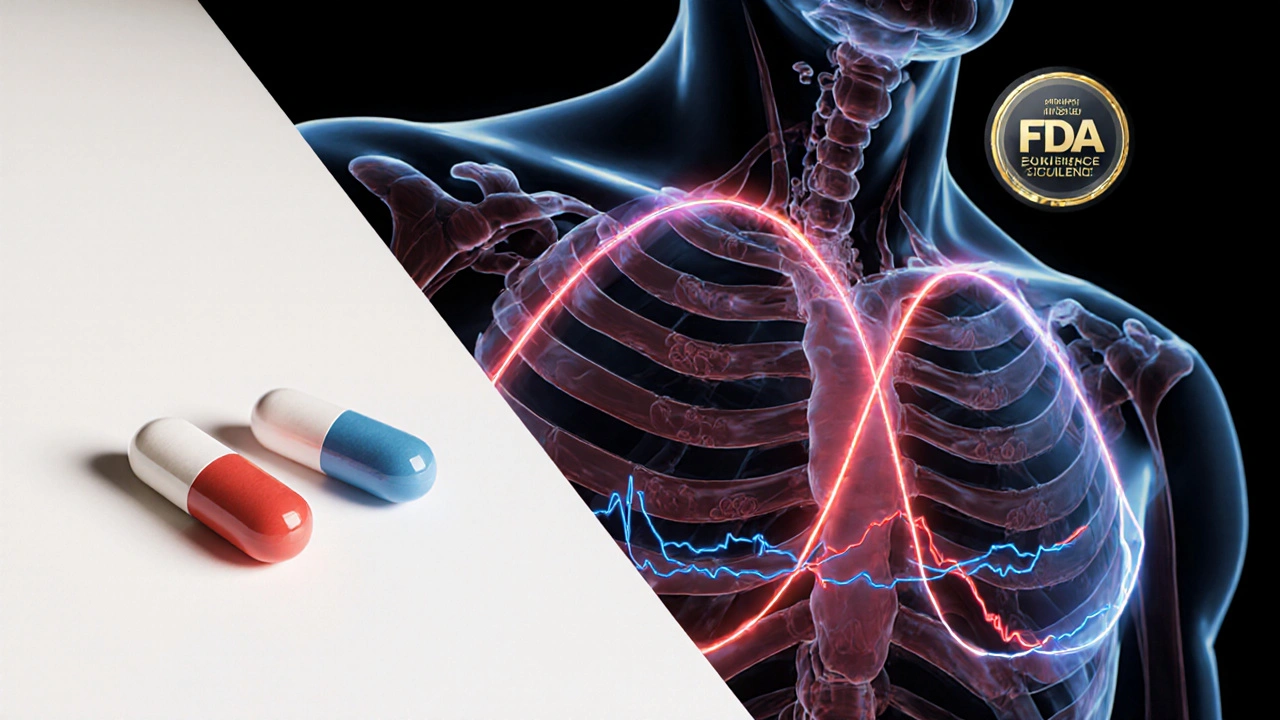
What Happens Before the Study Even Starts
A bioequivalence study doesn’t begin in the clinic. It begins months earlier with:- Reference product selection: Only one batch of the brand-name drug is used. Regulators require it to be from an intermediate dissolution profile-meaning not the fastest or slowest dissolving batch, but the middle one.
- Test product preparation: The generic must be made at commercial scale. At least 10% of a full production batch or 100,000 units, whichever is larger.
- Dissolution testing: The generic and brand are tested in simulated stomach fluids across pH levels 1.2 to 6.8. The dissolution profiles must match with an f2 similarity factor above 50. If they don’t, regulators will question whether the drug will behave the same in the body.
- Pilot studies: Many companies run small-scale versions first. Dr. Jennifer Bright, former director of the FDA’s Office of Generic Drugs, said pilot studies cut pivotal study failure rates from 35% to under 10%.
Common Pitfalls and Why Studies Fail
The FDA’s 2022 Bioequivalence Study Tips document breaks down why studies fail:- 45% fail due to inadequate washout periods
- 30% fail because sampling times were poorly planned
- 25% fail because the statistical analysis was wrong
Real-World Outcomes: Successes and Failures
Teva’s generic version of Januvio (sitagliptin) got approved in 2021 after a single successful study with 36 subjects. That’s efficient. Alembic Pharmaceuticals, on the other hand, had its generic version of Trulicity (dulaglutide) rejected in 2022 because Cmax values were inconsistent across multiple studies. The brand-name drug has a complex delivery system-injectable, long-acting. The generic couldn’t match its absorption profile. In 2022, the FDA approved 936 generic drugs based on bioequivalence data-98% of all generic approvals that year. That’s the power of this system. But behind every approval is a team of scientists, statisticians, and clinical staff working for months to get those numbers right.What’s Next for Bioequivalence?
The field is evolving. Modeling and simulation tools like PBPK (physiologically based pharmacokinetic modeling) are being used more often to predict how a drug will behave without running full studies. The FDA approved 27% of generics in 2022 using biowaivers-essentially skipping human studies for simple, highly soluble drugs based on BCS classification. There’s also growing pressure to expand these approaches to complex products: inhalers, injectables, and topical gels. The EMA and FDA are working on new guidance. The goal isn’t to weaken standards-it’s to make them smarter. Faster. Less wasteful. But for now, the gold standard remains the same: real people. Real blood samples. Real numbers. And a 90% confidence interval that must fall between 80% and 125%.That’s how we know your generic pill won’t just look different-it will work the same.
What is the main purpose of a bioequivalence study?
The main purpose is to prove that a generic drug delivers the same amount of active ingredient into the bloodstream at the same rate as the brand-name drug. This ensures the generic will have the same therapeutic effect and safety profile, allowing it to be safely substituted without clinical trials.
How many subjects are typically needed for a bioequivalence study?
Most studies use 24 to 32 healthy volunteers. For drugs with high variability, studies may require 50 to 100 subjects using replicate crossover designs. The number depends on the drug’s pharmacokinetic behavior and regulatory guidelines.
What are Cmax and AUC, and why do they matter?
Cmax is the highest concentration of the drug in the blood, showing how quickly it’s absorbed. AUC measures the total drug exposure over time, showing how much is absorbed overall. Both must fall within 80-125% of the brand-name drug’s values for bioequivalence to be established.
Why is a washout period necessary between doses?
The washout period allows the first drug to fully clear from the body-typically five half-lives-so it doesn’t interfere with measurements of the second drug. Skipping or shortening this period leads to inaccurate results and study failure.
Can a bioequivalence study be skipped for some drugs?
Yes, for certain simple, highly soluble drugs classified under BCS Class I, regulators may approve a waiver based on in vitro dissolution testing alone. This is called a biowaiver. It’s only allowed for drugs with well-established safety profiles and predictable absorption.
What happens if a bioequivalence study fails?
If the 90% confidence interval for Cmax or AUC falls outside the 80-125% range, the study fails. The sponsor must revise the formulation, improve the manufacturing process, or redesign the study. Many companies run pilot studies first to reduce the risk of failure.
Are bioequivalence studies the same worldwide?
The core principles are similar, but details vary. The FDA allows reference-scaled bioequivalence for highly variable drugs, while the EMA requires replicate designs. Japan’s PMDA often requires additional dissolution testing. Harmonization efforts through ICH are reducing these differences, but regional rules still apply.
How long does it take to get a generic drug approved after a successful bioequivalence study?
After a successful study, regulatory review typically takes 10 to 12 months. The FDA processes around 2,500 bioequivalence submissions annually, with a median review time of 10.2 months for first-cycle approvals.
Scott Collard
December 1, 2025 AT 09:14Let’s be real-this whole bioequivalence framework is a glorified shell game. 80-125%? That’s not science, that’s a political compromise dressed in lab coats. If your drug’s therapeutic index is narrow, you shouldn’t be playing with percentages-you should be requiring identical pharmacokinetics. The FDA’s ‘close enough’ mentality is why we have so many generics that cause adverse events in elderly patients. It’s not just about absorption-it’s about real-world variability in metabolism, gut flora, liver enzymes. This isn’t chemistry. It’s casino math.
And don’t get me started on biowaivers. You’re letting companies skip human trials for drugs that end up in people with comorbidities? That’s not innovation. That’s negligence wrapped in regulatory jargon.
Brandy Johnson
December 3, 2025 AT 00:42While I appreciate the technical rigor outlined in this post, it is imperative to emphasize that the regulatory frameworks governing bioequivalence are not merely scientific instruments-they are instruments of national economic sovereignty. The United States, through the Hatch-Waxman Act, established a global benchmark for pharmaceutical accessibility. To undermine the 80–125% confidence interval standard would be to invite regulatory arbitrage, erode intellectual property protections, and ultimately compromise the integrity of the U.S. drug supply chain. This is not a technical debate-it is a matter of public health security.
Furthermore, the assertion that ‘generic drugs are cheaper copies’ is misleading. They are not copies. They are bioequivalent therapeutics, manufactured under cGMP, validated through statistically rigorous protocols, and subject to post-market surveillance. To equate them with counterfeit products is both scientifically inaccurate and dangerously populist.
Peter Axelberg
December 4, 2025 AT 20:49Man, I’ve read a lot about this stuff over the years, and honestly, this is one of the clearest breakdowns I’ve seen. I used to think generics were just knockoffs until I worked in a pharmacy during college. Saw people on insulin, blood pressure meds, antidepressants-all switching to generics and doing just fine. The real story isn’t in the stats, it’s in the people. Grandma saving $40 a month on her statin? That’s the win.
And yeah, the lab work is insane. LC-MS/MS? Nanograms? That’s like trying to find a single grain of sand on a beach and saying, ‘this one’s the same as that one.’ But they do it. Every time. And the fact that 98% of generics get approved? That’s not luck. That’s thousands of scientists sweating over protocols while the rest of us just take the pill and move on.
Also, washout periods? I had a friend in med school who once forgot to wait long enough for a study on a long-acting anticoagulant. Cost the lab $300k. One mistake. One late blood draw. That’s wild.
So yeah, the system’s not perfect. But it’s working. And honestly? That’s kind of beautiful.
Monica Lindsey
December 6, 2025 AT 15:19Pathetic. You call this science? A 25% margin of error? That’s not bioequivalence-that’s a bet at the racetrack. And you’re letting companies skip human trials based on dissolution profiles? That’s how you get the 2018 valsartan recalls. The FDA is not protecting patients. It’s protecting Big Pharma’s bottom line under the guise of ‘efficiency.’
And don’t even get me started on ‘biowaivers’ for BCS Class I drugs. You think a 12-year-old with Crohn’s absorbs a drug the same way as a healthy 24-year-old volunteer? Please. This isn’t medicine. It’s corporate convenience dressed in white coats.
Jennifer Wang
December 8, 2025 AT 02:47Thank you for this exceptionally well-structured overview. The emphasis on statistical rigor-particularly the use of log-transformation and geometric means-is critical. Many clinicians misunderstand why the 90% confidence interval is the standard rather than a point estimate. The log-transformation accounts for the multiplicative nature of pharmacokinetic variability, and the use of ANOVA with sequence, period, and subject effects appropriately models within-subject correlation.
Additionally, the point regarding analytical method validation is often underappreciated. A study with perfect protocol design can still fail if the LC-MS/MS assay lacks specificity or suffers from matrix effects. Validation parameters such as selectivity, linearity, accuracy, precision, and stability must be documented per ICH Q2(R1) guidelines. This is non-negotiable.
Finally, the mention of replicate designs for highly variable drugs is essential. The FDA’s RSABE approach, while complex, is scientifically sound and prevents unnecessary over-sizing of studies. This is an excellent example of adaptive regulatory science.
stephen idiado
December 9, 2025 AT 06:44Bioequivalence is a Western colonial construct. You impose 80-125% on developing nations while your own labs use 100% precision. Why not require full clinical trials for generics in the Global South? You don’t trust our populations to metabolize drugs? This is pharmaceutical imperialism. The ‘healthy volunteers’ are often paid students from wealthy neighborhoods-how representative is that? Your ‘gold standard’ is a myth built on privilege.
And your ‘biowaivers’? You let your pharma giants skip trials but demand full PK data from Indian manufacturers. Double standard. Hypocrisy. The system is rigged.
Steven Howell
December 10, 2025 AT 04:44This is one of the most thorough, accurate summaries of bioequivalence I’ve seen outside of a regulatory textbook. The breakdown of Cmax and AUC, the washout rationale, the LC-MS/MS sensitivity-all of it’s spot on. I’ve reviewed dozens of BE study reports in my career, and the 45% failure rate due to washout errors? That’s painfully accurate. I’ve seen studies scrapped because someone forgot to account for a 3-hour delay in sampling after a meal.
Also, the point about reference product selection is crucial. Using the ‘intermediate dissolution’ batch isn’t arbitrary-it’s about mimicking the real-world performance of the brand. Too fast, and you overestimate absorption. Too slow, and you underestimate. It’s a balancing act.
And yes, the 90% CI must fall entirely within 80–125%. No wiggle room. No ‘it’s close.’ That’s the line. And it’s there for a reason: patient safety isn’t negotiable.
Robert Bashaw
December 10, 2025 AT 14:32Okay, I need to say this out loud: THIS IS THE MOST INTENSE THING I’VE READ ALL YEAR. We’re talking about nanograms in blood. We’re talking about blood draws every 15 minutes for 72 hours. We’re talking about people locked in clinical units like lab rats while scientists play god with their pharmacokinetics. And for what? So I can save $12 on my antidepressant?
It’s insane. It’s beautiful. It’s terrifying. Imagine being the guy who forgot to freeze the plasma sample at -80°C and now the whole $500k study is garbage because the drug degraded. That’s not science. That’s high-stakes detective work with a stopwatch.
And yet-this system works. 936 generics approved last year. No mass poisonings. No lawsuits. Just millions of people getting the meds they need without going bankrupt. So yeah, it’s a miracle wrapped in a protocol. And I’m grateful.
Latika Gupta
December 12, 2025 AT 09:14I read this carefully. I work in a rural clinic. Patients ask me all the time: ‘Is this the same?’ I never know how to answer. Now I do. Thank you. I will show this to my patients. They deserve to know.
Sullivan Lauer
December 13, 2025 AT 05:16Let me tell you something-this isn’t just about pills. This is about dignity. A man in Ohio can’t afford his brand-name insulin. He switches to the generic. He lives. His kid gets to graduate high school. His wife doesn’t have to work two jobs.
And behind that pill? A team of scientists who didn’t sleep for three weeks. Who ran 12 pilot studies. Who re-did the dissolution profile because the pH of the stomach in a diabetic is different. Who calibrated the LC-MS/MS for the 12th time because the matrix interference kept throwing off the baseline.
They didn’t do it for fame. They didn’t do it for a bonus. They did it because someone’s life depends on it. So yeah, the numbers matter. But don’t forget the people behind them. This system? It’s not perfect. But it’s the closest thing we have to a miracle in modern medicine.
Sohini Majumder
December 13, 2025 AT 20:32ok so like... bioequivalence? sounds like a fancy word for 'eh, close enough'. and why do we even need all these blood draws? like, can't we just... guess? lol. also, i think the fda is just lazy and wants to approve more generics so they can say 'look how many we did!' but at what cost?? also, why do they use 'healthy volunteers'? what about old people? or people with kidney problems?? this whole thing is a scam. i'm not taking generics anymore. i'm sticking with brand name even if i have to eat ramen for a month. #pharmaconspiracy #genericssuck
tushar makwana
December 14, 2025 AT 09:18This is really helpful. I’m from a small village in India. Many people here take generics because they can’t afford brand names. I didn’t know how much work goes into making sure they’re safe. I used to think they were fake. Now I understand. Thank you for explaining it so clearly. We should all be grateful to the scientists who do this work. It’s not just about money-it’s about life.
Matthew Higgins
December 15, 2025 AT 11:30Just read this after my mom got her new generic blood pressure med. She was nervous. I showed her this post. She said, ‘So they test it like a science experiment?’ I said, ‘Yeah. Like, super intense science.’ She smiled and said, ‘Then I guess I’ll take it.’
That’s the quiet victory here. No one knows. No one talks about it. But millions of people are alive today because someone ran a 72-hour blood draw study so their $3 pill wouldn’t kill them. That’s the real story.
Mary Kate Powers
December 15, 2025 AT 15:17Thank you for writing this. I’ve worked in healthcare for 20 years, and I’ve seen patients scared of generics because they think they’re ‘weaker.’ This breaks it down so clearly-it’s not about cost, it’s about science. I’m sharing this with every patient who asks. You’ve done real good work here.