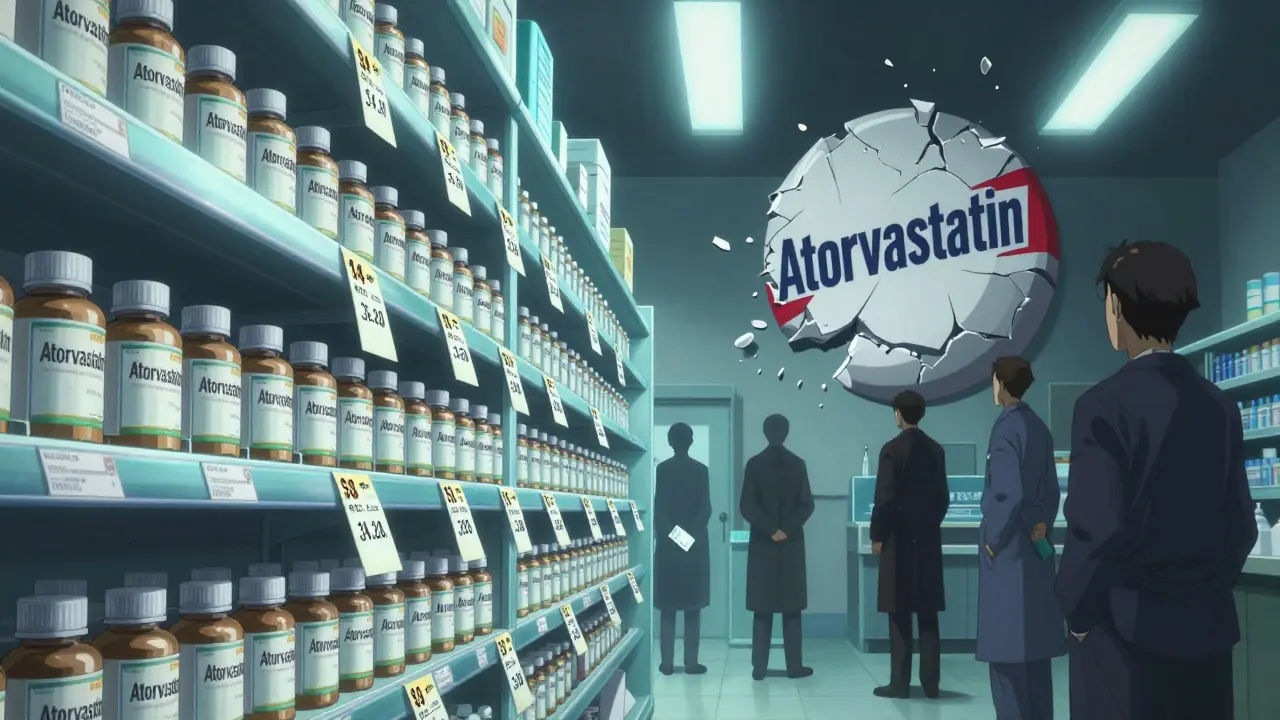
When you walk into a pharmacy and see a bottle of metformin for $4, or levothyroxine for $10, you’re seeing the result of a quiet but powerful economic force: generic drug competition. It’s not magic. It’s not luck. It’s strategy - and buyers, from Medicare to private insurers, are using it to force drug prices down. The system isn’t perfect, but it works better than most people realize.
Why Generic Drugs Are the Ultimate Bargaining Chip
Generic drugs aren’t just cheaper versions of brand-name pills. They’re legal, FDA-approved copies that hit the market after patents expire. And when multiple generics enter, prices don’t just drop - they collapse. Studies show that when six companies make the same generic drug, prices fall by an average of 90%. With nine competitors? That jumps to 97%. That’s not inflation. That’s market discipline. Take the cholesterol drug atorvastatin. When Lipitor’s patent expired in 2012, over 40 manufacturers started making generic versions. Within three years, the average price per pill fell from $4.20 to just 14 cents. That’s a 96.7% drop. No government agency had to step in. The market did it. Buyers - whether it’s the Centers for Medicare & Medicaid Services (CMS), a private pharmacy benefit manager (PBM), or a hospital system - know this. They don’t just wait for generics to appear. They use the threat of generics to negotiate before the patent even expires.How Medicare Uses Generic Competition to Set Prices
The 2022 Inflation Reduction Act gave Medicare the power to negotiate prices for certain high-cost drugs. But here’s the twist: Medicare can’t directly negotiate with drugs that already have generic competitors. Instead, it uses those generics as a benchmark. Here’s how it works. When CMS picks a brand-name drug like insulin glargine for negotiation, they don’t start from scratch. They look at what similar drugs cost - including the generic versions already on the market. They calculate the average 30-day price of all therapeutic alternatives. Then they use that number as the starting point for their offer. In June 2023, CMS released detailed guidance explaining this. They call it the “therapeutic alternative” approach. If five other drugs - brand or generic - treat the same condition and cost less, Medicare’s offer for the target drug has to be lower than or equal to that average. It’s not about what the drug maker says it costs to make. It’s about what the market already proves it can be sold for. This isn’t just theory. The first 10 drugs selected for negotiation under the law will have final prices set by January 2026. And for most of them, generic competition is already active or imminent. That means Medicare’s starting price is already low - and the final price will likely be even lower.The Canadian Model: Tiered Pricing That Rewards Competition
Canada doesn’t wait for drugs to hit the market before acting. Since 2014, they’ve used a tiered pricing system. If a drug has only one manufacturer, the government sets a higher price cap. But every time a new generic enters, the cap drops. The more competitors, the lower the ceiling. It’s simple math. One competitor? High price. Three competitors? Lower. Five or more? Price falls sharply. This system doesn’t just react to competition - it actively encourages it. Generic manufacturers know that if they invest in challenging a patent, they’ll be rewarded with a higher profit margin because prices haven’t yet been driven down. This approach avoids the trap that the U.S. is now facing: if the government sets a price too early, before generics enter, it can actually discourage new entrants. Why spend millions on legal battles and manufacturing setup if the government has already locked in a price lower than what you can profitably charge? Canada’s system avoids this by letting competition do the work first.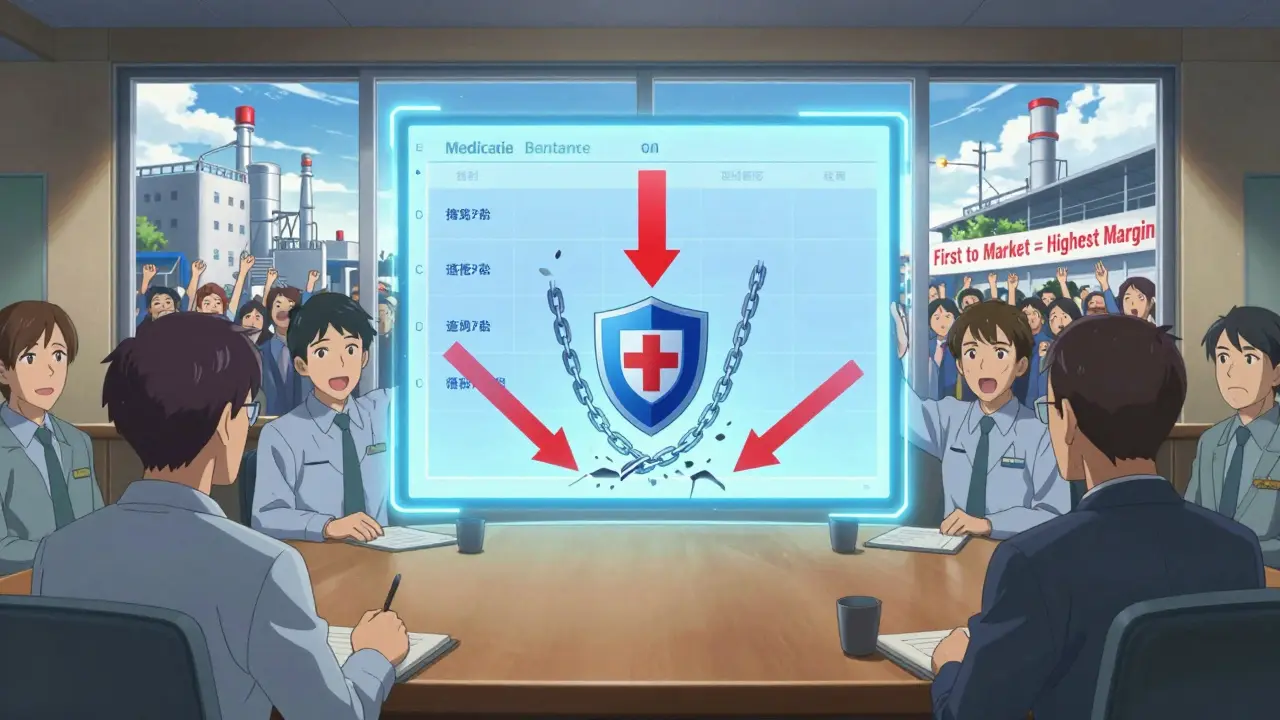
What Happens When Competition Is Stopped?
Not all drug makers play fair. Some use legal tricks to delay generics. One common tactic? Reverse payments. A brand-name company pays a generic manufacturer to stay out of the market. The FTC found that between 2010 and 2020, this happened with 106 drugs in the U.S. alone. Another tactic? “Product hopping.” That’s when a drug company slightly changes the formula - say, switching from a pill to a tablet - and pushes patients to the new version. Then they patent the new version. The old one? Still under patent protection. This delays generics for years. Between 2015 and 2020, there were 1,247 such maneuvers. These aren’t accidents. They’re calculated moves to extend monopolies. And when they work, they cost patients billions. A 2023 analysis by Avalere Health estimated that just one reverse payment deal can delay generic entry by 18 months - and cost the healthcare system over $100 million in that time.Who’s Winning and Who’s Losing?
The Association for Affordable Medicines says generic drugs have saved U.S. patients over $3 trillion since 2000. In 2023, generics made up 90% of all prescriptions filled - but only 22% of total drug spending. That’s the power of competition. But not everyone benefits. Generic manufacturers themselves are caught in a bind. If CMS sets a low price for a brand-name drug before generics enter, those manufacturers can’t make money. They’re not just competing with the brand - they’re competing with a government-set price that may be below their production cost. A 2023 report from Avalere found that 63% of generic manufacturers have delayed investments because of pricing uncertainty. That’s a problem. If no one’s willing to make the generic, then the competition never comes - and prices don’t fall. Meanwhile, big brand-name companies fight back. PhRMA, the main pharmaceutical lobby, spent over $300 million in 2023 on lobbying to block Medicare negotiation. Their argument? That lower prices will kill innovation. But data doesn’t back that up. The U.S. spends more per person on drugs than any other country - and still leads the world in new drug development.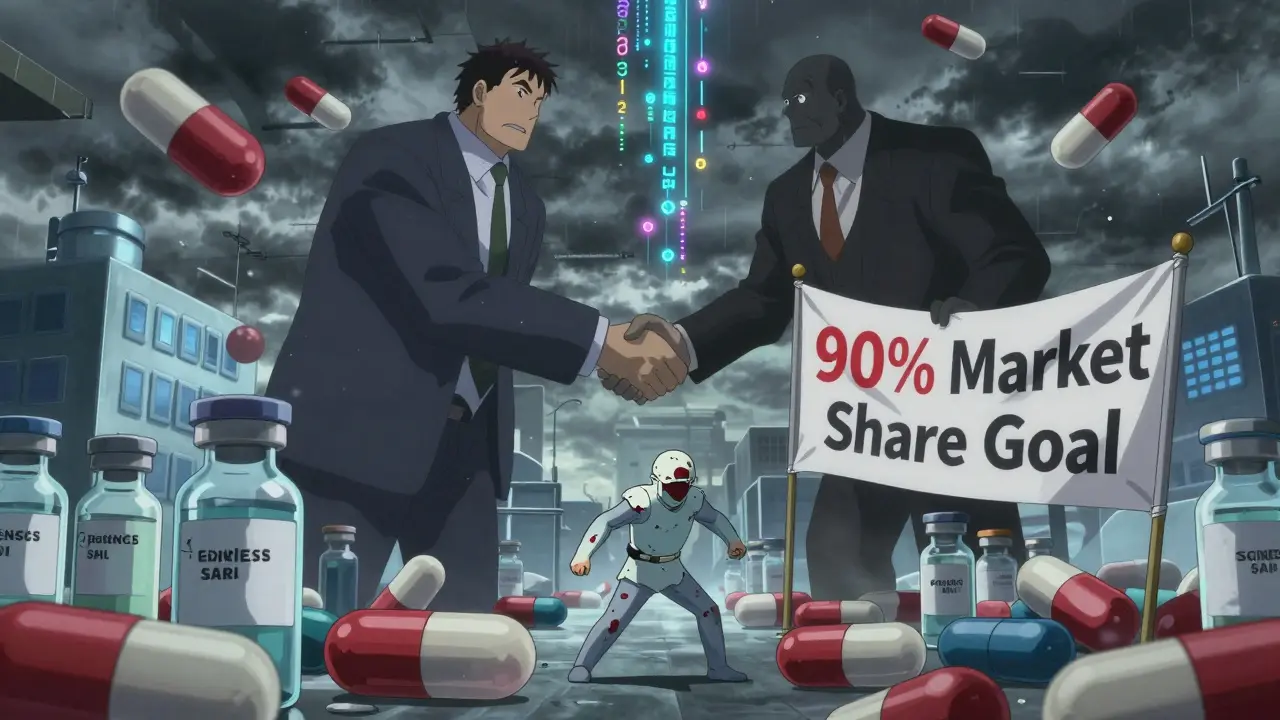
What’s Next? The Future of Generic Competition
The next few years will test whether the U.S. can keep competition alive. The proposed EPIC Act would delay Medicare price negotiations until after generics have had time to enter the market. That’s a smart fix - it lets the market work before the government steps in. Biosimilars - generic versions of biologic drugs like Humira - are the next frontier. But they’re harder to make. They cost more to develop. And so far, they’ve only captured 45% of the market, compared to 90% for traditional generics. That’s because manufacturers still use the same delay tactics - patent thickets, reverse payments - to keep biosimilars out. Health systems are starting to adapt. More are using real-world data - like how well a drug works in actual patients - to guide negotiations. By 2025, 73% of health technology assessment agencies plan to use this data. That means prices won’t just be based on cost - they’ll be tied to outcomes.What This Means for You
If you’re on Medicare, you’ll see lower prices for some of your most expensive drugs starting in 2026. If you’re on private insurance, your PBM is likely already using generic competition to cut costs - even if you don’t know it. The bottom line? Generic competition isn’t just about saving money. It’s about power. The more choices there are, the less power drug companies have to set prices. And that’s what buyers - from Medicare to your local pharmacy - are using to win.How do generic drugs lower prices so dramatically?
When multiple manufacturers produce the same generic drug, they compete on price. With just two or three competitors, prices often drop 50-70%. With six or more, they fall by over 90%. This happens because generics have no R&D costs to recoup, and each manufacturer lowers their price to win market share. The FDA found that drugs with nine generic competitors see price reductions of 97.3% on average.
Why doesn’t Medicare negotiate directly with generic drugs?
Medicare doesn’t negotiate with drugs that already have generic competition because the market is already driving prices down. Instead, it uses those existing generic prices as a benchmark to set lower prices for brand-name drugs. This approach leverages market competition without interfering with it. Direct negotiation with generics could disrupt the market and reduce incentives for new manufacturers to enter.
What are reverse payments, and why do they matter?
Reverse payments occur when a brand-name drug company pays a generic manufacturer to delay entering the market. The FTC found 106 such deals between 2010 and 2020. These payments keep prices high by blocking competition. A 2023 study showed that one reverse payment deal can delay a generic by 18 months and cost the healthcare system over $100 million in lost savings.
Can generic competition work for complex drugs like biosimilars?
It’s harder. Biosimilars - generic versions of biologic drugs - cost more to develop and face more regulatory and legal barriers. So far, they’ve only captured 45% of the market, compared to 90% for traditional generics. Patent thickets, litigation, and manufacturer delays continue to limit their impact. But as more biosimilars enter and competition grows, prices are starting to fall - just slower.
How do countries like Canada keep generic competition strong?
Canada uses a tiered pricing system: the more generic competitors a drug has, the lower the maximum allowed price. This rewards manufacturers who challenge patents and enter the market early. It also prevents the government from setting prices too low too soon, which could discourage future generic entry. The system has helped Canada maintain high generic adoption while keeping prices sustainable for manufacturers.
bill cook
February 26, 2026 AT 17:02And don’t even get me started on how they’re forcing pharmacies to stock these cheap generics - half of them don’t even work right.
Brandie Bradshaw
February 27, 2026 AT 01:54Yet, the same entities that profit from monopolies - patent trolls, reverse-payment architects, product-hopping corporations - are the ones lobbying to dismantle this system. They don’t fear innovation. They fear competition.
Angel Wolfe
February 28, 2026 AT 01:53And now Medicare is using generics as a benchmark? That’s just another way to lock in prices before real competition even starts. You think Canada’s system is better? They’re just doing the same thing under a different name. The real winners? The people who own the patents and the lobbyists. Not you.
Sophia Rafiq
February 28, 2026 AT 11:34Most people don’t realize their PBM is already using competitive bidding to slash prices. It’s not sexy, but it works. And yeah, biosimilars are slower, but that’s because the legal barriers are insane. Patent thickets are just corporate moats with lawyers.
Ajay Krishna
March 1, 2026 AT 15:16Canada’s tiered pricing is smart. It rewards entry, doesn’t punish it. Why can’t we do that? It’s not about ideology - it’s about basic supply and demand.
Sneha Mahapatra
March 2, 2026 AT 11:28It’s not just about money. It’s about dignity. When you can’t afford your life-saving drug, you stop being a person and become a cost center. The market doesn’t care about that. But we should.
Byron Duvall
March 4, 2026 AT 09:43And now Medicare’s playing along? Classic. They’re just letting the system pretend to work so they don’t have to fix it.
Katherine Farmer
March 5, 2026 AT 03:15What’s missing is any consideration of public goods. Pharmaceuticals are not toothpaste. They are life-or-death interventions. Letting the market dictate access is not efficiency - it’s moral failure.
And yet, here we are, applauding price drops while ignoring the structural violence that made them possible.