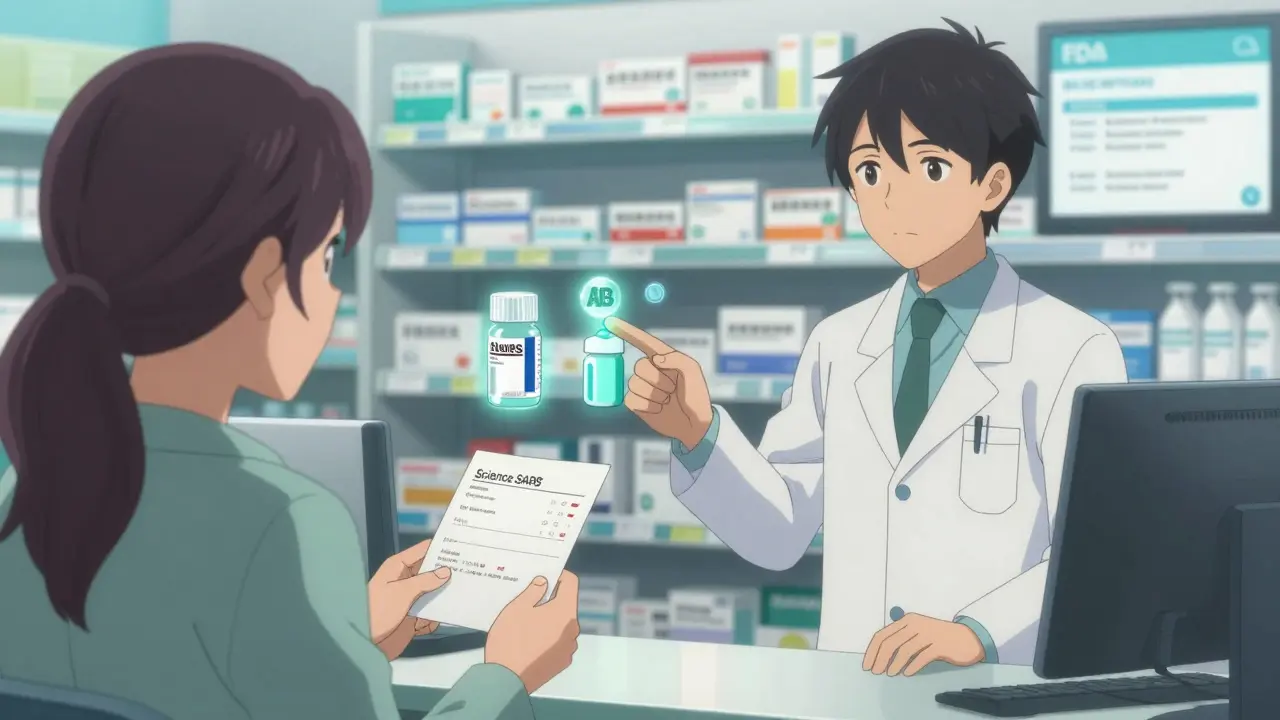
When your doctor writes a prescription, you might not realize that the medication you’re about to pick up could cost you hundreds of dollars more than a nearly identical version sitting right beside it on the pharmacy shelf. That cheaper version? It’s a generic medication. And in most cases, it’s just as safe and effective as the brand-name drug you’re used to seeing advertised on TV.
But how do you know if a generic version is available for your prescription? And more importantly, how do you make sure it’s actually safe to switch? You don’t need a pharmacy degree to find out. You just need to know where to look and what to ask.
What Exactly Is a Generic Medication?
A generic medication contains the exact same active ingredient as the brand-name drug. Same dose. Same way it’s taken - pill, liquid, injection. Same intended effect on your body. The only real differences are the inactive ingredients (like fillers or dyes) and the packaging. And the price. Generics typically cost 80-85% less. In 2022, the average brand-name drug cost $765.09. The generic version? Just $15.23.
The U.S. Food and Drug Administration (FDA) requires generics to meet strict standards. They must prove they’re bioequivalent - meaning your body absorbs them at the same rate and to the same extent as the brand-name drug, within a range of 80-125%. That’s not a guess. It’s tested in clinical studies. And they must be manufactured in the same kind of facilities, under the same quality controls.
Over 90% of all prescriptions filled in the U.S. are for generics. That’s more than 6 billion prescriptions a year. The reason? They save patients and the healthcare system billions.
How to Find Out If a Generic Is Available
There are four reliable ways to check if a generic version of your prescription is available - and they’re not all equally easy to use.
1. Ask Your Pharmacist First
This is the fastest, easiest, and most accurate method. Pharmacists have direct access to real-time databases like First Databank and Medi-Span that tell them instantly which generics are approved and available. A 2022 study in JAMA Internal Medicine found pharmacists correctly identify generic alternatives 98.7% of the time.
When you drop off your prescription, say: “Is there a therapeutically equivalent generic available for this?” Don’t just ask, “Do you have a generic?” That’s too vague. You want to know if it’s officially rated as interchangeable by the FDA.
Most major pharmacy chains - CVS, Walgreens, Rite Aid - automatically flag generic substitutions in their systems. In 92% of cases, they’ll alert you before you even ask.
2. Use the FDA’s Drugs@FDA Database
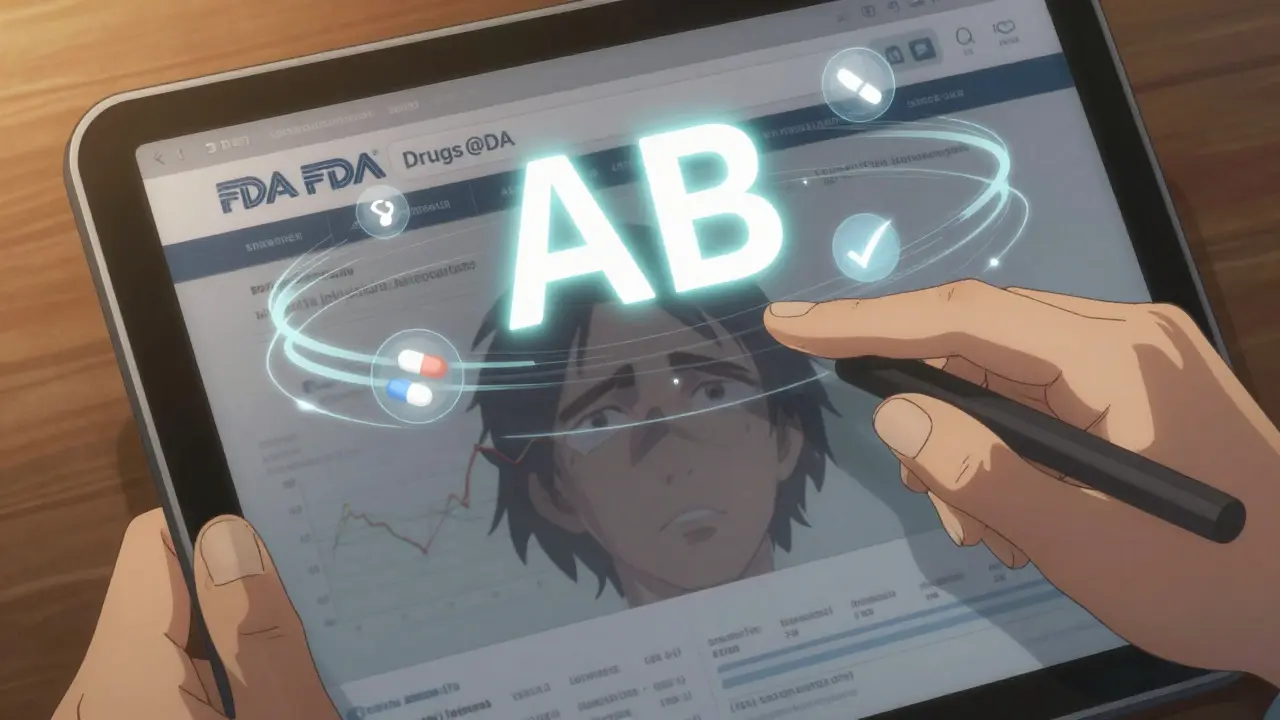
If you want to check yourself, go to Drugs@FDA. Type in the brand name of your medication. Look for the “Therapeutic Equivalence Code” under the approval details.
You’re looking for an “AB” rating. That means the generic is approved as equivalent and interchangeable. If you see “BX,” that means the FDA has concerns about interchangeability - maybe because the drug has a narrow therapeutic window, like warfarin or levothyroxine. In those cases, switching isn’t automatic.
It takes 8-12 minutes the first time you use it. But once you know where to look, it’s quick. The FDA launched a simplified “Generic Drug Search” tool in October 2023 to make this easier for regular users. Over 200,000 people used it in the first month.
3. Check Your Insurance Formulary
If you’re on Medicare Part D, Medicaid, or private insurance, your plan has a list of covered drugs - called a formulary. That list tells you which generics your plan will pay for, and which ones require prior authorization.
Use the Medicare Plan Finder (updated every October 15) to search your specific plan. Other insurers have similar tools on their websites. Search by the brand name. If a generic is listed as preferred or covered, you’re good to go.
But be careful: some plans automatically switch you to a generic without telling you. A 2023 study found 41% of Medicare beneficiaries were confused when their drug changed without prior notice.
4. Try GoodRx or Similar Apps
Apps like GoodRx are great for comparing prices. They’ll show you the lowest cash price for both brand and generic versions at nearby pharmacies. But they don’t always tell you if a generic is officially rated as therapeutically equivalent.
GoodRx is used by over 35 million Americans monthly. It’s helpful for savings, but don’t rely on it alone to determine safety or equivalence. Always cross-check with the FDA’s rating or ask your pharmacist.
When Generics Aren’t an Option
Not every brand-name drug has a generic version. About 10% of medications still don’t have generics available. Why?
- Patents: Brand-name companies hold patents that prevent generics from being made for up to 17 years from filing. Some get extensions, so it can take longer.
- Complex formulations: Drugs like inhalers, patches, or injectables are harder to copy exactly. Bioequivalence testing is more complicated.
- Low demand: If a drug is only used by a small number of people, companies don’t invest in making a generic version.
Also, some drugs - especially those with a narrow therapeutic index - are tricky to switch. Even tiny differences in how the body absorbs the drug can cause problems. That’s why doctors sometimes say, “Don’t substitute.”
Examples include:
- Warfarin (blood thinner)
- Levothyroxine (thyroid hormone)
- Phenytoin (seizure medication)
- Cyclosporine (organ transplant drug)
For these, your doctor may write “Dispense as written” or “Do not substitute.” That means the pharmacy can’t legally switch you to a generic without calling them back.
What to Do If Your Generic Isn’t Working
Some people report feeling different after switching to a generic. Maybe you’re more tired, your symptoms came back, or you feel off. That doesn’t always mean the generic is bad.
But it’s worth talking to your doctor. For drugs with narrow therapeutic windows, even small differences in absorption can matter. Studies show 5-8% of patients on drugs like levothyroxine may experience changes in lab results after switching generics.
Don’t assume it’s all in your head. Keep a log: when you switched, what symptoms changed, and when. Bring it to your doctor. They can check your blood levels or switch you back.
Also, be aware of drug shortages. The ASHP Drug Shortages database tracks over 280 active shortages as of late 2023. Sometimes, a generic is available - but the pharmacy is out of stock. That’s when your pharmacist might give you the brand name, even if you didn’t ask for it.
How to Save Money Without Compromising Safety
Here’s how to make sure you’re getting the best deal without risking your health:
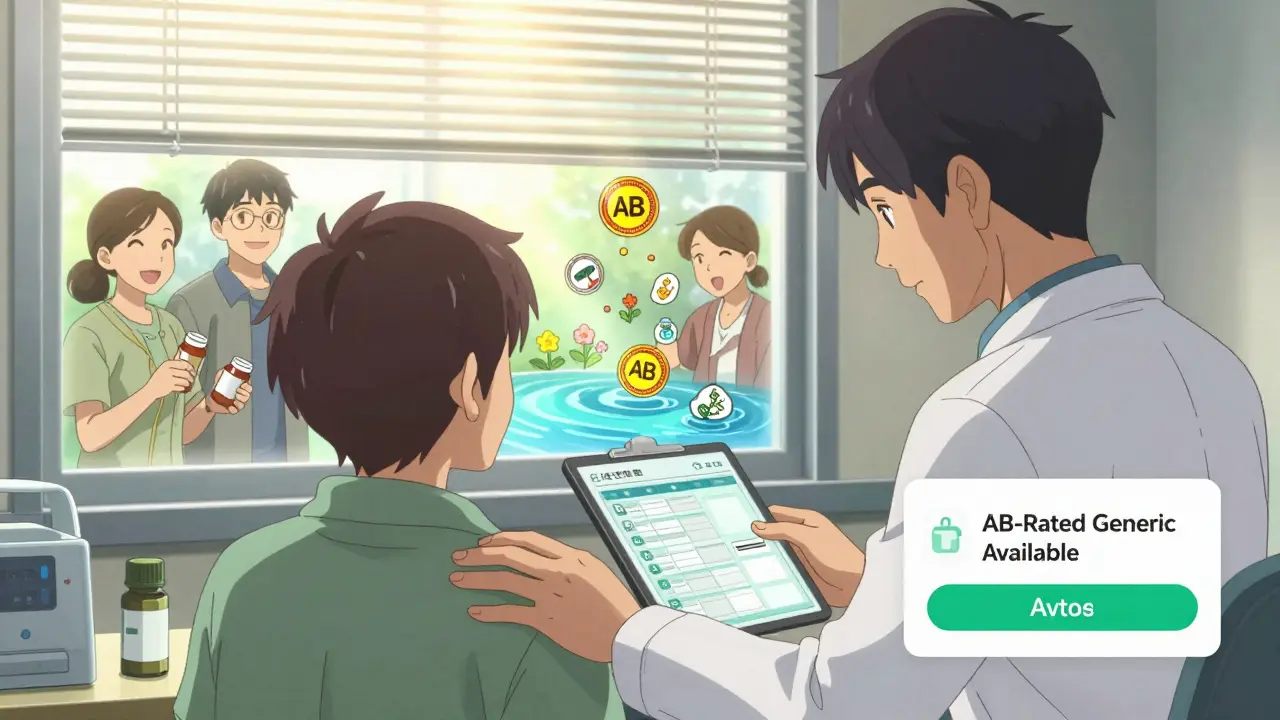
- Always ask your pharmacist: “Is there an FDA-approved AB-rated generic for this?”
- Use GoodRx to compare prices, but verify the generic’s rating on Drugs@FDA.
- Check your insurance formulary before filling the prescription.
- If you’re on a chronic medication, ask your doctor if you’re on a brand name just because that’s what was originally prescribed.
- Never switch generics yourself. Always consult your provider if you feel different after a switch.
One Reddit user saved $1,200 a year just by asking about generics. Another TikTok nurse showed over 2 million people how to use the FDA’s database. You don’t need to be an expert. You just need to ask the right question.
What’s Changing in 2024
Things are getting better for patients. Starting January 1, 2024, Medicare Part D plans are required to show real-time generic availability through the Plan Finder tool. That means you’ll know before you even get to the pharmacy.
Electronic health record systems like Epic - used by over 250 million patients - are adding FDA therapeutic equivalence data directly into doctor’s prescription screens by late 2024. That means your doctor might see a pop-up saying, “This has an AB-rated generic available. Would you like to switch?”
More than 66 billion dollars worth of brand-name drugs will lose patent protection over the next five years. That means even more generics will hit the market.
But the biggest barrier isn’t availability. It’s awareness. Only 32% of patients correctly understand when a generic is truly equivalent to the brand-name drug, according to Harvard’s Dr. Aaron Kesselheim.
You don’t need to be a pharmacist to protect your health - or your wallet. Just ask. Check. Confirm. And don’t be afraid to speak up.
Are generic medications as safe as brand-name drugs?
Yes. The FDA requires generic medications to contain the same active ingredient, strength, dosage form, and route of administration as the brand-name version. They must also prove they’re bioequivalent - meaning your body absorbs them at the same rate and to the same extent. Generics go through the same manufacturing inspections and quality controls. Over 90% of prescriptions in the U.S. are filled with generics, and they’ve been safely used for decades.
How do I know if a generic is approved for my drug?
Look up the brand name on the FDA’s Drugs@FDA website. Find the “Therapeutic Equivalence Code.” If it says “AB,” the generic is approved as interchangeable. If it says “BX,” the FDA has concerns about substitution, and you should talk to your doctor before switching. Your pharmacist can also tell you this instantly.
Can I switch from a brand-name drug to a generic without telling my doctor?
In most cases, yes - but only if the drug is rated “AB” by the FDA. For most medications, pharmacists can legally substitute a generic unless your doctor specifically wrote “Dispense as written.” But for drugs like warfarin, levothyroxine, or seizure medications, even small changes can affect your health. Always inform your doctor if you switch, especially if you notice new side effects or symptoms.
Why does my insurance keep switching me to a generic without asking?
Most insurance plans encourage or require generic substitution to lower costs. Your plan’s formulary lists which drugs are preferred - and generics are almost always cheaper. Unless your doctor has blocked substitution, the pharmacy is allowed to fill your prescription with the generic version. You should be notified, but sometimes the notification gets lost. Always check your medication label and ask your pharmacist if you’re unsure.
What if the generic doesn’t seem to work as well?
If you feel different after switching - worse symptoms, new side effects, or changes in lab results - talk to your doctor. For certain drugs with narrow therapeutic windows, even minor differences in how your body absorbs the medication can matter. Your doctor can check your levels, switch you back, or choose a specific generic brand that works better for you. Don’t assume it’s just your imagination - document your symptoms and bring them up at your next visit.
Are there any drugs that don’t have generic versions at all?
Yes. About 10% of medications don’t have generics yet. This usually happens because the drug is still under patent protection, or it’s a complex formulation like an inhaler, topical cream, or injectable that’s hard to copy exactly. Biologics - like insulin or rheumatoid arthritis drugs - are also slower to have generics (called biosimilars) approved. But more than 70% of top-selling brand-name drugs will face generic competition by 2028.
Jerian Lewis
January 8, 2026 AT 16:21People still don’t get it. Generics aren’t ‘almost as good’-they’re identical. The FDA doesn’t approve anything less than bioequivalent. If you’re ‘feeling different,’ it’s placebo or you’re not taking it right. Stop blaming the pill and start blaming your brain.
Meghan Hammack
January 9, 2026 AT 12:23OMG I just saved $900 this year by asking my pharmacist for generics!! 🙌 I used to pay $120 for my blood pressure med-now it’s $18. I didn’t even know I could ask! Thank you for this post, I’m telling all my friends!! 💖
Matthew Maxwell
January 10, 2026 AT 19:22It is patently irresponsible to suggest that patients should rely on pharmacists or apps like GoodRx without verifying therapeutic equivalence codes. The FDA’s Drugs@FDA database is the only authoritative source. Any deviation from this standard constitutes medical negligence. Furthermore, the notion that ‘feeling different’ after switching is merely psychological is not supported by pharmacokinetic literature. One must exercise due diligence.
Lindsey Wellmann
January 10, 2026 AT 21:17I switched my levothyroxine to generic and felt like a zombie for 3 weeks 😭 I cried in the shower. My doctor finally switched me back and I felt like a new person. Why do they make us guinea pigs?? 🤬 #GenericTrauma #ThyroidWarrior
Angela Stanton
January 11, 2026 AT 04:42Let’s unpack this. The 80-125% bioequivalence window is a regulatory artifact-not a biological guarantee. Variability in Cmax and AUC across generics can induce subtherapeutic exposure, especially in polypharmacy patients. Add in CYP450 polymorphisms and you’ve got a pharmacovigilance nightmare. GoodRx doesn’t account for pharmacodynamic variance. You’re not saving money-you’re gambling with your metabolic phenotype.
Johanna Baxter
January 12, 2026 AT 12:44Kiruthiga Udayakumar
January 14, 2026 AT 05:26Why are Americans so lazy? In India, we get generics from day one. No drama. No apps. Just ask the pharmacist. You pay less, you get the same medicine. Stop making everything a crisis. Your body doesn’t need a PhD to work.
Diana Stoyanova
January 15, 2026 AT 04:11Think about it: we’ve been conditioned to believe that brand = better. That’s advertising, not science. We treat pills like luxury goods-like a designer handbag that ‘has to be’ the real thing. But your body doesn’t care about the logo. It cares about the molecule. And guess what? The molecule in the generic is identical. The only thing different is the price tag-and your peace of mind. You’re not just saving money. You’re reclaiming your right to be informed. This isn’t about drugs. It’s about power. Who controls your health? The pharmacy? The insurance company? Or you? Ask the question. Check the code. Speak up. You’re not being difficult-you’re being human.
Darren McGuff
January 16, 2026 AT 11:12For those concerned about levothyroxine or warfarin, I’ve seen cases where switching generics led to INR fluctuations or TSH shifts-especially in elderly patients on multiple meds. The FDA’s AB rating is a legal standard, not a clinical guarantee. If your doctor has never mentioned it, ask them to review your therapeutic equivalence history. I’ve worked in pharmacy for 27 years. I’ve seen good outcomes. I’ve seen bad ones. Always document.
Alicia Hasö
January 17, 2026 AT 16:55To everyone who’s ever felt ‘off’ after switching: you’re not alone. I’ve been there. I’ve helped patients through it. You’re not crazy. You’re not weak. You’re paying attention-and that’s a superpower. Your body is trying to tell you something. Don’t dismiss it. Bring your log to your doctor. Ask for a blood test. Demand clarity. You deserve to feel like yourself again. And if your pharmacist doesn’t explain the AB rating? Find one who will. Your health is worth the extra five minutes.
Aron Veldhuizen
January 19, 2026 AT 13:20Let me be the first to say it: the entire generic system is a corporate shell game. The same companies that make brand-name drugs often own the generic versions. The FDA’s bioequivalence standards are deliberately vague. The 80-125% window? That’s a 45% swing in absorption. That’s not medicine-that’s probability theory. And don’t get me started on ‘authorized generics’-those are just rebranded brands with a different label. You’re not saving money. You’re being manipulated by patent lawyers and pharmacy benefit managers. The real solution? Single-payer. Universal pricing. Or at least, transparency.
Jeffrey Hu
January 19, 2026 AT 18:26Actually, the 98.7% accuracy stat from JAMA is misleading. That study only tested pharmacists’ ability to identify generics in a controlled setting. Real-world pharmacies have stock shortages, regional formulary differences, and staff turnover. Also, the FDA’s Drugs@FDA database doesn’t include all generics-some are approved under ANDA but never published in the Orange Book. And GoodRx? Their pricing is often outdated. You need to cross-reference at least three sources. Otherwise, you’re flying blind.