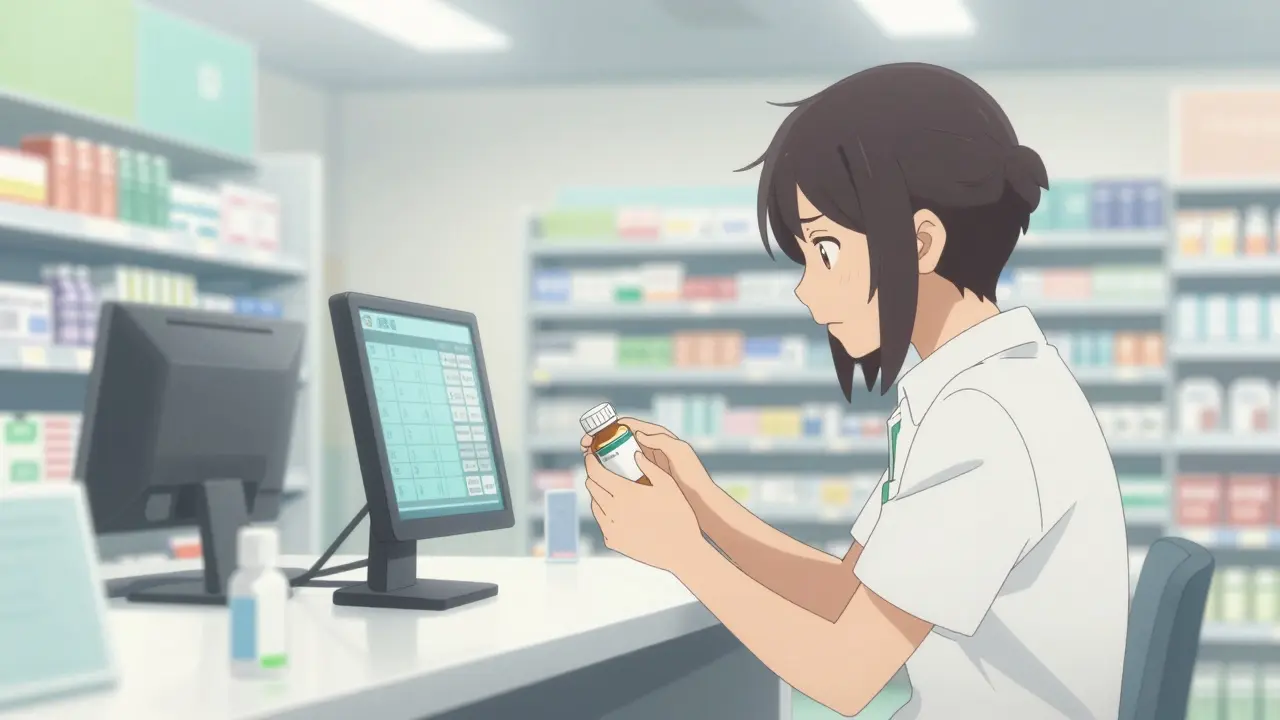
You're at the pharmacy counter and notice the price for your new prescription is double what you expected. Or maybe you've heard a friend say that "the generic just doesn't work as well." When it comes to your health, the difference between a brand-name drug and its generic counterpart can feel like a gamble, but it usually comes down to a few specific factors: cost, appearance, and a little bit of chemistry.
The goal of this guide is to help you walk into your next appointment feeling confident. You'll learn exactly what makes these drugs different, why your doctor might prefer one over the other, and how to have a direct conversation about your budget without compromising your care. Whether you're looking to save money or you're worried about efficacy, knowing the facts allows you to make a shared decision with your healthcare provider.
| Feature | Brand-Name | Generic |
|---|---|---|
| Active Ingredients | Original formulated compound | Identical to brand-name |
| FDA Approval | Full clinical trials required | Bioequivalence proven via ANDA |
| Cost | Higher (Patent protected) | Lower (Typically 80-85% less) |
| Appearance | Specific shape/color | Must differ from brand-name |
| Inactive Ingredients | Standard fillers/binders | May vary (dyes, flavors) |
What actually makes a drug "generic"?
To understand the conversation you'll have with your doctor, you first need to understand what a Generic Drug is. In simple terms, it is a chemical copy of an original medication. When a pharmaceutical company develops a new drug, they get a patent that usually lasts about 20 years. During this time, they are the only ones allowed to sell it, which is why brand-name drugs are so expensive-they have to recoup their research and development costs.
Once that patent expires, other companies can apply to the FDA (Food and Drug Administration) to sell their own version. For a generic to be approved, it must be "bioequivalent." This means it has to deliver the same amount of active ingredient into your bloodstream at the same rate as the brand-name version. According to data from Humana Pharmacy, generics typically show only a 3.5% average difference in absorption, which is well within the FDA's strict 20% limit.
If a drug is bioequivalent, it is expected to provide the exact same therapeutic benefit. So, when you see a pill that is a different color or shape, don't panic. U.S. trademark laws actually prevent generics from looking exactly like the brand-name version. The difference is in the "inactive ingredients"-the dyes and fillers-not the medicine itself.
Why your doctor might suggest one over the other
Most of the time, your doctor will be happy with whichever version you use. In fact, about 90% of prescriptions filled in the U.S. are generics because they are safe and effective. However, there are a few specific scenarios where your provider might specifically write "dispense as written" (DAW) to ensure you get the brand name.
The most common reason involves Narrow Therapeutic Index (NTI) drugs. These are medications where a tiny change in the dose or the way the body absorbs the drug can lead to a big change in how it works or cause a dangerous side effect. Examples include certain seizure medications or blood thinners like warfarin. In these rare cases, some doctors prefer you stay on one consistent brand to avoid any minor fluctuations between different generic manufacturers.
Another factor is the type of medicine. While most standard pills have generic versions, complex Biologic medications (which are grown in living cells rather than mixed in a lab) don't have "generics" in the traditional sense. Instead, they have biosimilars, which are highly similar but not identical copies. Your doctor might have a stronger preference here based on the specific protein structure of the drug.

How to start the conversation about cost
Talking about money can feel awkward, but healthcare providers deal with it every day. They know that high costs lead to "prescription non-adherence"-which is just a fancy way of saying people stop taking their meds because they can't afford them. Being honest about your budget is actually a clinical necessity; if you can't afford the drug, the drug can't treat you.
When you're sitting in the exam room, you can use a direct approach. Instead of waiting for the prescription to be sent to the pharmacy, ask these specific questions:
- "Is there a generic version of this medication available?"
- "In my specific case, would the generic work just as well as the brand name?"
- "Are there any reasons why I specifically need the brand-name version for my condition?"
- "If I can't afford the brand name, what are the best generic alternatives?"
If your doctor insists on a brand name, ask them why. Is it because of the NTI issue mentioned above, or is it just a preference? Knowing the reason helps you decide if you want to look for manufacturer coupons or check a service like GoodRx to see if the cost is manageable.
Dealing with the "Generic Switch" anxiety
It's common to feel a bit nervous when your pharmacy swaps your familiar blue pill for a white one. This is sometimes called the "nocebo effect," where you feel a negative side effect simply because you expect the new version to be different. However, if you truly feel the medication isn't working as well, don't just ignore it-but don't panic either.
Your first stop shouldn't actually be the doctor; it should be your Pharmacist. Pharmacists are the frontline experts on drug formulations. They can tell you if the generic you're receiving is from a different manufacturer than the one you had before, or if there's a specific inactive ingredient (like a certain dye) that might be bothering you.
If the pharmacist can't resolve your concern, bring a list of your specific symptoms back to your doctor. Instead of saying "I think the generic is bad," say "Since switching to the generic, I've noticed [specific symptom] at [specific time]." This gives your provider a concrete data point to determine if you actually need to switch back to the brand name.

A checklist for your next pharmacy visit
To make sure you're getting the best value and the right care, keep this mental checklist handy when you're picking up your meds:
- Check the label: Does it say the brand name or the generic name? If it's different from what the doctor told you, ask the pharmacist why.
- Verify the cost: If the price is surprisingly high, ask if there is a generic alternative that your doctor hasn't authorized yet.
- Note the appearance: If the pill looks different than your last refill, ask if the manufacturer has changed. While the active ingredient is the same, some people are sensitive to different filler brands.
- Confirm the dosage: Ensure the strength (e.g., 20mg) is identical to what was prescribed, regardless of whether it's brand or generic.
Are generic drugs less safe than brand-name drugs?
No. The FDA requires generic drugs to have the same active ingredients, strength, quality, and purity as the brand-name version. They must also be bioequivalent, meaning they work in the body the same way and provide the same clinical benefit.
Why does my generic medication look different from the brand name?
Due to trademark laws, generic drugs cannot look exactly like the original brand-name drug. This means they will often have a different color, shape, or flavor, even though the active medicine is identical.
Can I always switch from a brand name to a generic?
In most cases, yes. However, for certain "narrow therapeutic index" drugs (where small dose changes cause big reactions), your doctor may prefer you stay on one specific version. Always consult your provider before switching these types of medications.
How much cheaper are generic drugs usually?
Generics typically cost about 80% to 85% less than their brand-name counterparts. This is because generic manufacturers don't have to pay for the initial research and development or the massive marketing campaigns that brand-name companies do.
What is an ANDA?
ANDA stands for Abbreviated New Drug Application. It is the process generic companies use to get FDA approval. Instead of repeating expensive clinical trials, they simply prove that their drug is bioequivalent to the already-approved brand-name version.
What to do if you're still unsure
If you've had a conversation with your doctor and you're still worried, try a "test period." Use the generic for a few weeks while keeping a simple log of your symptoms. If you feel a genuine difference, you have a documented history to show your doctor, which makes it much easier for them to justify a brand-name prescription to your insurance company.
Remember, the goal isn't just to save money; it's to get the treatment that works best for your unique body. By asking the right questions and staying observant, you can balance your healthcare budget with your physical well-being.
dallia alaba
April 19, 2026 AT 14:43It's really crucial to highlight the role of the pharmacist here. Most people just treat them like cashiers, but they're actually the most accessible experts for checking the specific inactive ingredients in different generic batches. If you have a sensitivity to a specific dye or filler, the pharmacist can often identify which manufacturer is causing the issue and may even be able to request a different generic source from their wholesaler to keep your treatment consistent.
julya tassi
April 20, 2026 AT 08:08This is so helpful! :) I always get a bit nervous when the pill color changes, but knowing it's just a trademark thing makes me feel way better. Thanks for sharing! <3
Mike Beattie
April 20, 2026 AT 13:38The bioequivalence metrics are a start, but let's be real-the pharmacokinetic profiles on these cheap generics can be erratic. We're talking about a massive variance in bioavailability when you get into the nitty-gritty of the ANDA process. It's practically amateur hour for some of these manufacturers, and expecting a patient to just 'log their symptoms' while their systemic homeostasis is compromised is just typical of the current medical industrial complex. Honestly, if you aren't analyzing the Cmax and Tmax of your specific lot, you're basically playing Russian Roulette with your endocrine system. It's just sad how we've traded clinical precision for a few bucks in savings. Most people don't even realize the molecular stability of these binders varies wildly between plants. You can't just substitute a brand-name's proprietary delivery system with some generic slurry and expect the same therapeutic window. It's a total joke.
William Young
April 20, 2026 AT 23:41I appreciate the point about NTI drugs. It's a nuanced area where a little bit of caution goes a long way for patient safety.
Lesley Wimbush
April 21, 2026 AT 10:55Oh honey, the 'nocebo effect' is such a quaint way to describe the genuine horror of taking a pill that looks like it came from a discount bin. I mean, I'm all for saving a few pennies, but there's a certain... aesthetic quality to the brand names that just signals a higher tier of care, doesn't it? Some of us just have a more refined response to our medication, and honestly, the mental burden of trusting a generic is almost as bad as the symptoms themselves. It's just so tragic that we've reached a point where 'bioequivalence' is the only standard. I personally can't imagine the psychological toll of switching to a pill that's the wrong shade of white.
Aaron McGrath
April 22, 2026 AT 02:19STOP SETTLING FOR MID-TIER MEDS! If your insurance is capping your coverage, you need to AGGRESSIVELY fight for that brand name or find a manufacturer coupon NOW! Use the jargon, hit them with the NTI arguments, and demand a DAW prescription! Don't let some corporate algorithm decide your health outcomes based on a 20% absorption window! CRUSH those costs with GoodRx and get the gold standard stuff!
Lucy Kuo
April 23, 2026 AT 18:24It is an absolute tragedy that the financial burden of healthcare necessitates such stressful negotiations for the vulnerable. One must approach the physician with the utmost grace and transparency to ensure a harmonious outcome for all parties involved. It is truly heart-wrenching to consider the millions who suffer in silence because they fear the cost of a brand-name prescription.
Grace Grace
April 24, 2026 AT 05:03I am so glad this was postted!! I had a terible time with my generics last year and my docter didnt listen until I startd keeping a log of my side effectss!! It really is the only way to get them to take you seriusly when you feel something is off!!
Wendy Ajurín
April 25, 2026 AT 00:36The recommendation to use a symptom log is highly effective. Providing a physician with longitudinal data rather than anecdotal evidence significantly increases the likelihood of obtaining a prior authorization for brand-name alternatives from insurance providers.