Keeping expired pills, liquids, or patches in your medicine cabinet isn’t just messy-it’s dangerous. Every year, thousands of children accidentally swallow leftover medications, and countless others misuse them. Even worse, flushing pills down the toilet or tossing them in the trash without care pollutes our water and soil. The good news? You don’t need special equipment or a trip to the pharmacy to dispose of them safely. With simple steps using things you already have at home, you can protect your family and the environment.
Why You Can’t Just Throw Medications in the Trash
Many people think tossing expired drugs in the bin is harmless. It’s not. When medications sit in landfills, rainwater can wash them into groundwater. Studies show over 80% of U.S. streams contain traces of pharmaceuticals-from antibiotics to antidepressants. Even small amounts can harm fish, frogs, and other wildlife. And if someone digs through your trash, they could find your prescription bottles, steal your painkillers, or misuse them. The FDA and EPA agree: the safest way to get rid of most medications is through a take-back program. But if you don’t live near a drop-off location, or you need to dispose of something right away, you can do it safely at home. Here’s how.Step-by-Step: Safe Home Disposal for Solid Medications
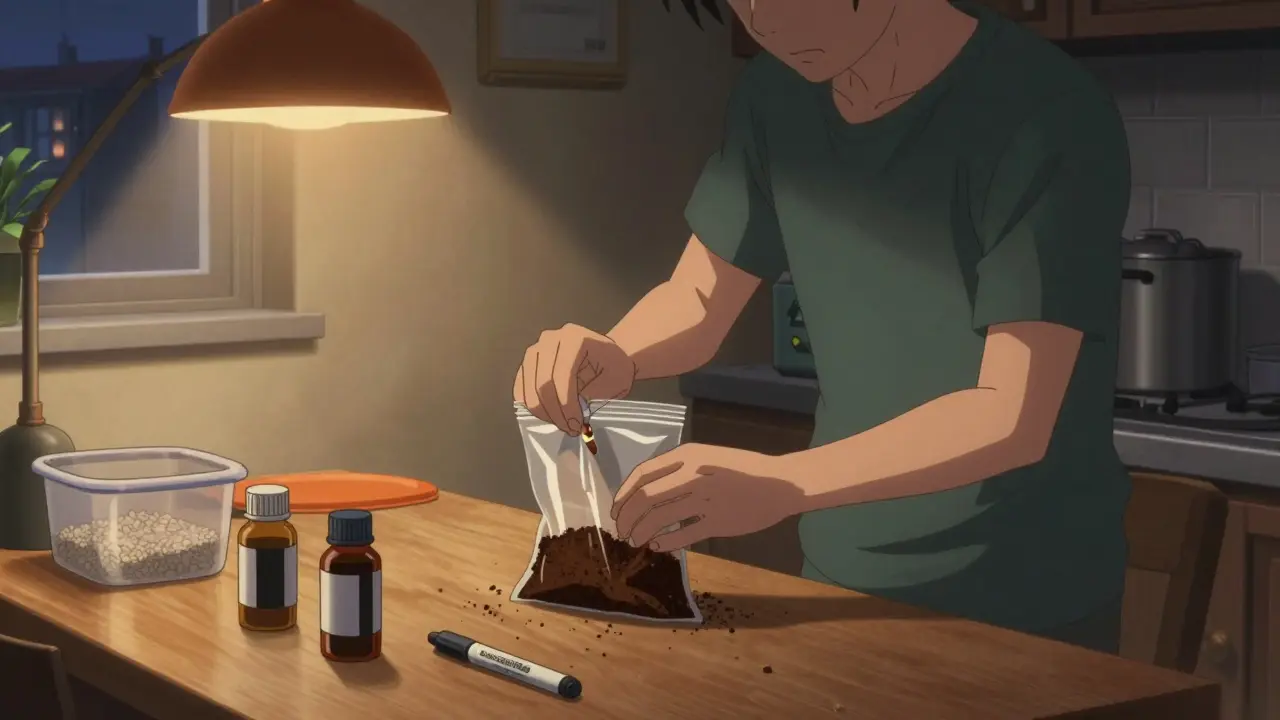
If you have pills, capsules, or tablets that are expired, unused, or no longer needed, follow these five steps exactly:- Take the medication out of its original bottle. Don’t leave it in the prescription container. Those labels have your name, address, and doctor’s details. Even if you think you’ve covered them, someone might still read them.
- Mix it with something unappetizing. Use one cup (240ml) of used coffee grounds, cat litter, or dirt. These materials make the medicine look and smell awful-enough to discourage anyone from digging through the trash. Don’t use sugar, salt, or water. They don’t hide the pills well.
- Put the mixture in a sealable container. Use a resealable plastic bag (at least 2-mil thick) or an empty margarine tub. Make sure it won’t leak. If you’re disposing of multiple bottles, mix everything into one container so it’s harder to pick out individual pills.
- Hide your personal info. Take a black permanent marker and completely cover the label on the original bottle. Write over your name, the pharmacy name, the prescription number, and the date. Then throw the empty bottle in the recycling bin.
- Put the sealed container in your regular trash. Don’t put it in the recycling bin. Don’t flush it. Just toss it with your weekly garbage. It’ll go to a landfill, but now it’s mixed with something no one wants to touch.
This method works for most pills, including opioids like oxycodone, pain relievers like ibuprofen, and even antibiotics. The key is making the mixture look and smell disgusting. That’s what stops misuse.
What About Liquids, Creams, or Inhalers?
Not all medications are the same. Liquids, eye drops, nasal sprays, and creams need extra care.- Liquids and creams: Pour them into a sealable plastic bag with coffee grounds or cat litter. Add a little water if needed to help absorb them. Seal it tightly. Then put it in your trash. Never pour them down the sink or toilet.
- Inhalers: These are pressurized. If you throw them in the trash, they can explode in a compactor truck. Don’t puncture them. Don’t burn them. Take them to a local pharmacy or medical waste facility. Many pharmacies now accept inhalers for free.
- Insulin and other temperature-sensitive drugs: Mix them immediately with absorbent material like cat litter. Keep them cool while you prepare the mixture if possible. Seal and trash as usual.
Needles and Sharps? Don’t Risk It
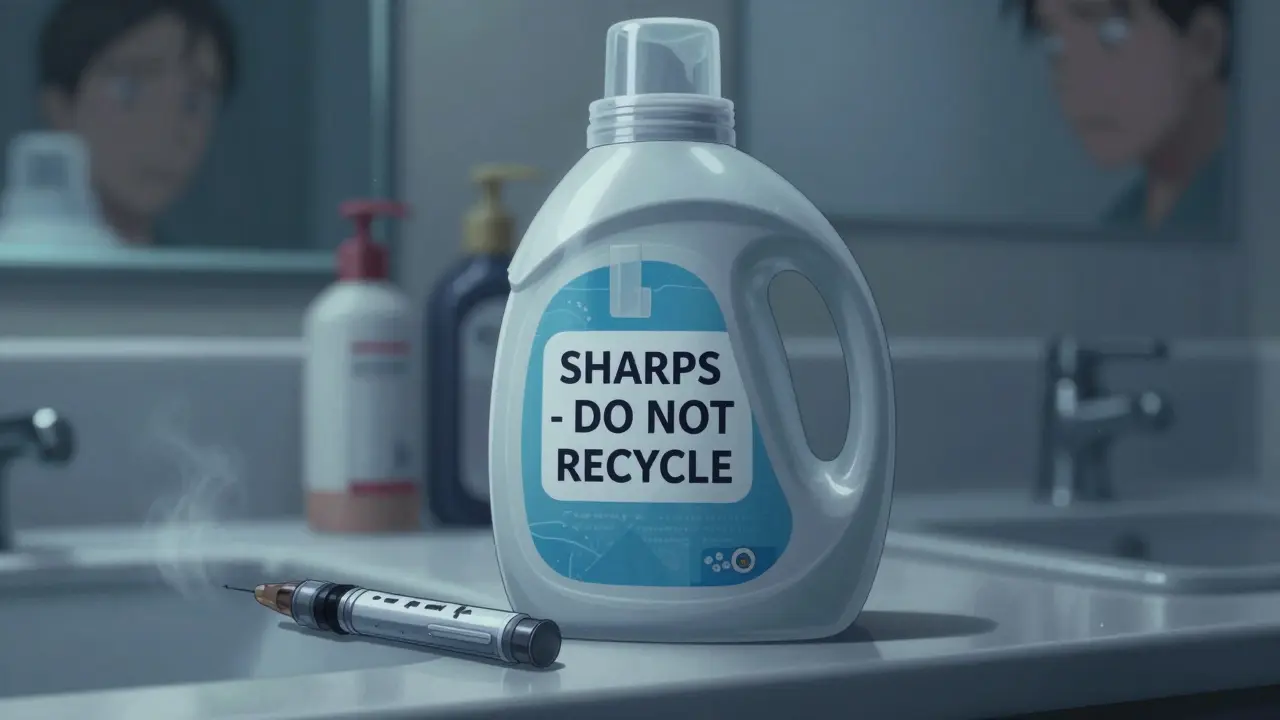
Used syringes, lancets, or pen needles are sharp and dangerous. Never toss them loose in the trash. Instead:- Use a rigid plastic container like an empty laundry detergent bottle or a dedicated sharps container. The walls must be at least 1mm thick.
- Keep the container closed and upright at all times.
- Once full, seal it tightly with heavy-duty tape.
- Label it clearly: “SHARPS - DO NOT RECYCLE.”
- Take it to a pharmacy, hospital, or community collection site. Many pharmacies offer free drop-off for sharps.
Some local councils in the UK offer free sharps disposal kits. Check with your GP surgery or local waste authority. Don’t wait until the container is full-replace it before it gets too heavy or hard to close.
When Flushing Is Actually Allowed (and Only for These Drugs)
Most people think flushing is bad-and it is, for almost everything. But the FDA has a short list of medications so dangerous if misused that they recommend flushing immediately, even if you have a take-back option. These include:- Fentanyl patches
- Oxycodone extended-release tablets
- Hydrocodone/acetaminophen
- Meperidine
- Tapentadol
If you have one of these, and you’re worried someone might get into them-even in your own home-flushing is the fastest way to remove the risk. The FDA updated this list in January 2023. Check their official site if you’re unsure. For all other drugs, never flush.
What About Take-Back Programs?
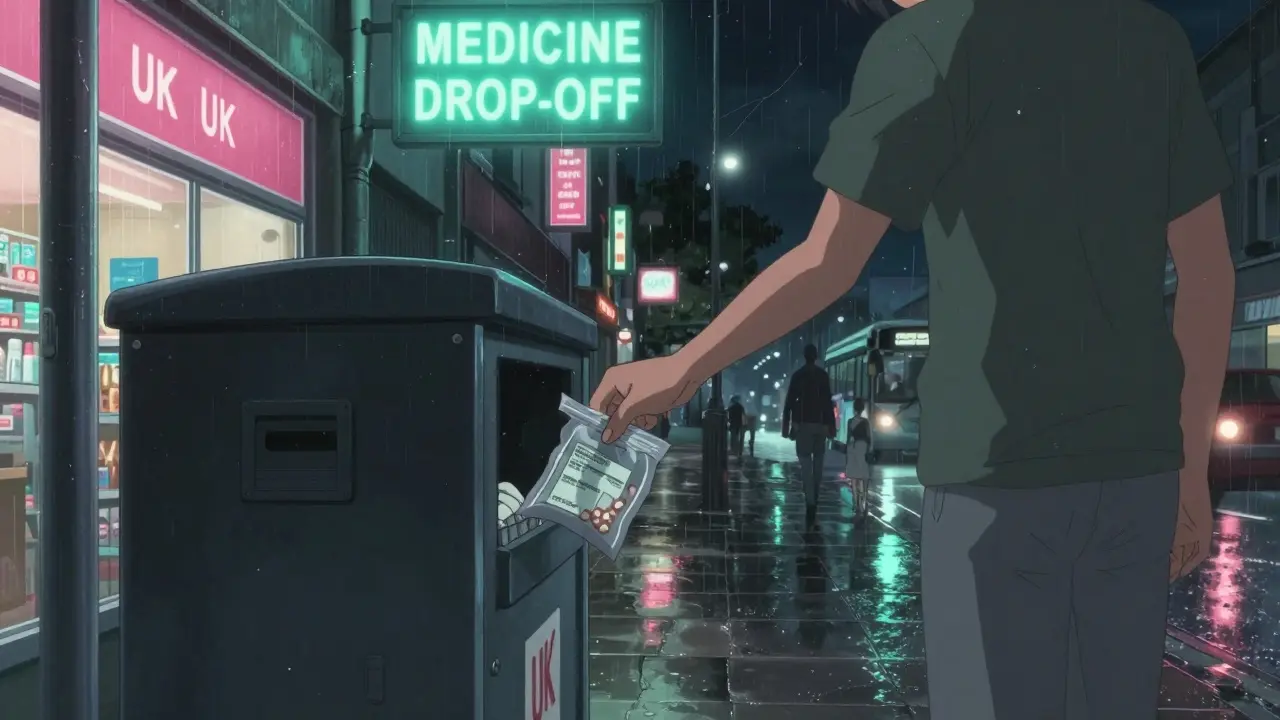
If you can, always use a take-back program. They’re the gold standard. Pills are collected and incinerated under strict controls, so nothing leaks into the environment. In the UK, you can drop off expired medications at most pharmacies for free. No prescription needed. Just bring them in a bag. Some pharmacies even have locked drop boxes you can use after hours. You can also check with your local council for household waste recycling centres that accept medicines. Some hold annual collection events. The NHS website has a tool to find your nearest drop-off point. Take-back programs are especially important if you have opioids, benzodiazepines, or other controlled drugs. These are the ones most likely to be stolen or misused.Common Mistakes People Make
Even when people mean well, they mess up. Here are the most common errors:- Using too little coffee grounds or cat litter. If the pills are still visible, someone might fish them out. Use a full cup per bottle.
- Forgetting to black out the label. Your name and prescription number are personal data. Cover it completely.
- Putting meds in the recycling bin. Recycling plants can’t handle drugs. They’ll end up in the wrong place.
- Flushing everything. Only flush the 15 drugs on the FDA’s list. Everything else stays out of the toilet.
- Keeping old meds “just in case.” Most drugs lose effectiveness after their expiry date. Some can become toxic. Don’t hold onto them.
Pro tip: Keep a small disposal kit in your bathroom. Put a permanent marker, a few resealable bags, and a small container of used coffee grounds in a drawer. When you need to dispose of something, you’re ready in under five minutes.
What Happens to Medications After They’re Collected?
When you drop off pills at a pharmacy or take-back event, they’re not just thrown in a dumpster. They’re collected in sealed bins and shipped to licensed incinerators. These facilities burn the drugs at temperatures over 1,000°C, turning them into ash and gas. No chemicals leak. No residue stays behind. This is why take-back programs are so much safer than home disposal. Even the best home method can’t guarantee 100% neutralization. Studies show up to 20% of certain drugs can still be detected in landfill runoff. Incineration doesn’t leave that risk.How Often Should You Clean Out Your Medicine Cabinet?
Do it at least once a year. Spring or fall works well. While you’re cleaning, check expiration dates. Toss anything you haven’t used in over a year. Also, get rid of old antibiotics-even if you think you might need them later. Antibiotics don’t work on viruses, and taking the wrong dose can lead to resistant infections. Keep only what you’re actively using. Store them in a cool, dry place. Keep them out of reach of kids and pets. And if you’re ever unsure whether a drug is safe to keep, ask your pharmacist. They’ll tell you for free.What If Someone Accidentally Swallows Expired Medicine?
If a child, pet, or adult swallows a pill they weren’t supposed to, act fast.- Call Poison Control immediately: 111 in the UK (press option 1 for poison control).
- Don’t wait for symptoms. Don’t try to make them vomit.
- Have the medicine bottle ready. Tell them the name, dose, and how much was taken.
Poison Control experts are trained to handle these cases. They’ll tell you whether to go to the hospital or wait it out. Every second counts.
Can I flush expired medications down the toilet?
Only if they’re on the FDA’s official flush list-which includes fentanyl patches, oxycodone, and a few other high-risk drugs. For everything else, flushing contaminates water supplies. Never flush painkillers, antibiotics, or antidepressants unless they’re on that list.
What if I don’t have coffee grounds or cat litter?
Use dirt, sand, or even used tea leaves. The goal is to make the medicine unappealing and unrecognizable. Avoid water, sugar, or salt-they won’t hide the pills. If you’re in a pinch, mix the pills with a small amount of dish soap and water, then seal it tightly in a bag. It’s not ideal, but better than leaving them exposed.
Can I recycle empty medicine bottles?
Yes, but only after you’ve completely removed the label. Use a permanent marker to black out your name, prescription number, and pharmacy details. Once the label is unreadable, you can recycle the bottle with your plastic recycling. If you can’t remove the label, throw the whole bottle in the trash.
Are there free disposal services in the UK?
Yes. Most pharmacies in the UK accept expired or unwanted medications for free. You can also check with your local council for household waste recycling centres that have medicine drop-off bins. Some areas hold annual collection events. The NHS website has a tool to find your nearest location.
How do I dispose of insulin pens or needles?
Put used needles and pens in a rigid plastic container like a detergent bottle with thick walls. Seal it with tape and label it “SHARPS.” Take it to your pharmacy or local medical waste facility. Many pharmacies offer free sharps disposal. Never put sharps in regular trash or recycling.
Is it safe to keep old medications “just in case”?
No. Most drugs lose potency after their expiry date. Some can break down into harmful substances. Antibiotics left over from a past infection won’t work on a new illness and can cause antibiotic resistance. Always dispose of unused meds properly instead of holding onto them.
Crystel Ann
January 15, 2026 AT 17:32Just did this last week with my dad’s old painkillers. Coffee grounds + sealable bag + marker over the label. Took five minutes. Feels good to know I’m not risking someone finding them or poisoning the water.
Simple, smart, and nobody has to make a trip.
Jaspreet Kaur Chana
January 16, 2026 AT 03:24Man, this is the kind of practical wisdom that actually saves lives. I’m from India and we don’t have take-back programs everywhere, so home disposal is the only option for most. I’ve been telling my cousins to use cat litter since last year - one of them even started a neighborhood cleanup after her uncle’s expired insulin went missing. People think it’s just about trash, but it’s about dignity, safety, and responsibility. Keep spreading this. No fancy apps needed, just common sense and a Sharpie.
Also, never flush. Ever. Unless it’s fentanyl. Then yes, flush like your life depends on it - because it might.
Iona Jane
January 17, 2026 AT 09:36They’re lying about the FDA list. They only added those drugs because Big Pharma got scared of lawsuits. The real reason you can’t flush? The EPA doesn’t want you to know they’ve been dumping pharmaceutical waste into rivers for decades. They just made you think you’re the problem. Wake up. This is all a distraction. Your medicine cabinet isn’t the threat - the system is.
And don’t trust pharmacies. They’re just middlemen for the same corporations that made the drugs in the first place.
RUTH DE OLIVEIRA ALVES
January 19, 2026 AT 08:33While the guidance provided is generally sound and aligns with current public health recommendations, it is imperative to emphasize that the disposal protocol outlined herein must be contextualized within the regulatory frameworks of the United Kingdom, which may differ materially from those of the United States. For instance, the Medicines and Healthcare products Regulatory Agency (MHRA) explicitly discourages the use of cat litter or coffee grounds in favor of dedicated pharmaceutical return systems, citing potential biohazard risks associated with non-standardized mixing agents. Furthermore, the environmental impact of landfill-bound pharmaceutical residues remains inadequately addressed by this method, as leachate containment in municipal landfills is neither uniformly enforced nor reliably monitored. The assertion that home disposal is ‘safe’ is therefore empirically overstated and potentially misleading in jurisdictions where take-back infrastructure exists.
Niki Van den Bossche
January 20, 2026 AT 15:03Oh, so we’re just supposed to bury our existential dread in coffee grounds now? How poetic. We’re told to mix our grief, our dependency, our chronic pain, our anxiety - all these human conditions distilled into little pills - with dirt and cat feces, as if the earth itself is the only therapist left who won’t judge us.
And then we smugly toss it into the trash like it’s not a metaphor for how we treat our broken systems, our broken bodies, our broken trust in institutions. The label? Covered. The truth? Still screaming. The water? Still drinking it. The system? Still running.
At least the pills are gone. But what about the silence that replaced them? The loneliness? The fear that maybe we’re not supposed to be here, medicated, masked, and mixed into someone else’s garbage?
Nat Young
January 22, 2026 AT 07:38Let’s be real - this whole guide is a feel-good scam. You think mixing pills with cat litter stops anyone from digging? People who need opioids don’t care if it smells like a litter box. They’ll scrape it out. And flushing? Yeah, it’s bad - but you know what’s worse? The fact that the FDA only lists 15 drugs as flushable because they’re too dangerous to leave lying around, but the rest? They’re just ‘inconvenient.’
Meanwhile, pharmacies make billions selling these things and then charge you $10 to drop them off. They don’t want you to dispose of them safely - they want you to keep buying more. This isn’t public health. It’s corporate theater with a side of guilt.
Haley Graves
January 23, 2026 AT 11:08THIS. THIS IS THE KIND OF CONTENT THAT MAKES A DIFFERENCE. I’ve been telling my mom for years to clean out her cabinet - she kept every antibiotic since 2012 ‘just in case.’ Now she’s doing it every six months and even made a little kit with bags and a marker. She says it feels empowering. You don’t need a degree to do the right thing - just a little awareness and the guts to act.
Share this. Print it. Tape it to your fridge. Someone’s kid might be saved because you did.
Tom Doan
January 24, 2026 AT 11:01How charming. A step-by-step guide to disposing of pharmaceuticals… as if the real problem isn’t the overprescription of opioids, the lack of mental health infrastructure, or the fact that 70% of these medications were never needed in the first place. We’ve turned a systemic failure into a domestic chore. Bravo. Now, if you’ll excuse me, I’ll be mixing my antidepressants with used tea leaves while silently mourning the collapse of public healthcare.
Jan Hess
January 26, 2026 AT 02:59Just want to say this guide saved my sister’s life. Her teenager was going through a rough patch and found her old Xanax bottle. She didn’t even know it was still there. After reading this, we cleaned out the whole cabinet together. We made it a family thing. Now we have a box in the bathroom and we check it every month. It’s not perfect but it’s something. Small steps, right?
Also, coffee grounds work way better than I thought. Who knew?
Gloria Montero Puertas
January 27, 2026 AT 20:11Oh, wonderful. So we’re now expected to become amateur chemists, environmental engineers, and privacy vigilantes - all before breakfast - because the state refuses to do its job? And you call this ‘safe’? Please. The only safe disposal is a centralized, federally mandated incineration program - not some DIY hobo ritual with margarine tubs and Sharpies. This isn’t empowerment - it’s negligence dressed up as helpful advice. And the fact that you’re praising it as ‘simple’ reveals just how low our standards have sunk.
ellen adamina
January 29, 2026 AT 05:48What about transdermal patches? The guide says to mix them but doesn’t say how. Do you peel them off the backing first? Do you rinse the sticky side? Does the adhesive count as hazardous? I’ve got a bunch and I’m scared to mess it up.
Diane Hendriks
January 30, 2026 AT 05:17Why are we listening to American guidelines in the UK? We have a national health service. We have laws. We have regulations. This whole post reads like a corporate blog post designed to make Americans feel better about their broken system. In the UK, we don’t need to mix pills with cat litter - we have free, legal, and safe drop-off points at every pharmacy. Stop exporting your problems as ‘solutions.’