
Imagine walking into your doctor’s office or pharmacy with a single sheet of paper that tells you exactly what to take, when to take it, and what to do if you miss a dose. That is the power of a Medication Action Plan (MAP). It is not just another list of pills. It is a personalized roadmap designed by you and your healthcare providers to keep you safe and healthy.
Many people struggle with managing multiple medications. You might forget doses, mix up timing, or feel confused about side effects. A MAP solves this by turning complex medical instructions into simple, daily actions. This guide will show you how to build one with your care team, ensuring you get the most out of your treatment while minimizing risks.
What Is a Medication Action Plan?
A Medication Action Plan is a patient-centric document containing specific actions for tracking progress in self-management. Think of it as the instruction manual for your health. Unlike a standard prescription label, which only lists drug names and dosages, a MAP explains the "why" and "how" behind your regimen.
This tool emerged from broader efforts to improve patient safety. In Germany, for example, standardized medication plans have been required since 2016 for patients on three or more drugs. In the United States, they are a core part of Medication Therapy Management (MTM) programs under Medicare Part D. The goal is simple: empower you to manage your health confidently.
A good MAP includes:
- Clear goals: What you want to achieve (e.g., lower blood pressure).
- Specific steps: Exactly what to do each day.
- Problem-solving strategies: What to do if you miss a dose or experience side effects.
- Progress tracking: How to measure success over time.
Why You Need a Medication Action Plan
Medication errors are a leading cause of hospital admissions. Research shows that misunderstandings about how to take medicines can lead to serious complications. A MAP helps prevent these issues by creating a shared understanding between you and your providers.
Here is why having a MAP matters:
- Improves adherence: Studies indicate that patients who actively create their own plans see a 25-40% improvement in taking medications correctly.
- Reduces hospital visits: Personalized plans have been linked to a 32% drop in medication-related hospitalizations within a year.
- Clarifies purpose: Knowing why you take each pill makes it easier to remember them. Many patients report feeling less confused after receiving a clear plan.
- Saves money: By preventing adverse drug events, MTM services generate significant savings for the healthcare system-every $1 invested returns approximately $12.30 in avoided costs.
Who Should Create a Medication Action Plan?
While anyone can benefit from a MAP, certain groups need them most. If you fall into any of these categories, talk to your pharmacist or doctor about getting one today.
| Patient Group | Why They Need It | Key Focus Area |
|---|---|---|
| Patients with chronic conditions | Manage multiple long-term diseases like diabetes or heart disease. | Coordinating different drug schedules. |
| Elderly individuals | Higher risk of drug interactions and cognitive decline affecting memory. | Simplifying routines and monitoring side effects. |
| Those on high-risk meds | Anticoagulants, insulin, and opioids require precise dosing. | Preventing dangerous errors and overdose. |
| People starting new treatments | New regimens often cause confusion during the adjustment period. | Establishing habits early. |
If you are eligible for Medicare Part D, you may qualify for free MTM services if you take eight or more chronic medications and have projected annual drug costs above $4,430 (as of 2024 guidelines). Even if you don’t meet these criteria, many private insurers and pharmacies offer similar consultations.

Step 1: Prepare for Your Comprehensive Medication Review
The foundation of a great MAP is accurate information. Before your appointment, gather everything related to your health. This process is called medication reconciliation, and it ensures no details are missed.
- Collect all containers: Bring every bottle, box, and blister pack you use. This includes prescriptions, over-the-counter drugs, vitamins, and herbal supplements.
- List non-drug therapies: Note down any devices (like inhalers or patches) and alternative remedies.
- Note allergies and reactions: Write down any past bad experiences with medications, even if they happened years ago.
- Prepare questions: Jot down concerns like “Can I take this with food?” or “What if I forget my evening dose?”
Pharmacists spend 30-60 minutes reviewing this data during a Comprehensive Medication Review (CMR). The more complete your input, the better their output.
Step 2: Collaborate with Your Care Team
Your care team typically includes your primary care physician, specialists, and pharmacists. Each plays a unique role in building your MAP.
- Physicians prescribe the medications and define clinical goals.
- Pharmacists check for interactions, simplify schedules, and translate medical jargon into plain language.
- You provide context about your daily life, preferences, and barriers to adherence.
Effective collaboration means speaking up. If a proposed schedule doesn’t fit your routine, say so. For instance, if you work night shifts, taking a morning pill at 8 AM might not make sense. Your team should adjust the plan to match your reality, not the other way around.
Step 3: Define Clear, Measurable Goals
Vague goals lead to vague results. Instead of saying “take medicine regularly,” set specific targets. Use the SMART framework (Specific, Measurable, Achievable, Relevant, Time-bound).
Example:
Weak Goal: “Try to remember my blood pressure med.”
Strong Goal: “Take Lisinopril at 7:00 AM every day with breakfast for the next 30 days to maintain BP below 130/80.”
Your MAP should include measurable outcomes. Maybe it’s achieving 90% adherence over a month or reducing dizziness episodes by half. These metrics help you track progress objectively.
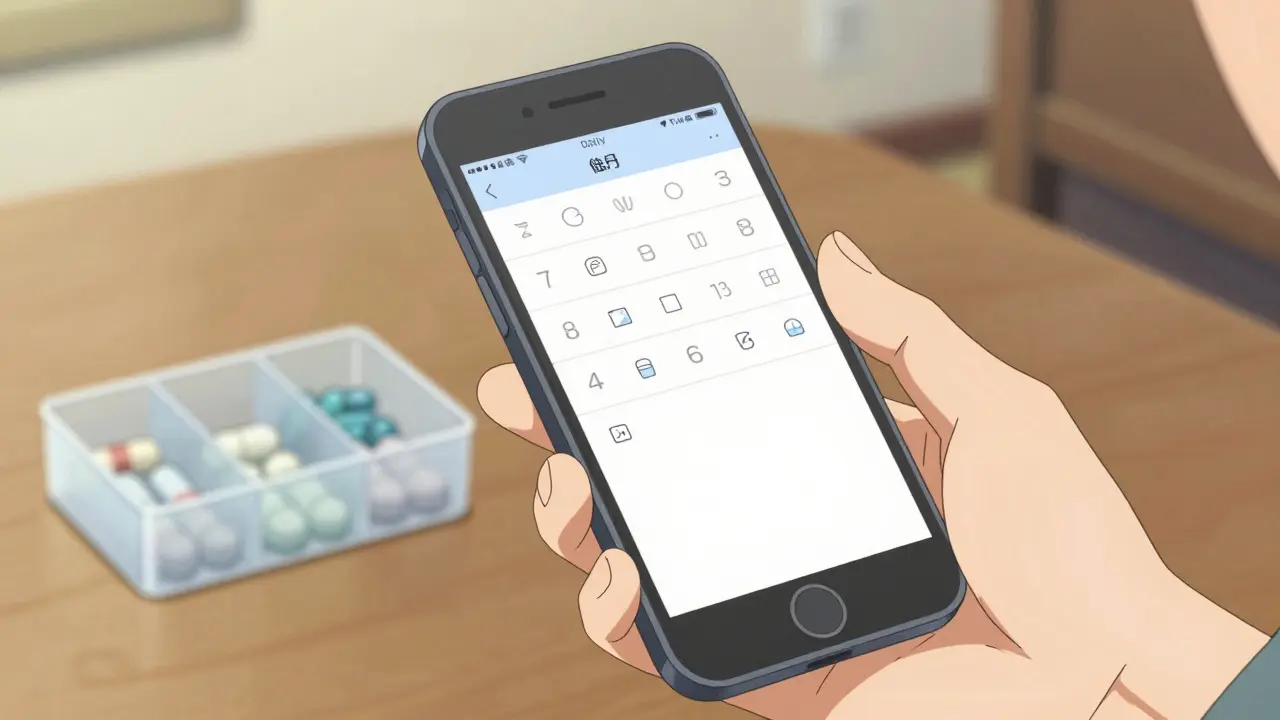
Step 4: Build Your Daily Routine
The heart of the MAP is the daily action list. Break down your regimen into manageable chunks. Link medication times to existing habits to boost memory.
- Morning: Take Pill A with coffee.
- Noon: Apply Patch B before lunch.
- Evening: Inject Insulin C after dinner.
Use visual aids if helpful. Some patients color-code sections or use pictures (e.g., a toothbrush icon for morning doses). Apps can also send reminders based on your specific MAP. About 63% of major pharmacy chains now offer such digital tools.
Step 5: Plan for Problems
Life happens. You will miss doses or encounter side effects. A robust MAP anticipates this.
Create an “If-Then” section:
- If I miss my morning dose, then I will take it as soon as I remember unless it’s close to my next dose.
- If I feel dizzy, then I will sit down immediately and call my nurse line.
- If I run out of refills, then I will contact the pharmacy two days before.
This proactive approach reduces anxiety and prevents small issues from becoming emergencies.
Review and Update Regularly
A MAP is a living document. As your health changes, so should your plan. Schedule quarterly reviews with your pharmacist or doctor. Add new medications, remove discontinued ones, and adjust goals based on recent test results.
Don’t wait for problems to arise. Proactive updates ensure your plan remains relevant and effective. Keep a copy at home, in your car, and share it with family members who might assist you in an emergency.
Is a Medication Action Plan the same as a medication list?
No. A medication list simply records what drugs you take. A Medication Action Plan goes further by outlining specific steps, goals, and problem-solving strategies tailored to your lifestyle and health needs.
How do I know if I’m eligible for free MTM services?
Under Medicare Part D, you qualify if you take eight or more chronic medications and have projected annual drug costs exceeding $4,430. Contact your pharmacy or insurance provider to confirm eligibility. Private plans vary, so check your benefits summary.
Who creates the Medication Action Plan?
It is co-created by you and your care team, primarily involving your pharmacist and physician. Your input on daily routines and preferences is crucial for making the plan practical and sustainable.
Can I update my MAP myself?
You can note changes, but always consult your pharmacist or doctor before altering doses or adding/removing medications. They ensure safety and check for interactions. Regular professional reviews are recommended at least quarterly.
What if I don’t understand the medical terms in my plan?
Ask your care team to explain using plain language. Effective MAPs avoid jargon. If you still feel confused, request a follow-up session or ask for visual aids. Understanding is key to adherence.
Lenny Cruz
June 5, 2026 AT 13:28The notion that a piece of paper can solve the systemic failures of modern pharmacology is quaint, bordering on delusional. We are told to 'collaborate' with our care teams, yet these teams are often overworked generalists who have thirty seconds to spend on your existential dread. The MAP is merely a bureaucratic band-aid for a healthcare system that prioritizes throughput over actual patient understanding. It places the cognitive load squarely on the patient, assuming they have the time, energy, and literacy to decode medical jargon into 'daily actions.'
Aswin Narayan J
June 7, 2026 AT 05:56Look, I get the frustration but you're missing the point entirely. In India, we don't have luxury MTM programs so we rely on family networks and strict adherence to the doctor's word because there is no other safety net. This guide is useful for people who actually have access to such resources. If you think it's elitist, fine, but ignoring it doesn't make your blood pressure go down. Stop complaining about the tool and start using what you have.
Jennifer Legore
June 7, 2026 AT 22:26I completely agree with the need for structure! :) Having a clear plan has been life-changing for me personally. When I started mapping out my meds with my pharmacist, I felt so much more empowered and less anxious about making mistakes. It really helps to have those specific 'if-then' scenarios written down because panic sets in quickly when you forget a dose. Let's support each other in taking control of our health! :)
Alyssa Zucker
June 9, 2026 AT 01:33I hear you, Lenny. It does feel overwhelming sometimes. I used to feel like just another number in the system too. But when I finally sat down with my pharmacist and brought all my bottles, she took the time to explain why each one mattered. It wasn't perfect, but it helped me feel seen. It’s scary to admit you need help, but having that paper makes the chaos feel a little less loud.
Francis Saul
June 9, 2026 AT 13:43hey guys its not that deep u just gotta do the work. i made a list on my fridge with markers and now i dont miss doses. dont overthink it. just take the pills when u supposed to. simple as that. ur health is ur responsibility not the doctors.
Dave Villeneue
June 10, 2026 AT 21:53Your simplistic approach ignores the complex pharmacokinetics involved in polypharmacy. Merely marking a fridge is insufficient for patients managing anticoagulants or insulin-dependent regimens where timing precision is critical for survival. You are trivializing serious medical management by reducing it to a marker on a door. This is dangerous advice disguised as common sense.
Rachel Harrypersad
June 12, 2026 AT 10:18we are all just meat bags waiting to break why pretend the map matters it changes nothing about the decay inside us the pills are just sugar pills for the soul trying to delay the inevitable end everything is meaningless anyway
Brian Irwin
June 14, 2026 AT 06:46i know it feels heavy sometimes but small steps help. i used to hate going to the doctor too but now i ask questions before i leave. it doesnt fix everything but it makes you feel better about yourself. try talking to someone you trust about it maybe write down what scares you first