
Imagine you are sitting in an airport lounge, watching the clock tick toward your flight. You have packed your bags, checked your passport, and confirmed your hotel reservation. But there is one item in your carry-on that could derail your entire trip if mishandled: your prescription medication. For millions of travelers, changing time zones isn't just about adjusting their sleep schedule; it is a complex medical challenge that requires precise planning.
If you take daily prescriptions, you know that consistency is key. But what happens when "daily" becomes ambiguous? Do you take your pill at 8 AM home time, or 8 PM destination time? Getting this wrong can lead to missed doses, reduced effectiveness, or even serious side effects. The good news is that with the right strategy, you can navigate these shifts safely. This guide breaks down exactly how to manage medication adherence when crossing borders and time zones, ensuring your health stays on track while you explore the world.
The Science Behind Time Zone Shifts and Medication
To manage your meds effectively, you first need to understand why time zones matter. Your body operates on a circadian rhythm-a natural internal clock that regulates hormone release, digestion, and other vital functions. Many medications are designed to work in sync with this rhythm. When you travel across multiple time zones, you disrupt this synchronization, a phenomenon known as jet lag. But your medication doesn't automatically adjust to the new local time.
According to research published in the Journal of Clinical Pharmacology, timing deviations can significantly impact drug efficacy. For most standard medications, such as blood pressure pills or antidepressants, a window of four hours (two hours before or after the scheduled time) is generally safe. However, for drugs with narrow therapeutic windows-like insulin, seizure medications, or hormonal contraceptives-even small timing errors can cause significant problems. Understanding this distinction is the first step in creating a safe travel plan.
| Medication Type | Sensitivity Level | Safe Timing Window | Action Required |
|---|---|---|---|
| Standard Prescriptions (e.g., Antihypertensives) | Low to Moderate | ±4 hours | Gradual adjustment over 2-3 days |
| Insulin | High | Strict meal-time alignment | Customized schedule from endocrinologist |
| Anti-seizure Medications | Very High | ±2 hours | Maintain strict regular schedule |
| Oral Contraceptives | High | ±12 hours max delay | Use backup contraception if delayed |
Strategies for Different Time Zone Gaps
Not all trips require the same level of intervention. The complexity of your medication schedule depends largely on how many time zones you are crossing. Healthcare providers generally categorize these scenarios into two main groups: short-haul and long-haul travel.
Short-Haul Travel (Less Than Three Hours Difference): If you are traveling within a similar time zone or shifting by less than three hours, the simplest approach is often the best. According to Encompass Health's clinical guidelines, you should maintain your original medication schedule without adjustment. If you usually take your pill at 9 AM, continue doing so based on your home time until you return. This minimizes confusion and keeps your body's internal clock stable.
Long-Haul Travel (Three+ Hours Difference): When crossing more than three time zones, you need a transition plan. Village Medical's travel health advisory suggests a hybrid approach. Take your first dose upon arrival according to your home time zone schedule. Then, gradually shift to the destination time zone for subsequent doses. For example, if you are flying east and gain four hours, you might take your next dose four hours earlier than usual, then another four hours earlier the following day, until you align with local time. This gradual shift prevents shock to your system.
Pre-Travel Preparation: The Foundation of Safety
Effective medication management starts weeks before you board the plane. Rushing to organize your prescriptions at the last minute increases the risk of errors. Here is a checklist to ensure you are fully prepared:
- Consult Your Doctor Early: Schedule a consultation at least four to six weeks before international travel. Bring your detailed itinerary, including flight times and layovers. This allows your provider to create a customized schedule, especially for time-sensitive medications like insulin or anticoagulants.
- Carry Extra Supply: Never pack just enough medication for your trip. The American Medical Association recommends carrying at least a seven-day surplus beyond your planned duration. For international trips to regions with limited pharmacy access, aim for a 14-day supply. This buffer protects you against lost luggage, flight delays, or unexpected extensions.
- Pack Smart: Always keep your medications in your carry-on luggage. Checked bags can be lost, delayed, or exposed to extreme temperatures. A survey by Chemique Pharm found that 63% of medication-related travel emergencies occurred because travelers packed meds in checked bags. If you need refrigeration, use insulated pouches with ice packs. Note that insulin loses up to 27% of its potency if exposed to temperatures above 86°F (30°C) for more than 24 hours.

Navigating Security and Documentation
Airport security can be a stressful hurdle for travelers with medications. The Transportation Security Administration (TSA) permits medications in carry-on luggage in containers larger than the standard 3.4-ounce liquid limit, provided they constitute a "reasonable quantity" for your trip. However, you must notify TSA agents at the beginning of the screening process. Failure to do so can lead to unnecessary delays or confiscation.
Documentation is equally critical. You should carry a detailed medication list containing:
- Brand and generic names of all medications
- Dosage and frequency
- Administration instructions
- Prescribing physician's contact information
- Purpose of each medication
- List of allergies
Keep both printed and digital copies of this list. Store the printed copy separately from your medications in case of loss. If you are traveling with controlled substances, obtain a letter from your physician explaining the medical necessity. Countries like Japan, South Korea, and the UAE have strict regulations regarding certain medications, and lacking proper documentation can result in legal issues.
Handling Missed Doses While Abroad
Despite the best plans, life happens. Flights get delayed, meals are skipped, and alarms fail. Knowing how to handle a missed dose is crucial. The golden rule, emphasized by Encompass Health and Mayo Clinic research, is: never double up on doses to compensate for a missed one. Doubling up increases the risk of adverse events by 4.2 times.
Instead, follow these general protocols:
- Within the Safe Window: If you remember the missed dose within the four-hour window (two hours before or after the scheduled time), take it as soon as you remember.
- Beyond the Safe Window: If more than two hours have passed before your next scheduled dose, skip the missed dose entirely. Resume your normal schedule with the next dose.
- Antibiotics: Continue the prescribed schedule without doubling. Inconsistent dosing can increase antibiotic resistance risk by 18%, according to CDC data.
- HIV Antiretrovirals: These require strict adherence. Take the missed dose as soon as possible, even if it is close to the next scheduled dose, to maintain therapeutic blood levels.
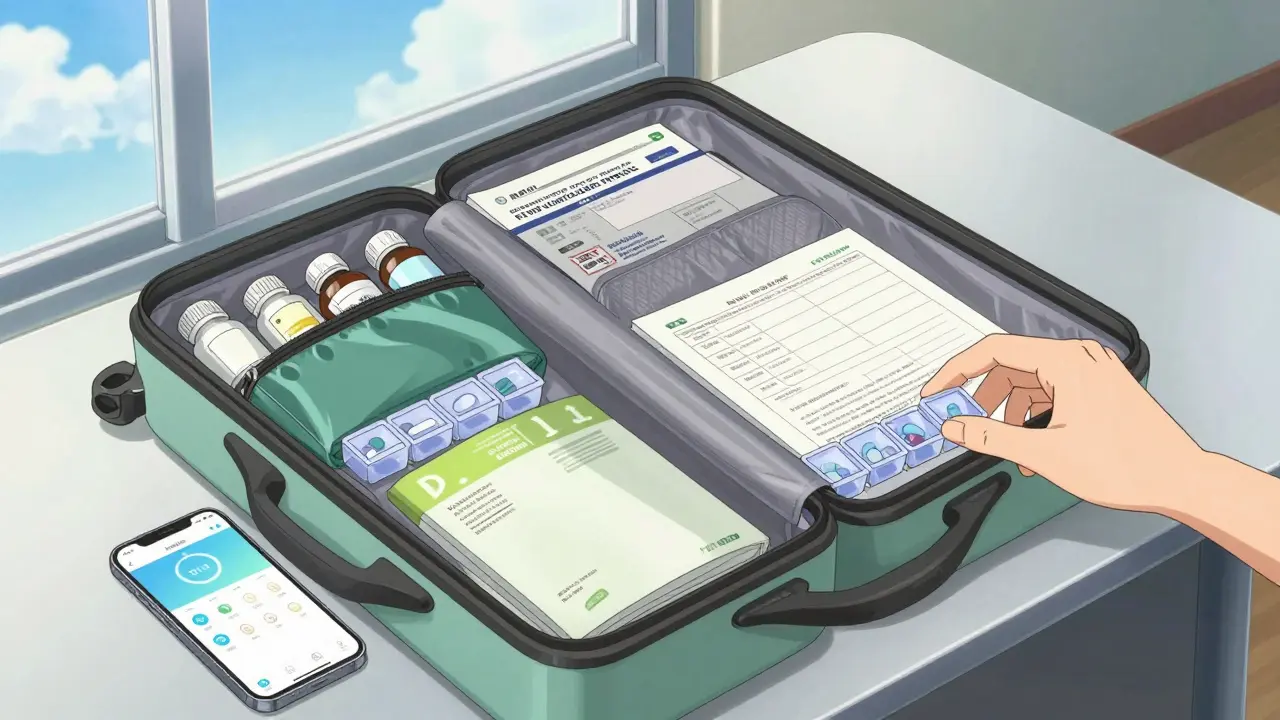
Leveraging Technology for Better Adherence
In today's digital age, technology can be your best ally in managing medication schedules. NimbleRx's 2024 study found that travelers using medication reminder apps with automatic time zone adjustment features had 47% fewer missed doses compared to those using standard phone alarms. These apps can sync with your calendar and adjust reminders based on your location, eliminating the guesswork.
Additionally, consider setting countdown timers rather than timezone-based alarms. The study noted that 89% of participants reported fewer missed doses when using this method. As you settle into your destination, switch your phone's time zone setting to local time, but keep your medication app synchronized with your home time initially, then gradually adjust it as per your doctor's advice.
Special Considerations for Specific Conditions
Certain conditions require extra vigilance during travel. Here are specific guidelines for common scenarios:
- Diabetes: If you cross five or more time zones, adjust basal insulin doses by 20% for each additional time zone beyond three. Meal-time insulin should be aligned with actual meal times at the destination. Consult your endocrinologist for a personalized plan.
- Epilepsy: Maintain dosing within a two-hour window of your regular schedule. Deviations greater than this increase breakthrough seizure risk by 3.7 times, according to Johns Hopkins University research.
- Cardiovascular Health: Travelers taking anticoagulants like warfarin should maintain INR testing within 72 hours of returning home. Dietary changes and schedule disruptions can affect medication efficacy.
- Contraception: Take the pill at the same local time each day. If a dose is delayed by more than 12 hours, use backup contraception to prevent unintended pregnancy.
Returning Home: Reversing the Clock
Your journey doesn't end when you land back home. Re-adjusting to your original time zone is just as important as adapting to the destination. Follow the same gradual shift strategy used for outbound travel. If you traveled east, you may need to delay doses slightly each day until you return to your routine. Monitor your body for any unusual symptoms and consult your healthcare provider if you experience persistent issues.
By planning ahead, understanding your medication's needs, and leveraging available tools, you can travel with confidence. Remember, your health is the priority. Don't hesitate to seek professional advice tailored to your specific medical history. Safe travels!
Should I change my medication schedule immediately upon arrival?
It depends on the number of time zones crossed. For shifts of less than three hours, maintain your home schedule. For larger shifts, gradually adjust over 2-3 days or follow a hybrid approach recommended by your doctor. Never make abrupt changes without medical advice, especially for time-sensitive medications.
Can I pack my medications in checked luggage?
No, never pack medications in checked luggage. They should always be in your carry-on bag to prevent loss, theft, or exposure to extreme temperatures. Checked bags are also subject to stricter liquid limits and handling risks.
What should I do if I miss a dose while traveling?
Do not double up on doses. If you remember within the safe window (usually ±2 hours), take it immediately. If it is closer to the next dose, skip the missed one and resume your normal schedule. Consult your specific medication guidelines for exceptions, such as HIV antiretrovirals.
How much extra medication should I carry?
Carry at least a seven-day surplus beyond your trip duration. For international travel to areas with limited pharmacy access, a 14-day supply is recommended. This ensures you have enough medication in case of delays or lost luggage.
Do I need special documentation for medications abroad?
Yes, especially for controlled substances. Carry a detailed medication list and a letter from your physician explaining the medical necessity. Research destination-specific regulations, as countries like Japan and South Korea have strict laws regarding certain medications.