
Imagine sitting in a clinic waiting room, clutching a bag of pill bottles, feeling slightly overwhelmed by the sheer number of prescriptions you take. You have an upcoming medication review, which is a structured clinical consultation where healthcare professionals systematically evaluate a patient's complete medication regimen to optimize therapeutic outcomes and ensure safety. This isn't just a routine check-up; it’s a critical safety net designed to catch potential problems before they become serious health issues. If you’ve been invited to one, or if your doctor suggested it, you might be wondering what exactly happens during this appointment and how you can make the most of it.
The reality is that many patients walk into these appointments unprepared, leading to rushed consultations and missed opportunities to improve their health. In the United Kingdom, under the National Health Service (NHS), these reviews are becoming increasingly standard, especially for older adults or those managing multiple conditions. The goal is simple: to make sure every pill you take is doing its job, isn’t harming you, and isn’t unnecessarily complicating your life. Preparing properly can turn a stressful 20-minute meeting into a powerful tool for better health management.
Understanding the Purpose of a Medication Review
Before gathering your pills, it helps to understand why this appointment exists. Historically, medication reviews emerged as a formal process to address polypharmacy, defined as the concurrent use of multiple medications by a single patient, often increasing the risk of adverse drug events. As we age, or as our health conditions multiply, we often see different specialists-perhaps a cardiologist for heart issues, a rheumatologist for joint pain, and a GP for general care. Each specialist prescribes treatments without always having full visibility into what the others are prescribing. This fragmentation can lead to dangerous drug interactions or redundant treatments.
A medication review acts as a central checkpoint. According to guidelines from practices like the Godiva Group Practice NHS, these reviews determine the overall effectiveness of your medications, verify correct dosages, and assess safety profiles. They are not about judging your adherence but about optimizing your regimen. For instance, a review might reveal that two different blood pressure medications are working against each other, or that a vitamin supplement is interfering with an antibiotic. By identifying these issues early, healthcare providers can prevent hospitalizations caused by adverse drug reactions.
It is also important to note that these reviews are not optional for many patients. Healthcare systems are moving toward mandatory reviews for high-risk groups. If you ignore an invitation, the consequences can be significant. Some NHS practices will restrict medication quantities or even cease issuing further prescriptions until a review is completed. This strict policy underscores the clinical importance of the process-it is fundamentally about keeping you safe.
Gathering Your Medications: What to Bring
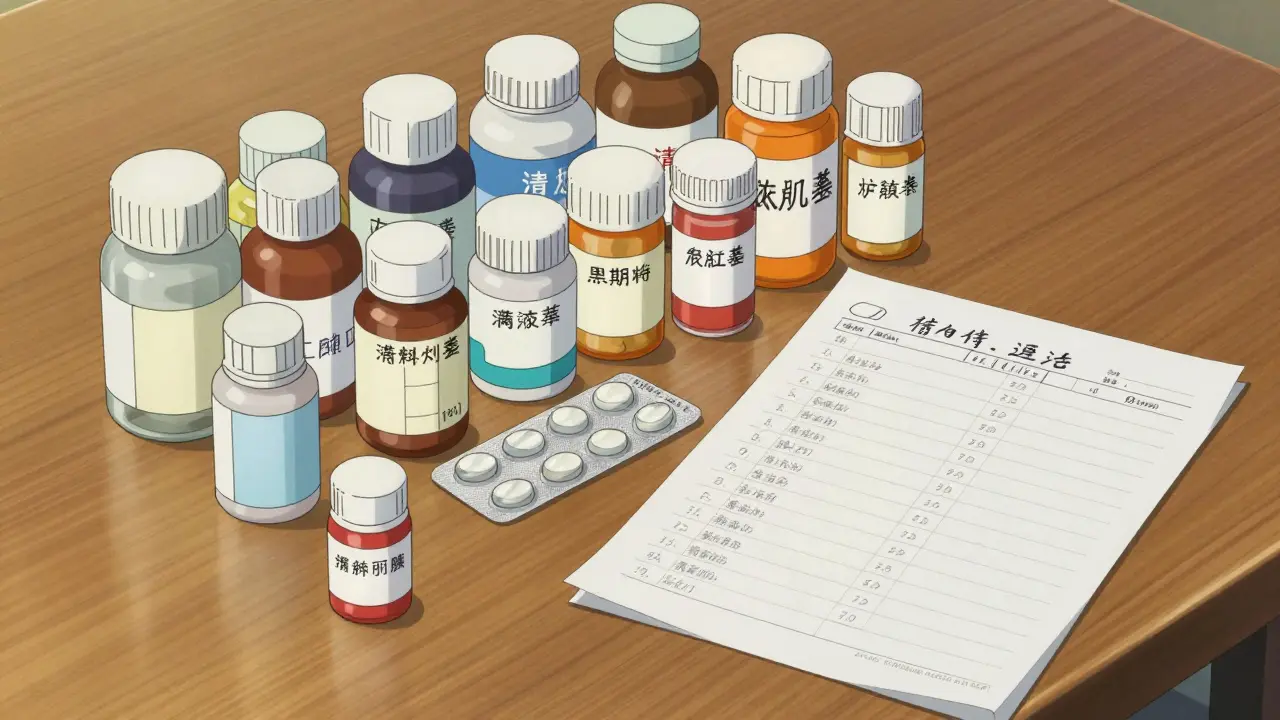
The cornerstone of a successful medication review is a comprehensive inventory of everything you put into your body. It is easy to forget that "medications" include far more than just prescription tablets. To prepare effectively, you need to bring every single item to the appointment. This includes:
- Prescription medications: All tablets, capsules, liquids, inhalers, creams, ointments, and eye drops prescribed by any doctor.
- Over-the-counter (OTC) products: Painkillers like ibuprofen or paracetamol, antacids, allergy medicines, and sleep aids bought from pharmacies or supermarkets.
- Herbal remedies and supplements: Vitamins, minerals, fish oils, and herbal teas or extracts. Many people assume these are harmless, but they can interact powerfully with prescription drugs. For example, St. John’s Wort can reduce the effectiveness of certain antidepressants and birth control pills.
- Topical treatments: Even creams and patches count, as ingredients can be absorbed into the bloodstream.
Do not rely on memory alone. Bring the actual containers if possible. Why? Because labels provide crucial details that memory often misses, such as exact dosage strengths and expiration dates. If you cannot bring the physical bottles, create a detailed list. However, physical inspection allows the pharmacist or GP to spot unused medications, which might indicate side effects or confusion about how to take them.
If you have difficulty traveling to the clinic, do not hesitate to ask for accommodations. The Northern Health and Social Services Board notes that home visits may be available for patients who struggle with mobility. Request this when booking your appointment. Being physically present with your medications is vital, so finding a way to get there-or having someone come to you-is essential.
Creating a Detailed Medication List
In addition to bringing the physical items, preparing a written record adds another layer of accuracy. This list should go beyond just names. For each medication, include the following details:
- Name of the medication: Use the brand name or generic name as it appears on the label.
- Dosage: How much of the drug is in each unit (e.g., 500mg, 10mg).
- Frequency: How often you take it (e.g., once daily, twice a week, as needed).
- Reason for taking it: Why was it prescribed? If you don’t remember, write down your best guess. This helps the provider assess if the condition still exists.
- Prescribing doctor: Who issued the prescription? This is helpful if there are conflicting instructions from different specialists.
- Side effects experienced: Have you noticed dizziness, nausea, fatigue, or mood changes since starting a new drug? Note these specifically.
For patients with specific conditions like Parkinson’s disease, timing is critical. Parkinson’s UK emphasizes documenting the precise timing of each dose because these medications have narrow therapeutic windows. Missing a window by even 30 minutes can significantly impact symptom control. If you take medications at irregular times, note your typical schedule. This information becomes especially valuable for telehealth appointments, where the clinician cannot observe your routine directly.
Preparing Questions and Concerns
A medication review is a shared decision-making process, not a lecture. You are the expert on your own experience; the clinician is the expert on pharmacology. To bridge this gap, prepare questions in advance. Writing them down ensures you don’t forget them in the moment. Consider asking:
- "Are all these medications still necessary given my current health status?"
- "Can any of these be simplified? For example, can I take fewer pills per day?"
- "What are the expected side effects, and which ones require immediate medical attention?"
- "Are there any non-drug alternatives for managing my symptoms?"
- "How do these medications interact with my diet or lifestyle habits?"
Think about your goals. Do you want to feel more energetic? Do you struggle with remembering to take pills? Are you worried about cost? Sharing these personal priorities helps the provider tailor the review to your needs. The Health Innovation Network’s framework highlights that agreeing on treatment goals is a key component of a structured review. If your goal is simplicity, the pharmacist might suggest switching to combination therapies or adjusting dosing schedules to align with your daily routine.
Navigating Telehealth and Virtual Reviews
With the rise of digital health services, many medication reviews now occur via video or phone calls. While convenient, virtual reviews require extra preparation. Since the clinician cannot physically inspect your medications, your documentation must be flawless. Before logging on:
- Organize your medications visually: Lay out all your bottles and boxes on a table where the camera can see them clearly. Group them by type (prescriptions, OTC, supplements).
- Test your technology: Ensure your internet connection is stable and that you have access to the telehealth platform, whether through an email link or a downloaded app. Patient Safety Wisconsin recommends testing audio and video capabilities beforehand to avoid technical delays.
- Have your list handy: Keep your written medication list next to you so you can refer to it quickly if asked for specific details.
If you are uncomfortable with technology, consider asking a family member or friend to help set up the call. Alternatively, inquire if a hybrid model is possible, where you drop off your medications at the pharmacy for a visual check while speaking with the pharmacist remotely. The key is ensuring the clinician has accurate data to work with, regardless of the medium.

What Happens During the Review?
Knowing what to expect can reduce anxiety. A typical review lasts between 20 to 45 minutes, depending on complexity. Routine assessments might be shorter, while comprehensive reviews led by clinical pharmacists often take longer. The process generally follows four steps:
- Assessment: The clinician reviews your list and compares it with your medical records. They look for duplicates, interactions, and appropriateness of doses.
- Goal Setting: You discuss what matters most to you-pain relief, mobility, mental clarity, etc.
- Identification of Issues: The provider identifies potentially inappropriate medicines. For example, they might flag a sedative that increases fall risk in older adults.
- Risk-Benefit Analysis: Together, you decide whether to continue, adjust, or stop certain medications. This is called deprescribing when stopping a drug is the best option.
Remember, deprescribing is not failure; it is often a sign of good care. Removing unnecessary medications can improve quality of life and reduce side effects. Be open to this possibility. The clinician will explain the rationale behind any changes and monitor you closely during the transition.
After the Appointment: Next Steps
The review doesn’t end when you leave the clinic. You may receive updated prescriptions, new instructions, or referrals to specialists. Take time to read any provided leaflets. If you are unsure about how to take a new medication, call the pharmacy or practice immediately. Do not guess.
Keep a copy of the agreed-upon plan. Update your personal medication list with any changes. Share this updated list with other healthcare providers you see regularly. Consistency across your care team prevents future errors. Finally, mark your calendar for your next annual review. Regular checks ensure that as your health evolves, your medication regimen evolves with it.
| Review Type | Duration | Key Preparation Focus | Who Conducts It |
|---|---|---|---|
| Routine Medication Review | ~20 minutes | Basic list of prescriptions | GP or Nurse |
| Comprehensive Medication Review | 30-45 minutes | All meds including OTC/supplements, detailed history | Clinical Pharmacist |
| Telehealth Review | Variable | Visual organization, tech setup, written lists | GP or Pharmacist |
What happens if I miss my medication review appointment?
If you miss your appointment, you may face restrictions on your prescriptions. Many NHS practices send monthly reminders for three months after the initial invitation. If you do not respond, they may limit the quantity of medications dispensed for one month. Continued non-compliance can result in the cessation of further prescriptions until a review is completed. This policy is in place to ensure patient safety, as unchecked polypharmacy poses significant risks.
Do I need to bring vitamins and herbal supplements to the review?
Yes, absolutely. Vitamins, minerals, and herbal remedies can interact with prescription medications. For example, some herbs can alter how your liver processes drugs, making them less effective or more toxic. Bringing all supplements ensures the clinician has a complete picture of your intake and can advise on safe usage.
How long does a medication review usually last?
A routine medication review typically lasts around 20 minutes. However, comprehensive reviews conducted by clinical pharmacists, especially for patients with complex conditions or polypharmacy, can take 30 to 45 minutes. Telehealth reviews may vary in length depending on the depth of discussion and technical setup.
Can I request a home visit if I cannot travel to the clinic?
Yes, if you have difficulty traveling due to mobility issues or other constraints, you can request a home visit when booking your appointment. Healthcare boards recognize that physical attendance is crucial for thorough reviews, and accommodations are often available to ensure accessibility.
Why is timing important for medications like those used for Parkinson’s disease?
Medications for Parkinson’s disease often have narrow therapeutic windows, meaning the difference between effective dosage and ineffective dosage is small. Precise timing is critical to maintain steady levels of the drug in your system. Deviations can lead to significant fluctuations in symptom control, making accurate documentation of dosing times essential for the review.
Kevin Burke
July 8, 2026 AT 17:32The modern individual is trapped in a labyrinth of chemical dependencies, orchestrated by a system that profits from your confusion. To prepare for such a review is to engage in a philosophical exercise of self-ownership amidst institutional fragmentation. One must question the very nature of 'optimization' when the goal is merely compliance rather than holistic well-being.
Sinead Doyle
July 9, 2026 AT 03:11typo alert: its not just about safety its about control. they want you to bring every bottle so they can track what youre taking and correlate it with other data points. St Johns Wort isnt just an herb its a marker for non-compliance with standard protocols. dont trust the labels they change them constantly to hide ingredients. bring the actual bottles because the barcodes are scanned into a central database that links to your social security number eventually. its all connected.
Emily Schor
July 10, 2026 AT 22:09This is actually really helpful advice. I always forget to list my vitamins and supplements, assuming they don't matter much compared to prescription drugs. It makes sense that interactions could happen there too. I'll definitely make a written list before my next appointment so nothing gets missed.
Samuel Friday
July 11, 2026 AT 05:29You people are absolutely pathetic if you need a blog post to tell you to organize your own medical history. It is insulting to suggest that the average person cannot manage this basic administrative task without hand-holding. The real issue is the incompetence of the healthcare providers who fail to maintain accurate records, forcing patients to do their jobs for them. Bring your bottles or stay ignorant.
Arun Krishnan
July 11, 2026 AT 23:55Great guide everyone. Remember that preparing for these appointments is a step towards better health. Take your time to write down everything. If you have trouble traveling ask for help. You are not alone in this process and small steps like making a list can make a big difference in how your doctor helps you.
Bobby Christiansen
July 13, 2026 AT 20:01I feel so attacked by this article lol. Like oh no I forgot to bring my herbal tea to the clinic now I am going to die. People need to relax. Doctors are not mind readers but they also are not judging you for forgetting a pill. Stop making such a huge deal out of a simple checkup. It's just medicine not a life sentence.
anna arifiana
July 14, 2026 AT 14:56I have to disagree with the premise that bringing physical bottles is superior to a digital record; in fact, it introduces unnecessary variables such as expiration dates that may be irrelevant to the current therapeutic assessment, and furthermore, the act of transporting heavy containers can be burdensome for elderly patients who might benefit more from a streamlined digital upload system which ensures accuracy through barcode scanning rather than visual inspection which is prone to human error.
Marie-Gladys Darcelin
July 15, 2026 AT 17:26It is imperative that one adheres strictly to the guidelines provided. Failure to present a comprehensive inventory is a dereliction of duty on the part of the patient. The consequences of non-compliance are severe and entirely justified. Do not presume that your personal convenience outweighs clinical necessity. Prepare accordingly or face the repercussions.
Kyle Bonnette-Lykens
July 16, 2026 AT 22:50just bring the pills. stop overthinking it.
Jasmine Agito
July 18, 2026 AT 12:06I found the section on telehealth particularly useful. Laying out the medications visually really does help the clinician see duplicates or old prescriptions that might have been forgotten. It's amazing how many unused meds we accumulate over time. I'd recommend taking photos of the labels beforehand just in case the connection drops during the call.
Tony Malvagna
July 20, 2026 AT 00:53Hey guys! This is super important stuff. Think about it as a journey to better health. You got this! Making a list is easy and it helps you take charge. Dont let the doctors rush you. Ask questions. Be the boss of your body. Its all about empowerment and taking those small steps forward. You are capable of managing your health effectively.
Mary Howarth
July 20, 2026 AT 21:25I am so glad someone wrote this because I was totally lost until now! It is wonderful to know that we can actually simplify our routines and maybe even stop taking some things we do not need anymore. I love the idea of setting goals with the doctor because it makes the appointment feel like a partnership rather than just a lecture. Let us all support each other in being proactive about our health!
Gilbert Bankual
July 20, 2026 AT 23:10Do it right. Bring everything. No excuses.
Ashley Loera
July 22, 2026 AT 15:15omg i cant believe people still dont know this. its so obvious you need to bring your bottles. why is this even a question? i feel like im yelling at clouds here. just do it already. stop wasting time reading articles and go clean your bathroom cabinet. its embarrassing how unprepared some people are. get it together.