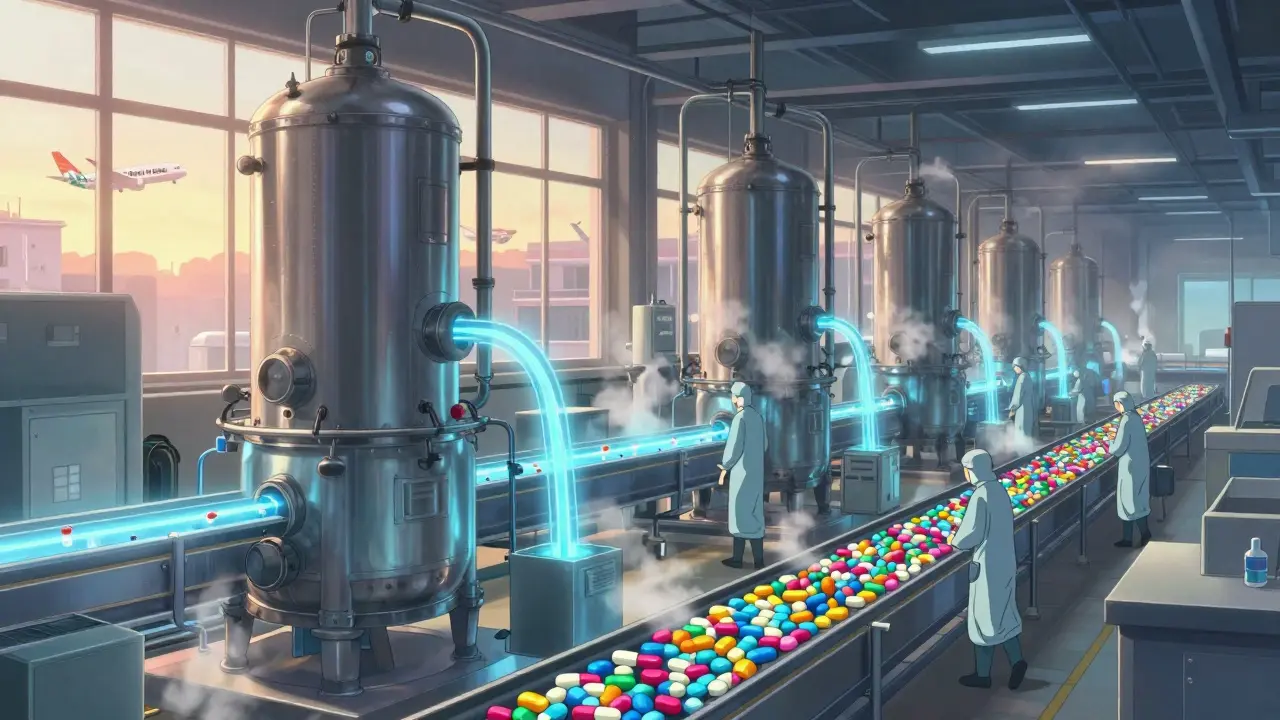
When you take a pill for high blood pressure, an antibiotic, or a vaccine, there’s a good chance it came from India. The country doesn’t just make medicine-it keeps the world stocked. With over 650 U.S. FDA-approved drug plants and more than 2,000 WHO-GMP certified facilities, India is the largest supplier of generic medicines by volume on the planet. It provides about 20% of all global pharmaceutical exports and over 60% of the world’s vaccines. For millions, especially in low-income countries, Indian generics are the only affordable option to stay alive.
How India Became the Pharmacy of the World
India’s rise wasn’t accidental. In the 1970s, the country changed its patent laws to ban product patents on drugs. That meant companies could copy patented medicines from the U.S. and Europe, reverse-engineer them, and sell them for a fraction of the price. This move turned India into a hub for affordable generics. While Western drugmakers focused on brand-name drugs with high margins, Indian manufacturers built scale, efficiency, and compliance into their operations. By 2023-24, the Indian pharmaceutical industry was worth $50 billion. Projections show it could hit $130 billion by 2030. What makes this possible? Over 10,000 manufacturing units and 3,000 pharmaceutical companies working in sync. These aren’t small labs-they’re industrial-scale plants producing more than 60,000 generic drugs and 500 active pharmaceutical ingredients (APIs) every year.Who Gets These Medicines?
Indian generics reach nearly every corner of the globe. The United States gets 40% of its generic drugs from India. The UK relies on Indian manufacturers for about one-third of its NHS prescriptions. In Sub-Saharan Africa, nearly half of all medicines come from India. For countries with strained healthcare budgets, this isn’t a luxury-it’s a lifeline. Take HIV treatment. Before Indian generics entered the market, antiretroviral therapy cost $10,000 per patient per year. Today, thanks to Indian manufacturers like Cipla and Dr. Reddy’s, that same treatment costs under $100. Doctors Without Borders confirmed in 2024 that Indian-sourced antimalarials and antibiotics reduced treatment costs by 65% in African clinics while maintaining 95% efficacy. Even in wealthy nations, cost matters. Nine out of ten prescriptions in the U.S. are for generics. Of those, 40% are made in India. Patients don’t always know the origin-but they notice the price difference. PharmacyChecker.com reports an 87% satisfaction rate among U.S. users of Indian generics, with affordability cited as the top reason.Quality and Regulation: A Mixed Record
Not all stories about Indian generics are positive. In 2025, The Bureau of Investigative Journalism found cases where poorly made Indian drugs caused harm abroad. These incidents made headlines-but they’re rare. Out of billions of doses shipped, the vast majority meet global standards. The FDA’s inspection compliance rate for Indian plants has jumped from 60% in 2015 to 85-90% today. That’s on par with global averages. Companies like Sun Pharma and Biocon now invest 6-8% of their revenue in R&D, upgrading facilities to meet strict EU and U.S. standards. Many Indian plants are more modern than those in Europe or the U.S. Still, challenges remain. Some batches of levothyroxine, used for thyroid conditions, have shown inconsistent dissolution rates. Patients on Reddit reported differences in taste or pill size compared to branded versions. Packaging inconsistencies and shipping delays also appear in 23% of negative reviews on platforms like Trustpilot. These aren’t safety issues-they’re quality control hiccups that affect user experience.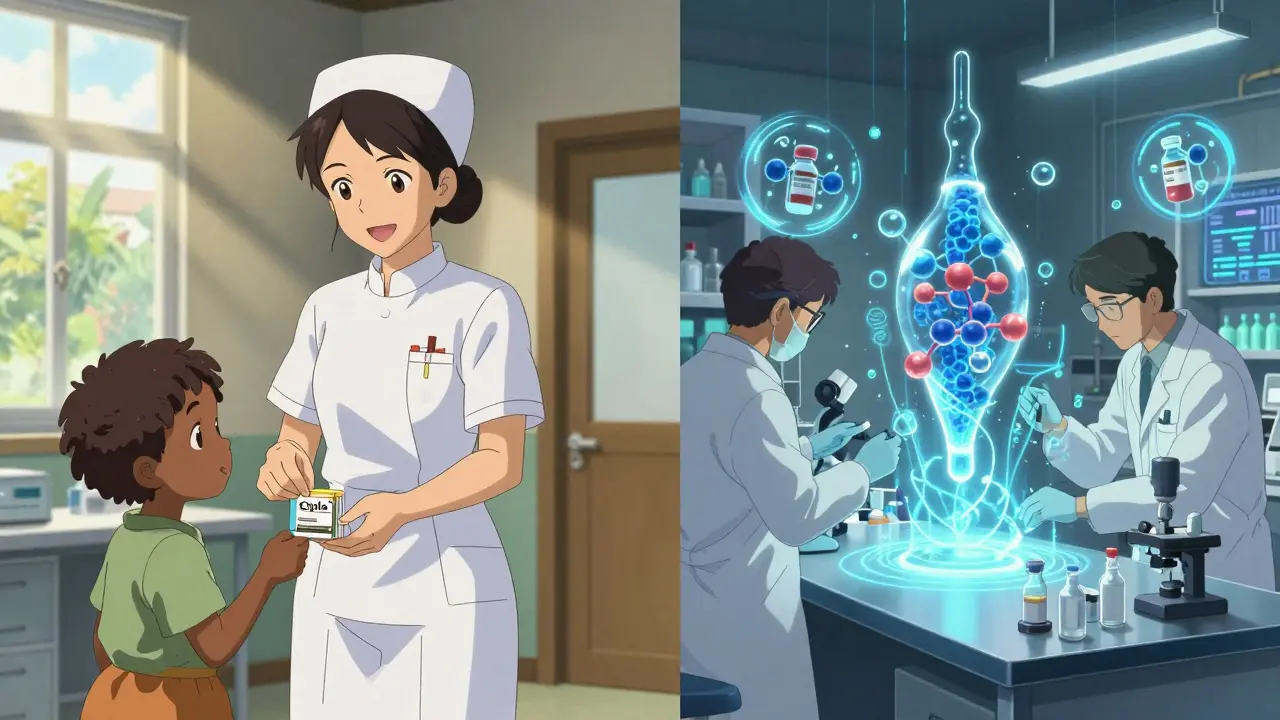
India vs. China: The API Problem
Here’s the big weakness: India still depends on China for 70% of its active pharmaceutical ingredients (APIs). That’s the raw chemical that makes the medicine work. China produces APIs cheaper, but its factories often lack the same level of regulatory oversight. The U.S. FDA has approved only 153 Chinese plants compared to India’s 650. This dependency is risky. During the pandemic, lockdowns in China disrupted global supply chains. Indian drugmakers faced shortages. In response, the Indian government launched a $400 million Production Linked Incentive (PLI) scheme to boost domestic API production. The goal? To cut reliance on China and reach 53% self-sufficiency by 2026.From Volume to Value: The Next Frontier
India exports more generics by volume than any country-but only 10% of the global generics market by value. Why? Because it sells low-cost, high-volume drugs. A tablet of metformin or amoxicillin might cost 90% less than the branded version. That’s great for access, but not for profit margins. Now, India is shifting. The industry is moving into complex generics-extended-release pills, inhalers, transdermal patches-and biosimilars, which are cheaper versions of biologic drugs like insulin or cancer treatments. Biosimilars now make up 8% of India’s export value, up from just 3% in 2020. Companies like Biocon and Dr. Reddy’s are spending over $500 million a year on biologics R&D. The government’s Pharma Vision 2047 aims to make India a $190 billion pharmaceutical export powerhouse by 2047. That’s not just about quantity. It’s about quality, innovation, and value.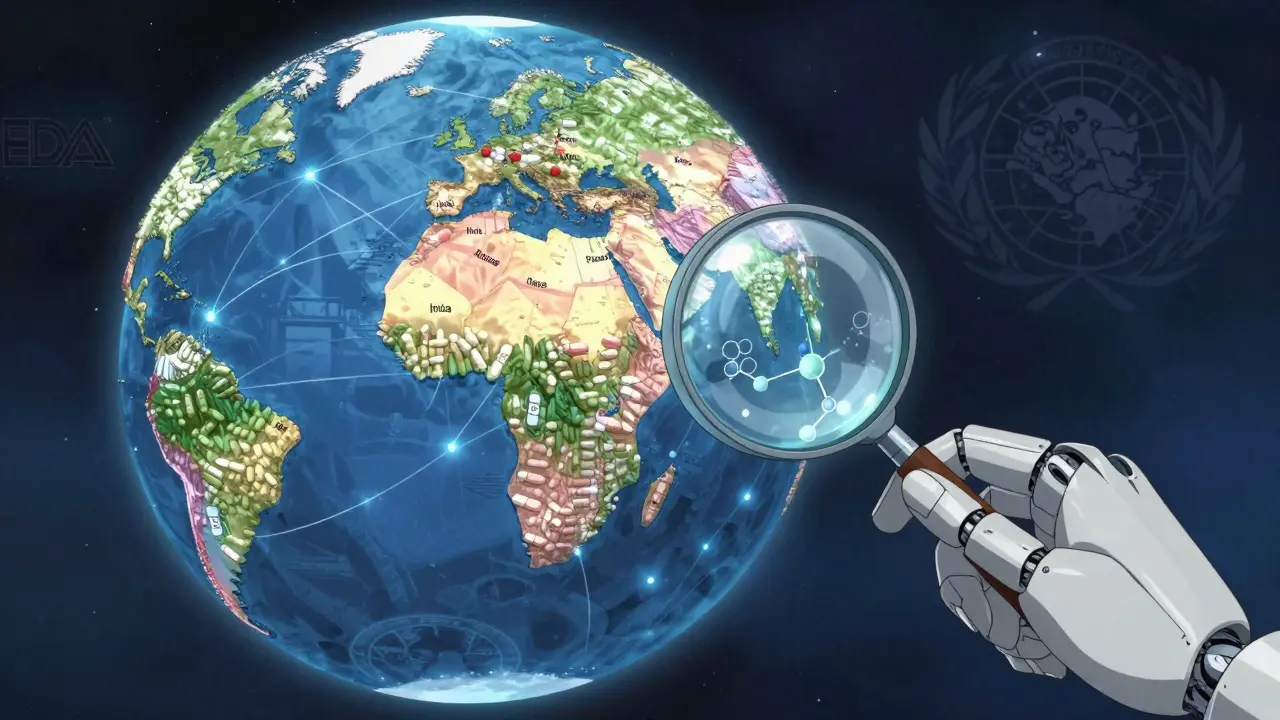
Who Are the Key Players?
The Indian generic market isn’t dominated by hundreds of small firms. A handful of giants control most of the export volume:- Sun Pharma: Market cap of $43 billion, largest Indian pharma company, produces over 1,000 generic drugs.
- Cipla: Known for HIV and respiratory drugs, pioneered low-cost antiretrovirals.
- Dr. Reddy’s Laboratories: Strong in biosimilars and complex injectables.
- Biocon: Leader in biosimilars, partnered with global firms to distribute biologic drugs.
What’s Holding India Back?
Three things stand in the way of India becoming a true global pharma leader:- API dependency: Too much reliance on China for raw materials.
- Low R&D in novel drugs: While Western firms spend billions on new molecules, India focuses on copying existing ones.
- Regulatory delays: Getting FDA approval takes 3-5 years for new exporters. Nearly 40% fail their first inspection.
What’s Next?
India’s future in pharma depends on three moves:- Getting API production self-sufficient by 2026.
- Scaling biosimilars and complex generics to capture higher-value markets.
- Pushing compliance beyond 95% to match the best in the world.
Are Indian generic drugs safe?
Yes, the vast majority are safe. Over 650 Indian drug plants are approved by the U.S. FDA, and more than 2,000 meet WHO-GMP standards. Compliance rates have risen from 60% in 2015 to 85-90% today, matching global averages. While rare cases of poor quality have been reported, they represent a tiny fraction of total exports. Regulatory oversight has improved dramatically over the last decade.
Why are Indian generic drugs so cheap?
India eliminated product patents on drugs in the 1970s, allowing local companies to copy patented medicines without paying royalties. This led to fierce competition among manufacturers, driving prices down. Combined with lower labor costs, efficient scale, and streamlined production, Indian generics cost 30-80% less than branded versions. The focus has always been on volume and affordability, not high margins.
Do Indian generics work as well as branded drugs?
Yes, when they meet regulatory standards. Generic drugs must contain the same active ingredient, strength, dosage form, and route of administration as the brand-name version. They’re required to be bioequivalent, meaning they work the same way in the body. Studies show Indian generics for conditions like hypertension, diabetes, and infections perform just as well as branded ones. Differences in taste, size, or fillers don’t affect effectiveness.
How much of the U.S. generic drug market comes from India?
India supplies about 40% of all generic drugs dispensed in the United States. That’s more than any other country. For common medications like metformin, lisinopril, and amoxicillin, Indian manufacturers are often the primary source. The FDA regularly inspects these plants, and compliance rates are now on par with U.S. and European facilities.
Is India replacing China as the global drug supplier?
India isn’t replacing China-it’s complementing it. China makes the raw chemicals (APIs) that go into most drugs, including those made in India. India takes those APIs and turns them into finished medicines that meet strict global standards. While China produces cheaper APIs, India has far more FDA-approved plants. The future will likely involve both: China supplying the ingredients, India packaging and exporting the final products.
Alex Curran
December 20, 2025 AT 14:43India's generic drug industry is one of the most underrated global assets. I've worked with pharma supply chains in Southeast Asia and the numbers don't lie - when you're treating malaria in rural Cambodia or HIV in Malawi, Indian generics aren't just convenient, they're the only thing keeping people alive. The scale is insane - 650 FDA-approved plants? That's more than most Western countries combined. And the cost savings? A single HIV regimen dropping from $10k to $100? That's not business, that's humanitarian engineering.
People freak out about quality but the FDA compliance rate is now 90%. Same as Germany. Same as the US. The few bad batches make headlines because sensationalism sells, not because they're common. Real talk - if you're on a generic from India, you're probably getting a better-made pill than the one your neighbor gets from a US plant that hasn't been inspected since 2012.
Kitt Eliz
December 21, 2025 AT 17:12LET’S BE CLEAR - INDIA IS THE REAL PHARMA SUPERPOWER 🚀💊
While the US and EU are busy patent-trolling and charging $500 for a 10-pill pack of metformin, India is quietly saving millions. Biosimilars? Check. API scaling? Check. FDA compliance? BETTER THAN EUROPE. This isn’t just manufacturing - it’s global health equity in action. China makes the chemicals? Cool. But India turns them into life-saving products that meet Western standards. That’s not luck - that’s discipline, scale, and vision. We need to stop talking about ‘cheap’ and start calling it ‘brilliantly efficient.’
Pharma Vision 2047? I’m in. Let’s fund it. Let’s celebrate it. Let’s stop acting like Indian drugs are ‘second rate’ when they’re literally the reason your grandma isn’t dead from hypertension.
Laura Hamill
December 22, 2025 AT 19:42THEY’RE POISONING US. I SWEAR TO GOD. I bought my blood pressure meds from an Indian online pharmacy and my hands started shaking. I looked up the batch number - it came from a plant in Hyderabad. The FDA says it’s approved? LOL. What a joke. They’re cutting corners. I read on Reddit that people are getting fake insulin from India. And now they want us to trust them with our vaccines? NO. NO. NO.
China’s the problem? Nah. It’s the Indian government letting these companies export cheap junk because they don’t care about Americans. This is a national security threat. Why aren’t we banning imports? Why is Congress letting this happen? Someone needs to investigate this. I’m not taking another pill from India. I’d rather pay $500 for a branded drug than die from a fake one.
Dikshita Mehta
December 23, 2025 AT 18:02As someone who grew up in India watching my dad work in a pharma lab, I can tell you this: the stigma around Indian generics is outdated. The factories I’ve visited in Gujarat and Telangana have robotics, AI-driven QC systems, and FDA inspectors who stay for weeks. The real issue isn’t quality - it’s perception. People think ‘cheap’ means ‘bad.’ But a generic metformin tablet from Sun Pharma has the same active ingredient, same bioavailability, same results as the branded version. The difference? The label. The packaging. The marketing budget.
Yes, there are bad batches. But they’re rare. And the industry is fixing it - faster than most Western companies. The PLI scheme for APIs? Brilliant. India doesn’t need to be the most expensive pharma player. It needs to be the most reliable. And it’s already there.
pascal pantel
December 25, 2025 AT 12:51Let’s deconstruct this. India exports 20% of global pharma volume? Great. But what’s the value share? 10%. That’s not leadership - that’s commoditization. They’re selling aspirin at $0.01 while Pfizer sells a single biologic for $100,000. This isn’t innovation - it’s arbitrage. They’re leveraging a 50-year-old patent loophole and low labor costs to flood the market with low-margin products.
And don’t get me started on API dependency. 70% from China? That’s a strategic vulnerability disguised as efficiency. You can’t build a sustainable pharma empire on someone else’s raw materials. And the FDA inspection failure rate for new entrants? 40%. That’s not ‘improving’ - that’s still a crapshoot. This isn’t a success story. It’s a temporary glitch in the global supply chain.
Gloria Parraz
December 27, 2025 AT 12:19I just want to say - thank you. To every pharmacist, factory worker, quality control technician, and regulatory officer in India. You don’t get enough credit. I work in a rural clinic in Kentucky. We rely on Indian generics for 80% of our inventory. Our patients? They’re diabetic, hypertensive, asthmatic. They can’t afford $500 prescriptions. But they can afford $5 from India.
I’ve seen lives saved. I’ve seen tears of relief when someone gets their insulin for $12 instead of $120. This isn’t about politics or nationalism. It’s about dignity. You’re not just selling pills. You’re giving people their lives back. And that matters more than any market cap or FDA statistic.
Sahil jassy
December 29, 2025 AT 02:28Bro India made the world’s cheapest HIV meds. That’s not a coincidence. That’s genius. The government said no patents on drugs in the 70s. Boom. Local companies started making copies. Now everyone gets treatment. No one dies because they can’t afford it. Simple. No drama. No hype. Just results.
China makes the powder. India turns it into pills that work. That’s the whole story. Stop overcomplicating it. And stop acting like we should be scared of Indian drugs. We should be grateful. The world owes India a debt.
Carolyn Benson
December 30, 2025 AT 22:29What if this is all a carefully constructed illusion? Who really controls the supply chain? Who owns the patents on the APIs? Who funds the R&D behind the biosimilars? The Indian pharma giants are not independent actors - they’re nodes in a globalized system designed to extract value from developing nations while maintaining Western dominance. The FDA inspections? Performative. The compliance rates? Manufactured. The ‘affordability’ narrative? A distraction from the fact that the real profit flows back to Western investors who hold stakes in Sun Pharma, Biocon, and Dr. Reddy’s.
It’s not about access. It’s about control. And we’re being sold a myth wrapped in a pill.
William Liu
January 1, 2026 AT 13:47India’s pharma story is one of the most inspiring underdog tales of the 21st century. No fancy subsidies. No military backing. Just smart policy, hard work, and a refusal to accept that medicine should be a luxury. They didn’t wait for permission. They built the system from the ground up - and now the whole world depends on it.
It’s not perfect. But perfection shouldn’t be the enemy of survival. For millions, Indian generics aren’t an option - they’re the only thing standing between life and death. And that’s worth celebrating, not criticizing.
Aadil Munshi
January 2, 2026 AT 16:41Let’s be real - the ‘pharmacy of the world’ label is just PR. India’s not innovating. It’s reverse-engineering. The US spends $80 billion a year on drug discovery. India spends $1 billion on copying. That’s not leadership - that’s imitation with scale.
And the API dependency? That’s not a ‘challenge’ - it’s a hostage situation. China could cut off supply tomorrow and India’s entire export model collapses. The PLI scheme? A Band-Aid. The real problem? India’s entire pharma identity is built on a loophole that’s about to vanish. Global patent norms are tightening. What happens when the copying stops?
They’re not the pharmacy of the world. They’re the pharmacy of the past.
Danielle Stewart
January 4, 2026 AT 00:09I’ve reviewed regulatory submissions for Indian manufacturers for over a decade. The shift in documentation quality is staggering. In 2015, half the dossiers had translation errors, missing protocols, inconsistent data. Now? Nearly all are eCTD-compliant, structured, traceable. The training programs, the audit teams, the internal SOPs - they’ve upgraded to match global standards. It’s not perfect, but the trajectory is clear.
And yes, there are still packaging inconsistencies. But those don’t affect efficacy. They affect customer experience. That’s a branding issue, not a safety one. If you’re worried about your pill looking different, that’s a psychological preference - not a medical risk.
Erica Vest
January 5, 2026 AT 06:07One of the most overlooked facts: Indian manufacturers produce over 500 APIs annually. That’s not just pills - that’s the molecular building blocks of modern medicine. They’re not just packaging chemicals - they’re synthesizing them at industrial scale. That’s a level of chemical engineering capability that even Germany struggles to match. The fact that they do it at 1/10th the cost? That’s not luck. That’s mastery.
And the biosimilars? They’re not just copies. They’re optimized. Biocon’s insulin biosimilar has better stability than the original in some storage conditions. That’s innovation disguised as imitation.
shivam seo
January 6, 2026 AT 23:34India’s not saving the world. It’s exploiting it. Cheap drugs mean cheap labor. Cheap factories. Cheap regulations. The FDA approves plants because they’re desperate for supply - not because they’re perfect. The real winners? Big Pharma investors who own shares in Indian companies and profit from the low-cost model. The losers? The workers in those plants, the patients who get inconsistent dosing, and the countries that become dependent on a single source.
This isn’t altruism. It’s capitalism with a humanitarian mask.