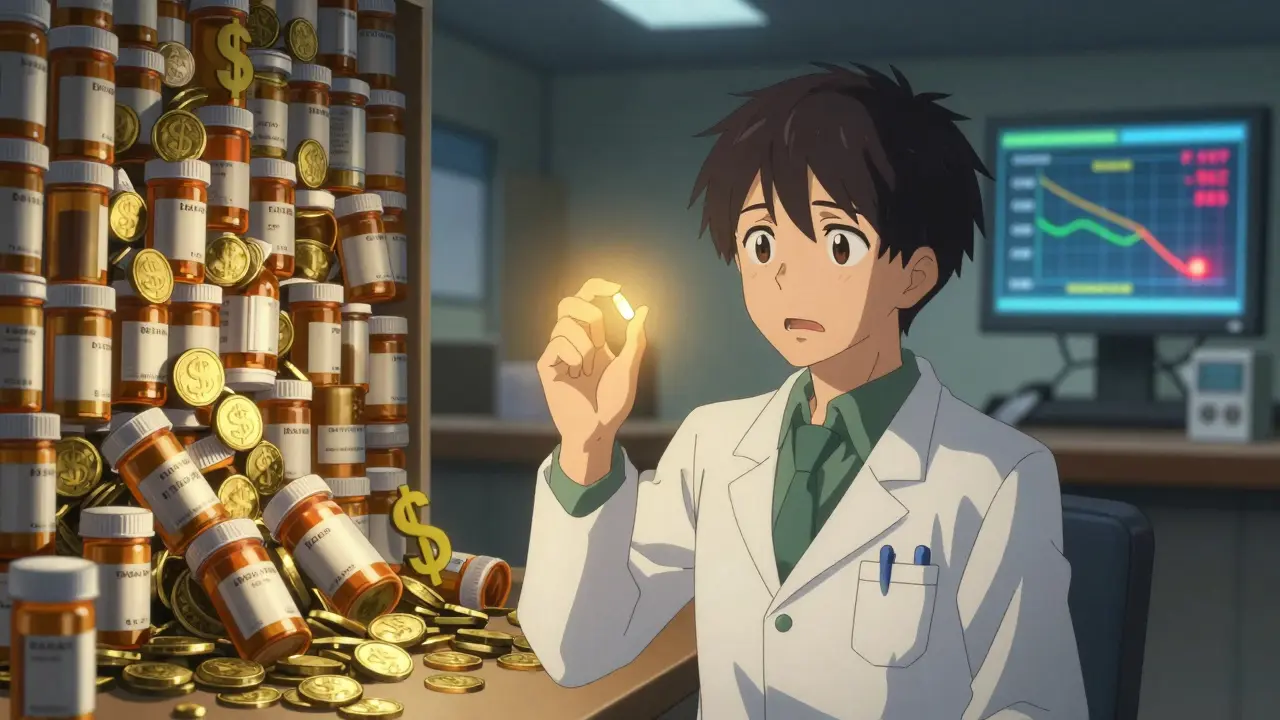
When you think about Medicaid spending, you probably picture expensive cancer drugs or life-saving insulin. But here’s the surprise: generic drugs are the real key to keeping Medicaid budgets from exploding. In 2023, generics made up 84.7% of all Medicaid prescriptions - yet they only accounted for 15.9% of total drug spending. That’s the power of generics. But even with those massive savings, states are still scrambling to do more. Why? Because when a single generic pill suddenly jumps from 10 cents to $2, it doesn’t just hurt budgets - it hurts patients.
How the Federal System Already Saves Money
The foundation of all this cost control is the Medicaid Drug Rebate Program (MDRP), created back in 1990. It’s not a fancy system - it’s a simple rule: if a drug company wants Medicaid to cover its medicine, it must pay a rebate. For generic drugs, that rebate is at least 13% of the average price manufacturers charge. Sounds fair, right? But here’s the catch: unlike brand-name drugs, states can’t negotiate extra rebates on generics. The formula is locked in by federal law. So while states have some flexibility with expensive brand-name drugs, they’re stuck with what the federal government gives them on generics.
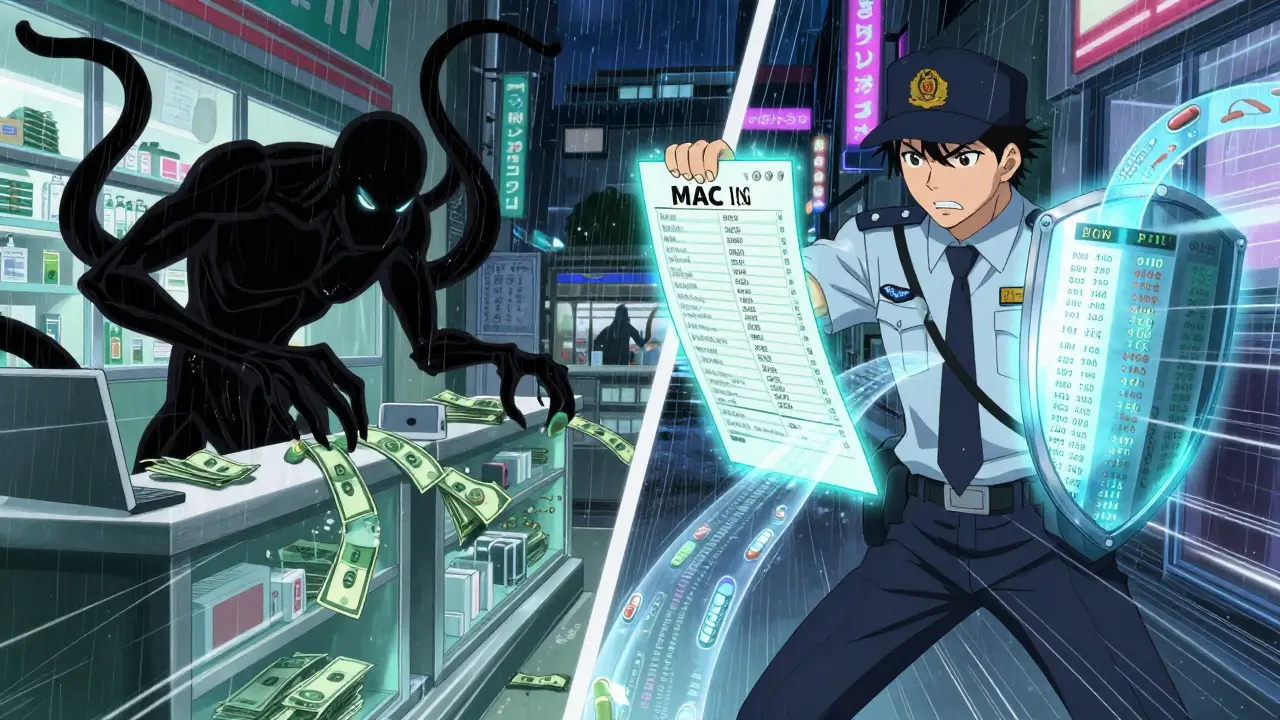
That’s why states have had to get creative. They can’t change the rebate, but they can change how they pay for the drugs. And that’s where Maximum Allowable Cost (MAC) lists come in. Forty-two states now use MAC lists - basically, a price cap on generic drugs. If a pharmacy tries to bill Medicaid for a generic that costs more than the MAC, the state won’t pay the full amount. Some states update these lists every month. Others do it quarterly. But if they update too slowly, problems pop up. Imagine a generic drug drops from $1.50 to $0.75 - but your MAC list still says $1.20. The pharmacy gets stuck with the loss. And if the MAC is too high? Pharmacies start overcharging, and Medicaid ends up paying more than it should.
State Strategies That Actually Work
States aren’t just sitting around waiting for federal help. They’re taking action - and some of these moves are working.
- 49 states require pharmacists to substitute a generic drug when it’s available - unless the doctor says no. This isn’t optional. It’s the law.
- 37 states limit which drugs can be prescribed within a therapeutic class. For example, if there are five generic versions of a blood pressure pill, the state might only cover the cheapest one unless the patient has a medical reason for the others.
- 28 states use Preferred Drug Lists (PDLs) to steer prescriptions toward the most cost-effective generics. These aren’t just lists - they’re tools that guide doctors and pharmacists toward cheaper options.
- 19 states have started value-based purchasing for generics. That means they pay more for generics that deliver better outcomes - like ones with higher adherence rates or fewer side effects.
Then there’s Maryland. In 2020, it passed a law that bans manufacturers from raising prices on generic drugs unless they can prove they added real clinical value. No more price spikes just because no one’s watching. Other states are following. California, Colorado, and Minnesota have created Prescription Drug Affordability Boards (PDABs) that can set upper limits on what Medicaid pays - even for generics. These boards don’t just look at price; they look at whether the drug is truly necessary.
The Hidden Problem: Pharmacy Benefit Managers (PBMs)
Here’s where things get messy. Most states don’t pay pharmacies directly. They hire third-party companies - called Pharmacy Benefit Managers (PBMs) - to handle claims, negotiate prices, and manage rebates. Sounds helpful? Not always.
PBMs often collect rebates from drug makers - but don’t always pass them on to Medicaid. In fact, a 2024 survey found that 27 states had no idea how much PBMs were actually paying for the generic drugs they were dispensing. So states started demanding transparency. Nineteen states now require PBMs to report the real cost of each generic drug they buy. That’s a game-changer. When states know what pharmacies are paying, they can adjust their reimbursement rates and stop overpaying.
But there’s backlash. Independent pharmacies say they’re getting squeezed. A 2024 survey of 1,200 small pharmacies found that 74% had been hit with delayed payments or claim denials because MAC lists didn’t match real-time prices. One pharmacist in Ohio told investigators his pharmacy lost $1,800 in a single week because a generic blood pressure pill dropped 40% overnight - but the state’s MAC list hadn’t updated yet. He had to cover the difference out of pocket.
Drug Shortages and Supply Chain Risks
Another big problem: shortages. In 2023, 23 states reported critical shortages of generic medications - like antibiotics, insulin, and heart drugs. The average shortage lasted nearly five months. Why? Because making generic drugs isn’t profitable anymore. Three companies now control 65% of the generic injectable market. When one of them shuts down a factory, the whole system stumbles.
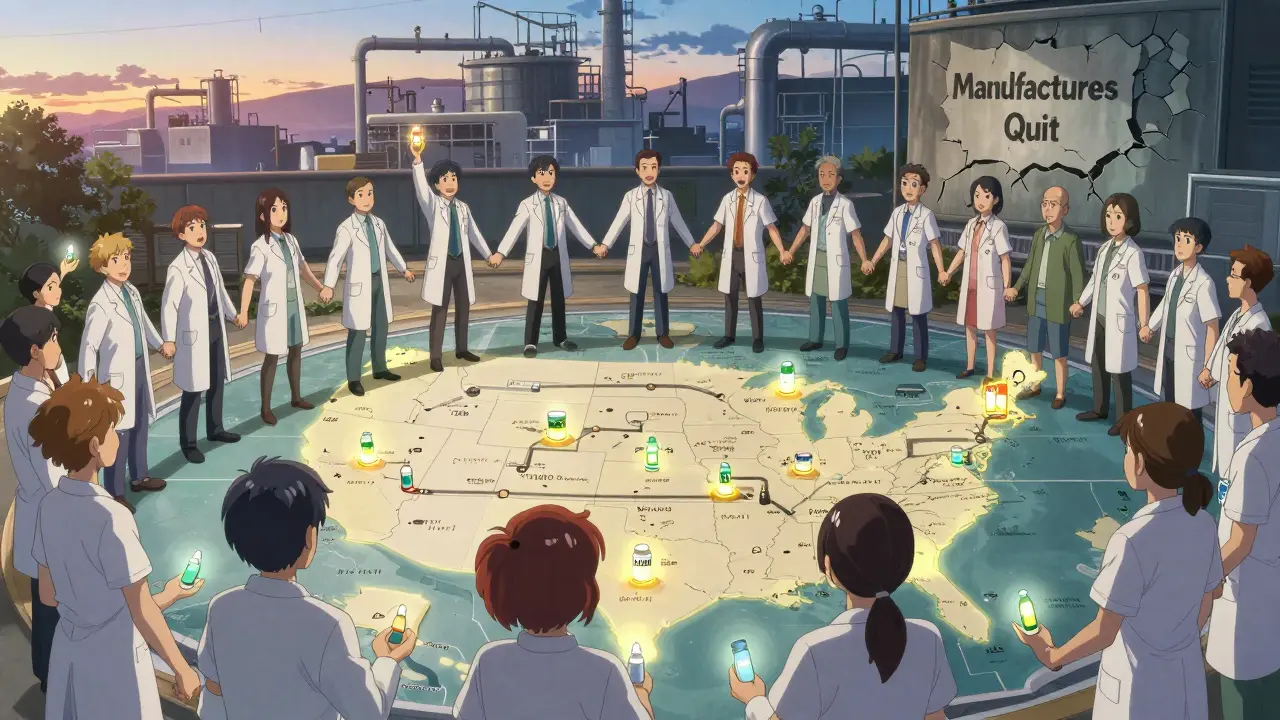
Twelve states passed laws in 2024 to build emergency stockpiles of essential generics. Oregon and Washington teamed up to create a multi-state purchasing pool, buying 47 high-volume generics together to get better prices and secure supply. Texas started a gene therapy carve-out - not because it’s cheap, but because it’s the only way to avoid chaos when a single drug disappears.
But here’s the risk: if states push prices too low, manufacturers just quit. Avalere Health warned in early 2025 that aggressive price controls could make it unprofitable to produce certain generics - and then those drugs vanish from shelves. That’s not savings. That’s a crisis.
The Future: GLP-1s, Supply Chains, and Legal Battles
Now, a new wave of drugs is coming - GLP-1 medications like Ozempic and Wegovy. These aren’t generics. But Medicaid programs in 13 states already cover them for obesity - and they cost $12,000 a year per patient. If the federal government mandates coverage for all Medicaid patients, that could add $1.2 billion in annual costs. States are bracing.
Meanwhile, 22 states are building strategic stockpiles of critical generics, aiming to have them ready by 2026. The Congressional Budget Office predicts state efforts could cut generic spending by $3.8 billion annually by 2027 - but only if they avoid cutting too deep. Too much pressure, and manufacturers leave. Too little, and budgets explode.
Legal fights are already starting. Pharmaceutical companies are suing states over drug pricing laws, arguing they violate federal trade rules. So far, courts have been mixed. But with 15 more states expected to introduce generic pricing bills in 2025, this is only getting started.
What Works - And What Doesn’t
So what’s the winning formula? It’s not one trick. It’s a mix:
- Update MAC lists weekly - not quarterly.
- Force PBMs to reveal what they pay for generics.
- Use therapeutic interchange to steer patients toward cheaper, equally effective options.
- Build regional buying pools to secure supply.
- Target price gouging on generics - not just brand names.
States that do all of this - like Maryland, Oregon, and California - are seeing real results. Their generic drug spending is growing slower than the national average. Their patients aren’t going without. And their pharmacies? They’re still getting paid.
The truth is, Medicaid can’t afford to ignore generics anymore. They’re not just cheap drugs - they’re the backbone of the system. And if states keep playing defense, they’ll lose. But if they get smart, strategic, and fast - they can keep costs down without breaking access.
Simon Critchley
February 9, 2026 AT 17:03Karianne Jackson
February 11, 2026 AT 07:33Angie Datuin
February 11, 2026 AT 19:48Camille Hall
February 12, 2026 AT 07:07Ritteka Goyal
February 12, 2026 AT 16:03Monica Warnick
February 14, 2026 AT 13:04Ashlyn Ellison
February 16, 2026 AT 07:51Jonah Mann
February 16, 2026 AT 14:02Frank Baumann
February 16, 2026 AT 21:51Tricia O'Sullivan
February 17, 2026 AT 09:36Marie Fontaine
February 18, 2026 AT 02:10Lyle Whyatt
February 19, 2026 AT 18:14Tatiana Barbosa
February 21, 2026 AT 01:51