Opioid & Sleep Apnea Risk Assessment Tool
Check the boxes that apply to your situation or the person you are inquiring about.
Assessment Pending
Select options above to evaluate potential risk levels regarding respiratory depression.
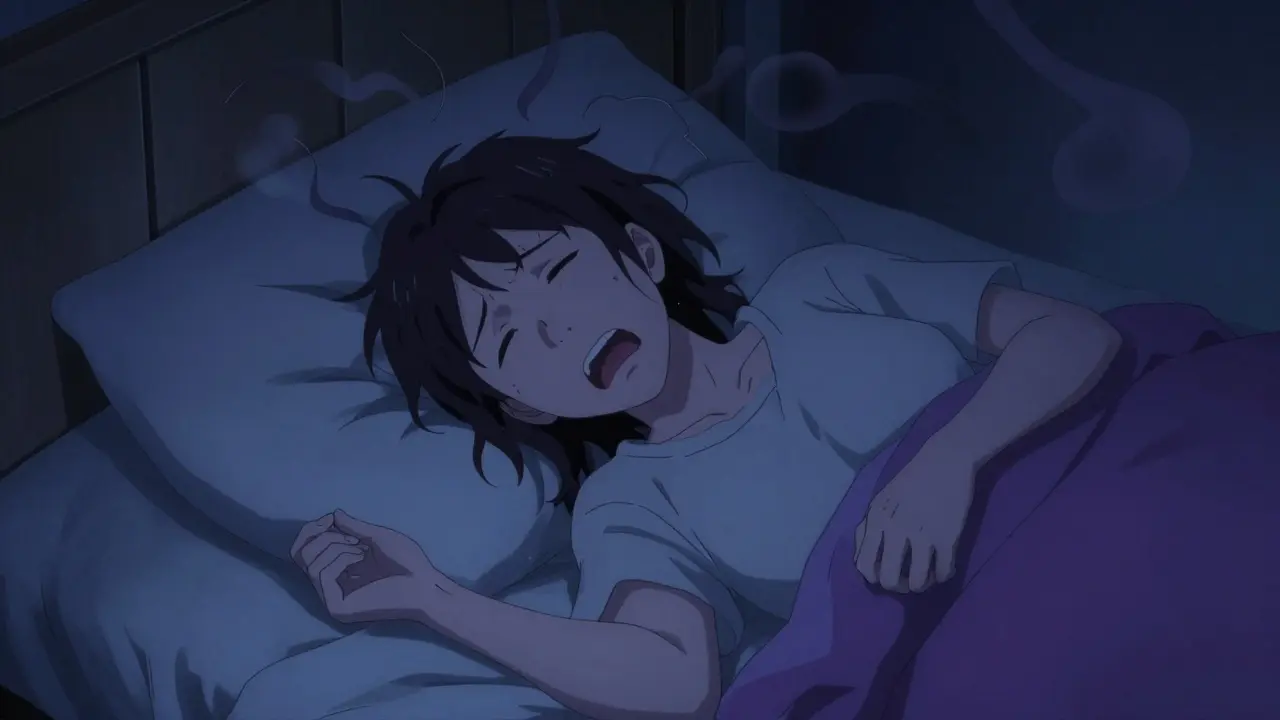
You take your prescribed pain medication, head to bed, and expect rest. Instead, you might wake up gasping for air, with a pounding headache and no memory of breathing through the night. This isn't just bad luck or poor sleep hygiene. It is a potentially fatal interaction between opioids and sleep-disordered breathing conditions like sleep apnea. The combination creates a perfect storm for opioid-induced respiratory depression (OIRD), a condition where breathing slows down dangerously or stops entirely during sleep.
Respiratory depression accounts for approximately 70% of all opioid overdose deaths, according to data from the Centers for Disease Control and Prevention (CDC). When you have underlying sleep apnea, that risk skyrockets. Your brain’s natural alarm system for low oxygen gets silenced by the drug, while your airway muscles relax too much to keep the passage open. Understanding this mechanism is not just academic-it could save your life.
How Opioids Silence Your Brain's Breathing Alarm
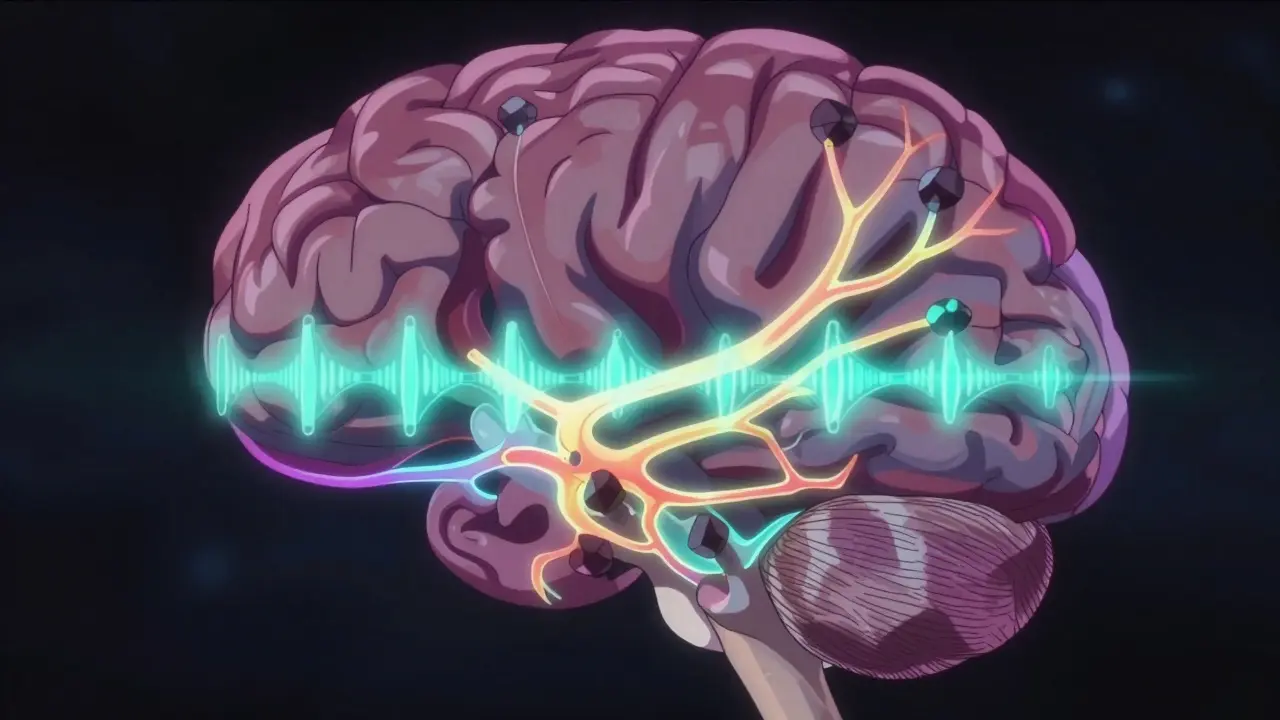
To understand why this happens, we need to look inside the brainstem, specifically at two critical areas: the pre-Bötzinger complex and the neural generator responsible for setting the basic rhythm of breathing and the parabrachial (PB) complex, a region in the upper brainstem that processes pain and regulates expiratory drive.
When opioids enter your system, they bind to mu-opioid receptors (MORs) in these regions. Research published in Respiratory Physiology & Neurobiology (Ramirez et al., 2021) shows that this binding doesn't just slow breathing slightly; it fundamentally alters the pattern. Inspiration (inhaling) might increase only by 10-15%, but expiration (exhaling) can stretch out by 100-200%. This prolonged exhale leads to pauses in breathing known as apneas.
The parabrachial complex appears to be the dominant player in life-threatening apnea. Studies indicate that deleting MORs from neurons in the Kölliker-Fuse nucleus (part of the PB complex) reduces morphine-induced apneas by 75-80% in animal models. In contrast, targeting only the pre-Bötzinger complex offers protection at therapeutic doses but fails when doses approach overdose levels. This distinction matters because it suggests that future treatments might focus on blocking receptors in the parabrachial complex to prevent fatal breathing stops without completely eliminating pain relief.
The Double Threat: Central and Obstructive Apnea
Opioids attack breathing from two angles. First, they cause central sleep apnea, where the brain fails to send signals to breathe. Dr. David J. Eckert from Harvard Medical School explains that opioids cause central respiratory depression in a dose-dependent manner. As you drift off to sleep, the "wakefulness drive" to breathe naturally diminishes. Opioids magnify this drop, leading to extended periods where no breath is taken.
Second, they contribute to obstructive sleep apnea, where the physical airway collapses due to muscle relaxation. Opioids suppress the hypoglossal motoneuron output to the genioglossus muscle-the primary muscle that keeps your upper airway open-by approximately 40-60% in rat models. If you already have obstructive sleep apnea, your airway is prone to collapse. Adding an opioid removes the remaining muscle tone needed to keep it patent, making obstruction more frequent and severe.
| Type of Apnea | Mechanism | Opioid Impact | Risk Factor |
|---|---|---|---|
| Central Sleep Apnea | Brain fails to signal breath | Suppresses brainstem rhythm generators (preBötC) | Dose-dependent; higher risk with high-dose therapy |
| Obstructive Sleep Apnea | Airway physically collapses | Relaxes genioglossus muscle (40-60% suppression) | Pre-existing anatomical narrowness; combined with sedatives |
Who Is Most at Risk?
Not everyone who takes opioids will experience severe respiratory depression, but certain groups face exponentially higher risks. About 30-40% of chronic opioid users develop clinically significant sleep-disordered breathing. Here is who needs to be most vigilant:
- High-Dose Users: Patients taking ≥100 morphine milligram equivalents (MME) daily show an average Apnea-Hypopnea Index (AHI) of 15.7 events per hour, compared to 4.2 in non-opioid users. An AHI over 30 is considered severe.
- Those with Existing Sleep Apnea: If you already use CPAP or have been diagnosed with sleep apnea, opioids reduce the effectiveness of your treatment and worsen the underlying condition.
- Combination Therapy Users: Mixing opioids with benzodiazepines, alcohol, or other central nervous system depressants increases overdose risk by 300-500%. These substances synergistically suppress the brainstem even further.
- Genetic Susceptibility: Variations in the OPRM1 gene can make some individuals more sensitive to the respiratory effects of opioids. Additionally, 10-15% of the population has naturally reduced ventilatory responses to hypercapnia (high CO2), putting them at extreme risk.
Symptoms You Should Not Ignore
Respiratory depression often happens silently during sleep. However, there are warning signs that suggest your breathing is compromised. Be alert for:
- Unrefreshing Sleep: Waking up feeling exhausted despite sleeping for eight hours.
- Morning Headaches: Caused by nocturnal hypoxemia (low oxygen) and hypercapnia (high carbon dioxide).
- Excessive Daytime Sleepiness: Falling asleep unintentionally during conversations or driving.
- Gasping or Choking Sounds: Partners may report hearing you stop breathing or gasp for air during the night.
- Cognitive Fog: Difficulty concentrating or remembering details, linked to intermittent oxygen deprivation.
Standard pulse oximetry can be misleading here. Oxygen saturation often remains normal until significant hypoventilation occurs because the body compensates initially. By the time oxygen levels drop, the situation may already be critical. This is why continuous monitoring, such as capnography, is recommended in hospital settings for high-risk patients.

Safety Strategies and Clinical Management
If you are prescribed long-term opioid therapy, proactive management is essential. The American Society of Anesthesiologists recommends baseline sleep studies for patients requiring long-term opioids, especially those with risk factors for sleep apnea. Here are practical steps to mitigate risk:
- Screening: Ask your doctor for a sleep study if you snore, have witnessed apneas, or feel excessively tired. The 2022 SUPPORT Act encourages Medicare Part D plans to include sleep apnea screening for opioid users.
- Dose Optimization: Work with your provider to find the lowest effective dose. Avoid escalating doses rapidly without re-evaluating respiratory function.
- Avoid Sedative Combos: Never mix opioids with benzodiazepines (like Xanax or Valium) or alcohol unless explicitly directed and monitored by a specialist.
- Naloxone Access: Keep naloxone, an FDA-approved opioid antagonist used to reverse overdoses accessible. Naloxone blocks mu-opioid receptors, reversing respiratory depression. Studies show it reduces upper airway collapsibility by approximately 25% in healthy individuals. Ensure family members know how to administer it (typically 0.04-0.4 mg intravenously or via nasal spray).
- CPAP Adherence: If you have obstructive sleep apnea, using your CPAP machine consistently is crucial. It mechanically keeps the airway open, counteracting the muscle relaxation caused by opioids.
Future Directions in Safe Pain Management
Research is actively working to separate pain relief from respiratory depression. The NIH HEAL Initiative has allocated $1.5 billion toward developing non-addictive pain treatments. Current developments include:
- Bias Agonists: New compounds are being designed to activate MORs in ways that provide analgesia (pain relief) without triggering the pathways in the parabrachial complex that cause apnea. Early preclinical models show 70-80% analgesic efficacy with only 20-30% respiratory depression.
- Adjunct Therapies: Drugs like 5-HT4(a) agonists and ampakines have shown 40-60% improvement in respiratory parameters in rodent models without compromising pain relief. These could serve as protective agents alongside traditional opioids.
- Genetic Screening: Within five years, genetic screening for OPRM1 polymorphisms may become standard practice, allowing doctors to tailor opioid prescriptions based on individual susceptibility to respiratory depression.
While traditional opioids will remain in clinical use for severe pain, the landscape is shifting toward safer, targeted therapies. Until then, awareness and vigilance are your best defenses against the silent danger of respiratory depression.
Can opioids cause sleep apnea if I didn't have it before?
Yes. Opioids can induce new-onset central sleep apnea by suppressing the brain's drive to breathe. They can also worsen or unmask obstructive sleep apnea by relaxing the muscles that keep your airway open. Approximately 30-40% of chronic opioid users develop clinically significant sleep-disordered breathing.
Is it safe to take opioids with my CPAP machine?
Using a CPAP machine is one of the safest ways to manage obstructive sleep apnea while on opioids, as it mechanically keeps the airway open. However, opioids still cause central sleep apnea (brain-driven breathing stops), which CPAP does not directly address. You must inform your sleep specialist about your opioid use so they can adjust pressure settings and monitor for central events.
What should I do if I suspect someone is experiencing opioid-induced respiratory depression?
If someone is unresponsive, breathing slowly or irregularly, or has blue/gray lips or fingernails, call emergency services immediately. If naloxone is available, administer it according to package instructions. Perform rescue breathing or CPR if trained and necessary until help arrives. Do not leave the person alone.
Do all opioids carry the same risk of respiratory depression?
All opioids carry some risk, but potency and duration vary. Fentanyl and methadone are associated with higher risks of severe respiratory depression due to their high potency and long half-lives. Short-acting opioids like morphine or codeine generally pose lower risks at therapeutic doses, but combining any opioid with other sedatives significantly increases danger.
How does the parabrachial complex contribute to opioid overdose?
The parabrachial complex contains mu-opioid receptors that, when activated, enhance tonic expiratory drive, leading to prolonged expiration and apnea. Research shows that removing these receptors prevents sustained apnea even at near-overdose levels, suggesting this brain region is a key target for future overdose prevention therapies.