
Every year, more than 5 million people in the U.S. are treated for skin cancer. The good news? Up to 90% of those cases are caused by sun exposure-and most of them are preventable. Yet, nearly 7 out of 10 adults don’t use sunscreen daily. Why? Because confusion rules the sunscreen aisle. You see SPF 100 on one bottle, mineral-only on another, and a spray that claims to be water-resistant but leaves your skin streaky. You’re not alone. This isn’t about vanity. It’s about survival.
What SPF Actually Means (And Why Higher Isn’t Always Better)
SPF stands for Sun Protection Factor. It’s a measure of how well a sunscreen blocks UVB rays, the ones that burn your skin and trigger most skin cancers. SPF 15 blocks about 93% of UVB. SPF 30 blocks 97%. SPF 50 blocks 98%. That’s it. There’s no magic jump from SPF 50 to SPF 100. SPF 100 blocks 99%-just 1% more than SPF 50. But here’s the catch: no sunscreen lasts longer just because the number is bigger. SPF 100 still needs reapplying every two hours. The FDA is cracking down on this now. By 2025, any product labeled SPF over 60 must prove it actually delivers that protection-and most won’t.Real-world testing by Consumer Reports found that 1 in 5 sunscreens sold in the U.S. deliver less protection than their label claims. One mineral sunscreen labeled SPF 50 only blocked UVB like SPF 13. Another, marketed as SPF 30, performed like SPF 4. That’s not a typo. That’s a health risk.
Broad Spectrum Isn’t Just a Marketing Word
UVB burns. UVA ages. And both cause cancer. That’s why “broad spectrum” matters more than you think. A sunscreen labeled broad spectrum has passed a test proving it protects against UVA rays too. The FDA requires these products to block wavelengths up to 370 nanometers. Anything less? It’s not broad spectrum. It’s just a burn blocker.Here’s what most people don’t realize: UVA rays penetrate deeper. They don’t cause sunburn, but they break down collagen, cause wrinkles, and trigger melanoma. That’s why daily sunscreen use cuts melanoma risk by 50%, according to the American Academy of Dermatology. If you’re only using SPF 30 without broad spectrum, you’re leaving yourself wide open to long-term damage-even on cloudy days.
Mineral vs. Chemical: What’s Really Going On Inside Your Bottle
There are two types of active ingredients in OTC sunscreens: mineral and chemical.Mineral sunscreens use zinc oxide and titanium dioxide. They sit on top of your skin and physically block UV rays. They work immediately. They’re less likely to irritate sensitive skin. But here’s the downside: most mineral sunscreens don’t block UVA well enough. In Consumer Reports’ 2025 tests, the top mineral sunscreen scored 55 out of 100 for protection. The top chemical sunscreen? 92. Why? Because zinc oxide needs to be at least 15-20% to be effective-and many brands cut corners. A product with 5% zinc oxide? That’s decorative, not protective.
Chemical sunscreens absorb UV rays like a sponge. Ingredients like avobenzone, octinoxate, and octocrylene are common. They’re more effective at blocking both UVA and UVB. But they need 15-20 minutes to activate. And some, like oxybenzone, are linked to coral reef damage. Hawaii and Key West banned them in 2021. The EU caps oxybenzone at 2.2%. The U.S. still allows up to 6%. The FDA is reviewing whether to ban 12 chemical filters by 2026.
So which should you pick? If you have rosacea, melasma, or sensitive skin, mineral is often the safer bet. Look for zinc oxide at 10% or higher. Brands like EltaMD UV Clear SPF 46 use 9% zinc oxide and niacinamide-it’s a dermatologist favorite. If you want maximum protection and don’t mind waiting 20 minutes, chemical sunscreens like La Roche-Posay Anthelios Melt-in Milk SPF 60 are the top performers. But avoid sprays unless you’re applying them in a controlled way. Most people spray too little.

How Much Should You Actually Use? (Spoiler: You’re Probably Using Too Little)
The FDA says you need 2 milligrams of sunscreen per square centimeter of skin. That’s about a shot glass full for your whole body. For your face? One-quarter teaspoon. That’s five pea-sized dots: forehead, nose, cheeks, chin. Rub them in. Don’t just smear. Most people use half that amount-and get only 1/3 of the labeled protection.Here’s what happens when you underapply SPF 30: you’re really wearing SPF 10. And that’s not enough. A 2024 study in the Journal of the American Academy of Dermatology found that 86% of beachgoers apply less than half the recommended amount. Use a UV camera app like Sunscreenr to see the gaps. You’ll be shocked.
Reapplication: The Most Ignored Rule
You think SPF 50 lasts all day? Wrong. Even water-resistant sunscreens lose effectiveness after 40 or 80 minutes in water or sweat. And towel-drying? That removes up to 80% of the product. Reapplication isn’t optional. It’s mandatory.But here’s the truth: only 14% of people reapply sunscreen every two hours. On TikTok, dermatologists like @DrDrA show how to reapply over makeup with a powder sunscreen or a setting spray with SPF. For the face, keep a small tube or stick in your bag. For the body? Use a spray-but spray generously, then rub it in. Don’t just mist. You need the full 2 mg/cm².
And don’t fall for the “all-day” myth. No sunscreen lasts 8 hours. Not even if it says so on the label.
What to Look for (and What to Avoid)
Look for:- SPF 30 or higher
- Broad spectrum label
- Water-resistant (40 or 80 minutes)
- Zinc oxide at least 10% (if mineral)
- Avobenzone, octocrylene, or ecamsule (if chemical)
- SPF over 60 without proof
- Products with PABA or trolamine salicylate (banned by FDA in 2024)
- Sprays you can’t rub in
- Mineral sunscreens with less than 5% zinc oxide
- Any product that says “sunblock” or “waterproof” (those terms are illegal now)
Price doesn’t always matter. CVS Health SPF 50 spray costs $2.99. JLo Beauty’s SPF 30 moisturizer costs $55. Both can work. But if you’re paying more than $15 an ounce, ask yourself: is it better, or just branded?
Real People, Real Problems
Reddit threads and Amazon reviews tell the real story. One user with Fitzpatrick skin type VI said: “I tried 12 mineral sunscreens. All left a white cast. I switched to Supergoop! Unseen Sunscreen-no cast, no grease, no stinging. I’ve used it every day for a year.” Another: “CeraVe Mineral SPF 30 turned my face chalky. I thought it was supposed to be better.”Stinging eyes? That’s usually from chemical filters like octinoxate. Try a mineral sunscreen with no fragrance. Oxidation? That’s when sunscreen reacts with your skin’s oils and turns orange. It happens with iron oxide in tinted formulas. Look for “non-oxidizing” on the label.
And yes, some brands are lying. Black Girl Sunscreen Kids Lotion claimed SPF 50. Tests showed SPF 13. That’s not a mistake. That’s dangerous.
The Bottom Line
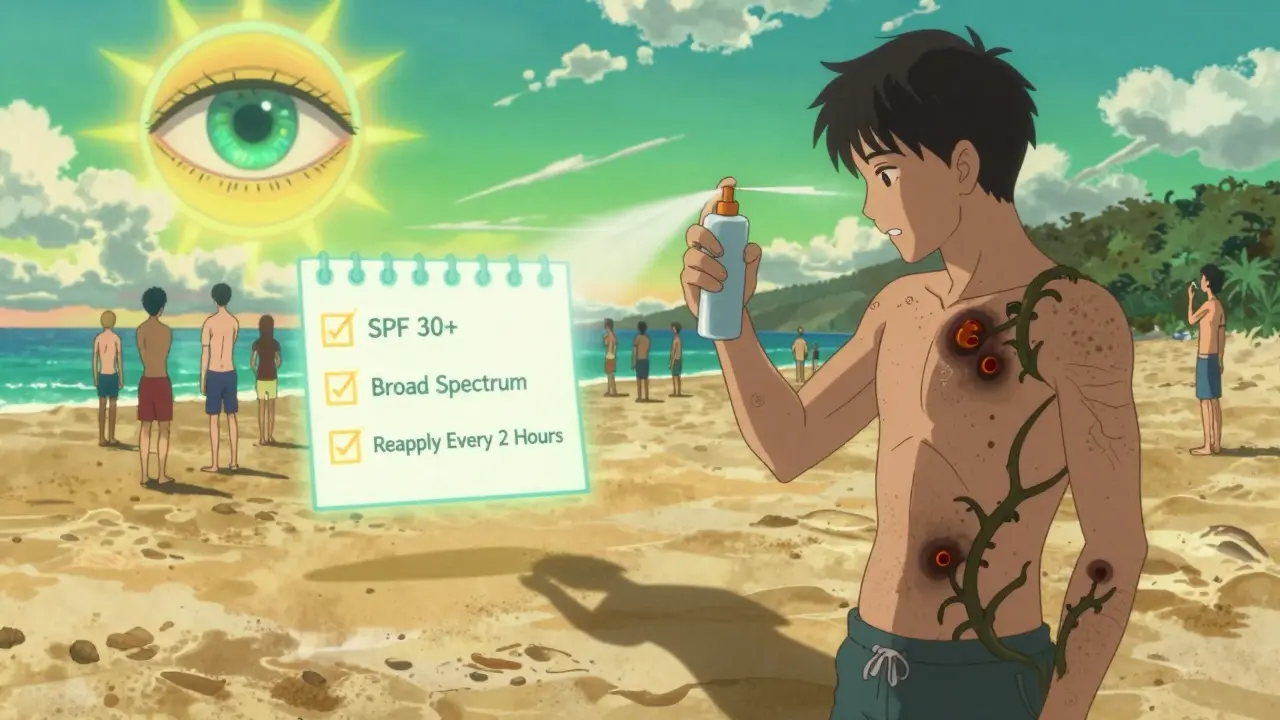
You don’t need the fanciest bottle. You don’t need to spend $50. You need three things:- SPF 30 or higher
- Broad spectrum
- Reapplication every two hours-or after swimming, sweating, or towel-drying
Apply enough. Don’t skip your ears, neck, lips, or feet. Use sunscreen every day, even when it’s cloudy. UV rays cut through clouds. And if you’re unsure? Pick a dermatologist-recommended brand like La Roche-Posay, CeraVe, or EltaMD. They’ve been tested, not just marketed.
The sun won’t wait. Your skin won’t either.
Is SPF 100 really better than SPF 50?
No. SPF 50 blocks 98% of UVB rays. SPF 100 blocks 99%. That’s just 1% more protection. But both need reapplication every two hours. The FDA is moving to cap SPF labels at 60+ because higher numbers mislead people into thinking they’re safer or longer-lasting. You’re not getting extra protection-you’re paying more.
Can I use last year’s sunscreen?
Check the expiration date. Most sunscreens last 3 years unopened. Once opened, they lose effectiveness after 12 months. Heat and sunlight speed up degradation. If it smells weird, changed color, or separated, toss it. A degraded sunscreen gives you false confidence-and that’s dangerous.
Do I need sunscreen if I have dark skin?
Yes. Darker skin has more melanin, which offers some natural protection-but not enough. Melanoma is often diagnosed later in people of color, and survival rates are lower. UVA damage still causes wrinkles, dark spots, and skin cancer. Broad spectrum SPF 30 is just as important for Fitzpatrick skin types IV-VI.
Why does my sunscreen pill under makeup?
Pilling happens when sunscreen doesn’t absorb properly-usually because you’re using too much, too soon, or mixing incompatible products. Wait 15 minutes after applying sunscreen before putting on makeup. Use a lightweight, non-greasy formula. Some sunscreens, like Supergoop! Unseen Sunscreen, are designed to be makeup-friendly. Avoid layering heavy moisturizers underneath.
Are spray sunscreens safe?
They’re fine if used correctly. But most people spray too little and inhale the product. Spray generously onto your hands first, then rub it on. Never spray directly on your face. Avoid using sprays in windy areas. For kids, sprays are risky because of inhalation. Stick to lotions or sticks for them. And always rub sprays in-spraying alone doesn’t give full coverage.
What’s the best sunscreen for sensitive skin?
Look for mineral sunscreens with zinc oxide (at least 10%) and no fragrance, alcohol, or parabens. EltaMD UV Clear SPF 46 is a top pick-it contains niacinamide to calm redness and 9% zinc oxide. Vanicream and CeraVe also have gentle, dermatologist-tested options. Avoid chemical filters like oxybenzone and octinoxate if you have rosacea or eczema.
Do I need sunscreen indoors?
If you’re near a window, yes. UVA rays penetrate glass and cause aging and skin damage. If you sit by a sunny window all day-whether at home or in the office-daily sunscreen helps prevent dark spots and wrinkles. You don’t need SPF 50 indoors, but SPF 30 broad spectrum is a smart habit.
Is mineral sunscreen better for the environment?
It’s complicated. Zinc oxide and titanium dioxide are less harmful to coral reefs than oxybenzone and octinoxate-which are banned in Hawaii and Palau. But some mineral sunscreens use nano-particles that may still affect marine life. Look for non-nano zinc oxide if you’re swimming in oceans. Still, the biggest threat to reefs is climate change, not sunscreen. But choosing reef-safe formulas is a responsible step.
What to Do Next
Start today. Pick one sunscreen that meets SPF 30+, broad spectrum, and water-resistant criteria. Test it for a week. Does it sting? Does it leave a white cast? Does it feel greasy? If it doesn’t work, try another. There’s no one-size-fits-all. But there is one rule that never changes: apply enough, reapply often, and never skip it-even on cloudy days.The science is clear. The data is real. Your skin remembers every missed application. Make today the day you stop guessing-and start protecting.
Arlene Mathison
January 19, 2026 AT 21:22Just switched to EltaMD UV Clear after years of skipping sunscreen-my skin has never looked better. No white cast, no stinging, and I actually remember to reapply now. Who knew protection could feel this good? 🙌
Emily Leigh
January 20, 2026 AT 23:38SPF 50 vs 100? Lol. You’re paying for a placebo. The FDA’s gonna cap it at 60 because the industry’s been scamming us for decades. ‘Water-resistant’? More like ‘water-smeared.’ And don’t get me started on sprays-you’re basically aerosolizing your face while hoping for the best. 😒
Carolyn Rose Meszaros
January 22, 2026 AT 03:40My mom used to say, ‘Sunscreen is like toothpaste-you don’t skip it just because you’re not in the sun.’ Now I get it. I use CeraVe every morning, even when it’s raining. My 30s are looking way better than my 20s. 😊
Greg Robertson
January 23, 2026 AT 16:53I used to think sunscreen was for beach days-then I got a sunspot on my nose at 32. Now I use SPF 30 daily. Not glamorous, but worth it. Also, the shot glass rule? Real. I measure now. No regrets.
Renee Stringer
January 24, 2026 AT 21:31People still use sprays on their kids? That’s not just lazy-it’s negligent. The FDA should ban them outright. And if you’re using a mineral sunscreen with 5% zinc oxide, you’re not protecting yourself-you’re performing a placebo ritual.
Courtney Carra
January 26, 2026 AT 19:19It’s funny how we treat sunscreen like a chore. But the sun doesn’t care if you’re ‘not outside much.’ UVA penetrates windows, clouds, even your car windshield. We’ve been conditioned to think of sun damage as a ‘summer problem.’ It’s not. It’s a cumulative, silent thief. And we’re letting it steal our skin, one missed application at a time.
thomas wall
January 27, 2026 AT 11:41It is profoundly disconcerting that the American consumer is routinely misled by marketing hyperbole in the realm of dermatological protection. The notion that SPF 100 confers meaningful advantage over SPF 50 is not merely erroneous-it is a public health failure. The FDA’s proposed cap is a necessary, albeit tardy, corrective. One must question the integrity of an industry that profits from ignorance.
Manoj Kumar Billigunta
January 27, 2026 AT 16:00I’m from India and we’ve been using turmeric and aloe for sun protection for generations-but science says we need SPF too. I started using CeraVe Mineral SPF 30 last year. No white cast, no irritation. My daughter uses it too. Simple, cheap, effective. No need to overcomplicate it. Just use it. Every day.
Art Gar
January 28, 2026 AT 03:41The assertion that ‘SPF 30 is sufficient’ is a dangerous oversimplification. While statistically marginal, the incremental protection offered by SPF 50+ is not negligible in high-risk populations-particularly those with genetic predispositions to melanoma or prolonged occupational exposure. To dismiss higher SPF as ‘marketing’ ignores the precautionary principle, which underpins all public health recommendations. The burden of proof should lie with the manufacturer, not the consumer.