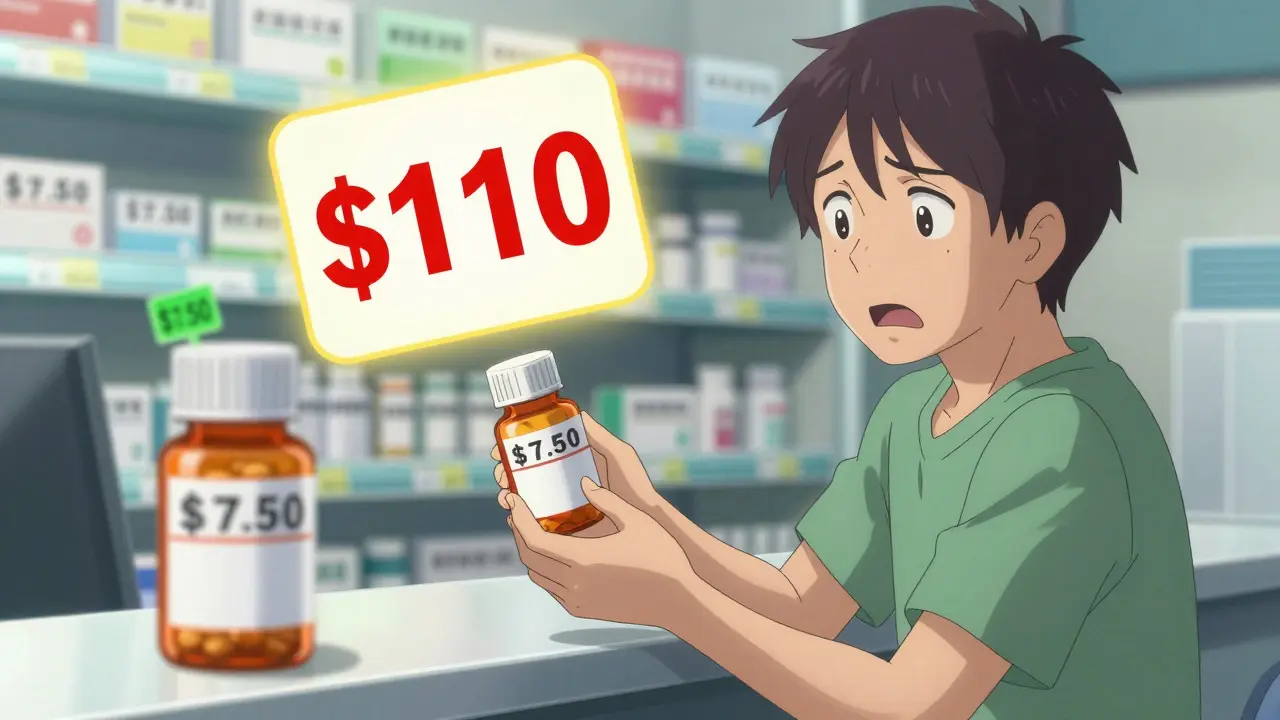
Imagine walking into a pharmacy to pick up your blood pressure medication. You hand over the prescription, and the pharmacist tells you it’s $110. You blink. That same pill, sitting on the shelf just three feet away in a different aisle or perhaps at a different store entirely, might cost you $7.50. This isn’t a glitch in the matrix; it is the reality of out-of-pocket costs for millions of people today. The difference usually comes down to one word: generic.
We often hear that generic drugs are cheaper, but we rarely grasp the sheer scale of that savings-or how much money is still leaking out of our pockets due to broken systems. If you are trying to understand why your medical bills feel so heavy, even when you are taking "affordable" medications, you need to look at the numbers behind the labels. The gap between what you pay with a generic drug versus a brand-name drug is not just a small discount; it is a chasm that defines financial security for many households.
The Real Price Gap: Generics vs. Brand-Name Drugs
Let’s get straight to the data because the story here is dramatic. In 2023, the average out-of-pocket cost for a generic prescription was $7.05. Now, look at the average for a brand-name drug: $27.10. That means if you take a brand-name medication, you are paying nearly four times more than someone taking the generic equivalent. But wait-it gets worse for those on specific insurance plans where brand-name copays can skyrocket to over $56 per month, according to analyses from DrugPatentWatch.
This pricing disparity has been widening. While generic prices have remained remarkably stable-rising only slightly from $6.06 in 2017 to $7.05 in 2023-brand-name costs have surged. Why does this matter? Because Generic pharmaceuticals are medicines that are bioequivalent to brand-name drugs but sold under their chemical name after patent expiration. They contain the same active ingredients, work the same way in your body, and undergo the same rigorous safety checks by the FDA. The only difference is the label and the price tag.
Consider the case of Sildenafil Citrate, commonly known as Viagra. When the patent expired and generics entered the market, the price per prescription dropped from $49.90 to $3.07. That is a 94% reduction. Or look at Emtricitabine/Tenofovir Disoproxil Fumarate, used for HIV treatment, which fell from $20.46 to $2.13-a 90% drop. These aren’t marginal savings; they are life-changing differences for patients who need these drugs daily.
| Metric | Generic Drugs | Brand-Name Drugs |
|---|---|---|
| Average Copay (2023) | $7.05 | $27.10 |
| Price Stability Since 2017 | Minimal increase (~$1) | Significant increase |
| Share of Total Prescriptions | 90% | 10% |
| Share of Total Spending | 13.1% | 86.9% |
Why You Are Still Overpaying for Generics
If generics are so cheap, why do some patients still complain about high costs? The answer lies in the opaque machinery of the U.S. healthcare system. Just because a drug is generic doesn’t mean the price is transparent. In fact, systemic inefficiencies mean you might be paying significantly more than necessary, even for off-patent medications.
Take Medicare Part D, for example. A study published in JAMA Internal Medicine analyzed 1.4 billion claims and found that Medicare overspent by 20.6% compared to what members could pay at Costco. For 90-day fills, Medicare spent 29.4% more than the retail price at big-box stores. This means an uninsured person buying directly from Costco sometimes pays less than an insured senior citizen using their Medicare plan. How does that happen?
It happens because of middlemen. Pharmacy Benefit Managers (PBMs), insurers, and distributors capture value through rebates and fees that are hidden from the consumer. The USC Schaeffer Center found that while direct patient payments for generics dropped by 50% over recent years, the total cost (including what insurers pay) dropped by 80%. This suggests that intermediaries are keeping a larger slice of the pie, causing patients to effectively overpay by 13-20% due to a lack of price transparency.
Another issue is insurance plan design. Some insurers shift generic drugs to higher cost tiers, forcing patients to pay more even though the drug itself is cheap. An analysis showed this practice increased annual patient spending by 135%, even as the actual medicine prices fell by 38%. It is a counterintuitive trap: the cheaper the drug becomes in the wholesale market, the more complex the billing structure becomes for the end user.
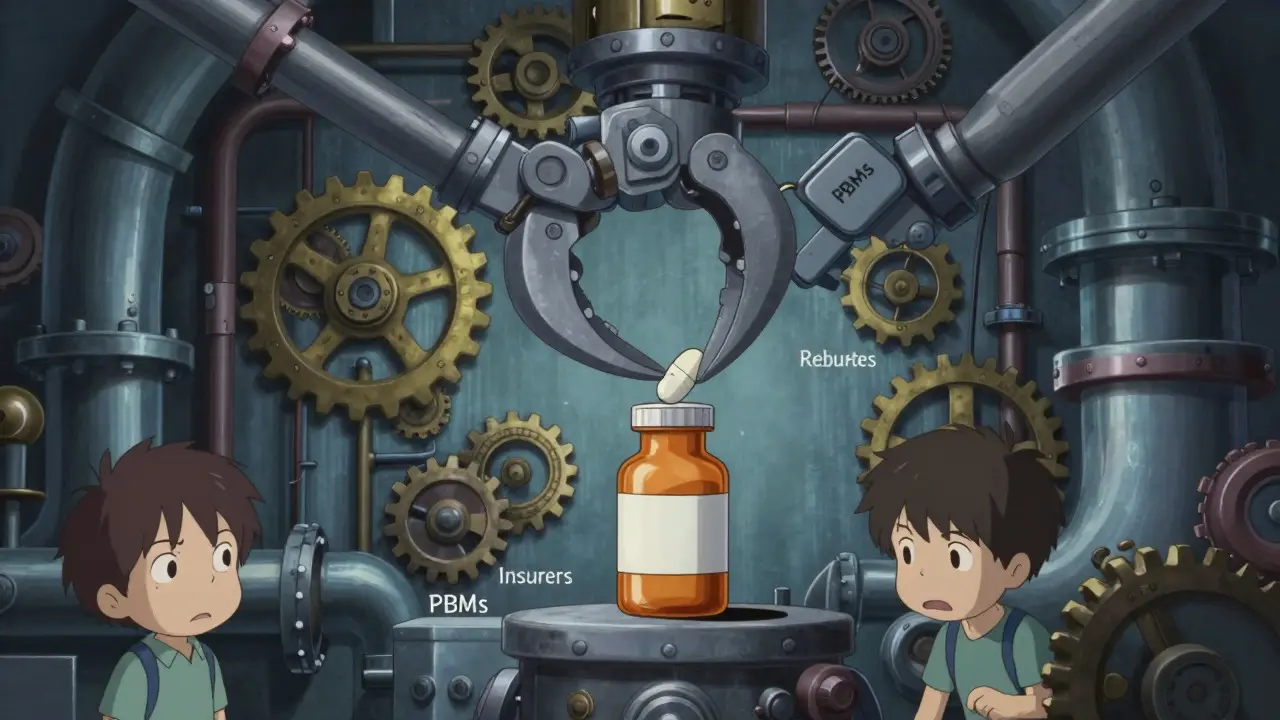
The Power of Direct-to-Consumer Pharmacies
So, how can you fight back against these inflated costs? One powerful tool is bypassing traditional retail pharmacies and using Direct-to-Consumer (DTC) online pharmacies. These platforms cut out the middleman and offer cash prices that are often lower than your insurance copay.
Research from the NIH published in JAMA Internal Medicine in 2023 revealed stunning savings. DTC pharmacies offered median cost reductions of 76% for expensive generics and 75% for common generics compared to retail pharmacies. Let’s look at real-world examples:
- Pantoprazole 20mg: Sold for $9.20 via MCCPDC versus $44 at Albertsons. That is a 79% savings.
- Rosuvastatin 5mg: Available for $7.50 from Health Warehouse versus $110 at Walgreens. That is a 93% savings.
These are identical medications. Same manufacturer, same quality, same FDA approval. The only difference is the distribution channel. By choosing a DTC model, patients are essentially opting out of the bloated rebate system that inflates list prices. For anyone managing chronic conditions like hypertension or high cholesterol, switching to a DTC provider for generic refills can save hundreds of dollars a year.
The Systemic Impact: Savings vs. Burden
To understand the full picture, we have to look at the macro level. Generic drugs are the backbone of affordable healthcare in the United States. According to the Association for Accessible Medicines (AAM), generics account for 90% of all prescriptions filled but represent only 13.1% of total prescription drug spending. This efficiency generated $445 billion in savings during the decade ending in 2023.
Without generics, the financial burden would be catastrophic. Consider efavirenz, emtricitabine, and tenofovir tablets. When patents expired, the 30-day equivalent price plummeted from approximately $1,000 to around $65. This single transition generated $131 million in savings. Imagine if every blockbuster drug faced this fate without a generic alternative. Healthcare costs would spiral out of control, pushing millions into medical bankruptcy.
However, there is a paradox. While generics save the system billions, individual patients still face unnecessary strain. The AHRQ data from 2011-2016 showed that consumers actually pay a higher share of generic costs (41.8%) than brand-name drugs (32.1%). This indicates that insurance designs often penalize patients for choosing cheaper options, shifting the financial risk onto them rather than sharing the savings.
International Context: Is the U.S. Anomaly?
How do these costs compare globally? The United States remains an outlier. Data from the Department of Health and Human Services (HHS) shows that U.S. drug prices across all categories were nearly three times higher than in 33 other OECD countries in 2022. Even with the dominance of generics, American patients pay more for the same molecules than their counterparts in Europe or Canada.
Proponents argue that because 9 out of 10 U.S. prescriptions are generics, Americans benefit from competitive pricing. And indeed, some generic prices in the U.S. are lower than in other countries. But the structural issues-opaque rebates, PBM fees, and tiered formularies-mean that the potential savings are not fully realized by the patient. The "list price" is often a fiction, disconnected from the actual transaction cost.
Actionable Steps to Reduce Your Financial Burden
You don’t have to accept high out-of-pocket costs as inevitable. Here are practical steps to lower your medication expenses today:
- Ask for the Generic: Always confirm with your doctor and pharmacist if a generic version is available. Most brand-name drugs have generic equivalents once patents expire.
- Compare Cash Prices: Don’t assume your insurance copay is the lowest price. Use tools like GoodRx or check DTC pharmacy websites to see the cash price. Often, the cash price is lower than the copay.
- Use 90-Day Supplies: Many mail-order and DTC pharmacies offer discounts for 90-day fills. This reduces administrative costs and often lowers the per-pill price.
- Review Your Formulary Tier: Check where your generic drug sits on your insurance formulary. If it’s on a higher tier, ask your doctor to appeal or switch to a therapeutic alternative on a lower tier.
- Consider DTC Pharmacies: For routine maintenance medications, explore reputable direct-to-consumer pharmacies. Verify they are accredited by VIPPS (Verified Internet Pharmacy Practice Sites) to ensure safety.
The goal is to reclaim control over your healthcare spending. By understanding the mechanics of generic pricing and identifying where the system fails, you can make informed choices that protect your wallet.
Are generic drugs really as effective as brand-name drugs?
Yes. The FDA requires generic drugs to be bioequivalent to their brand-name counterparts. This means they must contain the same active ingredients, work in the same way in the body, and meet the same strict standards for strength, purity, and stability. The only differences may be inactive ingredients, color, or shape.
Why are out-of-pocket costs for generics still rising?
While the wholesale price of generics has deflated, out-of-pocket costs for patients have risen slightly due to insurance plan designs. Insurers may shift generics to higher cost tiers or implement copays that do not reflect the true low cost of the drug. Additionally, supply chain inefficiencies and middleman fees can inflate the final price paid by the consumer.
What is a Direct-to-Consumer (DTC) pharmacy?
A DTC pharmacy sells medications directly to patients online, often bypassing traditional insurance networks and retail markups. They typically offer transparent cash prices that can be significantly lower than both brand-name drugs and insured generic copays, especially for common maintenance medications.
How much can I save by switching from brand-name to generic?
On average, generic prescriptions cost about 80-85% less than brand-name drugs. In 2023, the average generic copay was $7.05 compared to $27.10 for brand-name. For specific drugs like Sildenafil, savings can exceed 90%. Over a year, this can amount to hundreds or even thousands of dollars in savings.
Is it safe to buy generic drugs from online pharmacies?
It is safe if you use accredited online pharmacies. Look for the VIPPS seal or verify the pharmacy through the National Association of Boards of Pharmacy. Avoid sites that sell drugs without a prescription or offer prices that seem too good to be true, as these may be counterfeit.