
Getting the medicine you need shouldn’t mean choosing between rent and refills. For millions of Americans, patient assistance programs from drug companies are the only way to afford life-saving prescriptions. But eligibility isn’t simple. It’s a maze of income limits, insurance rules, and paperwork that changes from one drug to the next-and even from one company to another.
Who Qualifies for Patient Assistance Programs?
The short answer: if you can’t afford your meds, you might qualify. But the details matter. Most programs require you to be uninsured, underinsured, or have a very low income. You also must be a U.S. resident and get your prescription from a U.S.-licensed doctor. No exceptions.Income is the biggest gatekeeper. Nearly all programs use the Federal Poverty Level (FPL) as their baseline. For 2023, 500% of FPL meant $75,000 a year for a single person and $153,000 for a family of four. Some programs, especially for expensive cancer or rare disease drugs, stretch to 600% FPL. Others cap it at 400%. Pfizer, for example, uses 300% FPL ($43,200 for one person) for basic medications like Eucrisa, but lets people earning up to $77,760 qualify for oncology drugs.
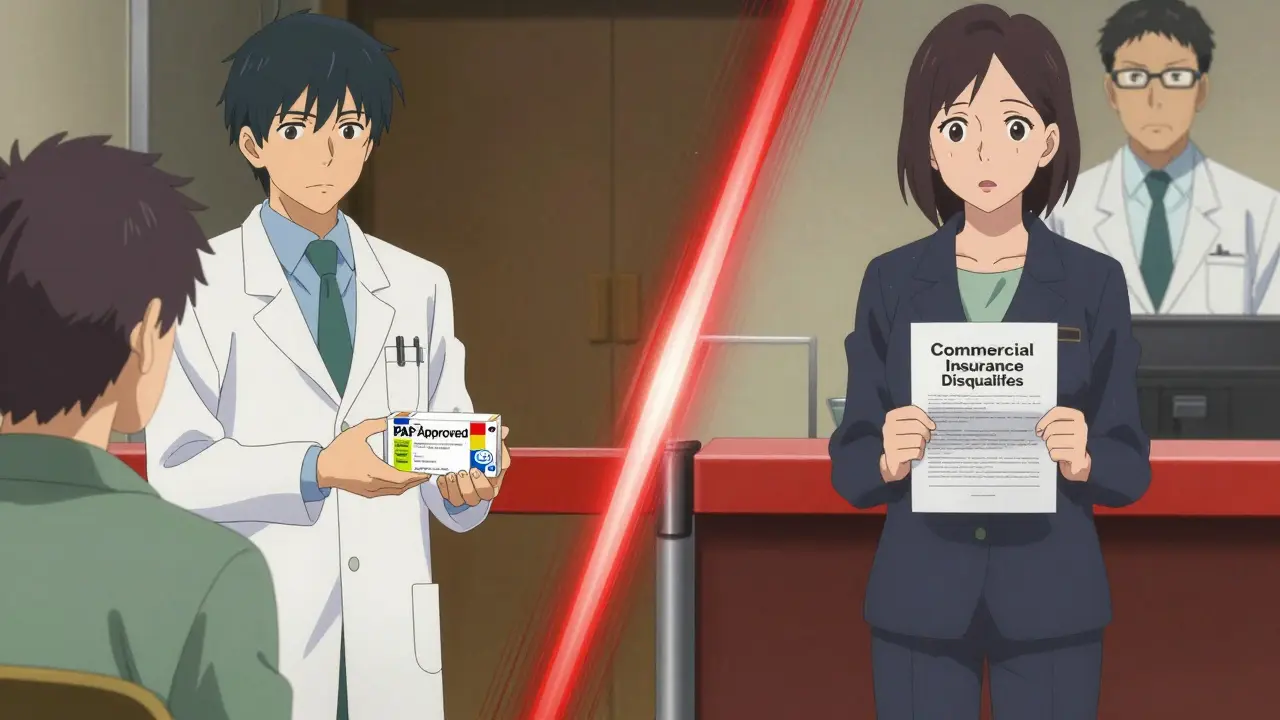
Here’s the catch: if you have private insurance, you’re often disqualified. GSK’s program, for instance, only helps people without commercial insurance. Merck makes exceptions if you’re facing extreme financial hardship, but only if your insurer doesn’t force you to apply for manufacturer help first. That’s a key rule-many insurance plans won’t cover a drug unless you’ve tried getting it for free from the drug company. That’s called a “step therapy” requirement, and it’s legal. But if your plan pushes you toward a PAP, you’re usually ineligible for it.
Medicare Patients: A Special Case
If you’re on Medicare Part D, things get even trickier. Many drug companies won’t help you at all unless you’ve already been denied Extra Help-a government program for low-income seniors. Takeda’s Help At Hand program requires you to submit proof you were turned down for Extra Help before they’ll even look at your application.Even if you get approved, there’s a hidden penalty. PAP assistance doesn’t count toward your True Out-of-Pocket (TrOOP) costs. That means if you’re trying to reach the $8,000 threshold to get catastrophic coverage in 2024, every free pill you get from a PAP doesn’t move you closer. You’re stuck paying more out of pocket just to get that safety net.
And here’s the worst part: people with incomes between 135% and 150% of FPL-about $18,347 to $20,385 for one person-are often stuck in a gap. They make too much for Extra Help but too little for most manufacturer PAPs. That’s not a mistake. It’s how the system works.
Insurance Status Is Everything
You’d think having insurance would help. But for PAPs, it often hurts. A 2019 study found 97% of independent charity programs won’t help uninsured people. That’s right-uninsured patients, the group most in need, are frequently turned away by charities that claim to help them. Manufacturer programs are slightly more flexible, but they still demand you prove you have no other options.Commercial insurance is usually a hard pass. If your plan covers your drug, even if you’re paying $500 a month in copays, you’re typically not eligible. Some newer programs, called “commercial PAPs,” were launched in 2022 and 2023 to help insured patients with high out-of-pocket costs. But they’re still rare. Only 12 major drug makers offer them. And even then, you need to show your plan’s formulary doesn’t cover your drug-or that your copay is unaffordable.
What Documents Do You Need?
Getting approved isn’t just about filling out a form. You need proof. And not just one kind. Most programs require:- A signed application from you and your doctor
- Proof of income: W-2s, pay stubs, tax returns, or Social Security statements
- Proof of U.S. residency: utility bill, lease agreement, or driver’s license
- Prescription details: drug name, dosage, and prescribing doctor’s info
Some programs, like GSK’s, ask for multiple income documents. Others want your Modified Adjusted Gross Income (MAGI), which is different from your gross income. A 2022 CMS analysis found 52% of errors came from people miscounting their household size. Another 31% confused gross income with MAGI. That’s why applications get denied-not because you’re ineligible, but because you missed a box or mixed up numbers.
Doctor verification is another bottleneck. Merck says it takes an average of 28 days to get a signed form from a physician. That’s longer than most people can wait. If your doctor doesn’t respond, you’re stuck.
How Long Does It Take?
The average application takes about 27 minutes to complete. But approval? That’s another story. Pfizer’s RxPathways says 72 hours for approved cases. But real-world reports tell a different tale. On Reddit, users say 37% of first applications get denied. The most common reason? Incomplete paperwork. The second? Income verification issues.Some people apply three or more times before they’re approved. The Medicare Rights Center found 42% of applicants needed multiple tries. And if you’re on Medicare, wait times for help lines jump to nearly 19 minutes. That’s not just inconvenient-it’s dangerous when you’re running out of pills.
Which Drugs Are Covered?
Not every drug is eligible. PAPs focus on expensive, branded medications-especially cancer drugs, rare disease treatments, and biologics. IQVIA found 98% of branded oncology drugs are covered by PAPs. For heart disease or diabetes meds, the coverage drops to 76%. Generic drugs? Almost never.Why? Because generics cost less. Drug companies don’t lose much if someone can’t afford a $10 generic. But if a $12,000-a-month cancer drug goes unused, it hurts their bottom line. That’s why PAPs exist mostly for high-cost drugs. They’re not designed to help with everyday prescriptions. They’re a lifeline for the most expensive treatments.
What Happens After You’re Approved?
Once you’re in, you’re not done. You’ll need to reapply. For primary care drugs, most programs require annual re-enrollment. For specialty drugs, you might need to verify your income every three months. GSK requires yearly updates. Pfizer asks for updated income docs every 12 months.If your income changes-say you got a raise, lost a job, or had a baby-you must report it. Otherwise, you risk losing your meds. And if you’re denied later, restarting the process can take weeks. No one wants to wait that long when they’re sick.
What’s Changing in 2025 and Beyond?
The Inflation Reduction Act kicks in hard in 2025. Medicare Part D patients will pay no more than $2,000 a year out of pocket for drugs. That’s a game-changer. Avalere Health predicts PAP use among Medicare beneficiaries could drop by 35-40%. Why? Because if your cap is $2,000, you might not need free drugs anymore.But here’s the twist: the 27.5 million underinsured Americans-those with high-deductible plans or no coverage for certain drugs-will still need help. And drug companies aren’t planning to cut back. They spent $32.7 billion on PAPs in 2022. That’s 2.3% of total U.S. drug spending. They’re not giving up. They’re just shifting focus.
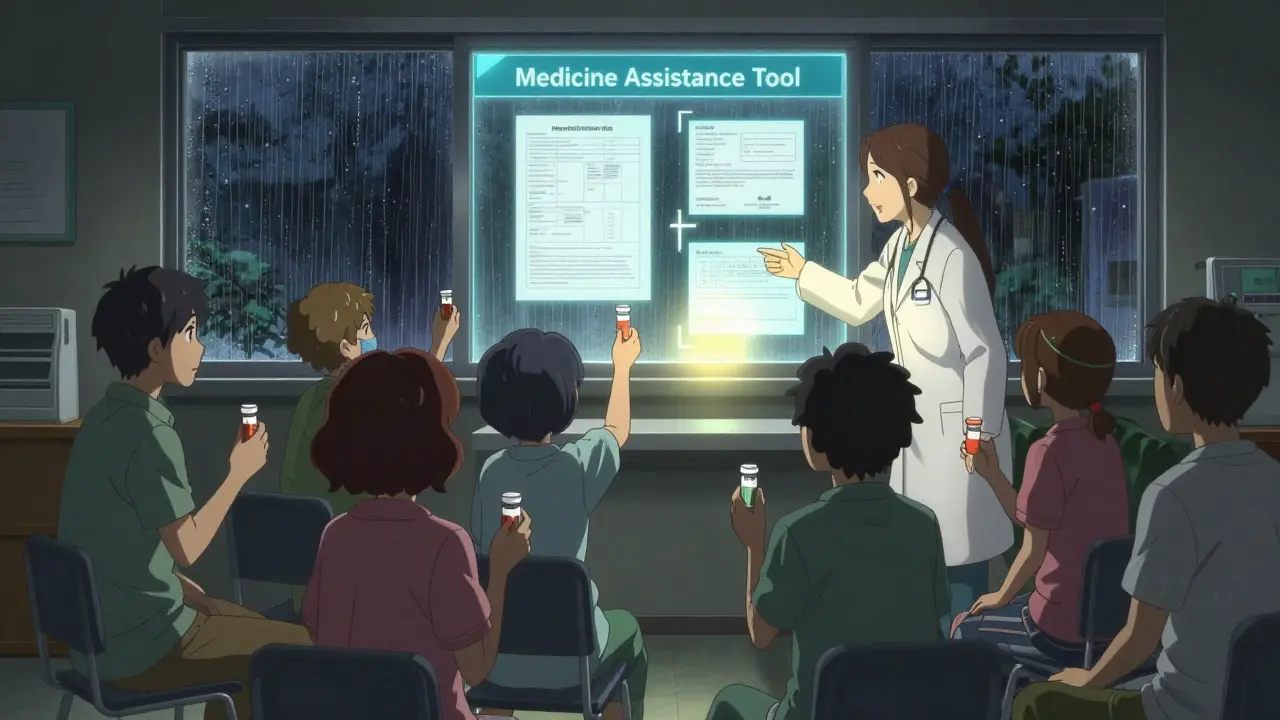
Now, more programs are integrating with pharmacy benefit managers (PBMs) and tools like the Medicine Assistance Tool (MAT). Pfizer even linked its system to TurboTax in 2023 to cut down on income errors. That’s a good sign. But it’s not enough. Experts like Dr. Aaron Kesselheim at Harvard say PAPs let drugmakers avoid lowering prices. They’re a band-aid, not a cure.
Where to Start
Don’t guess. Don’t wait. Start here:- Find your drug’s manufacturer. Google “[drug name] patient assistance program.”
- Check their website for income limits and insurance rules.
- Gather your documents: tax returns, pay stubs, prescription, ID.
- Call their help line. Ask: “Do you help people on Medicare?” or “Do you cover this drug?”
- If denied, ask why. Then fix it and reapply.
There are also free navigators. About 78% of programs have someone you can call to walk you through it. The Patient Advocate Foundation and NeedyMeds offer free help. Don’t be shy. Ask for help. You’re not alone.
Medication shouldn’t be a luxury. But right now, it often is. PAPs aren’t perfect. They’re complex, inconsistent, and sometimes unfair. But for many, they’re the only way to survive. Know your rights. Know your options. And don’t give up.
Can I get free medicine if I have Medicare?
Yes, but only under specific conditions. Most drug company programs won’t help if you’re on Medicare Part D unless you’ve been denied Extra Help first. Some programs, like Takeda’s Help At Hand, require proof of denial before they’ll approve you. Even then, the free medication won’t count toward your out-of-pocket maximum, so you may still pay more to reach catastrophic coverage. Always check the program’s rules for Medicare patients.
What if my income is just above the limit?
Some programs allow slight overages, especially for expensive specialty drugs. Pfizer, for example, raises the income cap to 600% FPL for cancer medications. But most won’t budge. If you’re just over the limit, try applying anyway. Some reviewers make exceptions for medical hardship-like if you’re paying for home care, transportation, or other high medical costs. Document everything and ask for a manual review.
Do I need to reapply every year?
Yes, most programs require annual re-enrollment for basic medications. For specialty drugs like those used in cancer or autoimmune conditions, you may need to reapply every 3 to 6 months. You’ll need to submit updated income documents and a new prescription. Missing a deadline means your medication stops. Set calendar reminders and keep copies of all paperwork.
Can I apply for multiple programs at once?
Absolutely. If you take multiple drugs from different manufacturers, apply for each program separately. Some people get help for their cancer drug from one company and their insulin from another. There’s no rule against applying to several. Just make sure you’re honest about your income and insurance on each application. Lying on one can disqualify you from all.
What if I’m denied?
Don’t give up. The most common reason for denial is incomplete paperwork-not being ineligible. Ask for the exact reason. Was it a missing signature? An outdated tax form? A miscalculated income? Fix it and reapply. Many people get approved on their second or third try. Call the program’s help line. Ask for a case manager. Some have special review processes for appeals. Persistence pays.
Are there programs for people without insurance?
Yes, but they’re rare. Most independent charity programs (like PAN Foundation) exclude the uninsured. However, many drug manufacturers do accept uninsured applicants. Pfizer, Merck, and AbbVie all have programs explicitly for uninsured patients. The key is to look for manufacturer programs, not charity ones. Use NeedyMeds or RxAssist to search specifically for “uninsured” eligibility.
Beth Cooper
January 30, 2026 AT 22:06So let me get this straight - drug companies give free meds to keep prices high? Classic. They’re not helping you, they’re avoiding regulation. The FDA lets them charge $12k/month for a pill because they ‘need to recoup R&D’ - but if you can’t pay, suddenly they’re angels with free samples? Nah. This whole system is a PR stunt wrapped in bureaucracy. And don’t even get me started on TurboTax integration - that’s not efficiency, that’s surveillance. They’re tracking your income to decide who lives and who dies. I’ve seen this before. It’s how Pharma got away with opioid addiction. Same playbook.
Donna Fleetwood
January 31, 2026 AT 09:02I know this sounds overwhelming, but please don’t give up. I helped my mom get her cancer meds through PAPs after 3 denials - and yes, it took forever. But once we got it, it was life-changing. The key? Call the help line, don’t just email. Find the case manager by name. Ask for a manual review. And write down every single thing they say. I kept a spreadsheet: date, rep name, what they asked for, what I sent. It made all the difference. You’re not alone. There are people who want to help - you just have to keep pushing.
Melissa Cogswell
February 2, 2026 AT 06:50Just a quick tip: if you're on Medicare and denied Extra Help, you can appeal that denial. It’s not final. Many people don’t realize they can request a redetermination - and sometimes, if you submit updated medical bills or show high out-of-pocket costs from other conditions, they’ll reverse it. Once you get Extra Help approved, even partially, some PAPs will open up. Also, check if your state has a Medicaid buy-in program - some let you qualify for lower income thresholds than federal. It’s not perfect, but it’s a workaround.
Bobbi Van Riet
February 3, 2026 AT 02:31I’ve been navigating this for 7 years with my autoimmune condition. Honestly, the worst part isn’t the income limits - it’s the doctors. Your PCP doesn’t care. Your specialist is overworked. You have to beg them to sign a form that takes 20 minutes of their time - and they won’t do it unless you remind them 3 times. I had to print out the application, highlight the signature line, put it in an envelope with a stamped return label, and hand it to them during my visit. I even wrote a sticky note: ‘This gets me my insulin. Thank you.’ That worked. Also - if you’re denied because of ‘incomplete income docs,’ don’t panic. Call back and say, ‘I’m willing to provide bank statements or a notarized letter of hardship.’ Most programs will accept that if you push. And yes, you can apply to multiple companies. I get insulin from one, my biologic from another, and my thyroid med from a third. It’s a patchwork, but it keeps me alive.
Also, NeedyMeds has a tool that auto-fills forms based on your income. Use it. It saved me hours. And if you’re between 135–150% FPL - you’re not crazy for being stuck. That gap is intentional. Congress didn’t fix it. But you can still fight. Don’t let them make you feel guilty for needing help.
Holly Robin
February 4, 2026 AT 08:13THEY’RE LYING TO YOU. EVERY SINGLE ONE OF THEM. PAPs are a distraction. They don’t want you to know this, but drug companies are legally allowed to charge whatever they want - and they do. The real reason they run PAPs? To avoid price controls. If they lowered prices, the government would force them to lower ALL prices. But if they give free samples, they can say, ‘See? We’re compassionate!’ Meanwhile, your insulin still costs $300. And guess who pays? YOU. Through higher premiums. Through taxes. Through the $800 billion in wasted healthcare spending. This isn’t charity. It’s a shell game. And the people who fall through the cracks? They die quietly. Don’t be fooled. This system is designed to fail you.
Shubham Dixit
February 6, 2026 AT 03:24Why do Americans always cry about drug prices? In India, we pay $2 for insulin, $5 for cancer chemo, and no one is running to some corporate charity for help. Why? Because we don’t let greedy corporations run our healthcare. You have a government that lets pharmaceutical giants own your life. You think Pfizer cares about you? They care about profit. They don’t want to help you - they want to keep you dependent. Look at what happened in Canada - prices dropped 80% when they regulated. Why don’t you demand that? Instead, you’re filling out forms like it’s a game. Wake up. This isn’t about paperwork. It’s about systemic corruption. Your country is being robbed - and you’re polishing the handcuffs.
KATHRYN JOHNSON
February 8, 2026 AT 00:03There is no legal obligation for pharmaceutical companies to provide patient assistance programs. They are entirely voluntary. Therefore, any expectation that they should be accessible, equitable, or efficient is misplaced. The system is functioning as designed: profit-driven, fragmented, and intentionally complex. To suggest otherwise is to misunderstand the nature of corporate behavior in a capitalist healthcare system. The solution is not better forms - it is structural reform. Until then, your emotional investment in this process is misplaced.
Sazzy De
February 8, 2026 AT 01:59Been there. Got the stack of denial letters. I applied to 5 programs. Got approved on the 3rd try. The key? Don’t stress about getting it perfect. Just get it in. They’ll tell you what’s wrong. I used my tax transcript from the IRS website - way faster than waiting for a copy of my return. And I called the help line every Monday morning - they’re less busy then. I didn’t cry. I didn’t beg. I just kept showing up. It’s exhausting, but it works. You’re not broken. The system is.
Lily Steele
February 8, 2026 AT 10:52Just applied for my dad’s diabetes med. Took 2 hours. Got denied because they thought he was married (he’s widowed). Sent a death certificate. Approved in 4 days. No one tells you that sometimes the paperwork is about proving someone is dead. But it’s real. Also - if you’re on Medicare, call your local Area Agency on Aging. They have free navigators who do this for a living. They’ll even call your doctor for you. Seriously. Ask for help. You’re not weak for needing it.
Sidhanth SY
February 10, 2026 AT 07:09I think this whole thing is fixable if we just had more transparency. Why can’t there be one portal where you plug in your income, insurance, and meds and it tells you what you qualify for? Why does every company have its own weird form? It’s like the internet in 1998. Also, I applied for my asthma inhaler and got approved - even though I have insurance - because my copay was $400. Turns out Pfizer has a commercial PAP for that. No one told me. So I’m glad this post exists. Just… make it easier. Please.
Adarsh Uttral
February 12, 2026 AT 06:53so i got my cancer med for free last year but then i got a part time job and they cut me off. i didnt even make 20k a year. they said i was over 300% fpl. but i had 12k in medical bills. they didnt care. now im paying $1100 a month. its not fair. i tried to reapply but they said i have to wait 6 months. i dont have 6 months. this system is broken.