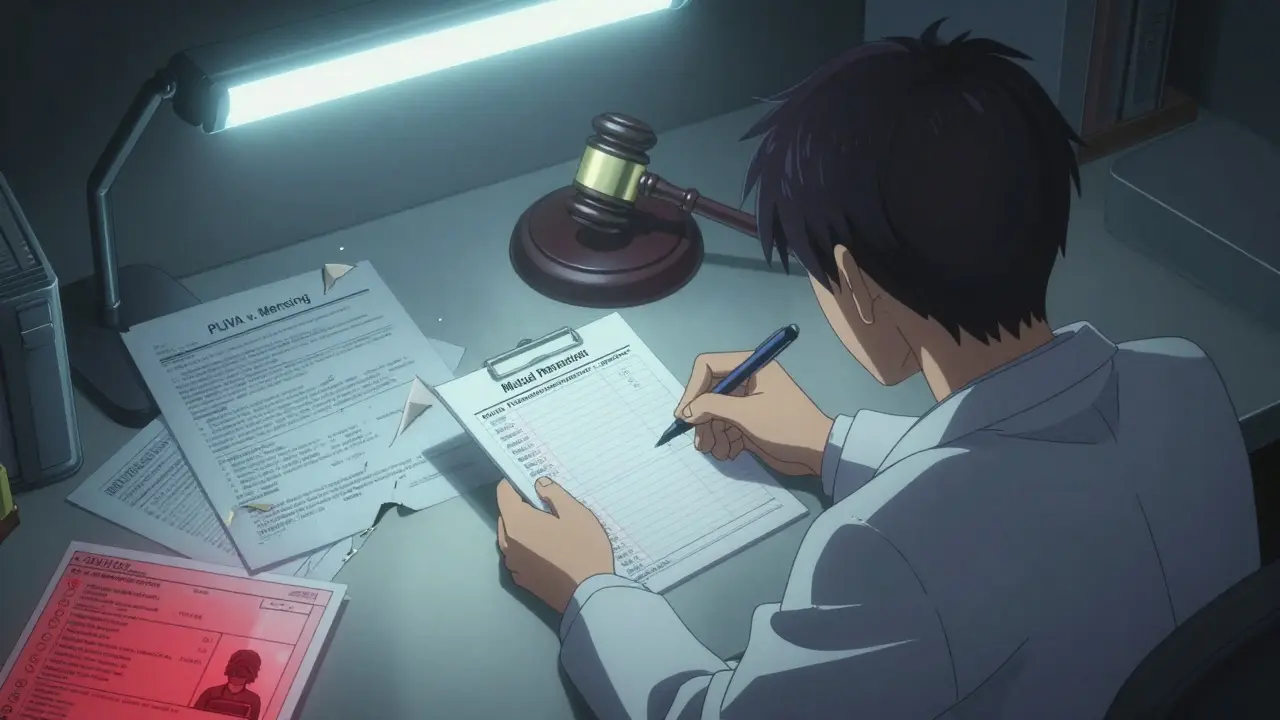
When a doctor writes a prescription for a generic drug, they might think they’re doing the right thing-saving money, following guidelines, helping patients afford treatment. But in today’s legal landscape, that simple act can carry serious legal consequences. Physician liability for prescribing generics isn’t about intent. It’s about what happens when things go wrong, and who ends up being held responsible.
Why Prescribing Generics Can Put Doctors at Risk
In 2011 and 2013, the U.S. Supreme Court made two rulings that changed everything: PLIVA v. Mensing and Mutual Pharmaceutical v. Bartlett. These decisions said generic drug manufacturers can’t be sued for failing to update warning labels, even if a patient is seriously harmed. Why? Because federal law says generic makers must copy the brand-name label exactly-they can’t change it on their own. That left patients with nowhere to turn. No lawsuit against the maker. No compensation from the company that produced the drug. So where do they go? Often, straight to the doctor who wrote the prescription. This isn’t theoretical. Between 2014 and 2019, lawsuits targeting physicians over generic drug injuries rose by 37%. A patient develops toxic skin reactions after taking generic sulindac. Their lawyer looks at the chain of responsibility: the manufacturer can’t be touched. The pharmacist followed the law. That leaves the prescribing physician as the only viable target.How Liability Is Proven-The Three Legal Hurdles
To win a malpractice case against a doctor over a generic drug, the plaintiff must prove three things:- Duty: There was a doctor-patient relationship. This is almost always clear.
- Dereliction: The doctor failed to meet the standard of care. This is where it gets tricky. Did they warn the patient? Did they consider known risks? Did they document it?
- Direct cause: The medication directly caused the injury. This requires medical evidence linking the drug to the harm.
The State-by-State Patchwork of Rules
Forty-nine states let pharmacists swap a brand-name drug for a generic unless the doctor writes “dispense as written.” But here’s the catch: only 32 states require pharmacists to notify the doctor when they make the switch. In 17 states, the doctor might never know. That creates a dangerous blind spot. A patient gets a generic version of a narrow-therapeutic-index drug like warfarin or levothyroxine. The generic has slightly different absorption rates. The patient’s INR spikes. They bleed internally. The doctor didn’t know a substitution happened. They didn’t counsel the patient. Now they’re facing a lawsuit. Some states are trying to fix this. Illinois courts have ruled that generic manufacturers can be held liable if their drug is inherently dangerous and they refuse to update labeling. But in most states, federal preemption overrides state law. That means doctors in Texas, Florida, or Ohio face far greater exposure than those in Illinois.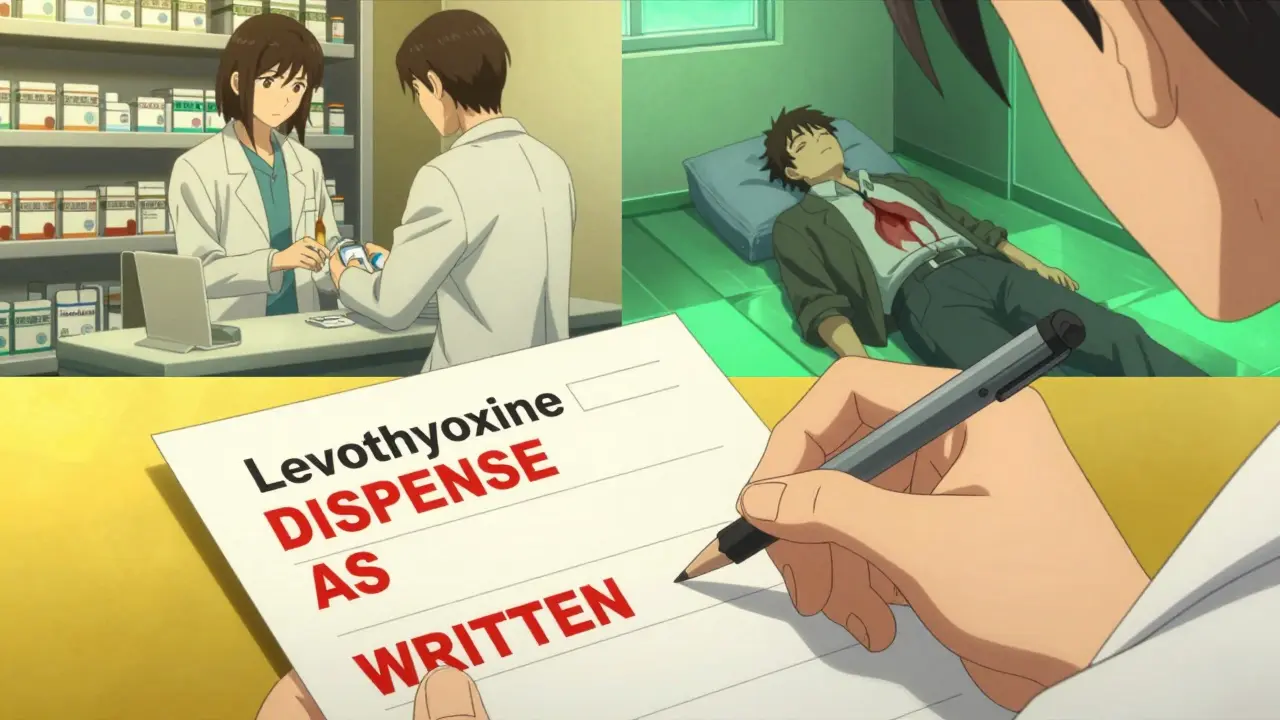
What Doctors Are Doing to Protect Themselves
A 2022 survey of 1,200 physicians found that 68% feel more anxious about prescribing generics. Forty-two percent admit they sometimes choose brand-name drugs-even when cheaper options exist-just to avoid liability. Doctors are changing their habits:- They now write “dispense as written” on prescriptions for drugs like levothyroxine, cyclosporine, and seizure medications.
- They add detailed warnings to electronic health records: “Discussed risk of Stevens-Johnson syndrome with patient. Advised to seek immediate care if rash develops.”
- They’re spending 15-20 extra minutes per visit documenting every conversation about side effects.
Insurance Premiums Are Rising-And So Are Settlements
Professional liability insurers have noticed the trend. Premiums for primary care physicians rose 22.7% between 2013 and 2022. For those who routinely authorize substitutions without documentation, insurers now add a 7.3% surcharge. Settlements are climbing, too. The American College of Physicians recorded 47 malpractice claims related to generic drugs between 2016 and 2021. Twelve of them resulted in payouts averaging $327,500. One case involved a patient who developed Stevens-Johnson syndrome after a pharmacist substituted a generic anticonvulsant. The doctor had written “may substitute” and didn’t warn the patient about skin reactions. The settlement was $485,000.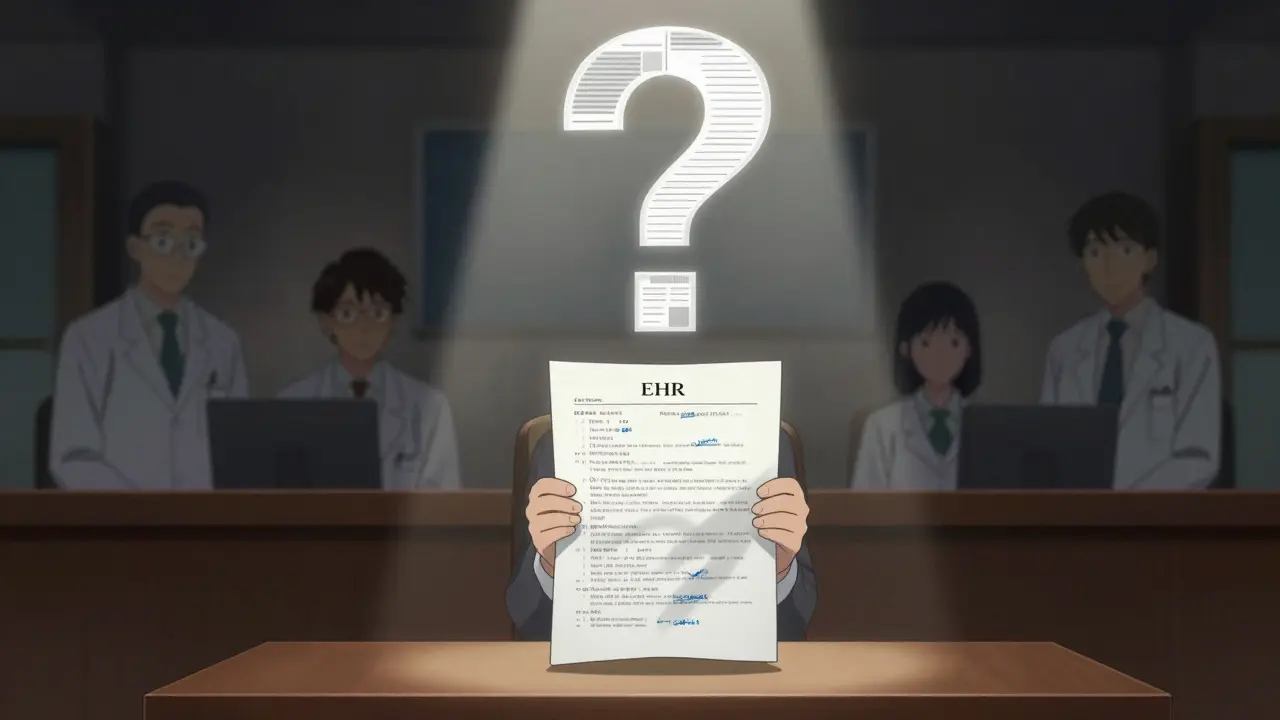
What You Need to Do Right Now
If you prescribe medications, here’s what you need to do:- Know your high-risk drugs. Warfarin, levothyroxine, lithium, phenytoin, and some immunosuppressants have narrow therapeutic windows. Always write “dispense as written” on these.
- Document everything. Don’t say “medication discussed.” Say: “I explained that [drug] may cause dizziness, blurred vision, and nausea. I advised avoiding driving or operating heavy machinery until tolerance is established.”
- Use your EHR’s tools. If your system has a mandatory counseling field, fill it out. It’s your legal shield.
- Ask patients. “Have you taken this medication before? Did you have any side effects?” This isn’t just good medicine-it’s your defense.
- Stay updated. New safety warnings come out all the time. If the brand-name label changes, but the generic doesn’t, you’re the one who has to tell the patient.
The Bigger Picture
The system isn’t broken because of doctors. It’s broken because of a legal gap created by federal preemption. Generic manufacturers are shielded. Pharmacists follow the law. Patients get hurt. And doctors-facing the most direct relationship with the patient-are left holding the bag. The American Medical Association is pushing for state laws that require pharmacists to notify physicians within 24 hours when a substitution occurs. Eighteen states have introduced bills in 2023. But until federal law changes, the burden stays with you. The numbers don’t lie: 90% of prescriptions filled in the U.S. are generics. That means nearly every doctor is affected. Ignoring this isn’t an option. Documenting carefully isn’t bureaucracy-it’s your protection.Can I be sued if I prescribe a generic drug and the patient gets hurt?
Yes. While generic manufacturers are protected by federal preemption, physicians can still be held liable if they failed to meet the standard of care-such as not warning about known side effects, not documenting patient counseling, or prescribing a high-risk drug without proper monitoring.
What’s the difference between prescribing a brand-name drug versus a generic in terms of liability?
Legally, the standard of care is the same. But if a patient is injured by a brand-name drug, they can sue the manufacturer. With generics, they can’t. That means the doctor becomes the primary target in lawsuits. The liability risk shifts entirely to the prescriber.
Do I have to write “dispense as written” on every prescription?
No-but you should for drugs with narrow therapeutic indices, like warfarin, levothyroxine, or certain anti-seizure medications. In 32 states, this prevents pharmacists from substituting generics. For other drugs, it’s optional, but documenting counseling is still critical.
How detailed should my documentation be?
Be specific. Instead of “discussed side effects,” write: “I explained that [drug] may cause severe skin rash, dizziness, and liver toxicity. I advised reporting any new rash, yellowing of skin, or persistent nausea immediately.” Generic notes like “medication reviewed” offer no legal protection.
Is there any legal protection for doctors who follow all guidelines?
Following guidelines doesn’t guarantee immunity, but thorough documentation reduces liability exposure by up to 58%. Courts look for evidence that you acted reasonably. If you can show you warned the patient, documented the conversation, and chose the drug appropriately, you’re far less likely to lose a case.
William James
February 23, 2026 AT 20:29Man, this whole system is just a mess. I mean, we're supposed to be helping people, right? But now we're walking around like we're carrying bombs in our prescriptions. I've prescribed generics for years, never thought twice. Now I'm second-guessing every scrip I write. It's not about the drug-it's about the paperwork. And honestly? The paperwork is the real villain here.
I had a patient last week on levothyroxine. I wrote "dispense as written" like they say. But I didn't write down that I told her about the dizziness. Just said "medication discussed." Now I'm sweating bullets. What if she falls? What if she drives? I'm not a lawyer. I'm a doctor. Why do I need to be both?
David McKie
February 23, 2026 AT 23:44Oh, here we go again-the poor, persecuted physician. Let me guess, you're also too busy to document because you're too busy saving lives? Newsflash: if you can't document it, it didn't happen. And if it didn't happen, you're legally naked. This isn't a conspiracy. It's called accountability. You think you're being punished? You're being reminded that medicine isn't a moral crusade-it's a legal minefield. And you, my friend, are holding the detonator.
Haley Gumm
February 24, 2026 AT 19:11I get it. I really do. But here's the thing-doctors aren't the problem. The system is. I work in a rural clinic. We're stretched thin. We don't have time to write 15 paragraphs in the EHR for every generic. And yet, if we don't? We're the ones who get sued. Meanwhile, the manufacturer gets off scot-free. That's not justice. That's a loophole with teeth.
My intern asked me yesterday, "Why do we even use generics?" I didn't have a good answer. Not anymore.
Gabrielle Conroy
February 25, 2026 AT 19:36YES YES YES!! I'm so glad someone finally said this!! 🙌 I've been screaming into the void for years! Document, document, DOCUMENT!! I literally have a sticky note on my monitor that says "If you didn't type it, it didn't happen!" 😭
I had a patient last month on warfarin-generic, of course-and I wrote: "Explained risk of bleeding, bruising, nosebleeds, dark stools. Advised to call immediately if any of these occur. Patient acknowledged understanding. Signed informed consent form attached."
That took 4 minutes. But now? I sleep like a baby. And my malpractice insurer gave me a discount!! 🎉
John Smith
February 27, 2026 AT 03:29Shalini Gautam
February 27, 2026 AT 22:36As an Indian doctor, I find this hilarious. In India, we don't even have EHRs. We write on paper. Patients bring their own generics from the pharmacy. We don't even know what brand they're taking. But we still get sued? Here, you have a system that's so over-legalized, it's suffocating. In my country, we just hope for the best. Maybe we're better off?
Also, why is everyone so scared? If a patient gets hurt, it's not always the drug. Maybe they drank alcohol. Maybe they didn't take it right. Maybe they're just unlucky. But nooo, it's always the doctor.
Nandini Wagh
February 28, 2026 AT 00:49Wow. So now doctors are being punished for trying to save people money? That's beautiful. Truly. The system is designed to protect corporations, not patients. And now it's turning doctors into scapegoats. I'm not surprised. This is capitalism with a stethoscope.
I used to think medicine was noble. Now I think it's just another way for lawyers to get rich.
Holley T
February 28, 2026 AT 23:41Let me be the first to say this: the whole "document everything" thing is absurd. It's not about safety. It's about liability theater. You're not a paralegal. You're a physician. If you're prescribing a generic, you're making a clinical decision. Not writing a legal affidavit.
And let's be real-the EHRs are designed to trap you. Mandatory fields? Of course. They're not helping you. They're protecting the company that built them. Epic Systems? They're making millions off this fear. And you're the one doing the work.
Also, "dispense as written"? That's just a band-aid. The real problem is federal preemption. Until Congress fixes that, all this documentation is just noise.
And yes, I know I'm being contrarian. But someone has to say it.
Ashley Johnson
March 1, 2026 AT 19:19Have you ever thought this might be a big pharma plot? 🤔 I mean, think about it. They get away with everything. They make the brand-name drugs. Then they let generics be made by some third-world factory. Then they get sued? Nope. But the doctor? Oh, he's got a target on his back.
And the EHR? It's not just a tool. It's a spy. They're watching you. They're tracking every word you type. They're building a profile. And one day? They'll use it against you.
I heard a story about a doctor who wrote "medication discussed" and got sued for $2 million. They pulled his EHR logs. Found out he typed it in 12 seconds. "Insufficient counseling," they said.
They're not protecting you. They're preparing you for the fall.
tia novialiswati
March 2, 2026 AT 01:53You got this!! 💪 I know it feels overwhelming-but you're not alone!! 🤗 Every single one of you out there documenting, counseling, writing "dispense as written"? You're doing the right thing. Even if it takes 15 extra minutes. Even if it feels like paperwork hell.
I had a patient yesterday who said, "Doc, why are you asking so many questions?" I smiled and said, "Because I care. And because I want you to be safe."
You're not just a doctor. You're a guardian. And your notes? They're your shield. Keep going. You're making a difference.
Lillian Knezek
March 2, 2026 AT 17:19They're tracking us. Always. The EHR, the insurance, the state boards. They know which doctors prescribe generics. They know who documents. They know who doesn't. And they're building a database. One day, they'll use it to deny licenses. Or raise premiums. Or worse.
I heard a rumor that the AMA is working with a private company to tag every generic prescription with a hidden code. So they can track you forever. I don't know if it's true. But I wouldn't be surprised.
Don't trust the system. Document. But don't believe it'll protect you.
Maranda Najar
March 3, 2026 AT 06:11Oh, the tragedy! The sheer, unmitigated tragedy of it all! 🎭 The noble physician, burdened by the weight of a legal system that has turned compassion into a liability! The very act of prescribing a generic-a gesture of benevolence!-is now a dagger poised at the heart of medical ethics!
Each keystroke in the EHR is a lament. Each "dispense as written" is a whispered prayer. And when the patient bleeds? When the skin cracks? When the liver fails? The courtroom becomes a cathedral of injustice, where the doctor, clad in scrubs and exhaustion, stands alone before the altar of corporate impunity!
Will no one speak for the healer? Will no one lift the veil from the eyes of the faceless conglomerate that manufactures death and walks away, unscathed?
Sanjaykumar Rabari
March 5, 2026 AT 01:24