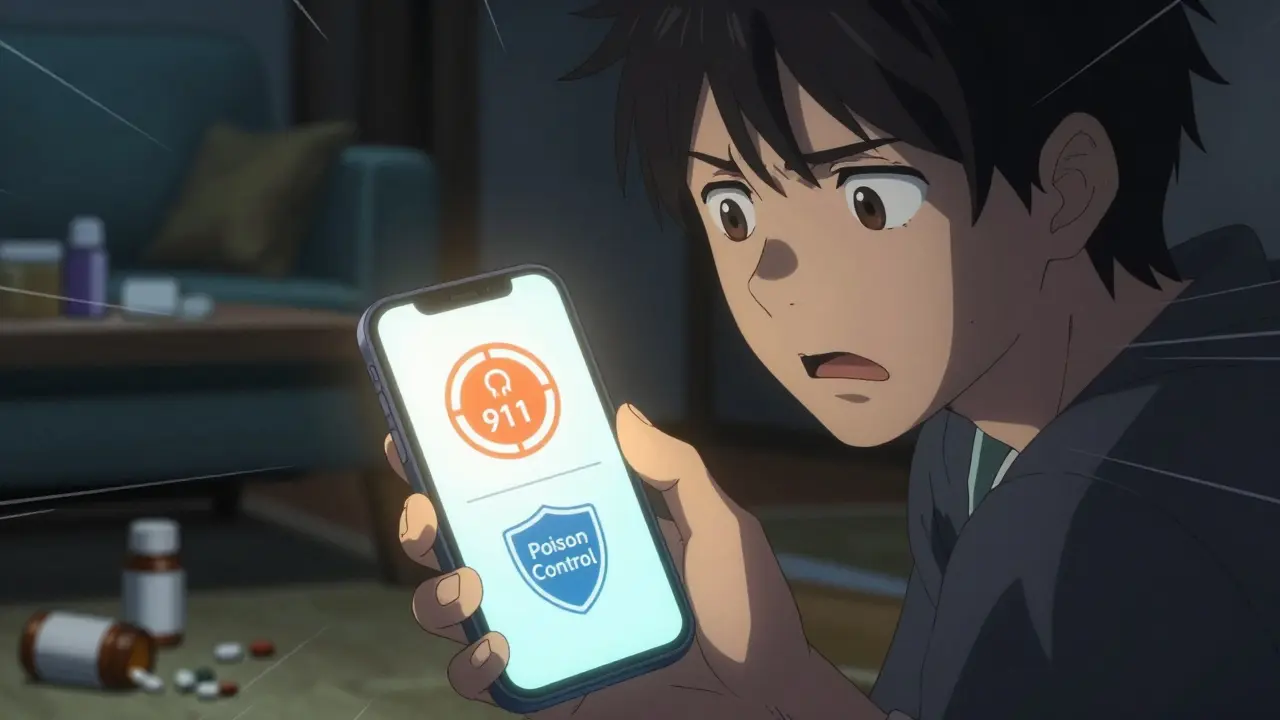
Imagine this: you find someone unresponsive on the floor, or your child has just swallowed a handful of pills. Panic sets in instantly. Your heart races, and your first instinct is often to grab the phone. But who do you call? Do you dial Poison Control for expert advice, or do you scream for Emergency Medical Services (EMS) by calling 911?
Making the wrong choice can cost precious minutes-or even a life. The line between a situation that needs professional toxicology advice and one that demands immediate ambulance transport is thin but critical. Understanding where that line lies isn't just about medical knowledge; it's about knowing how to triage chaos.
Poison Control is a specialized network of regional centers staffed by medical toxicologists and nurses who provide free, confidential guidance for exposures to poisons and drugs. In the United States, this system operates through 55 regional centers coordinated by America's Poison Centers. Since the launch of the unified national hotline, 1-800-222-1222, in 2007, these experts have handled approximately 2.1 million human exposure cases annually. Their primary goal is to prevent unnecessary trips to the emergency room while ensuring patients get the right care at the right time.
The Red Flags: When to Call 911 Immediately
Time is the enemy in an overdose scenario. If the person is showing signs of physiological collapse, you do not have time to wait on hold or consult an online database. You need paramedics on scene now. According to data from the CDC’s WISQARS system, respiratory failure is present in nearly 30% of fatal poisoning cases. This means breathing issues are the number one killer.
Call 911 immediately if the person exhibits any of the following:
- Respiratory distress: They are struggling to breathe, breathing very slowly, or have stopped breathing entirely. If their lips or fingertips are turning blue or gray, oxygen is not reaching their brain.
- Unresponsiveness: You cannot wake them up. Shaking their shoulders loudly or applying painful stimuli (like a sternum rub) elicits no response. In medical terms, this corresponds to a Glasgow Coma Scale score of 8 or lower.
- Seizures: Generalized tonic-clonic seizures lasting longer than five minutes require immediate intervention to prevent brain damage.
- Cardiovascular instability: Signs include extreme dizziness, fainting, or a systolic blood pressure dropping below 90 mmHg. This indicates shock.
There is also a specific rule regarding age. The Advance ER protocol mandates bypassing Poison Control for infants under 1 year old and adults over 79 years old. These populations have fragile pharmacokinetics-their bodies process toxins differently and less efficiently. Studies show they face a 37% higher mortality rate from identical exposures compared to healthy adults. If a toddler swallows a button battery or an elderly person misses a dose and then takes double, call 911. Do not risk it.
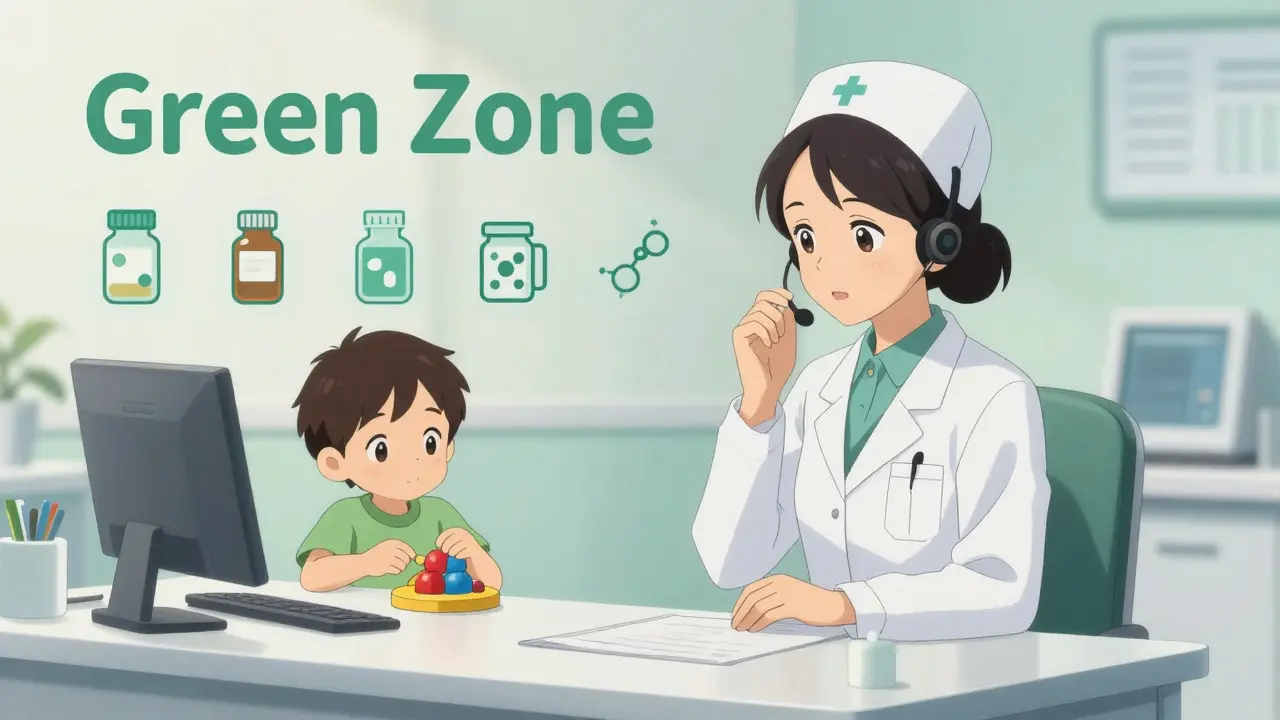
The Green Zone: When to Contact Poison Control
Not every accidental ingestion requires an ambulance ride. In fact, rushing a stable patient to the ER can expose them to hospital-acquired infections and high costs without adding clinical value. The Connecticut Poison Control Center estimates that proper triage saves healthcare systems $1.8 billion annually by avoiding 300,000 unnecessary transports.
You should call 1-800-222-1222 if:
- The patient is stable: They are alert, talking, and breathing normally with no abnormal vital signs.
- The exposure is known and quantifiable: You know exactly what was ingested and roughly how much. For example, a child accidentally took two extra acetaminophen tablets instead of one.
- The event happened recently: The exposure occurred within the last two hours, and no symptoms have manifested yet.
- It involves household products: Spilled cleaning chemicals, minor skin contact with pesticides, or swallowing a small amount of non-toxic plant matter.
For instance, if a healthy adult accidentally takes a slightly higher dose of ibuprofen but feels fine, Poison Control can calculate the exact risk based on their weight and advise home observation. However, if that same adult has liver disease or is taking other medications that interact with ibuprofen, the advice might change to "go to the ER." That nuance is why expert consultation matters.
The Gray Area: Intentional Overdose and Multiple Substances
This is where things get dangerous. If the overdose was intentional-whether due to suicide attempts, self-harm, or severe mental health crises-you must call 911. Data from SAMHSA shows that 68.2% of suicide attempts involve multiple substances. Mixing drugs creates unpredictable chemical reactions that Poison Control cannot manage remotely.
Furthermore, 41% of intentional overdose victims develop respiratory compromise within just 15 minutes. Even if the person seems okay when you first check on them, their condition can deteriorate rapidly as the drugs peak in their bloodstream. EMS personnel can monitor vitals continuously during transport and administer advanced life support if needed. Poison Control specialists are brilliant, but they cannot intubate a patient or start an IV drip from the other end of the phone.
What to Have Ready Before You Dial
Panic makes us forgetful. To make the most of the call, gather these details before you pick up the phone. Having this information ready reduces stress and ensures accurate advice.
- The product container: Bring the pill bottle, chemical container, or plant sample to the phone. Labels contain concentration data and formulation types (e.g., extended-release vs. immediate-release), which drastically change toxicity profiles.
- Patient weight: Toxicity is calculated by milligrams per kilogram of body weight. An error of more than 10% in weight estimation can lead to incorrect dosing recommendations for antidotes.
- Time of exposure: Be as precise as possible. Did it happen 10 minutes ago or an hour ago? The "toxic window" varies by substance.
- Current symptoms: Note when symptoms started and how they have progressed. Vomiting, confusion, or rash changes the management plan entirely.
- First aid administered: Did you induce vomiting? Give activated charcoal? Tell the specialist exactly what you did.
Opioid Overdoses: A Special Case
If you suspect an opioid overdose (heroin, fentanyl, oxycodone, etc.), the protocol shifts. Opioids depress the central nervous system, slowing breathing until it stops. In this scenario, you act first, then call.
If you have Naloxone (Narcan), administer it immediately. It is an opioid antagonist that can reverse respiratory depression within minutes. After administering Naloxone, call 911. Why? Because Naloxone’s effects may wear off faster than the opioid, leading to a "re-narcotization" where the person slips back into unconsciousness. Paramedics can provide continuous monitoring and additional doses if needed.
In New Mexico alone, real-time guidance from the Narcan Helpline helped reverse over 12,000 overdoses in 2022. While Poison Control can guide you on Naloxone use, 911 is the safer bet for opioid crises due to the high risk of rapid deterioration.
| Situation | Action | Reason |
|---|---|---|
| Child swallowed 1 vitamin tablet, acting normal | Call Poison Control | Low risk, stable patient, likely home observation |
| Adult found unresponsive, slow breathing | Call 911 | Life-threatening respiratory arrest risk |
| Intentional ingestion of multiple pills | Call 911 | High risk of delayed complications and interaction |
| Spilled bleach on skin, mild irritation | Call Poison Control | Needs decontamination advice, not emergency transport |
| Infant (<1 yr) ingests unknown substance | Call 911 | High vulnerability, rapid deterioration risk |
Digital Tools and Limitations
Technology has expanded access to toxicology expertise. The webPOISONCONTROL platform handles nearly 30% of consultations, offering a structured 12-step interface for users to input exposure details. It is validated against physician assessments with 97.2% agreement. However, it has strict limitations. You cannot use it for intentional overdoses, multiple substance ingestions, or symptomatic patients. If the system flags your case as high-risk, it will direct you to call 911 or Poison Control directly.
Mobile apps like the Poison Help app provide offline first-aid instructions but lack real-time consultation. Relying solely on an app for a serious exposure is risky. Always prioritize human connection when in doubt.
Conclusion: Trust Your Gut, But Verify
The hardest part of any overdose situation is the fear of making a mistake. Remember this rule of thumb: If you are unsure, err on the side of caution. Calling 911 for a false alarm is better than waiting too long for a crisis. However, using Poison Control appropriately keeps emergency resources available for those who truly need them. Both systems work together to save lives. Know the signs, prepare your information, and act decisively.
Is Poison Control free?
Yes, Poison Control services in the United States are completely free and confidential. The national hotline 1-800-222-1222 connects you to regional centers funded by federal grants and state contracts. There is no charge for the consultation, regardless of whether you have insurance.
Can I call Poison Control for drug overdoses?
You can, but with caveats. For stable patients with known single-substance exposures, Poison Control can provide guidance. However, for suspected opioid overdoses or intentional ingestions involving multiple drugs, calling 911 is strongly recommended due to the high risk of rapid respiratory failure and complex interactions.
What if the person vomits after an overdose?
Vomiting can be a sign of toxicity or a natural reflex. Do not try to stop it unless advised by a professional, as it may remove some of the toxin. However, if the person is becoming drowsy or unresponsive, place them in the recovery position (on their side) to prevent choking on vomit. Call 911 if they are difficult to wake up.
How long does it take for Poison Control to answer?
Response times are typically very fast, with a median connect time of around 28 seconds according to recent audits. Specialists are available 24/7, 365 days a year. If you are put on hold for more than a minute or two, consider calling 911 if symptoms are worsening.
Should I induce vomiting?
Never induce vomiting unless explicitly instructed by Poison Control or a medical professional. Inducing vomiting can cause aspiration (inhaling vomit into the lungs), especially if the person is drowsy, or can cause further damage if the substance is corrosive (like bleach or drain cleaner).