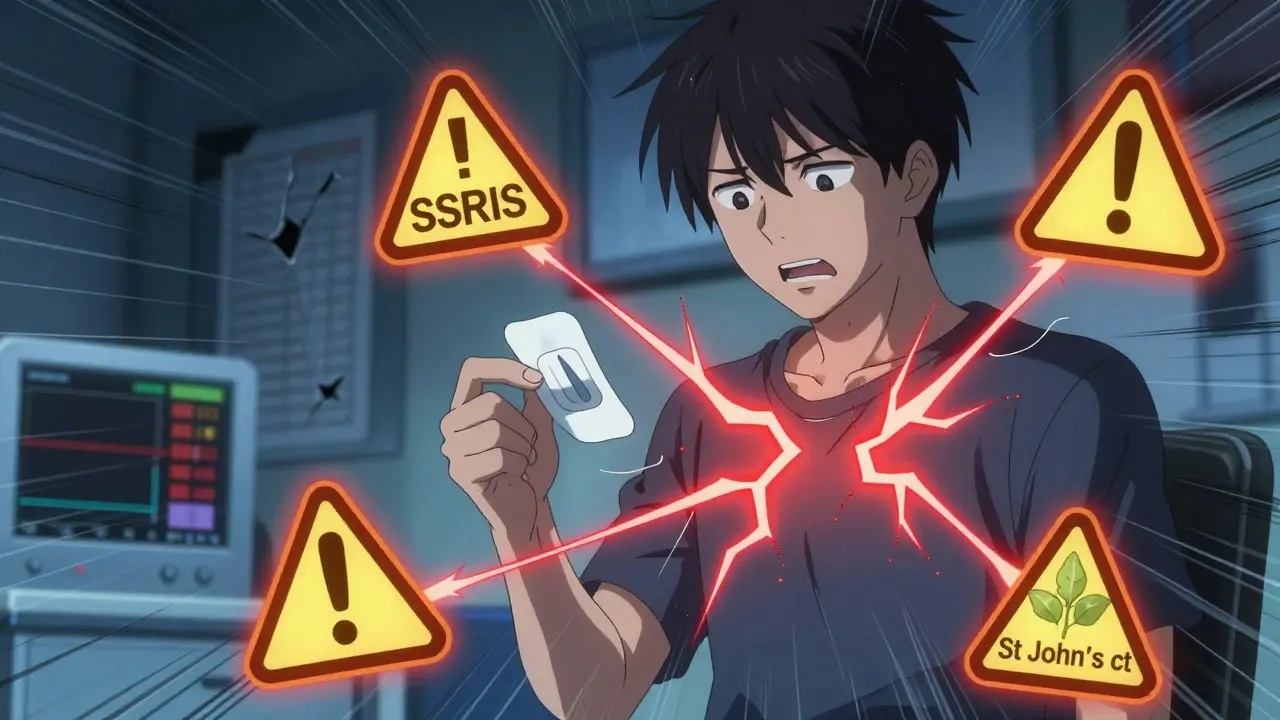
When you’re prescribed selegiline transdermal (EMSAM) for depression, you might think the patch is safer than old-school oral MAOIs. After all, you don’t need to avoid aged cheese or red wine anymore-at least not at the lowest dose. But here’s the truth most doctors don’t spell out: selegiline transdermal can still kill you if mixed with common antidepressants, painkillers, or even cough syrup. The risk isn’t theoretical. It’s real, documented, and preventable-if you know what to look for.
Why Selegiline Transdermal Is Different (But Not Safe)
Selegiline transdermal works by blocking monoamine oxidase enzymes, which normally break down serotonin, norepinephrine, and dopamine in your brain. At 6 mg/day, it mostly avoids gut MAO-A, so tyramine in food won’t spike your blood pressure. That’s why the FDA removed dietary restrictions for this dose. But that doesn’t mean it’s harmless. Even at 6 mg, it still blocks MAO-A in your brain. And when you add another drug that boosts serotonin-like an SSRI, SNRI, or even dextromethorphan in cough medicine-you’re pouring gasoline on a fire.The Real Danger: Serotonin Syndrome
Serotonin syndrome isn’t just a side effect. It’s a medical emergency. Your body gets flooded with too much serotonin. Symptoms start fast: agitation, confusion, rapid heartbeat, high blood pressure, shaking, sweating, fever, muscle stiffness, and diarrhea. In severe cases, you can go into seizures, lose consciousness, or die. The CDC and FDA both list serotonin syndrome as a black box warning for EMSAM. That’s the strongest warning they give. A 2015 study in the Journal of Clinical Psychiatry tracked 12 cases of serotonin syndrome linked to MAOIs over five years. Three involved EMSAM-all at the 12 mg dose-combined with SSRIs. All patients needed hospital care. One ended up in the ICU. Even worse, a 2021 case report showed a patient developed full-blown serotonin syndrome after getting ondansetron (a common anti-nausea drug) while using EMSAM 9 mg/day. That drug isn’t even an antidepressant. It’s used for chemotherapy nausea. And it still triggered a life-threatening reaction.What Drugs Can Trigger This?
You can’t just check your antidepressant list. You need to look at everything. Here’s what you must avoid while on EMSAM:- SSRIs: fluoxetine (Prozac), sertraline (Zoloft), escitalopram (Lexapro)
- SNRIs: venlafaxine (Effexor), duloxetine (Cymbalta)
- TCAs: amitriptyline, nortriptyline
- Triptans: sumatriptan (Imitrex), rizatriptan (Maxalt) - used for migraines
- Tramadol (Ultram) - a painkiller many don’t realize is serotonergic
- Dextromethorphan - found in Robitussin, NyQuil, and many OTC cough syrups
- Buspirone (Buspar) - an anti-anxiety drug
- St. John’s Wort - a popular herbal supplement
- Tryptophan - sold as a sleep aid
- Linezolid - an antibiotic sometimes used for stubborn infections
- Intravenous methylene blue - used in some surgeries
Washout Periods: The 14-Day Myth
You can’t just stop your SSRI and start EMSAM the next day. You have to wait. The FDA says 14 days after stopping EMSAM before starting an SSRI or SNRI. But that’s not the full story. If you’re switching from fluoxetine (Prozac), you need to wait five weeks-because fluoxetine and its active metabolite stick around for weeks after you stop taking it. And here’s the flip side: if you’re coming off an SSRI to start EMSAM, you still need 14 days after stopping most SSRIs. But again, fluoxetine? Five weeks. The 2023 American Journal of Psychiatry guidelines now recommend a 21-day washout for all serotonergic drugs before starting EMSAM, even if the FDA hasn’t updated its label yet. Why? New research suggests MAO-A enzyme recovery in the brain may take up to 28 days-not 14. Your brain doesn’t reset on a calendar. It resets when your body makes new enzymes. And that takes time.
What About the 6 mg Patch? Is It Safe?
No. And this is where most mistakes happen. Because the 6 mg patch doesn’t require dietary changes, some doctors assume it’s low-risk for drug interactions too. That’s dangerous. A 2018 article in Psychiatric Times called this a "misconception" that has led to "dangerous prescribing practices." Even at 6 mg, selegiline still inhibits brain MAO-A. That’s enough to cause serotonin syndrome when combined with another serotonergic drug. One patient in the 2015 case series was on the 6 mg patch and took tramadol for back pain. He developed serotonin syndrome within 48 hours. He survived. But he didn’t know the risk.How to Stay Safe: The 5 T’s Rule
If you’re on EMSAM-or thinking about it-use this simple checklist every time you see a doctor, pharmacist, or even buy OTC meds:- Timing - When was your last dose of any antidepressant, migraine drug, or cough syrup?
- Types - List every pill, patch, supplement, and herbal product you take. Include vitamins with tryptophan.
- Testing - Know the symptoms of serotonin syndrome. If you feel confused, shaky, hot, or your heart races after starting a new drug, get help immediately.
- Transition - Never switch drugs without a clear plan. Ask for written instructions on washout periods.
- Telephone - Keep your psychiatrist’s or pharmacist’s number handy. If something feels wrong, call before waiting to see if it passes.
Why Your EHR Might Not Protect You
You might think your doctor’s computer will warn them if you’re mixing EMSAM with Prozac. But a 2020 study in the Journal of the American Medical Informatics Association found that only 43% of electronic health record systems correctly flagged this interaction. Many systems still treat EMSAM like it’s just another antidepressant. They don’t recognize the unique risks of MAO inhibition. That means the burden falls on you. Don’t assume your doctor knows. Don’t assume the system will catch it. Bring your own list. Ask the questions.
Real-World Failure: Patients Are Being Misinformed
A 2023 online survey on the mental health forum Talkiatry asked 142 people prescribed EMSAM if they were warned about drug interactions. Only 32% said they were given a full explanation. 68% were not. And 22% had already experienced symptoms-like nausea, tremors, or anxiety-after taking OTC cold medicine. They didn’t connect it to EMSAM until they Googled it later. That’s not negligence. It’s systemic ignorance. Many prescribers still think the patch makes everything safe. It doesn’t. And patients are paying the price.What’s Changing Now?
Mylan Pharmaceuticals, the maker of EMSAM, is developing a genetic test to identify patients who metabolize MAO enzymes differently. That test could one day help predict who’s at higher risk. But it’s not available yet. Meanwhile, the FDA updated its labeling in May 2022 to explicitly say: "The absence of dietary restrictions at the 6 mg dose does not equate to absence of drug-drug interaction risks." That’s a direct correction to the myth that low-dose EMSAM is "safe" with other meds.Bottom Line: This Isn’t a Risk You Can Guess Your Way Through
Selegiline transdermal is a powerful tool. For people who’ve tried five other antidepressants and failed, it can be life-changing. But it’s not a gentle option. It’s a precision instrument. One wrong move-and you’re in the ER. If you’re on EMSAM, treat every new medication like a potential bomb. Even if it’s "just" a cold pill. Even if your doctor says "it’s fine." Double-check. Triple-check. Keep a written list of every drug you take. Show it to every provider. Don’t rely on memory. Don’t trust software. Your life depends on you being the most informed person in the room.Can I take ibuprofen or acetaminophen with selegiline transdermal?
Yes, ibuprofen and acetaminophen are generally safe with EMSAM. They don’t affect serotonin levels. But always confirm with your pharmacist before taking any new OTC pain reliever. Some combination products contain hidden serotonergic ingredients like dextromethorphan or pseudoephedrine, which can be risky.
How long does it take for selegiline to leave my system?
The drug itself clears quickly-within hours. But the enzyme it blocks, MAO-A, doesn’t regenerate overnight. It takes about two weeks for your body to make new enzymes. That’s why washout periods are so long. Even if you feel fine, your brain is still vulnerable to serotonin overload for weeks after stopping EMSAM.
Can I use EMSAM if I’ve had serotonin syndrome before?
No. If you’ve had serotonin syndrome from any cause, EMSAM is contraindicated. The risk of recurrence is too high. Your doctor should explore other treatment options, like ketamine therapy, TMS, or non-serotonergic antidepressants like bupropion.
What should I do if I accidentally take a serotonergic drug with EMSAM?
Call 911 or go to the nearest emergency room immediately. Do not wait for symptoms to worsen. Tell them you’re on EMSAM and took a serotonergic drug. Time is critical. Treatment includes stopping the drugs, cooling your body, and in severe cases, using cyproheptadine (an antihistamine that blocks serotonin).
Is there a safer MAOI alternative to EMSAM?
No. All MAOIs carry the same serotonin syndrome risk. The transdermal patch reduces dietary risks, but not drug interaction risks. If you’re concerned about interactions, your doctor may consider non-MAOI options like vortioxetine, bupropion, or even non-pharmacological treatments like CBT or ECT.
Can I drink alcohol while on EMSAM?
Moderate alcohol is generally not contraindicated, but it can worsen dizziness, lower blood pressure, and increase sedation. Heavy drinking is dangerous and may raise the risk of liver toxicity or worsen depression. Always talk to your doctor before drinking alcohol while on EMSAM.
Next Steps: What to Do Right Now
If you’re on EMSAM:- Review every medication you take-prescription, OTC, herbal.
- Call your pharmacist and ask: "Is anything here unsafe with selegiline transdermal?"
- Print out the FDA’s Medication Guide for EMSAM and bring it to your next appointment.
- If you’re switching meds, get a written transition plan. Don’t rely on memory.
- Teach a family member the signs of serotonin syndrome. If you can’t speak, they need to know what to do.
- Ask your doctor: "What’s my washout period if I’m coming off another antidepressant?"
- Ask: "What happens if I need pain relief or a migraine drug?"
- Ask: "Are there alternatives that don’t carry this level of interaction risk?"