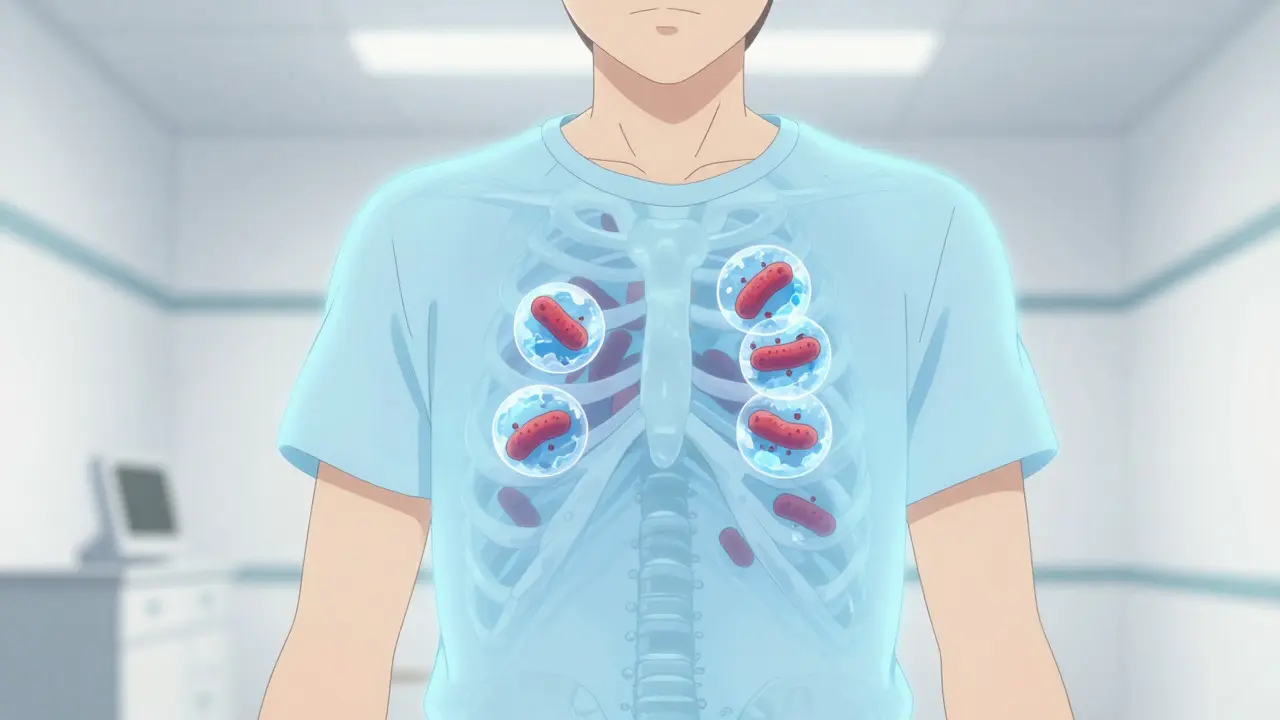
You might not know it, but roughly one-third of the world’s population carries Tuberculosis is an infectious disease caused by Mycobacterium tuberculosis bacteria that exists in two primary clinical states: latent TB infection (LTBI) and active TB disease. Also known as TB, it was identified by Robert Koch in 1882 and remains a top global killer. The World Health Organization declared it a public health emergency in 1993, and it still ranks among the top 10 causes of death worldwide. But here is the catch: most people with the bacteria never get sick. They live with what doctors call latent TB, while others develop active disease that can be deadly if untreated. Understanding the difference between these two states-and how modern drug therapy treats them-is crucial for your health and safety.
The Silent Carrier: Understanding Latent TB Infection
Latent TB infection (LTBI) is tricky because it hides in plain sight. You have the Mycobacterium tuberculosis is the specific bacterium responsible for causing tuberculosis infections in humans inside you, but your immune system has walled them off. Think of it like a dormant volcano. The bacteria are alive, but they aren’t multiplying or damaging your tissue. According to research published in PMC, this state represents an equilibrium where the host controls the infection without eradicating it completely.
If you have latent TB, you won’t feel sick. You won’t cough, you won’t sweat at night, and you certainly won’t spread the disease to anyone else. This is a critical distinction. You can go to work, hug your kids, and travel without worrying about infecting others. However, the risk isn’t zero. About 5% to 10% of people with latent TB will develop active disease within the first two years after exposure. For those with weakened immune systems, such as individuals with untreated HIV, that risk jumps significantly.
Doctors diagnose latent TB using immunologic tests. The tuberculin skin test (TST) or interferon-gamma release assay (IGRA) checks if your immune system recognizes the bacteria. If the test is positive, but your chest X-ray is normal and you have no symptoms, you likely have LTBI. The Minnesota Department of Health notes that this latent phase can last for decades. Some people carry the bacteria their entire lives without ever developing active disease. But for others, especially those who become immunocompromised later in life, that dormant bacteria can wake up.
When the Volcano Erupts: Active TB Disease
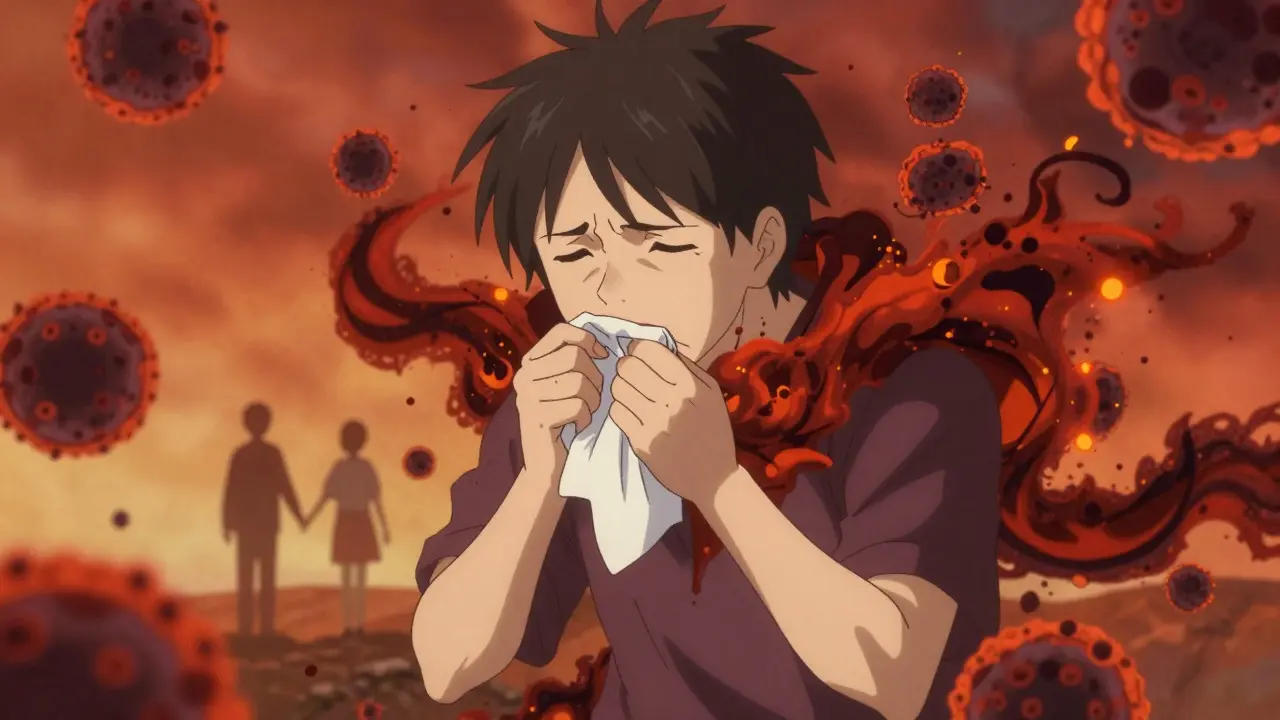
Active TB disease happens when the bacteria break free from their containment and start multiplying rapidly. This usually occurs when the immune system weakens due to factors like HIV, diabetes, malnutrition, or certain medications. Unlike latent TB, active TB makes you sick, and it makes you contagious.
The symptoms don’t hit all at once. As the Mayo Clinic points out, they usually begin gradually and worsen over several weeks. You might start with a mild cough that lingers for more than three weeks. Then come the other signs: unexplained weight loss, drenching night sweats that require changing clothes, fever, chills, and profound fatigue. In severe cases, you might cough up blood (hemoptysis) or experience sharp chest pain.
Diagnosis requires more than just looking at symptoms. Doctors need microbiological confirmation. This means taking a sputum sample-the mucus you cough up from deep in your lungs-and growing the bacteria in a culture or running nucleic acid amplification tests. A chest X-ray will also show abnormalities, unlike the clear scans seen in latent TB. Once active TB is confirmed, immediate treatment is necessary not just to save your life, but to stop you from spreading the bacteria through respiratory droplets when you cough, sneeze, or talk.
| Feature | Latent TB Infection (LTBI) | Active TB Disease |
|---|---|---|
| Bacterial Activity | Dormant, contained by immune system | Actively multiplying and spreading |
| Symptoms | None | Cough >3 weeks, weight loss, night sweats, fever |
| Contagious? | No | Yes (if pulmonary) |
| Chest X-Ray | Normal | Abnormal |
| Sputum Culture | Negative | Positive |
| Treatment Duration | 3-9 months (usually 1 drug) | 6-7+ months (4 drugs initially) |
Drug Therapy: Fighting Back with Antibiotics
Treating TB is a marathon, not a sprint. The bacteria are slow-growing and resilient, which means standard antibiotics won’t cut it. You need a specific combination of powerful drugs taken for many months. Skipping doses or stopping early is the biggest mistake patients make, leading to drug-resistant strains that are much harder to cure.
For latent TB infection, the goal is prevention. You want to kill off those dormant bacteria before they wake up. The standard regimen recommended by the CDC and Minnesota Department of Health is Isoniazid is a first-line antibiotic medication used to treat and prevent tuberculosis infections taken daily for nine months. However, newer, shorter regimens are becoming popular to improve compliance. These include four months of rifampin or a three-month course of weekly isoniazid and rifapentine. These shorter courses are endorsed by the WHO because they help people finish treatment, reducing the chance of progression to active disease.
Active TB disease requires a heavier artillery. The initial phase lasts two months and involves four drugs: isoniazid, rifampin, pyrazinamide, and ethambutol. This "RIPE" regimen attacks the bacteria from multiple angles to prevent resistance. After two months, if the patient is improving, the treatment shifts to a continuation phase lasting four to seven months, typically using just isoniazid and rifampin. The total treatment time is usually six to seven months minimum.
Monitoring is vital during this process. These drugs can be hard on the liver. Patients need regular clinical evaluations and liver function tests. Symptoms like yellowing of the skin (jaundice), nausea, or dark urine should be reported immediately. Additionally, directly observed therapy (DOT) is often recommended. This means a healthcare worker watches you take each dose to ensure adherence. It sounds intrusive, but it saves lives by preventing the development of multidrug-resistant TB (MDR-TB).

Risks, Resistance, and Global Context
Why does TB remain such a threat in 2026? Despite effective treatments, the disease persists because of social determinants of health, immigration patterns, and the rise of drug resistance. In the United States, TB cases hit a historic low in 2020, but incidence remains higher among foreign-born persons and specific racial minority groups. Globally, while incidence has declined by about 2% per year since 2000, MDR-TB strains pose a serious challenge.
Immunocompromised individuals face the highest stakes. People with untreated HIV have a dramatically increased risk of progressing from latent to active TB. In fact, TB is a leading cause of death among people with HIV globally. This link underscores why screening for TB is part of standard HIV care and vice versa.
The emergence of MDR-TB-strains resistant to at least isoniazid and rifampin-requires even longer, more toxic, and expensive treatment regimens. Second-line drugs like fluoroquinolones and injectable agents may be needed, sometimes for up to two years. This highlights the importance of completing the full course of first-line therapy. Every missed pill gives the bacteria a chance to mutate and survive.
Prevention and Future Directions
Can we prevent TB? Vaccines exist, but the BCG vaccine given in many countries offers variable protection against adult pulmonary TB. Research continues into novel vaccines and host-directed therapies that boost the body’s own defenses. Meanwhile, public health efforts focus on identifying and treating latent TB in high-risk populations. Screening immigrants from high-prevalence countries, prisoners, and homeless populations helps stop transmission before it starts.
New diagnostic tools are also changing the game. Nucleic acid amplification tests provide rapid results, allowing doctors to start treatment faster. Immunological markers under study might one day better distinguish between different stages of latent infection, allowing for more personalized treatment plans. Until then, awareness remains our best tool. If you’ve been exposed to someone with active TB, get tested. If you’re diagnosed with latent TB, consider treatment. And if you have active TB, stick to your meds. It’s the only way to beat the bug.
Is latent TB contagious?
No, latent TB infection is not contagious. The bacteria are dormant and contained by your immune system, so you cannot spread them to others through coughing, sneezing, or talking.
How long does it take to cure active TB?
Standard treatment for drug-susceptible active TB takes at least 6 to 7 months. It involves an initial 2-month phase with four drugs, followed by a continuation phase with two drugs. Multidrug-resistant TB may require treatment for up to 2 years.
What are the side effects of TB medication?
Common side effects include liver toxicity (hepatotoxicity), which requires monitoring via blood tests. Other issues can include orange discoloration of bodily fluids (from rifampin), nerve pain (from isoniazid), and joint pain (from pyrazinamide). Report any jaundice, nausea, or vision changes to your doctor immediately.
Who is at highest risk for developing active TB?
People with weakened immune systems are at highest risk. This includes individuals with untreated HIV, diabetes, chronic kidney disease, or those taking immunosuppressive medications. Recent contacts of active TB cases and immigrants from high-prevalence countries are also at elevated risk.
Can I get TB again after being treated?
Yes, reinfection is possible if you are re-exposed to the bacteria. Additionally, some cases of relapse occur due to incomplete eradication of the original strain. Completing the full course of therapy reduces this risk significantly.