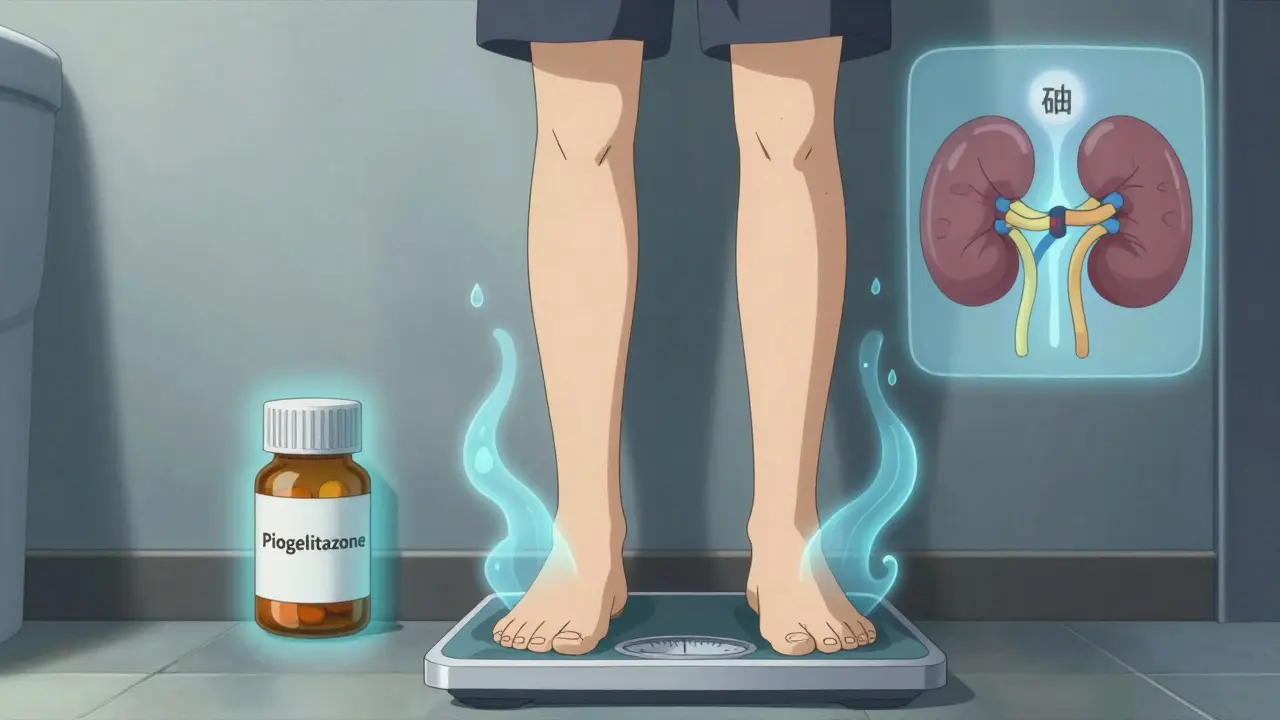
TZD Fluid Retention Tracker
Track your weight changes and fluid retention risk while taking TZDs. This tool uses evidence-based thresholds to help you monitor side effects.
When you’re managing type 2 diabetes, getting your blood sugar under control is the goal. But for some people taking thiazolidinediones (TZDs) like pioglitazone or rosiglitazone, that progress comes with unexpected side effects-especially weight gain and swelling in the legs and ankles. If you’ve noticed sudden weight gain, puffy feet, or tight shoes after starting one of these medications, you’re not alone. About 60% of people on TZDs experience noticeable weight gain, and nearly half of them deal with fluid retention that turns into visible edema. The good news? There are real, evidence-backed ways to manage these side effects without giving up the benefits of the drug.
Why TZDs Cause Weight Gain and Swelling
TZDs work by making your body more sensitive to insulin. That’s helpful if you have severe insulin resistance, especially when other drugs like metformin aren’t enough. But here’s the catch: they also trigger your kidneys to hold onto more sodium and water. About 65-70% of the weight gain from TZDs isn’t fat-it’s extra fluid. That’s why the scale jumps so fast, often within the first month. The mechanism isn’t simple. These drugs activate receptors in your kidney’s tubules, especially in the proximal part and thick ascending limb of Henle. This causes sodium to be reabsorbed instead of flushed out. At the same time, they increase vascular permeability, letting fluid leak into tissues. The result? Swelling in the ankles, feet, and sometimes even the lower belly. It’s not just uncomfortable-it can be dangerous if it leads to heart strain.Who’s at Highest Risk?
Not everyone on TZDs gets swollen legs. But certain people are much more likely to. If you already have heart issues, especially New York Heart Association (NYHA) Class III or IV heart failure, TZDs are a hard no. The FDA black box warning exists for a reason: fluid overload can push a weak heart into failure. Other red flags:- History of heart failure or fluid retention from other drugs
- Chronic kidney disease (eGFR below 45)
- Older adults (65+)
- People taking insulin along with TZDs-this combo raises edema risk to over 15%
- High sodium diet (more than 2,500 mg per day)
How Much Weight Gain Is Normal?
On average, people gain 2.7 to 3.0 kg (6-7 pounds) on pioglitazone or rosiglitazone. That sounds small, but it’s often felt as a sudden, uncomfortable puffiness. The weight gain isn’t gradual-it typically happens fast, within the first 4-8 weeks. Studies show that 78% of users report weight gain, and 63% notice visible swelling. What’s more concerning is the rate of gain. If you gain more than 2-3 kg (4.5-6.5 pounds) in a week, that’s a warning sign. It’s not just fluid-it could mean your heart is struggling to handle the load. That’s why daily weight tracking isn’t optional. It’s lifesaving.
Proven Strategies to Reduce Fluid Retention
You don’t have to live with swollen ankles and tight clothes. Here’s what actually works, based on clinical trials and patient data:1. Lower the Dose
Pioglitazone is often started at 30 or 45 mg daily. But studies show that 15 mg daily reduces edema incidence from 4.8% to just 2.1%. The same goes for rosiglitazone. You don’t need the max dose to get insulin-sensitizing benefits. Ask your doctor if you can drop down to the lowest effective dose. Many people maintain good blood sugar control at 15 mg.2. Take It in the Morning
Fluid retention tends to worsen overnight. While there’s no large trial proving it, small observational studies suggest taking TZDs in the morning helps. Why? Your body naturally clears fluid during the day. Taking the drug earlier gives your kidneys time to adjust before bedtime. It’s a simple tweak with low risk.3. Combine With an SGLT2 Inhibitor
This is the most powerful strategy. SGLT2 inhibitors like empagliflozin or dapagliflozin make your kidneys dump sugar and sodium through urine. They counteract TZD-induced fluid retention. A 2020 study found that combining pioglitazone with empagliflozin cut edema risk by 45%. Plus, you lose weight instead of gaining it. Many patients who switched to this combo reported less swelling and better energy.4. Use a Thiazide Diuretic
Loop diuretics like furosemide are too strong for this use-they can cause electrolyte crashes. But low-dose thiazides (like hydrochlorothiazide 12.5 mg daily) help gently. One observational study showed a 38% drop in edema symptoms when thiazides were added. Talk to your doctor about trying this if you’re already on TZDs and can’t switch.5. Cut Back on Salt
This sounds basic, but it’s critical. Eating more than 2,000 mg of sodium per day makes fluid retention worse. Try to avoid processed foods, canned soups, deli meats, and restaurant meals. Cook at home with herbs instead of salt. A 2021 study found that reducing sodium intake lowered edema severity by 27%. It’s not a cure-but it helps.6. Elevate Your Legs and Move
Sitting or standing all day makes swelling worse. Try elevating your legs for 15-20 minutes a few times a day. A simple pillow under your ankles while watching TV helps. Light walking also improves circulation and reduces pooling. No need for intense workouts-just stay moving.What About Other Diabetes Drugs?
TZDs aren’t the only option. Here’s how they stack up:| Drug Class | Average Weight Change | Fluid Retention Risk | Heart Failure Risk |
|---|---|---|---|
| TZDs (pioglitazone) | +2.7 to +3.0 kg | High (3-16%) | Increased |
| Metformin | −0.5 to +1.0 kg | Very low | Neutral or protective |
| SGLT2 inhibitors | −2.0 to −4.0 kg | Reduced | Reduced |
| GLP-1 agonists | −3.0 to −6.0 kg | Minimal | Reduced |
| Sulfonylureas | +1.5 to +3.0 kg | Low | Neutral |
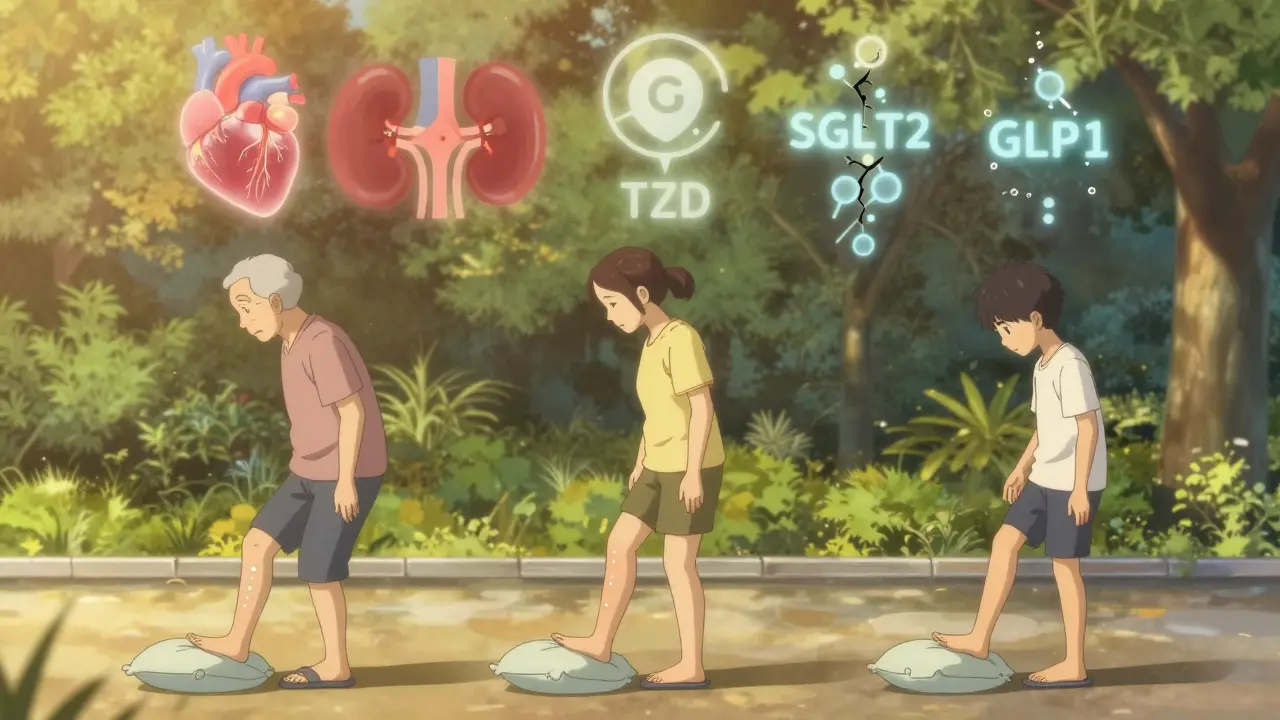
When to Consider Stopping TZDs
If you’ve tried the strategies above and still have:- Swelling that doesn’t improve in 4 weeks
- Weight gain over 3 kg in a month
- Dyspnea (shortness of breath) at rest or with light activity
- Waking up gasping for air
What’s Next? The Future of TZDs
TZDs are fading from mainstream use. In 2006, they made up nearly 18% of diabetes prescriptions. By 2022, that dropped to under 5%. Newer drugs are safer, more effective, and come with heart and kidney benefits. But they’re not gone. For people with severe insulin resistance-especially those with PCOS or fatty liver disease-TZDs still have value. And research is moving forward. Newer PPAR modulators like saroglitazar are showing promise in trials with much lower fluid retention. Genetic testing may soon identify who’s at risk for edema before they even start the drug. For now, though, if you’re on a TZD, don’t just accept the side effects. Talk to your doctor. Lower the dose. Add an SGLT2 inhibitor. Cut the salt. Monitor your weight. You don’t have to live with swollen ankles just because your blood sugar is better.Can TZDs cause heart failure?
Yes, TZDs can worsen or trigger heart failure, especially in people with pre-existing heart conditions. The drugs cause fluid retention, which increases blood volume and puts extra strain on the heart. The FDA requires a black box warning for TZDs, stating they should not be used in patients with NYHA Class III or IV heart failure. Even in people without diagnosed heart failure, fluid overload can lead to symptoms like shortness of breath, swelling, and fatigue.
How long does it take for TZD-related swelling to go away?
If you stop the TZD or reduce the dose, swelling usually improves within 1-2 weeks. Adding an SGLT2 inhibitor or low-dose thiazide diuretic can speed this up. In one study, patients who switched to a combination therapy saw noticeable reduction in ankle swelling within 7-10 days. If swelling persists beyond 4 weeks despite interventions, further evaluation for heart or kidney issues is needed.
Is it safe to take a water pill with TZDs?
Yes, but only certain ones. Loop diuretics like furosemide are too strong and can cause dangerous drops in potassium or sodium. Thiazide diuretics (like hydrochlorothiazide 12.5 mg daily) are safer and have been shown to reduce TZD-induced edema by 38%. Always use them under medical supervision, and get regular blood tests to check electrolytes. Never self-prescribe diuretics.
Do all TZDs cause the same amount of weight gain?
Rosiglitazone and pioglitazone cause similar levels of weight gain and fluid retention-about 3 kg on average. However, pioglitazone has a slightly better safety profile for the heart and is still available in most countries. Rosiglitazone was restricted in the U.S. due to heart attack concerns (though later data was mixed). Both drugs carry the same fluid retention risks at standard doses.
Can lifestyle changes alone reduce TZD side effects?
Lifestyle changes help, but they’re rarely enough on their own. Reducing sodium intake, elevating legs, and staying active can lower edema severity by up to 27%. But for most people, combining these with dose reduction or an SGLT2 inhibitor is needed to see real improvement. Lifestyle is the foundation-but it works best when paired with medication adjustments.
Are there newer drugs that replace TZDs?
Yes. SGLT2 inhibitors (like empagliflozin) and GLP-1 receptor agonists (like semaglutide) are now preferred second-line options after metformin. They improve blood sugar, cause weight loss, and reduce heart failure risk-unlike TZDs. For patients who still need insulin sensitization, these drugs are safer and more effective. TZDs are now mostly reserved for rare cases where other drugs haven’t worked and heart/kidney risk is low.
Kathy Leslie
March 13, 2026 AT 04:44Amisha Patel
March 13, 2026 AT 23:38Elsa Rodriguez
March 14, 2026 AT 12:20Serena Petrie
March 15, 2026 AT 12:13Buddy Nataatmadja
March 16, 2026 AT 03:37mir yasir
March 16, 2026 AT 05:00Stephanie Paluch
March 16, 2026 AT 06:51tynece roberts
March 18, 2026 AT 04:04Hugh Breen
March 19, 2026 AT 17:04Byron Boror
March 21, 2026 AT 11:15