Have you ever handed your prescription to the pharmacist and watched them hesitate? Maybe they asked if you wanted the generic version, or perhaps your doctor wrote "dispense as written" in bold letters. It’s a moment that can feel confusing, especially when you know generics are supposed to be cheaper. But why do some doctors insist on the brand name?
It isn’t always about money. While it is true that brand-name drugs cost significantly more-often 80% to 85% more than their generic counterparts-there are specific medical scenarios where the proprietary formulation matters. For most medications, the generic works just fine. But for a small group of critical drugs, switching versions can lead to serious health risks. Understanding these exceptions helps you navigate your healthcare decisions with confidence.
The Science Behind Generic Equivalence
To understand why a doctor might block a generic substitution, we first need to look at how the Food and Drug Administration (FDA) approves these alternatives. Under the Hatch-Waxman Act of 1984, generic manufacturers must prove their drug is "bioequivalent" to the brand name. This means the generic delivers the same active ingredient into your bloodstream at roughly the same rate.
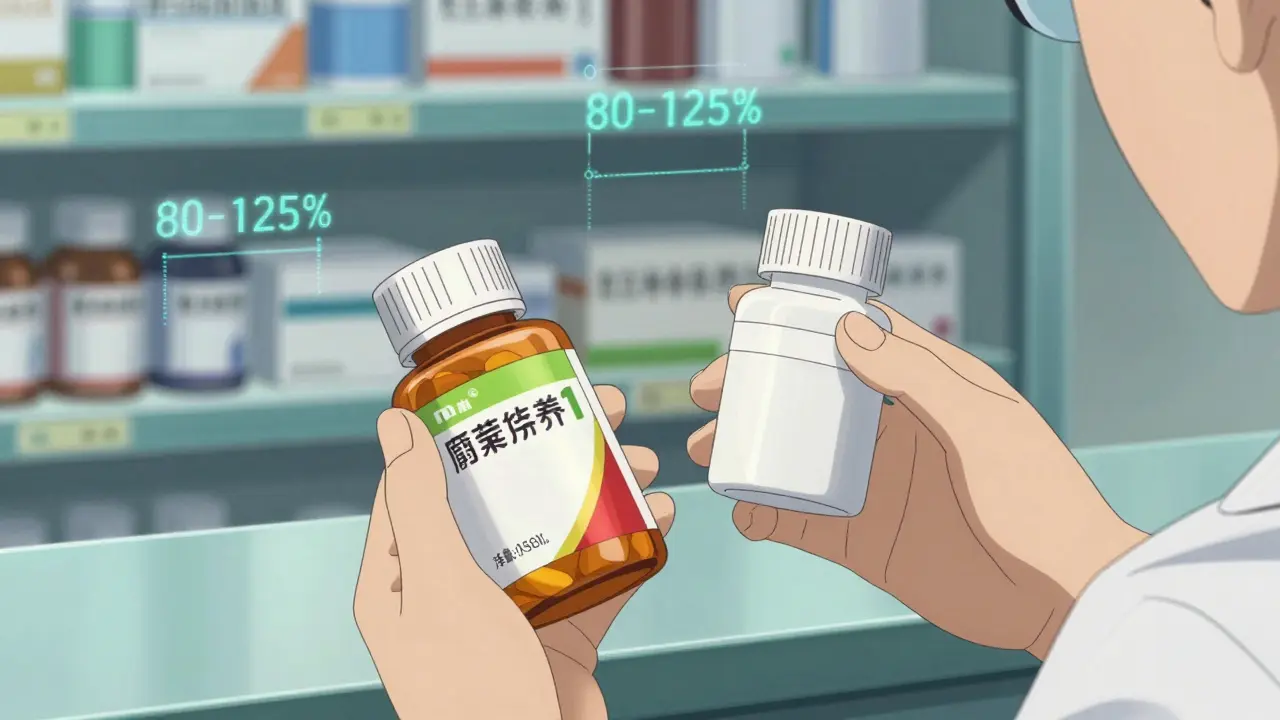
The FDA allows a margin of error here. A generic drug is considered equivalent if its blood concentration falls within 80% to 125% of the brand-name product. For most medicines, this 20% variance window is safe and clinically irrelevant. If you take a standard antibiotic or a common pain reliever, your body processes the generic and the brand almost identically. Studies, including a massive 2020 meta-analysis in JAMA Network Open covering over 112,000 patients, show identical clinical outcomes for broad categories like statins and ACE inhibitors.
However, this statistical average hides a crucial detail: individual biology varies. While the population average fits within that 80-125% range, your personal metabolism might sit right on the edge. For most people, this doesn't matter. For others, particularly those on sensitive medications, that slight difference in absorption can mean the difference between being healthy and having a medical emergency.
Narrow Therapeutic Index: When Precision Matters
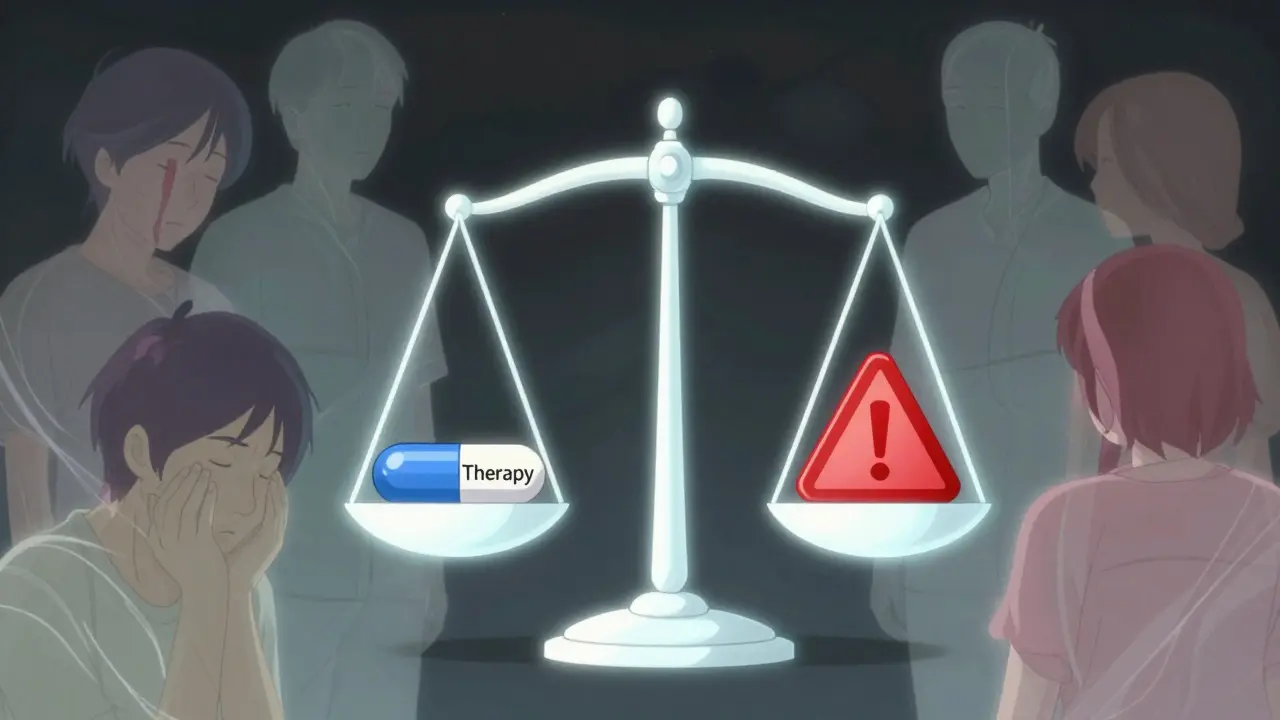
This brings us to the most important reason for brand-only prescriptions: Narrow Therapeutic Index (NTI) drugs. These are medications where the line between a helpful dose and a harmful one is razor-thin. Even a tiny fluctuation in how much drug enters your system can cause treatment failure or severe side effects.
Consider thyroid medication. Levothyroxine (sold under the brand name Synthroid) is used to treat hypothyroidism. The American Thyroid Association specifically recommends sticking with one consistent source because even minor variations in hormone levels can trigger symptoms like depression, fatigue, or heart palpitations. In patient communities, stories are common of individuals who switched from Synthroid to a generic levothyroxine and experienced significant mood swings or physical decline, only to recover after returning to the brand.
Other NTI drugs include:
- Levetiracetam (Keppra): An antiepileptic drug. A 2019 study in Epilepsy & Behavior found that 12.7% of patients switched from brand Keppra to generic experienced breakthrough seizures, compared to just 4.3% who stayed on the brand.
- Warfarin (Coumadin): A blood thinner. Variations in potency can increase the risk of dangerous clotting or bleeding events.
- Lithium: Used for bipolar disorder, where precise blood levels are essential for stability.
For these conditions, the Institute for Safe Medication Practices identifies brand-name prescribing as medically justified. The goal isn't to pay for a logo; it's to ensure the chemical delivery remains stable and predictable.
Inactive Ingredients and Patient Sensitivities
You might assume that if the active ingredient is the same, the pill is the same. But pills are more than just medicine. They contain fillers, binders, dyes, and coatings known as inactive ingredients. These components hold the pill together, control how fast it dissolves, and sometimes mask taste.
While the FDA requires inactive ingredients to be pharmacologically inert, they are not required to be identical across manufacturers. One generic maker might use lactose as a filler, while another uses corn starch. Another might use a different dye for the coating. For most patients, this is invisible. But for people with sensitivities, it causes real problems.
A frequent complaint in patient forums involves gastrointestinal issues. Some patients report stomach upset or nausea when switching between different generic manufacturers of antibiotics like ciprofloxacin. Others have allergic reactions to specific dyes or preservatives found in one generic but not the brand. If you have a history of reacting to certain fillers, your doctor may prescribe the brand name because its inactive ingredient profile is consistent and well-documented.
Additionally, some brand-name drugs feature proprietary delivery systems. Think of inhalers like Advair Diskus. The device itself is part of the therapy. Generic versions often come in different devices that require different breathing techniques. If a patient has mastered the brand device, switching to a generic with a new mechanism can reduce the amount of medicine actually reaching the lungs, rendering the treatment less effective.
Insurance Hurdles and Prior Authorization
Even when there is a valid medical reason, getting insurance to cover a brand-name drug is rarely automatic. Insurance companies design their formularies to encourage generic use to keep costs down. When a doctor writes "brand medically necessary," it triggers a review process.
This usually involves Prior Authorization (PA). Your doctor’s office must submit documentation proving why the generic won't work. According to 2022 data from AHIP, this process takes an average of 72 hours. Approval rates vary wildly by drug class. For example, PAs for proton pump inhibitors (acid reducers) are approved only 45% of the time, while those for antiepileptics hit 89%. This gap reflects the industry's recognition that seizure control is more sensitive to formulation changes than acid reflux management.
If the PA is denied, you face a choice: switch to the generic and hope it works, or pay out-of-pocket for the brand. With brand-name drugs averaging $471 per prescription compared to $13 for generics, this financial burden is significant. This is why clear communication with your provider is vital before you leave the office.
| Feature | Brand-Name Drug | Generic Drug |
|---|---|---|
| Average Cost | High (~$471/prescription) | Low (~$13/prescription) |
| Bioequivalence Range | Reference Standard | 80-125% of Brand |
| Inactive Ingredients | Consistent formulation | Varies by manufacturer |
| Best For | NTI drugs, sensitivities, complex devices | Most chronic conditions, acute infections |
| Insurance Coverage | Often requires Prior Auth | Usually preferred tier |

How to Talk to Your Doctor About This
You don't need to be a pharmacist to advocate for your health. If you are worried about switching to a generic, ask specific questions during your appointment. Instead of saying "I want the brand," try asking: "Is this medication considered a narrow therapeutic index drug?" or "Have other patients had issues with the generic version of this?"
If your doctor agrees the brand is necessary, ask them to explicitly check the "Dispense as Written" box on your electronic prescription. In 49 states and Washington D.C., pharmacists can substitute generics unless this box is checked. Without that mark, you might get the generic by default, leading to a delay while you sort out the mix-up.
Also, keep a record of any adverse reactions. If you tried a generic in the past and felt worse, tell your doctor. Documented therapeutic failure is one of the strongest arguments for prior authorization approval. Your insurer is more likely to say yes if your chart shows a clear pattern of negative outcomes with the alternative.
Frequently Asked Questions
Can I ask my pharmacist to give me the brand name instead of the generic?
Yes, you can request the brand name, but your insurance may not cover it. Most plans will make you pay the full cash price for the brand if the generic is available, which can be hundreds of dollars more. You should call your pharmacy ahead of time to confirm stock and ask your doctor to write "Dispense as Written" to avoid confusion.
What does "Dispense as Written" mean on a prescription?
"Dispense as Written" (DAW), also known as "Do Not Substitute" or "Brand Medically Necessary," is a directive from the doctor telling the pharmacist they cannot replace the prescribed brand-name drug with a generic equivalent. This is legally binding in most U.S. states.
Are generic drugs really as effective as brand names?
For the vast majority of medications, yes. The FDA requires generics to be bioequivalent, meaning they work the same way in the body. Large studies show identical outcomes for common drugs like statins and blood pressure meds. However, for "Narrow Therapeutic Index" drugs like thyroid or seizure medications, some patients experience differences in effectiveness or side effects.
Why do some doctors prefer writing brand names even when generics exist?
There are several reasons. Sometimes it is habit, as doctors trained with brand names. Other times, pharmaceutical representatives promote familiarity with the brand. However, inappropriate brand prescribing is also driven by patient preference or concerns about inconsistent generic manufacturing. Studies suggest 15-20% of brand prescriptions lack strong clinical justification, contributing to higher healthcare costs.
What should I do if I have a bad reaction to a generic medication?
Contact your doctor immediately. Do not stop taking the medication without medical advice, especially for chronic conditions. Your doctor can help determine if the reaction was due to the inactive ingredients or the active drug. They may then prescribe a specific generic manufacturer or switch you back to the brand name, initiating the prior authorization process with your insurance.
Does insurance ever cover brand-name drugs automatically?
In rare cases, yes. If a drug has no generic equivalent available, or if the FDA has determined that a specific brand is uniquely effective for a condition, insurance may cover it without prior authorization. However, for most drugs with generic alternatives, you will need to go through a prior authorization process to prove medical necessity.