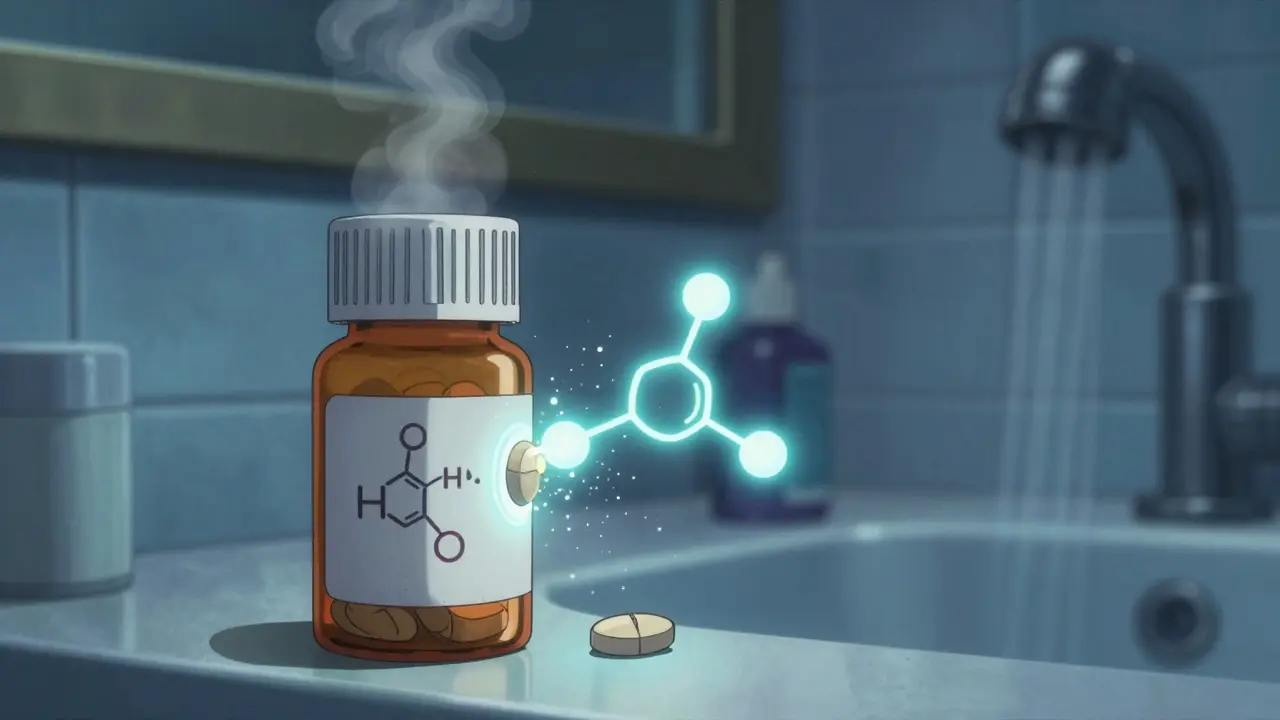
Medications Don’t Just Suddenly Go Bad on Their Expiration Date
Most people think expired medications are like milk-once the date passes, they’re useless or even dangerous. But that’s not how it works. The truth is, drugs start losing potency the moment they’re made. The expiration date isn’t a cliff edge-it’s a safety buffer. Manufacturers guarantee that your pill, capsule, or liquid will still have at least 90% of its labeled strength up to that date, assuming it’s been stored properly. After that? It’s not a guaranteed failure. It’s a slow fade.
What Actually Happens Inside a Pill or Liquid?
The active ingredient in your medicine-like ibuprofen, amoxicillin, or levothyroxine-isn’t stable forever. It breaks down through simple chemical reactions. The main culprits are water, heat, and light. Water causes hydrolysis, where molecules split apart when they react with moisture. Heat speeds up these reactions. Light, especially UV, can trigger photodegradation, changing the chemical structure of drugs like tetracycline or epinephrine.
These reactions turn the original compound into other substances. Some are harmless. Others can be ineffective-or, in rare cases, harmful. That’s why the FDA requires manufacturers to test for degradation products. A 2007-2012 review found over 400 drug lots recalled just for potency loss or impurities. That’s not a small number. It shows how serious this process is.
Not All Medications Are Created Equal
Some drugs hold up well. Others don’t. Ibuprofen, for example, is famously stable. Studies on medications stored on the International Space Station showed ibuprofen tablets still met potency standards even after years past expiration. That’s because its chemical structure resists breakdown.
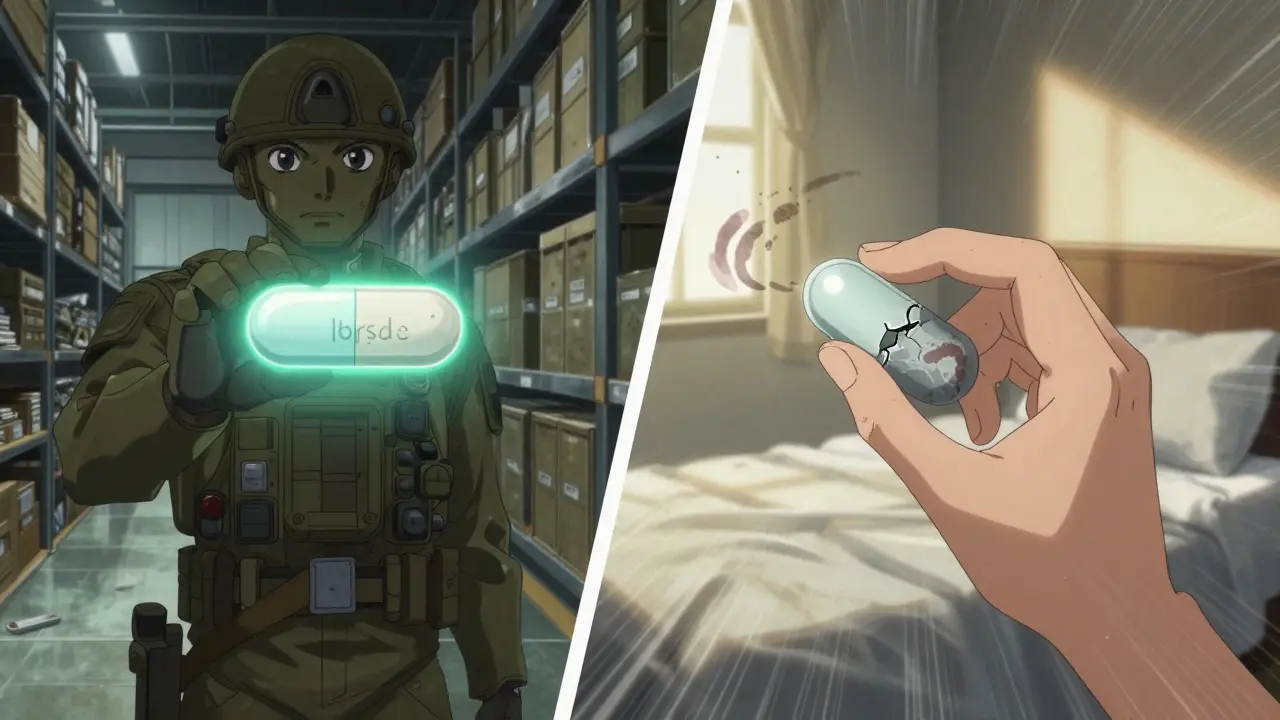
But not all drugs are so tough. Epinephrine in EpiPens degrades noticeably within months after expiration. A 2017 study showed reduced bioavailability after just one year. Levothyroxine, used for thyroid conditions, is another weak link. Even small drops in potency can throw off hormone levels. Antibiotics like amoxicillin and levofloxacin also lose strength faster than you’d expect. If you take an expired antibiotic that’s no longer strong enough, it won’t kill the bacteria. Instead, it might make them resistant. That’s not just ineffective-it’s dangerous.
Where You Store Your Medicine Matters More Than You Think
It doesn’t matter how good the drug is if you store it wrong. The bathroom is the worst place. Humidity from showers, temperature swings, and steam accelerate degradation. Studies show storage in a humid bathroom can cut a drug’s shelf life by 30-50% compared to a cool, dry bedroom drawer.
Pharmaceutical companies test drugs under extreme conditions to predict how they’ll age. They use 40°C heat and 75% humidity to simulate two years of real-world storage in just six months. If a drug survives that, it gets a 1-3 year expiration date. But your home isn’t a lab. Your medicine might be sitting in a hot car, a sunlit windowsill, or a steamy bathroom. That’s why the expiration date is conservative-it’s designed for worst-case scenarios.
Why the FDA Says: Don’t Use Expired Medications
The U.S. Food and Drug Administration is clear: don’t take expired drugs. Their 2023 guidance says there’s no guarantee of safety or effectiveness after the date. And they’re right to say it. Because while most pills might still work, you can’t know which ones.
Think about this: if you’re taking a blood thinner, an insulin shot, or an EpiPen, a 10% drop in potency could be life-threatening. Even if the drug looks fine, smells fine, and hasn’t changed color, you can’t tell if it’s still strong enough without a lab test. And no one’s going to test your old bottle of amoxicillin at home.
The military’s Shelf Life Extension Program (SLEP) shows that under perfect conditions, 88% of drugs last years beyond their label. But that’s in climate-controlled warehouses, with sealed packaging and strict inventory tracking. Your medicine? It’s been through your purse, your car, your drawer. That’s why SLEP doesn’t apply to you.

What About Those Stories of Pills Working Years Later?
You’ve probably heard stories-someone found a 10-year-old ibuprofen bottle and it worked fine. Or a veteran used expired antibiotics during a supply shortage. These aren’t myths. They’re real. But they’re exceptions, not rules.
That’s the problem with anecdotes. They make us feel safe. But medicine isn’t about feeling safe. It’s about knowing. And without testing, you don’t know. A 2020 NIH study found that many solid-dose drugs retain potency for years. But that same study warned: liquids, suspensions, and injectables degrade faster. And even within the same drug class, different brands behave differently. One company’s ibuprofen might last longer than another’s, just because of the fillers they use.
What Should You Actually Do?
- Store meds properly. Keep them in a cool, dry place-like a bedroom drawer, not the bathroom. Avoid direct sunlight.
- Don’t rely on expiration dates as a hard stop. If your medicine is only a few months past expiration and stored well, it’s probably still fine for non-critical use (like occasional pain relief). But don’t risk it with antibiotics, heart meds, or emergency drugs.
- Throw away anything that looks off. Discoloration, crumbling, strange smells, or clumping? That’s a sign of degradation. Don’t use it.
- Replace critical drugs on time. EpiPens, insulin, seizure meds, and blood thinners? Don’t gamble. Get new ones before they expire.
- Dispose of old meds safely. Many pharmacies have take-back programs. Don’t flush them or toss them in the trash where kids or pets might get to them.
The Future: Smarter Packaging, Better Dates
Scientists are working on solutions. New packaging with oxygen and moisture barriers could extend shelf life by 25-40%. Some companies are experimenting with smart labels that change color if the drug degrades. There’s even research into personalized expiration dates based on how you store your medicine.
But none of that’s available to consumers yet. For now, the best advice is simple: treat your meds like tools, not decorations. If they’re critical to your health, don’t wait. If they’re not, don’t risk it. The science is clear-potency fades. But safety? That’s up to you.
Are expired medications dangerous to take?
Most expired medications aren’t toxic, but they can be ineffective. The real danger comes from drugs that need precise dosing-like antibiotics, insulin, or epinephrine. If they’ve lost potency, they won’t work, which can lead to worsening illness or antibiotic resistance. In rare cases, degraded chemicals can form harmful byproducts.
How long do pills last after expiration?
It depends on the drug and storage. Solid pills like ibuprofen or aspirin can retain 90% potency for 5-10 years if kept cool and dry. Liquids, eye drops, and reconstituted antibiotics often degrade within months after expiration. The FDA says you can’t assume safety after the date-so don’t rely on how long it might last.
Why do expiration dates only go 1-3 years if drugs last longer?
Manufacturers set expiration dates based on stability testing, but they’re conservative. They don’t test beyond a few years because there’s little financial incentive. The FDA requires only that drugs meet potency standards up to the labeled date. Longer testing would cost more, and companies don’t need to prove beyond that. The military’s program shows many drugs last longer-but that’s under perfect conditions, not your bathroom cabinet.
Can I tell if a medication has degraded just by looking at it?
Sometimes. If a tablet is discolored, crumbly, or smells odd, or if a liquid is cloudy or has particles, it’s degraded. But many drugs degrade without visible changes. That’s why you can’t rely on appearance. A pill can look perfect but still be 30% weaker. Lab tests are the only way to know for sure.
Is it okay to use expired allergy or pain meds?
For non-critical uses like occasional headaches or mild allergies, an expired antihistamine or ibuprofen might still work if stored well and only slightly past its date. But don’t use it if it’s more than a year expired, or if it looks or smells wrong. Never use expired versions for serious conditions, children, or chronic illnesses.
henry mateo
January 1, 2026 AT 07:25Kunal Karakoti
January 2, 2026 AT 21:32Kelly Gerrard
January 4, 2026 AT 04:44Glendon Cone
January 4, 2026 AT 13:30Amy Cannon
January 6, 2026 AT 09:51Greg Quinn
January 8, 2026 AT 05:10Henry Ward
January 9, 2026 AT 11:47Aayush Khandelwal
January 10, 2026 AT 17:25Sandeep Mishra
January 12, 2026 AT 06:39oluwarotimi w alaka
January 13, 2026 AT 23:44Emma Duquemin
January 15, 2026 AT 13:47