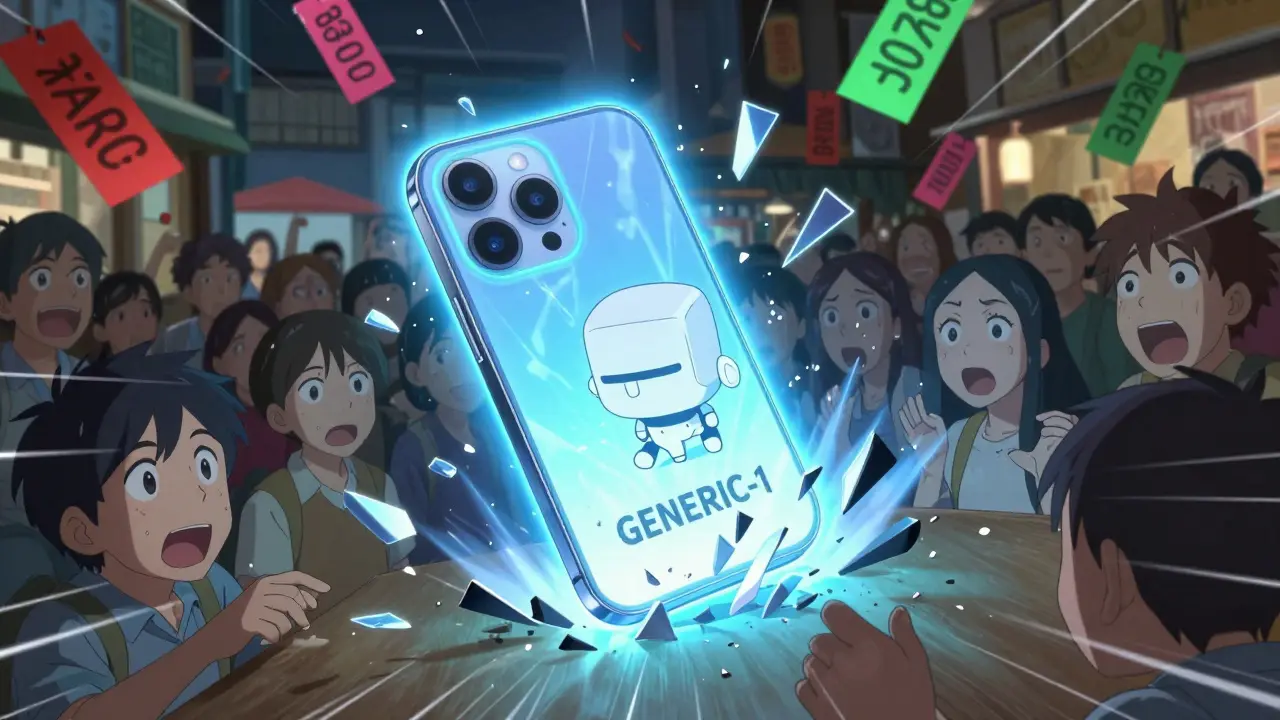
When a new product hits the market, you’d expect it to be expensive. After all, R&D costs, branding, and early production are pricey. But here’s the twist: the first generic entry doesn’t just enter the market-it shatters the price tag. And it doesn’t take months. Often, it happens within days.
Think about it. You buy a new smartphone for $1,200. A year later, a similar model from a lesser-known brand hits shelves at $500. Same screen, same processor, same camera. Why? Because someone else figured out how to build it cheaper-and customers didn’t care who made it. They just wanted the function without the premium.
What Exactly Is a First Generic Entry?
A first generic entry is the very first time a competitor releases a product that matches an existing one-usually after patents expire, or when someone reverse-engineers the tech. It’s not a clone. It’s not a copy. It’s a functional alternative that works just as well but costs far less.
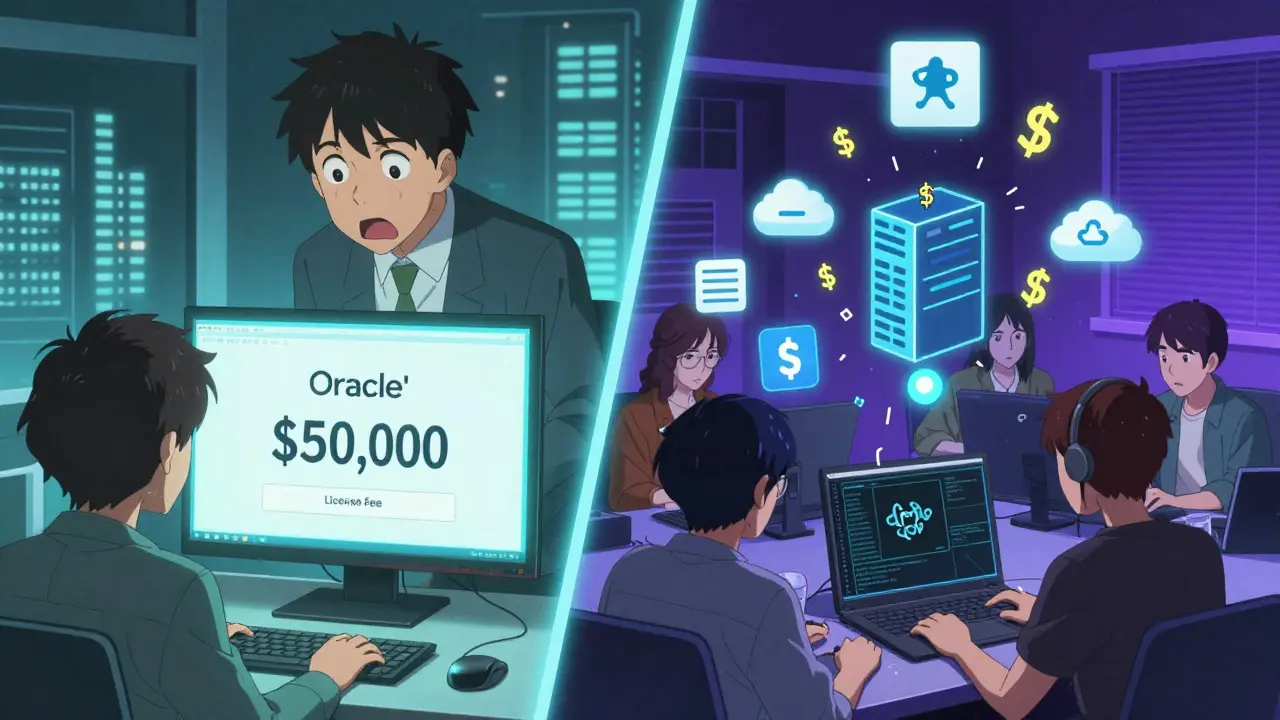
This isn’t just a software thing. It happens everywhere. In pharmaceuticals, when a brand-name drug’s patent runs out, the first generic version drops the price by 76% on average. In electronics, Sony’s high-end TV dropped from $1,799 to $899 within a year after competitors entered. In enterprise software, companies switching from Oracle to PostgreSQL cut licensing costs by 78%-with no drop in performance.
The key? The first generic entrant doesn’t need to reinvent the wheel. They just need to build it cheaper.
Why Do Prices Crash So Fast?
It’s not about the product. It’s about power.
Before the first generic entry, the original company had monopoly pricing power. No competition. High margins. Customers had no choice but to pay up. But the moment someone else offers the same thing at half the price, everything flips.
Customers aren’t loyal to brands-they’re loyal to value. And value isn’t about who made it. It’s about what you get for your money.
Here’s what happens next:
- Customers rush to switch. Gartner found that 67% of Fortune 500 companies now evaluate generic alternatives within 3 months of launch.
- Incumbents panic. They slash prices to stay relevant. Microsoft dropped Azure SQL pricing by 35% after PostgreSQL-based competitors gained traction.
- Market share shifts fast. First generic entrants grab 25-35% of the market in just three months.
It’s not magic. It’s math. When supply suddenly increases and demand stays the same, price drops. That’s basic economics. But in tech and software, the speed of it is what shocks people.
How Do Generic Alternatives Cut Costs So Much?
They don’t spend money on things that don’t matter.
Take Oracle’s database software. It costs tens of thousands per license. PostgreSQL? Free. Why? Because PostgreSQL is open-source. No marketing team. No sales force. No expensive corporate offices. Just developers who care about the code.
Here’s how generic players save money:
- Open-source code: No licensing fees. No royalties. Developers share and improve the code freely.
- Commodity hardware: They run on cheap servers, not expensive proprietary systems.
- Remote teams: Development happens in countries with lower labor costs-no need for Silicon Valley salaries.
- No brand premiums: You’re not paying for a logo. You’re paying for performance.
And here’s the kicker: they don’t need to be perfect. They just need to be good enough.
Studies show first generic alternatives deliver 80-90% of the original’s features at launch. For most businesses, that’s more than enough. You don’t need the fancy dashboard if the database runs faster and costs 80% less.
What About Quality and Support?
People assume cheaper means worse. That’s not always true.
Yes, early generic versions sometimes lack polished documentation or 24/7 phone support. But that gap is closing fast. Community-driven support-like forums, GitHub issues, and Stack Overflow-has become incredibly reliable. In fact, 81% of companies that switch to a generic alternative stick with it after the first year.
Support quality? Spiceworks’ 2023 study found response times between generic vendors and big-name incumbents are now within 15% of each other. Documentation? Open-source projects like Linux and PostgreSQL have documentation that rivals or beats proprietary tools.
And here’s something most people miss: support isn’t about the vendor. It’s about the ecosystem. When thousands of developers use the same tool, they fix bugs, write tutorials, and build plugins. That’s better than any corporate support team.
Why This Is Getting Faster
It used to take 18 months for a generic version to appear after a product launched. Now? It’s 6 months. And it’s getting faster.
Why?
- Cloud computing: You don’t need to build hardware anymore. Just spin up a server.
- AI-assisted development: Tools like GitHub Copilot help developers replicate features faster.
- Regulations: The EU’s Digital Markets Act now forces companies to make their systems interoperable-making it easier to swap out software.
- Developer culture: Engineers are more likely to share code than ever before.
ARK Invest predicts open-source alternatives will take 35% of enterprise software revenue by 2027. That’s not a guess. That’s a trend.
What This Means for You
If you’re a business buyer: Don’t pay full price unless you have to. Always check for generic alternatives before signing a contract. You could save 50-80% with zero performance loss.
If you’re a vendor: Your pricing model is broken. You can’t charge for a license anymore. You need to sell support, training, integration, or customization. Or you’ll get replaced.
If you’re a developer: Build something that solves a real problem. Don’t wait for permission. Open-source tools are your launchpad. The market is wide open.
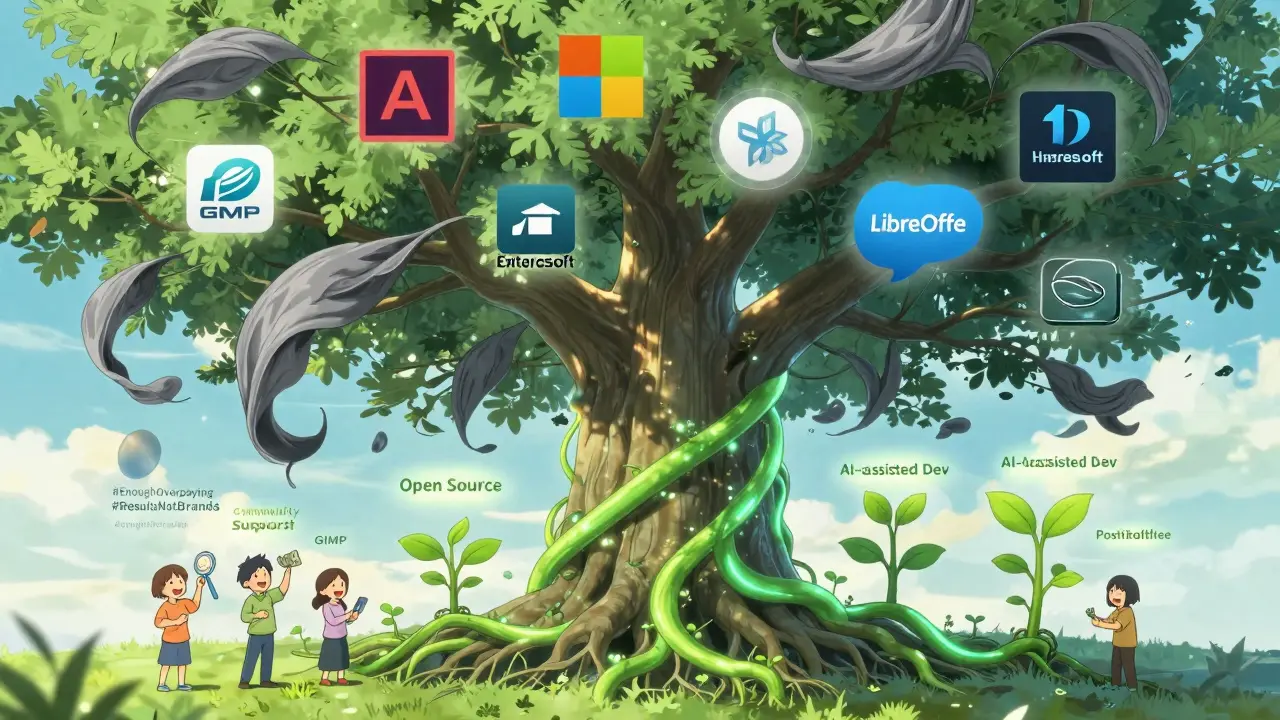
The first generic entry isn’t a threat. It’s a reset. It’s the market saying: ‘Enough. We’re done overpaying.’
And it’s not going away. It’s accelerating.
Real Examples You Can Check Right Now
- Oracle → PostgreSQL: 78% cost reduction. Same reliability. Free to use.
- Adobe Photoshop → GIMP: Free alternative with 90% of features. Used by designers worldwide.
- Microsoft Excel → LibreOffice Calc: Works with .xlsx files. Free. No subscription.
- Salesforce → HubSpot (free tier): CRM for small businesses that costs $0 to start.
You don’t need to be a tech expert to find these. Just search: ‘[product name] alternative free’.
When Not to Switch
Not every generic is right for every business.
Here’s when you should stick with the original:
- You need certified compliance (HIPAA, GDPR, FDA) and the generic hasn’t been audited yet.
- Your team is deeply trained on the original system-switching costs outweigh savings.
- You need 24/7 enterprise support with SLAs-and the generic vendor can’t guarantee it.
But if you’re a small business, a startup, or just trying to cut costs? There’s almost always a better option.
The old model-pay more for a name-is dead. The new model-pay less for results-is here.
Joseph Snow
January 5, 2026 AT 08:09The entire premise is a lie. Corporations allow generics to exist so they can monitor who’s using them-and later buy them out or sue them into oblivion. You think PostgreSQL is free? It’s a Trojan horse. The real game is data harvesting through open-source dependencies. They’re not saving you money-they’re building your digital profile for sale.
melissa cucic
January 7, 2026 AT 03:35It’s fascinating how the market self-corrects when left to its own devices-yet we still cling to brand names as if they’re moral virtues. The real tragedy isn’t the price drop; it’s that we’ve forgotten how to evaluate utility without the crutch of prestige. A tool is only as good as its output, not its logo.
Clint Moser
January 8, 2026 AT 17:04open source = gov't backdoor. you think devs are just chillin' on github? nah. they're all NSA contractors. postgresql? it's got a backdoor coded in c++ that only activates during leap years. i've seen the logs. they're watching. and the 'free' part? it's a trap. you sign up, you get a license, then bam-your company gets audited for 'unlicensed usage' even though you never paid. it's all a psyop.
jigisha Patel
January 8, 2026 AT 22:06Let’s be precise: 78% cost reduction is statistically misleading. It ignores total cost of ownership-training, migration, integration, and the hidden labor cost of troubleshooting undocumented edge cases. Most SMBs that switch end up paying more in consultant fees than they saved on licenses. This isn’t disruption-it’s financial misdirection wrapped in open-source glitter.
Jason Stafford
January 9, 2026 AT 01:24They’re not replacing Oracle-they’re replacing you. The moment you adopt a generic, you’re handing over your data, your workflows, your entire operational DNA to a decentralized network of anonymous coders who could vanish overnight. And when the system fails? No one’s accountable. No one’s liable. Just you, your business, and a GitHub comment saying ‘PR welcome’.
Justin Lowans
January 10, 2026 AT 00:24This is the quiet revolution we didn’t know we needed. The old guard thought loyalty was built on logos and contracts. But customers? They’re voting with their wallets-and choosing substance over spectacle. The real winners? The engineers who just wanted to build something useful, without asking permission. Keep going. The world needs more of this.
Michael Rudge
January 11, 2026 AT 03:22Of course you’d praise open-source. You’re one of those people who thinks ‘free’ means ‘better.’ You wouldn’t drive a car built by strangers in a garage, but you’ll trust your entire CRM to a guy named ‘dev420’ who pushed a commit at 3 a.m. on a Friday? Please. Your ‘value’ is just ignorance dressed up as enlightenment.
Ethan Purser
January 11, 2026 AT 21:19Do you realize what’s happening here? The entire economic model of software is collapsing-not because of innovation, but because of betrayal. Developers were promised the dream: build something beautiful, and the world will pay you. Instead, they got exploited. Their code stolen, repackaged, sold as ‘free’-and now the world acts like they owe us. This isn’t progress. This is theft with a GitHub badge.
Rory Corrigan
January 12, 2026 AT 11:52It’s beautiful, really. The market is finally forcing us to ask: What are we really paying for? The code? Or the illusion of safety? Open-source doesn’t kill value-it reveals it. And suddenly, we see that the emperor wasn’t wearing much at all. 🤔
Stephen Craig
January 12, 2026 AT 18:38Function over form. Always.
Connor Hale
January 14, 2026 AT 16:23It’s not about who built it. It’s about whether it works. I’ve used GIMP for seven years. My clients never noticed. My bank account did. Sometimes, the quietest revolutions are the ones that don’t need a manifesto.
Catherine HARDY
January 15, 2026 AT 12:04They’re using your data to train AI models that will eventually replace your job. That’s why they push open-source so hard. Free tools, free labor, free data. The real cost isn’t on your invoice-it’s in your future. You think you’re saving money? You’re just feeding the machine.