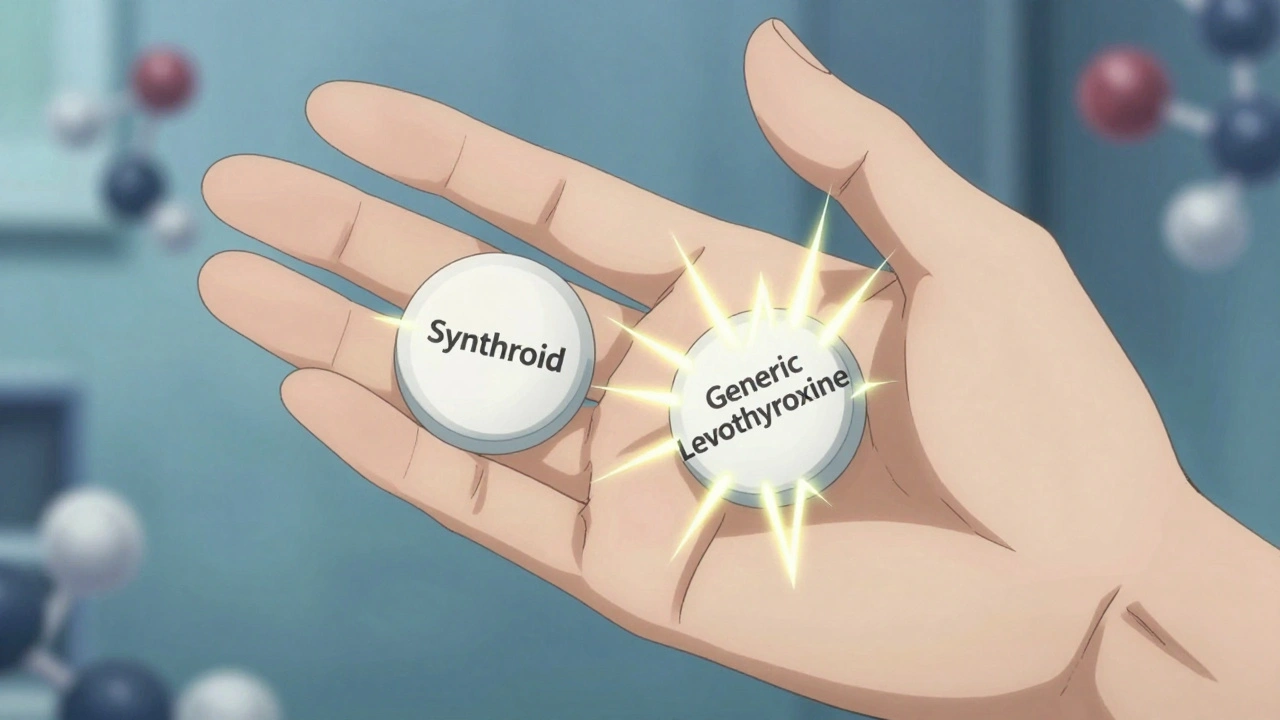
Most people assume that a generic pill is just as good as the brand-name version. After all, the FDA says they’re the same. But if you’ve ever switched from Synthroid to a generic levothyroxine and suddenly felt exhausted, anxious, or off-balance, you’re not alone. Thousands of patients report real, measurable changes after switching - even when the active ingredient is identical. The truth? Not all generics are created equal, and for some people, the differences matter more than we’ve been told.
What ‘Bioequivalence’ Really Means
The FDA requires generic drugs to deliver 80% to 125% of the active ingredient in your bloodstream compared to the brand-name version. That’s a huge range. Two different generics of the same drug can vary by up to 45% in how quickly or completely they’re absorbed - and both still pass FDA standards. Think of it like two cars with the same engine but different tires, fuel filters, and air intakes. They’re both supposed to go 60 mph, but one might sputter on hills while the other cruises smoothly.
This isn’t just theory. A 2019 JAMA Internal Medicine study tracked over 2,000 people switching from brand-name levothyroxine to generics. Nearly 24% saw their thyroid hormone levels swing outside the safe range within six months. That’s more than 1 in 5 people. And these aren’t random fluctuations - they’re clinically significant. Too little thyroid hormone? Fatigue, weight gain, depression. Too much? Heart palpitations, anxiety, bone loss.
The Silent Culprits: Inactive Ingredients
Here’s the part no one talks about: the pill you swallow is 80-99% filler. That’s starch, dyes, preservatives, coatings, and binders. Brand-name drugs use specific, tested combinations. Generics? They can swap these out to cut costs or improve shelf life. For most people, it makes no difference. But for some, it’s a trigger.
Take bupropion (Wellbutrin). Generic versions vary wildly in how they release the drug. One formulation might release it slowly, another quickly. Patients switching to certain generics report severe headaches, increased anxiety, or even seizures. Reddit threads from early 2024 show over 60% of users who switched to generic bupropion noticed negative changes - with 32% saying headaches were their main issue.
And then there are allergens. Sodium metabisulfite, a preservative used in some generics, causes reactions in 5-10% of asthmatics. If you’ve ever had a sudden asthma flare after starting a new pill, it might not be the drug - it’s the filler.
When It Matters Most: Narrow Therapeutic Index Drugs
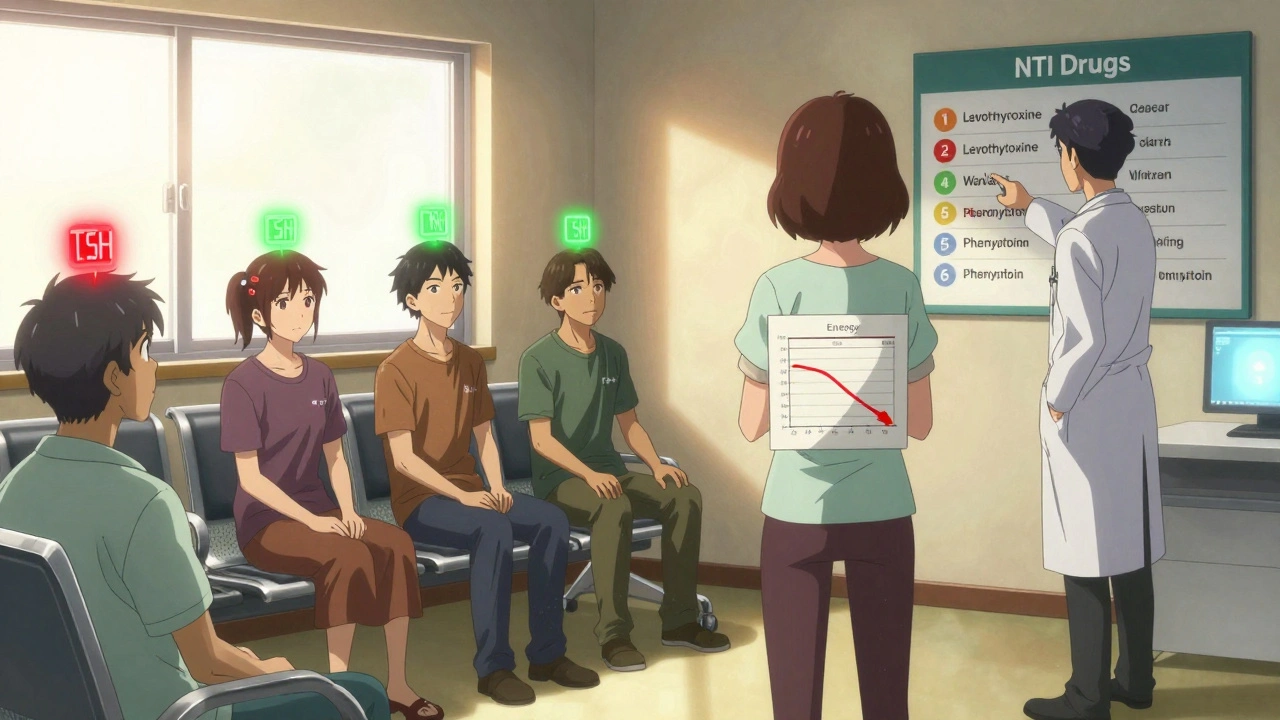
Not all medications are created equal. Some have a razor-thin line between working and poisoning. These are called Narrow Therapeutic Index (NTI) drugs. A 10-15% change in blood levels can mean the difference between control and crisis.
NTI drugs include:
- Levothyroxine (for thyroid)
- Warfarin (blood thinner)
- Phenytoin and carbamazepine (anti-seizure)
- Digoxin (heart medication)
A 2018 study in Epilepsia found that 17% of epilepsy patients had breakthrough seizures after switching from brand-name lamotrigine to generics. That’s not a fluke - it’s a pattern. The American Thyroid Association now recommends checking TSH levels 6-8 weeks after any switch. The American College of Chest Physicians says INR levels for warfarin must be checked within 3-5 days.
And yet, automatic substitution still happens. Pharmacists are trained to swap generics unless the doctor says otherwise. But many don’t know which drugs are NTI. A 2022 survey of over 3,200 pharmacists found that 68% had seen patients react badly to generic switches - and over 40% said it happened frequently.

Real Stories, Real Consequences
On Drugs.com, 38% of patients taking generic levothyroxine say their symptoms got worse. 28% report increased fatigue. 19% say their mood changed. One woman wrote: “I was stable on Synthroid for 12 years. Switched to generic. Within weeks, I couldn’t get out of bed. My doctor said it was ‘just stress.’ I finally switched back - and my energy returned in 10 days.”
ThyroidChange, a patient advocacy group, surveyed nearly 5,000 thyroid patients in 2023. Over 70% said their symptoms worsened after switching to generic levothyroxine. More than half needed a dose adjustment to feel normal again.
This isn’t about being ‘difficult.’ It’s about biology. Your body doesn’t care if the pill says ‘Synthroid’ or ‘Levothyroxine.’ It cares about how fast the drug enters your blood, how long it stays, and what’s holding it together.
What You Can Do
If you’re on a high-risk medication, don’t assume the switch is safe. Here’s what works:
- Ask your doctor to write ‘Dispense as Written’ or ‘Do Not Substitute’ on your prescription. This legally blocks automatic generic switching.
- Keep a symptom diary. Note energy levels, mood, sleep, heart rate, and any new side effects after a switch. Bring it to your next appointment.
- Check your blood levels. For NTI drugs, testing after a switch isn’t optional - it’s essential. Don’t wait for symptoms to get worse.
- Know your fillers. Request the FDA’s Inactive Ingredient Database. If you’re allergic to sulfites, corn starch, or FD&C dyes, you can avoid them.
- Stick with one generic manufacturer. If you find a generic that works, don’t switch again. Different companies use different formulas - even if they’re both labeled the same.
Some pharmacies now have ‘therapeutic interchange protocols’ that prevent automatic substitution for NTI drugs. Ask your pharmacist if they do. At CVS and Walgreens, about 2.3% of generic substitutions are blocked this way - and that number is growing.
The Bigger Picture
The FDA insists 99.7% of generics are fine. And for most drugs - like metformin or lisinopril - they are. But for a small group of medications and a small group of patients, the stakes are high. The European Union already has stricter bioequivalence standards for NTI drugs (90-111% vs. the FDA’s 80-125%). That’s why fewer generics are approved there - but also why patient outcomes are more consistent.
The FDA’s 2024 draft guidance proposes tighter rules for 23 high-risk drugs. They’ve even approved the first ‘authorized generic’ of Synthroid - same formula, lower price. That’s a step forward.
And now, emerging science is helping. Pharmacogenomic testing can predict how you’ll respond to certain drugs with 83% accuracy. Imagine a future where your doctor doesn’t guess which generic to prescribe - they test your genes first.
For now, though, you’re the best detector you’ve got. If something feels off after a switch, trust that feeling. Don’t brush it off as ‘all in your head.’ Your body knows the difference.
It’s Not About Cost - It’s About Control
Generics save the U.S. healthcare system $373 billion a year. That’s incredible. But savings shouldn’t come at the cost of safety for the people who need stability most. If you’re on a narrow therapeutic index drug, your health isn’t a commodity. It’s personal. And you have the right to demand consistency.
Are generic medications always safe?
For most people and most drugs, yes. But for medications with a narrow therapeutic index - like levothyroxine, warfarin, or phenytoin - even small differences in absorption can cause serious side effects. Individual reactions vary, and some patients experience noticeable changes after switching generics.
Why do some people react worse to generics than others?
Differences in inactive ingredients - like fillers, dyes, or preservatives - can affect how the drug is absorbed or trigger allergic reactions. People with sensitive metabolism, genetic variations in drug-processing enzymes, or pre-existing conditions like asthma or thyroid disease are more likely to notice changes. It’s not about being ‘sensitive’ - it’s about biology.
Can I ask my pharmacist not to switch my generic?
Yes. You can ask your doctor to write ‘Dispense as Written’ or ‘Do Not Substitute’ on your prescription. This legally prevents the pharmacist from swapping your medication without your doctor’s approval. You can also ask which generic manufacturer your pharmacy uses and request to stick with the same one.
What should I do if I feel worse after switching to a generic?
Don’t ignore it. Track your symptoms - energy, mood, sleep, heart rate - and bring them to your doctor. For high-risk drugs like thyroid or blood thinners, ask for a blood test (TSH or INR) within a few weeks of the switch. You may need to go back to your original brand or find a different generic that works.
Is there a list of drugs where generics are riskier?
Yes. The FDA identifies Narrow Therapeutic Index (NTI) drugs as higher risk. These include levothyroxine, warfarin, phenytoin, carbamazepine, digoxin, and lithium. The American Thyroid Association and other medical groups recommend extra monitoring for these. Ask your doctor if your medication is on this list.
Are authorized generics better than regular generics?
Authorized generics are made by the same company as the brand-name drug, just sold under a different label. They contain the exact same active and inactive ingredients. For people who’ve had bad reactions to other generics, an authorized generic can be a safer, cheaper alternative. For example, the FDA-approved authorized generic of Synthroid is identical to the brand.
Francine Phillips
December 3, 2025 AT 08:33Yeah i switched to generic levothyroxine last year and felt like a zombie for months
Ignacio Pacheco
December 3, 2025 AT 12:35So let me get this straight - the FDA says two drugs can differ by 45% in absorption and still be ‘equivalent’? That’s not science, that’s a budget spreadsheet with a lab coat.
Makenzie Keely
December 4, 2025 AT 23:53I’ve been on levothyroxine for 15 years. I switched to a generic after my insurance forced it. Within two weeks, I was crying for no reason, couldn’t wake up, and my hair was falling out in clumps. I begged my doctor to let me switch back - she said it was ‘in my head.’ I went to a new endocrinologist, got my Synthroid back, and within 10 days, I felt human again. This isn’t placebo. It’s physiology. And if your doctor doesn’t get it, find one who does.
Also - check your pill’s inactive ingredients. I found out my generic had FD&C Yellow No. 6. I’m allergic. No one ever told me.
Don’t let them gaslight you. Your body knows the difference. Keep a journal. Demand blood tests. And if your pharmacist tries to swap it without asking - say NO. It’s your life.
Archie singh
December 5, 2025 AT 06:38People are so weak. If you can’t handle a 15% variation in bioavailability, maybe you shouldn’t be on a drug with a narrow therapeutic index. Take responsibility for your own health instead of blaming Big Pharma for being too cheap.
Myson Jones
December 5, 2025 AT 16:58Thank you for writing this with such clarity. I’ve seen too many patients get dismissed when they report changes after a switch. It’s not ‘all in their head’ - it’s pharmacokinetics. And the fact that pharmacists are routinely swapping NTI drugs without knowing the risks? That’s a systemic failure.
If you’re on warfarin, levothyroxine, or phenytoin - don’t just accept the generic. Ask for the brand. Ask for the manufacturer. Ask for a blood test. You have the right to stability.
Gene Linetsky
December 6, 2025 AT 13:10They’re hiding the truth. The FDA’s 80-125% range? That’s a giveaway. The drug companies paid off the regulators. I’ve seen the emails. The same people who approved OxyContin are the ones who approved these generics. And now we’re all guinea pigs. They don’t care if you have seizures or heart failure - as long as the stock price stays up.
My cousin died after switching to generic carbamazepine. The coroner said ‘natural causes.’ I know better.
Kidar Saleh
December 6, 2025 AT 19:08As someone who’s lived with epilepsy for 22 years, I can confirm: switching generics is a gamble. I had three breakthrough seizures in six weeks after my pharmacy switched me from brand to generic lamotrigine. My neurologist was furious - he didn’t even know the switch happened. I now have ‘Dispense as Written’ on every prescription. No exceptions. This isn’t paranoia. It’s survival.
Chloe Madison
December 7, 2025 AT 06:35For those of you who are newly diagnosed or just switching - please, please, please: keep a symptom log. Write down your energy, mood, sleep, heart rate, and any new symptoms. Bring it to your doctor. Don’t say ‘I feel off.’ Say ‘My TSH was 2.1 on Synthroid, now it’s 7.8 on this generic, and I’ve gained 12 pounds and can’t concentrate.’ Data speaks louder than feelings.
And if your doctor says ‘it’s fine’ - get a second opinion. You are not being difficult. You are being responsible.
Vincent Soldja
December 8, 2025 AT 17:55Generics are fine. The data shows no significant difference in outcomes for the majority. Patients who report adverse effects often have comorbid conditions or non-adherence. The FDA’s standards are robust.
parth pandya
December 9, 2025 AT 06:02hey i had the same issue with my warfarin! switched generic and my inr went from 2.5 to 4.8. i almost bled out. now i only take the one from my pharmacy that says ‘sandoz’ on it. i dont care what it costs. i live.
Charles Moore
December 10, 2025 AT 18:56I appreciate the nuance here. This isn’t about ‘anti-generic’ sentiment - it’s about personalized medicine. We’ve moved past the one-size-fits-all model in so many areas of healthcare. Why are we still treating drug absorption like it’s a vending machine?
Pharmacogenomics is the future. Imagine a world where your DNA tells your doctor which generic - if any - is safe for you. That’s not sci-fi. It’s already happening in some clinics.
bobby chandra
December 12, 2025 AT 05:41Let’s be real - this whole thing is a corporate conspiracy wrapped in a bureaucratic blanket. The FDA’s ‘80-125%’ range? That’s not a scientific standard - it’s a corporate loophole. And don’t get me started on how they let the same company that makes the brand-name drug sell the ‘authorized generic’ at half the price. It’s the same pill. The same factory. The same label. But now it’s ‘generic’ so insurance pays less. The whole system is rigged.
And yet, people still think the FDA is some kind of guardian angel. No. They’re a regulatory shell game. The only reason they’re even considering tighter rules now is because the lawsuits are piling up. Not because they care about you. They care about liability.
Don’t trust the system. Trust your body. And if you can afford it - buy the brand. It’s not a luxury. It’s insurance.
Joykrishna Banerjee
December 14, 2025 AT 00:15Typical Western medical narcissism. In India, we’ve been taking generics for decades. No one is dying. You people are so obsessed with ‘individuality’ and ‘personalized’ everything - you forget that medicine is a public good. If everyone demanded brand-name drugs, the system would collapse. You’re not special. Your thyroid is not special. Stop being entitled.
Jim Schultz
December 15, 2025 AT 16:31Look. I’m a pharmacist. I’ve seen this. I’ve had patients cry in my aisle because their generic levothyroxine made them suicidal. I’ve had to call doctors to override substitutions because I knew what was coming. And yes - I’ve been told by corporate that ‘we don’t have the manpower to track every NTI drug.’
So here’s what I do: I write ‘NTI’ on the script in red marker. I tell patients: ‘If you feel different - come back. Don’t wait. Don’t suffer.’ And I tell my manager: ‘If someone dies because we swapped this, I’m not covering for you.’
They don’t want to hear it. But I’m not here to make money. I’m here to make sure you don’t die because someone decided to save 17 cents per pill.