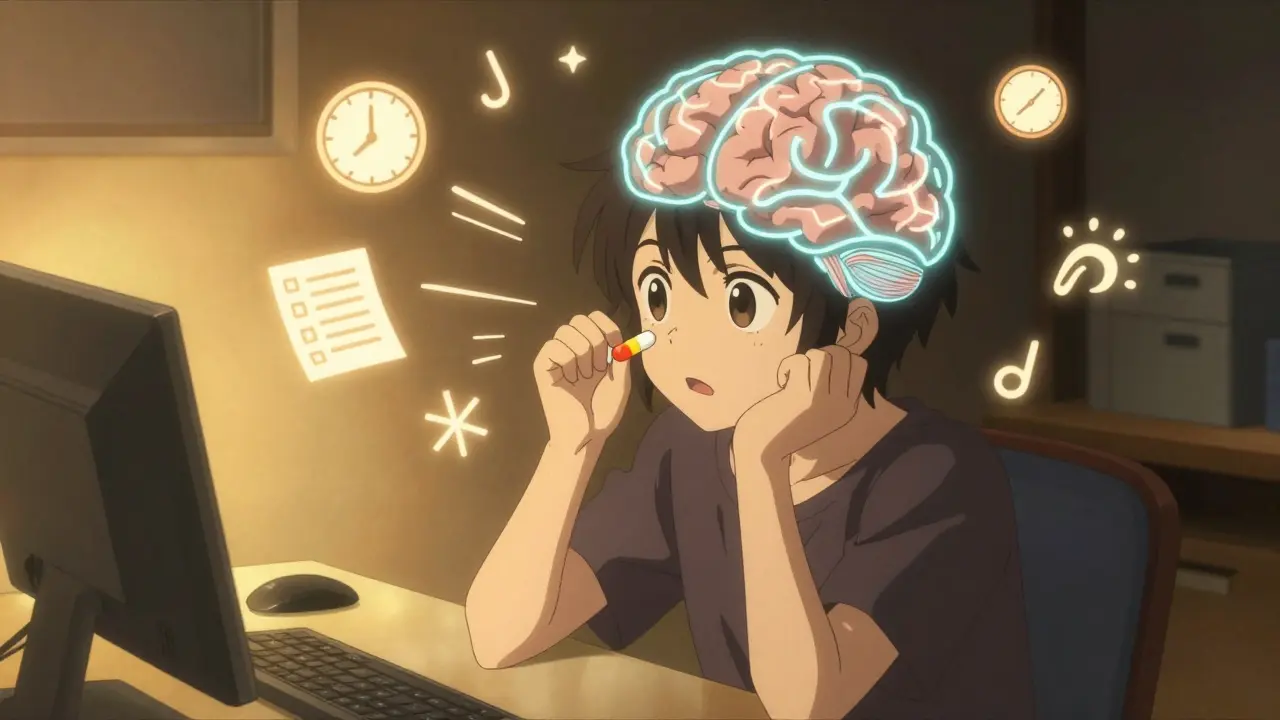
When you’re trying to focus at work, keep up with schoolwork, or just get through the day without feeling overwhelmed, ADHD can make even simple tasks feel like climbing a mountain. Medication helps - but it’s not the whole story. The most effective approach combines the right medicine with real-life strategies that build skills, not just suppress symptoms.
How ADHD Medications Actually Work
ADHD isn’t about being lazy or unmotivated. It’s a neurodevelopmental condition where the brain’s executive functions - planning, focusing, controlling impulses - don’t work the way they should. Stimulants like methylphenidate and amphetamines don’t make you hyper. They help balance dopamine and norepinephrine in the prefrontal cortex, the part of your brain that handles focus and decision-making.
Think of it like turning up the volume on a weak signal. Without medication, the signal is faint. With it, your brain gets clearer instructions to stay on task. Methylphenidate (Ritalin, Concerta) blocks the reuptake of these neurotransmitters. Amphetamines (Adderall, Vyvanse) do the same but also push more of them out into the space between brain cells. Both work fast - within 30 to 60 minutes - and most people notice a difference the first day.
Non-stimulants work differently. Atomoxetine (Strattera) increases norepinephrine slowly over weeks. Guanfacine (Intuniv) and clonidine (Kapvay) calm overactive brain circuits by targeting alpha-2 receptors. These aren’t quick fixes. You might not feel better for four to six weeks, but once they kick in, the effect is steady - no peaks and crashes.
Stimulants: The Gold Standard - But Not for Everyone
Stimulants are the most studied and most effective ADHD medications. About 70 to 80% of people - kids and adults - see clear improvement in focus, impulse control, and task completion. The MTA study from 1999, still one of the largest ADHD trials ever, found stimulants reduced symptoms more than behavioral therapy alone.
But they’re not magic. Side effects are common. Appetite suppression hits 50 to 60% of children. Sleep problems? Around 30 to 50%. Headaches and stomachaches show up in 15 to 25%. Some adults report feeling emotionally flat - like their personality is muted. On Reddit’s r/ADHD, over 68% of users reported persistent appetite loss, and 52% said sleep issues never fully went away.
Not all stimulants are the same. Methylphenidate tends to cause fewer side effects than amphetamines, though the difference is small. Extended-release versions like Concerta or Vyvanse last 10 to 12 hours and smooth out the highs and lows you get with short-acting pills. That means fewer doses, less rebound irritability, and better school or work performance.
Cost matters too. Generic methylphenidate costs $15 to $25 a month. Brand-name extended-release versions? $250 to $400 without insurance. Many insurers make you try the cheapest option first - a process called step therapy.
Non-Stimulants: Slower, But Safer for Some
If stimulants don’t work or cause too many side effects, non-stimulants are the next step. They’re less effective - about 50 to 60% respond - but they’re safer for people with heart conditions, anxiety, or a history of substance use.
Atomoxetine is the only non-stimulant approved as a first-line treatment for ADHD in adults. It doesn’t carry abuse risk, and it works all day without needing multiple doses. But it can cause nausea, fatigue, and in rare cases, liver issues. It also takes time. Don’t give up after two weeks. Wait at least six.
Guanfacine and clonidine were originally blood pressure meds. They’re now used off-label for ADHD, especially in kids with tics or emotional outbursts. They help with impulse control and reduce aggression. Side effects? Drowsiness, dizziness, low blood pressure. But they’re often easier to tolerate than stimulants, especially for younger kids.
For parents of preschoolers, non-stimulants can be a better fit. Research shows they cause less appetite loss and moodiness than stimulants in children under six.
Behavioral Strategies: The Missing Piece
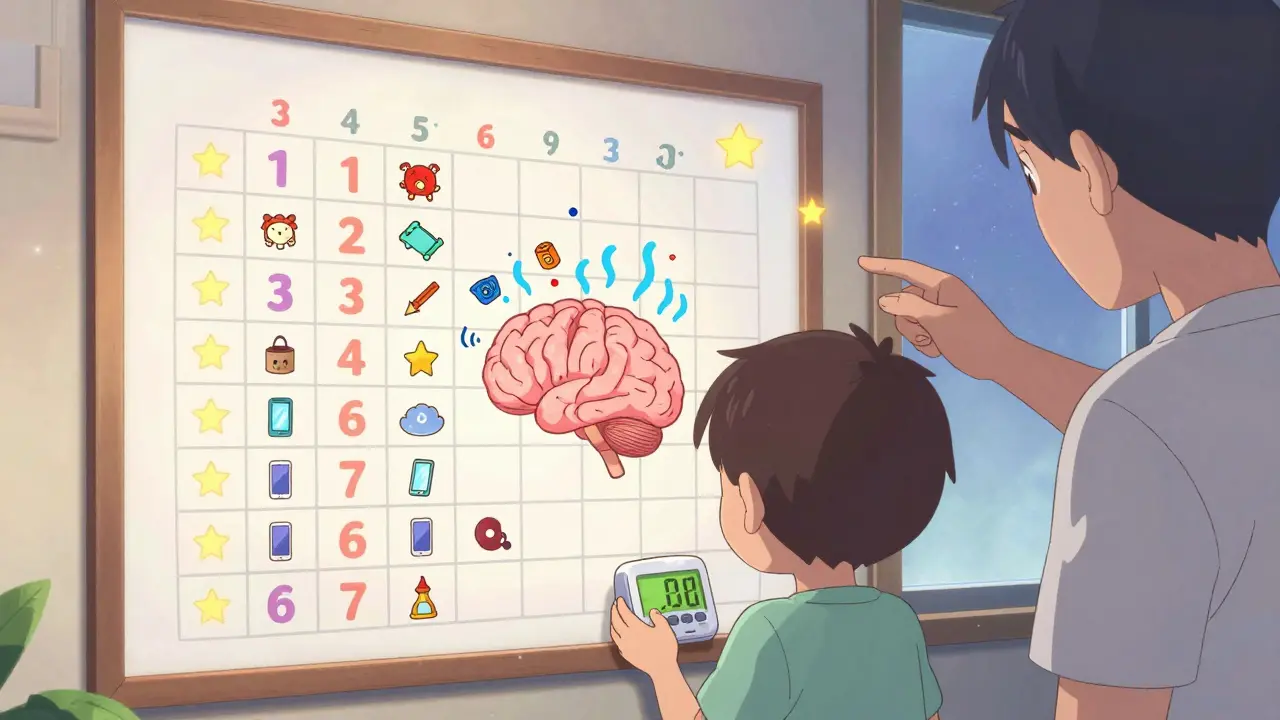
Medication helps you focus. Behavioral strategies help you stay organized, manage time, and handle emotions. They’re not optional extras. They’re essential.
For kids, parent training programs like the New Forest Parenting Programme have been proven to cut ADHD symptoms by 40 to 50%. That means learning how to give clear, calm instructions, use reward systems, and respond to meltdowns without escalating. It sounds simple. Doing it consistently? That’s the hard part. These programs require 12 to 16 weekly 90-minute sessions. But parents who stick with it say their kids become more cooperative, less defiant, and more confident.
For adults, organizational tools matter more than ever. Digital calendars with alarms, task lists broken into tiny steps, timers for work blocks - these aren’t gimmicks. They’re external brain supports. People with ADHD often have trouble with time blindness - the feeling that time slips away. A 25-minute timer set for “start homework” can be the difference between getting it done and staring at a blank page for two hours.
Structure is everything. A consistent morning routine, a set place for keys and wallets, a weekly planning session - these reduce decision fatigue. When your brain is already overloaded, every small choice drains energy. Eliminate the choices where you can.
Side Effects You Can’t Ignore
Stimulants raise heart rate and blood pressure. That’s why doctors check your vitals before starting and every few months after. About 5 to 10% of users report increased heart rate. Palpitations and elevated BP happen in 3 to 7% and 2 to 5% respectively. If you have a family history of heart disease, talk to your doctor before starting stimulants.
Growth suppression is real - but often temporary. Studies show kids on stimulants may grow slightly slower in the first year. Their height and weight might lag. But by year three, most catch up. Still, doctors track growth every six months. If your child stops growing, it’s time to reassess.
Then there’s rebound - the irritability, crying, or anger that hits as the medicine wears off. It’s common in 45% of children. Fixing it isn’t about adding more meds. It’s about timing. Giving the last dose six to eight hours before bedtime cuts rebound in 65% of cases. Snacks before the dose wears off can help too.
Women and girls report side effects more often than men and boys. One study found females experienced side effects 1.4 times more frequently. Why? We don’t fully know. Hormones, metabolism, or brain chemistry may play a role. If you’re a woman on stimulants and feel worse, it’s not in your head. Talk to your provider.
What the Research Says About Long-Term Use
Some people worry that taking ADHD meds for years will damage the brain. The data says otherwise. The 20-year follow-up of the MTA study found no negative impact on adult outcomes - education, employment, relationships - for those who stayed on medication. In fact, consistent treatment was linked to better long-term results.
But 28% of participants stopped taking meds by adolescence. Why? Side effects. Feeling like the medication changed who they were. Or thinking they didn’t need it anymore. That’s why monitoring isn’t just about physical health. It’s about quality of life. Are you sleeping? Eating? Feeling like yourself? If not, the dose or the drug might need adjusting.
The FDA and European regulators still warn about rare psychiatric side effects - hallucinations, paranoia, manic episodes - especially in people with a history of mental illness. These are uncommon, but serious. If you or your child suddenly becomes unusually agitated, depressed, or withdrawn, call your doctor immediately.

What’s New in ADHD Treatment
Science hasn’t stopped. In 2023, the FDA approved AZSTARYS, a new combination drug that releases two forms of methylphenidate over 13 hours. It’s designed to be harder to misuse and smoother in effect.
There’s also growing interest in digital therapies. EndeavorRx, an FDA-cleared video game for kids aged 8 to 12, trains attention networks through gameplay. It’s not a replacement for meds, but a useful add-on. New VR-based cognitive training tools are in phase 3 trials and could be available soon.
Genetic testing is starting to help too. Tests like Genomind’s PGx Express look at how your body metabolizes meds based on your CYP2D6 and CYP2C19 genes. In 2023, a study showed it could predict 65% of non-responders to specific stimulants. That means less trial and error. Less wasted time. Less frustration.
The American Academy of Pediatrics now recommends screening for eating disorders before starting stimulants. Why? New data shows a 12% higher risk in people already predisposed. Appetite loss isn’t just annoying - it can become dangerous.
How to Decide What’s Right for You
There’s no one-size-fits-all. Your best option depends on your symptoms, your health, your lifestyle, and what you can stick with.
If you need fast results - say, to get through a big project or school term - stimulants are your best bet. Start low, go slow. Track side effects. Talk to your doctor about extended-release versions.
If you have anxiety, heart issues, or a history of drug use, skip stimulants. Try atomoxetine or guanfacine. Give them time. Don’t quit after two weeks.
And no matter what medication you use, add behavioral tools. Make lists. Set timers. Use alarms. Create routines. These aren’t just tips - they’re survival skills. Medication helps you focus. Behavioral strategies help you live.
ADHD isn’t a flaw. It’s a different way of thinking. The goal isn’t to fix you. It’s to give you the tools to thrive - with or without medication.
Do stimulants make ADHD worse over time?
No. Long-term studies, including a 20-year follow-up of the MTA trial, show stimulants don’t worsen ADHD symptoms or cause brain damage. In fact, consistent use is linked to better outcomes in adulthood - including higher education completion and lower rates of substance abuse. Some people feel like they’ve become dependent on the focus it provides, but that’s not addiction. It’s the brain working the way it should when supported.
Can I stop taking ADHD meds once I feel better?
Maybe - but don’t do it without talking to your doctor. ADHD is a lifelong condition. Stopping meds might make symptoms return quickly. Some people try tapering off during summer breaks or weekends to see how they do. If focus and organization fall apart, it’s a sign you still need support. Others find they can manage better with behavioral tools alone later in life. But that’s rare. Most people benefit from staying on some form of treatment.
Why do some people gain weight on non-stimulants?
Stimulants suppress appetite. When you stop them, your hunger returns - sometimes strongly. That’s why some people gain weight after switching from stimulants to non-stimulants like atomoxetine or guanfacine. It’s not that the non-stimulant causes weight gain. It’s that the appetite-suppressing effect is gone. Eating habits and activity levels matter more than the drug itself. Watch your portions and stay active.
Are there natural alternatives to ADHD medication?
There’s no proven natural cure. Omega-3 supplements, iron, zinc, and exercise can help slightly - especially if you’re deficient. But they don’t match the effect of FDA-approved meds. Behavioral strategies - routines, timers, organizational tools - are the most effective non-medical approach. Don’t waste money on unproven supplements. Focus on structure, sleep, and movement. Those have real science behind them.
How do I know if my child’s ADHD medication isn’t working?
Look for signs: Does your child still struggle to finish homework? Do they get in trouble at school for impulsivity? Do they say they feel "the same" or "worse"? A good response means noticeable improvement in at least two areas - focus, organization, emotional control, or social behavior. If there’s no change after four to six weeks, talk to your doctor. It might be the wrong dose, wrong drug, or need for added behavioral support.
Can ADHD meds cause depression?
Rarely - but it can happen. Stimulants can trigger mood changes, especially in people with underlying anxiety or bipolar disorder. If you or your child becomes unusually sad, withdrawn, or talks about hopelessness, contact your doctor right away. It’s not common, but it’s serious. Non-stimulants like atomoxetine have a slightly higher risk of causing low mood, especially early on. Monitoring is key.
Is it safe to take ADHD meds long-term?
Yes, for most people. Decades of research show long-term stimulant use is safe when monitored. Regular check-ups for heart health, growth (in kids), and mental health are essential. The biggest risk isn’t the medication - it’s untreated ADHD. Left alone, ADHD increases the risk of accidents, job loss, relationship problems, and substance use. Medication reduces those risks. The benefits outweigh the risks for the vast majority.
What to Do Next
If you’re just starting out, talk to your doctor about your biggest challenges. Is it focus? Organization? Emotional control? That’ll guide whether stimulants, non-stimulants, or behavioral tools should come first.
Keep a symptom journal. Note when you feel focused, when you don’t, what you ate, how you slept. That data helps your doctor adjust your plan.
And don’t wait for perfection. Start with one behavioral change - like setting a daily alarm to plan your next day. One small win builds momentum. Medication helps you get started. Behavioral strategies help you keep going.
Mimi Bos
December 28, 2025 AT 23:08Payton Daily
December 30, 2025 AT 00:32Kelsey Youmans
December 30, 2025 AT 12:25Nicole Beasley
December 31, 2025 AT 13:17Vu L
December 31, 2025 AT 18:48James Hilton
January 1, 2026 AT 05:19Sydney Lee
January 1, 2026 AT 11:04oluwarotimi w alaka
January 1, 2026 AT 23:52Debra Cagwin
January 2, 2026 AT 20:11Hakim Bachiri
January 4, 2026 AT 15:48Celia McTighe
January 5, 2026 AT 11:35Ryan Touhill
January 5, 2026 AT 16:33Teresa Marzo Lostalé
January 7, 2026 AT 06:51ANA MARIE VALENZUELA
January 8, 2026 AT 10:11Bradly Draper
January 9, 2026 AT 05:23