Every year, millions of people take generic drugs because they’re affordable, effective, and widely available. But what if the pill you swallowed didn’t contain the medicine it claimed to? What if it was fake? Fake generic drugs aren’t just a scam-they’re a silent killer. And they’re slipping into the supply chain more easily than ever before.
How Fake Drugs Are Made
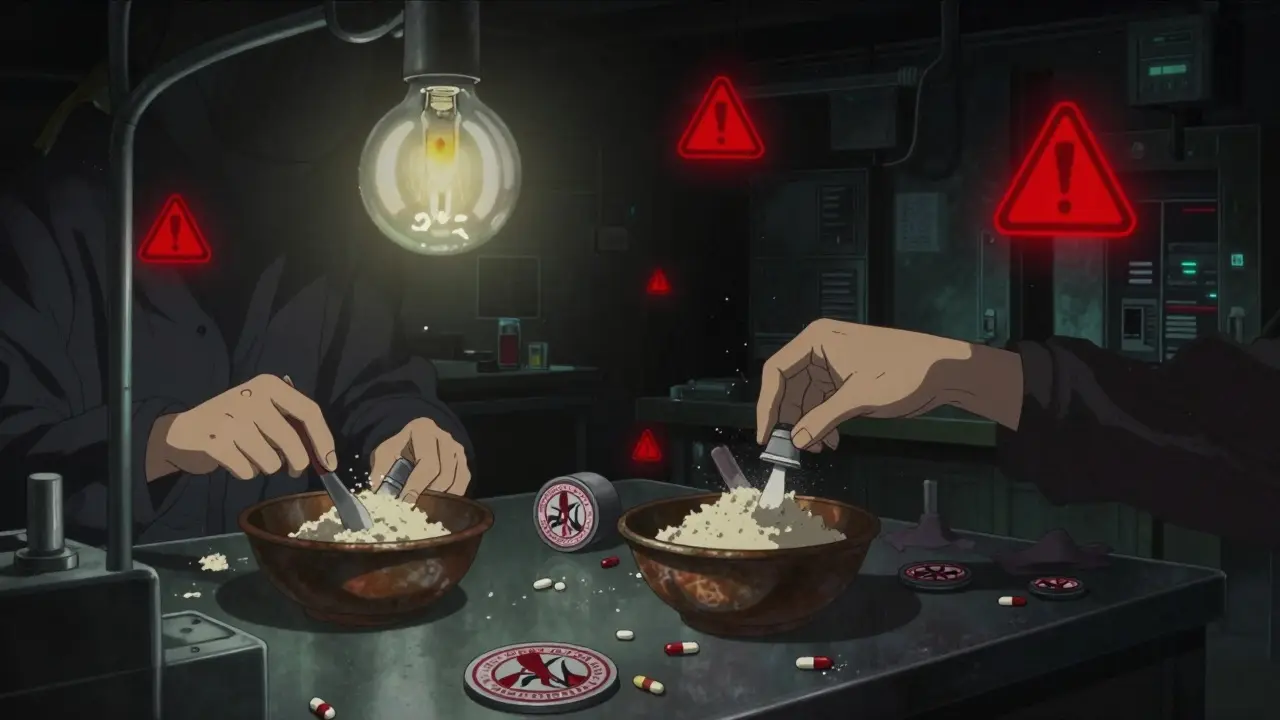
Counterfeit generic drugs start in hidden labs, often in countries with weak regulation. Places like parts of Southeast Asia, Eastern Europe, and even some regions in Africa are hotspots. These aren’t fancy labs with white coats and fume hoods. They’re basements, warehouses, or even homes where people mix chemicals without any safety standards. The goal? Make something that looks real. Counterfeiters copy the shape, color, and logo of real pills using cheap, high-quality printers. Some even replicate the texture of the coating. In 2023, TrueMed Inc. found that 95% of fake generic pills match the real ones visually. You’d never know the difference unless you tested it. But here’s the dangerous part: the active ingredient might be missing, diluted, or replaced with something harmful. One study found fake antimalarials contained only 10-20% of the needed artemisinin. That’s not enough to kill the parasite-just enough to make it resistant. That’s how drug-resistant malaria spreads. In 2008, contaminated heparin from China entered the U.S. supply chain. It wasn’t fake-it was adulterated. But the result was the same: 149 deaths. The lesson? It doesn’t matter if the drug is copied or tampered with. If it doesn’t work or hurts you, it’s a public health emergency.How They Get Into Legitimate Supply Chains
Fake drugs don’t just show up in your medicine cabinet out of nowhere. They sneak in through cracks in the system. There are three main ways:- Parallel importation: A drug sold legally in one country gets bought cheaply and resold in another where it’s more expensive. If the original supplier is compromised, fakes can slip in with real shipments.
- Grey market sales: Unlicensed distributors buy real drugs in bulk, then mix in counterfeits to boost profits. This is common in regions where oversight is thin.
- Online pharmacies: The biggest threat. The National Association of Boards of Pharmacy says 95% of online pharmacies are illegal. You think you’re buying Lipitor from a trusted site? You might be getting a pill with chalk, rat poison, or nothing at all. Reddit user u/PharmaWatcher found counterfeit Lipitor with wrong scoring and color-later confirmed by lab tests.
Why Generic Drugs Are Targeted
Generic drugs make up more than 60% of all prescriptions in the U.S. and even more in developing countries. They’re cheap. That’s why they’re popular. But that same low price makes them perfect targets. The global generic drug market hit $438.7 billion in 2022. Counterfeiters don’t go after $100 branded pills-they go after the $1.50 generics. Why? Because they can make a bigger profit margin. A fake pill costs pennies to make. If you sell 10,000 of them, you’re walking away with thousands in profit. The de-formulation process for generics also creates risks. When a company makes a generic version, they reverse-engineer the original. Sometimes, they use cheaper raw materials. If those materials are contaminated or poorly sourced, even legal generics can be unsafe. That’s what happened with the ARB recalls starting in 2018-cancer-causing impurities slipped into blood pressure meds because suppliers cut corners.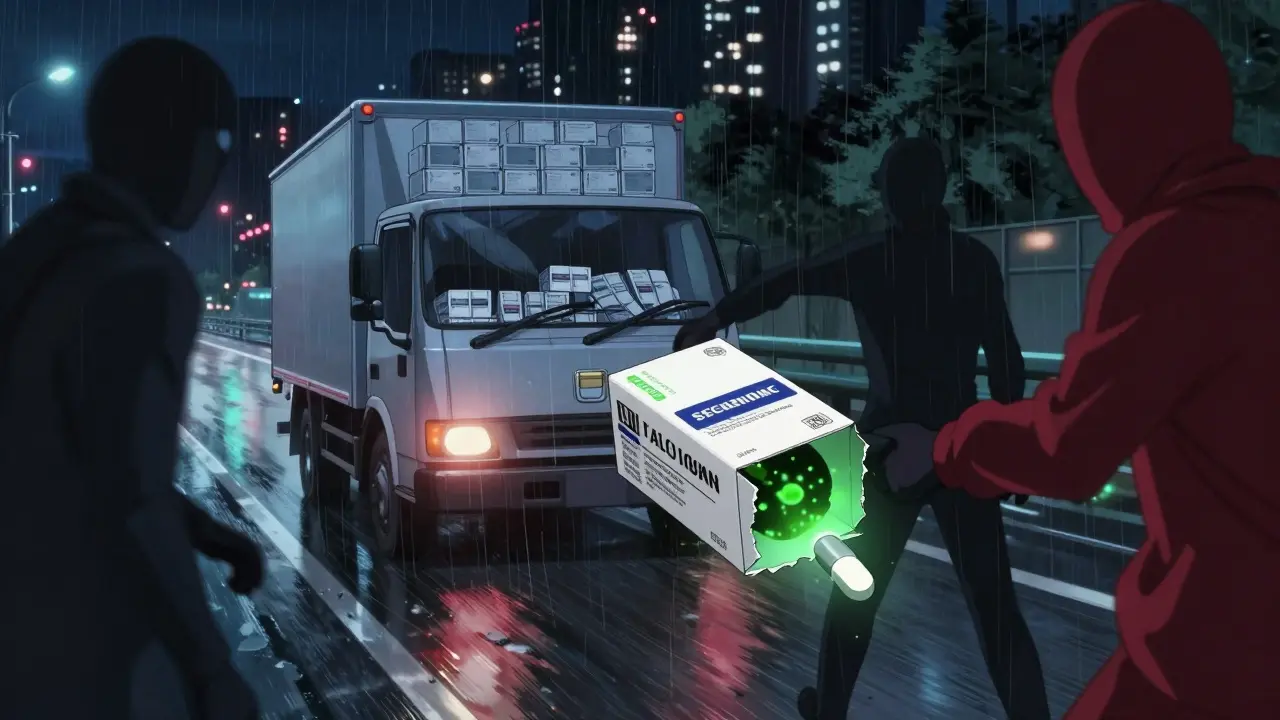
Where the System Fails
You’d think there’d be strict rules to stop this. There are. But enforcement is patchy. Only 40% of countries have any kind of track-and-trace system. That means once a drug leaves the factory, no one knows where it’s been. The U.S. has the Drug Supply Chain Security Act (DSCSA), which requires full tracing by 2023. But most of the world? No such luck. In Europe, the Falsified Medicines Directive cut counterfeit penetration by 18% after it rolled out in 2019. But in Africa, where 42% of all falsified medicines are found, many pharmacies still rely on visual inspection. Pharmacists don’t have microscopes or testing kits. They just look at the packaging. And that’s exactly what counterfeiters count on. A 2022 survey of 1,200 pharmacists across 45 countries found that 68% had seen suspected fake drugs. But 32% couldn’t tell if they were real or fake. The packaging is too good.How to Spot a Fake (And What to Do)
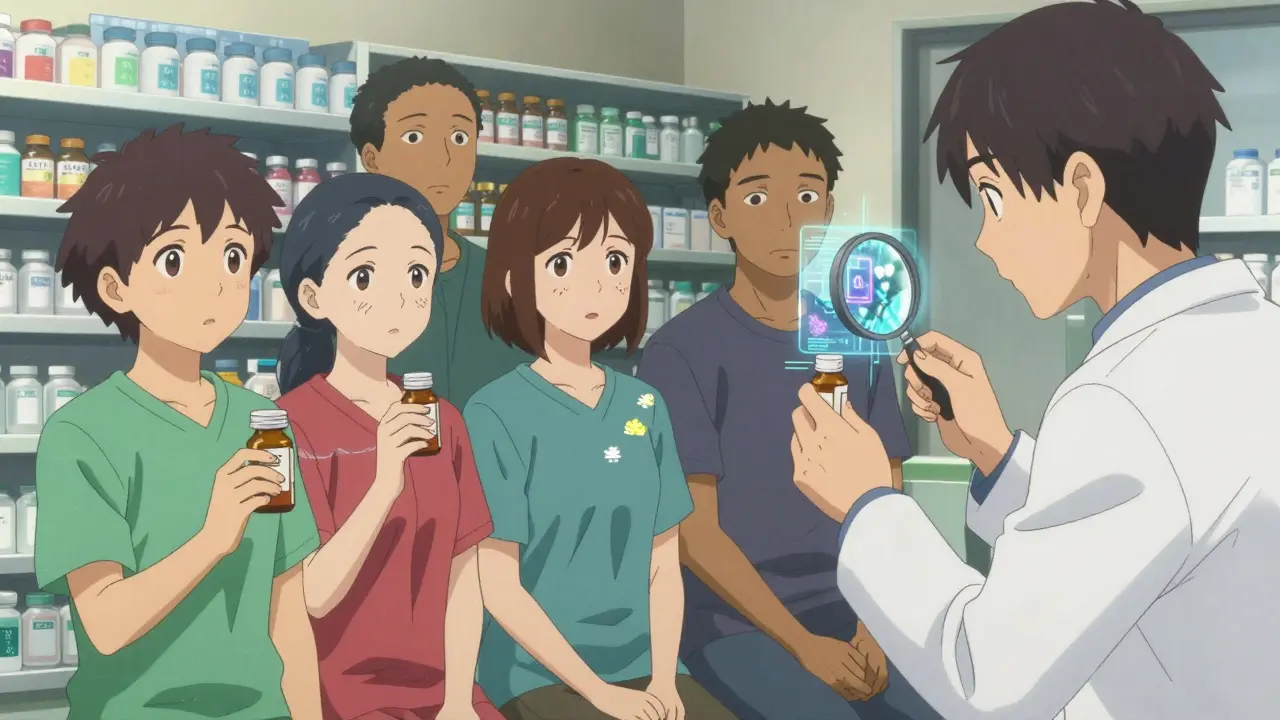
You can’t test every pill. But you can protect yourself.- Buy from licensed pharmacies only. If you’re ordering online, check if the site is verified by the National Association of Boards of Pharmacy (NABP). Look for the VIPPS seal.
- Check the packaging. Look for spelling errors, blurry logos, or mismatched batch numbers. Real drugs have consistent color, texture, and scoring. If your pills look different from last time, ask your pharmacist.
- Know your medicine. If you’ve been taking a generic blood pressure pill for years and suddenly it’s a different shape or color, don’t assume it’s a reformulation. Call your pharmacy.
- Report suspicious drugs. In the U.S., report to the FDA’s MedWatch program. In the UK, use the Yellow Card system. Every report helps track the problem.
What’s Being Done-and What’s Not
Some progress is being made. Companies like Pfizer have stopped over 302 million fake doses since 2004 by working with customs, police, and pharmacies. The EU’s directive forced pharmacies to scan barcodes before selling. Blockchain pilots by MediLedger are 97.3% accurate at spotting fake entries. But the counterfeiting industry is evolving. In early 2023, Europol seized cancer drugs with AI-generated holograms. The fake packaging looked perfect to human eyes-and even to some scanners. The real problem? Profit outweighs risk. The global market for fake drugs is $200 billion a year. The odds of getting caught? Slim. The fines? Often just a slap on the wrist. In many countries, counterfeiters face no jail time. The WHO warns that without global coordination, fake drugs could make up 5-7% of all medicines by 2030. That’s not a guess. It’s a projection based on current trends.What You Can Do
You’re not powerless. Here’s what matters:- Don’t buy drugs from street vendors, unverified websites, or social media sellers.
- Ask your pharmacist where your meds come from. If they don’t know, be suspicious.
- Support policies that demand traceability. Push for stronger laws in your country.
- Report anything that seems off. One report can lead to a bust that saves lives.
How can I tell if my generic drug is fake?
Look for changes in color, shape, size, or scoring on the pill. Check the packaging for misspellings, blurry logos, or mismatched batch numbers. If the medicine looks different from previous refills, ask your pharmacist to verify it. You can also check if the pharmacy is licensed-online pharmacies should have a VIPPS seal in the U.S. or a GPhC registration in the UK.
Are fake generic drugs common in the UK?
Fake generic drugs are rare in the UK’s legal supply chain because of strict regulations and the Falsified Medicines Directive. However, counterfeit drugs still enter through illegal online pharmacies. The UK’s Medicines and Healthcare products Regulatory Agency (MHRA) reports hundreds of seized packages each year, mostly from overseas sellers. The real risk comes from buying meds online without a prescription.
Which types of generic drugs are most often counterfeited?
High-demand, high-profit generics are the main targets. These include antibiotics, cardiovascular drugs (like blood pressure pills), antimalarials, and erectile dysfunction medications. The U.S. Pharmacopeia’s database shows 28.7% of counterfeit incidents involve cardiovascular drugs, 22.4% involve antibiotics, and 18.9% involve antimalarials. These are drugs people take daily-so fake versions cause long-term harm.
Can counterfeit drugs be detected at home?
You can’t test for chemical purity at home, but you can spot visual red flags: inconsistent tablet color, odd smell, crumbling texture, or packaging that looks cheap. Some apps claim to scan pills, but they’re unreliable. The best defense is buying from trusted pharmacies and reporting anything suspicious to health authorities.
Why don’t governments shut down fake drug operations?
Many counterfeit operations are based in countries with weak law enforcement or corruption. Even when seizures happen, the penalties are often too light to deter criminals. Plus, the global supply chain is complex-fake drugs pass through multiple countries before reaching consumers. International cooperation is slow, and resources for enforcement are limited, especially in low-income regions.
Is it safe to buy generic drugs from other countries?
Buying generic drugs from other countries carries risk unless you’re using a licensed, regulated pharmacy. Some countries, like Canada or India, have strong pharmaceutical standards, but even then, online sellers may ship fake versions. Always verify the pharmacy’s credentials and avoid sites that don’t require a prescription. The cheapest option isn’t always the safest one.
Alex Curran
December 18, 2025 AT 07:01Had a friend in Mumbai get counterfeit blood pressure pills last year. She ended up in the ER. The packaging looked identical to what she’d been taking for five years. No one caught it until her BP spiked and her kidney values went haywire. Scary how good these fakes are now.
Alana Koerts
December 19, 2025 AT 11:30So what? People die from real drugs all the time. This isn’t a crisis it’s capitalism. If you want safe meds pay for the brand name. Stop expecting cheap to be safe. It’s not magic.
Lynsey Tyson
December 21, 2025 AT 06:49I get why people buy online. My insurance won’t cover my generic statin unless I jump through 12 hoops. I’ve bought from Canadian pharmacies for years. Never had an issue. But I always check the site’s credentials. It’s not about fear-it’s about being smart.
Connie Zehner
December 22, 2025 AT 01:16OMG I JUST REALIZED MY LAST BOTTLE OF METFORMIN LOOKED DIFFERENT 😱 I THOUGHT THEY CHANGED THE FORMULA! I’M GOING TO CALL MY PHARMACY RIGHT NOW. THANK YOU FOR THIS POST!! 🙏
Dikshita Mehta
December 22, 2025 AT 18:14In India, counterfeit drugs are a huge problem in rural areas. Many pharmacies don’t even have UV lights to check holograms. I’ve trained community health workers to look for batch number consistency and packaging texture. Small steps matter. You don’t need a lab to spot a fake if you know what to look for.
benchidelle rivera
December 23, 2025 AT 12:24The system is rigged. Big Pharma spends billions lobbying against traceability laws because they don’t want to be held accountable for their supply chains. They profit off generics but won’t invest in security. Meanwhile, people die. This isn’t about rogue labs-it’s about corporate negligence.
The FDA has the tech to track every pill. They just don’t enforce it. Why? Because the drug distributors are their donors. You think this is about safety? It’s about money. Always.
And don’t get me started on how they let counterfeit drugs into the VA system. Veterans are the ones getting these fakes. And who gets punished? No one. Not a single executive. Just some low-level pharmacist getting fired.
We need real penalties. Jail time. Asset seizures. Not fines that cost less than a weekend in Bali. Until then, this isn’t a public health issue-it’s a crime syndicate with a pharmacy license.
Emily P
December 24, 2025 AT 11:35Is there any open-source database where people can upload photos of their pills and compare them to verified ones? I’d love to contribute if something like that exists.
anthony funes gomez
December 25, 2025 AT 02:59The structural inefficiency of pharmaceutical distribution is a classic example of information asymmetry amplified by regulatory capture. The absence of end-to-end blockchain verification creates a vector for adversarial exploitation at scale. We’re not dealing with counterfeit goods-we’re dealing with systemic epistemic failure.
Kelly Mulder
December 26, 2025 AT 09:48Let me just say-anyone who buys meds online without a prescription deserves what they get. You think you’re saving money? You’re gambling with your liver. And if you’re dumb enough to trust a website that says ‘Buy Viagra Without a Prescription’-you’re not a victim. You’re a liability.
Also, ‘generic’ doesn’t mean ‘cheap’. It means ‘patent expired’. If you’re getting $1.50 pills from a site that doesn’t require a doctor’s note? You’re not getting a generic. You’re getting a death sentence with a placebo coating.
Vicki Belcher
December 27, 2025 AT 22:05Y’all need to stop panicking and start acting 💪 Seriously-report suspicious meds. Talk to your pharmacist. Share this post. One person speaking up can stop a whole batch from hitting shelves. We’ve got power. Use it. 💊❤️