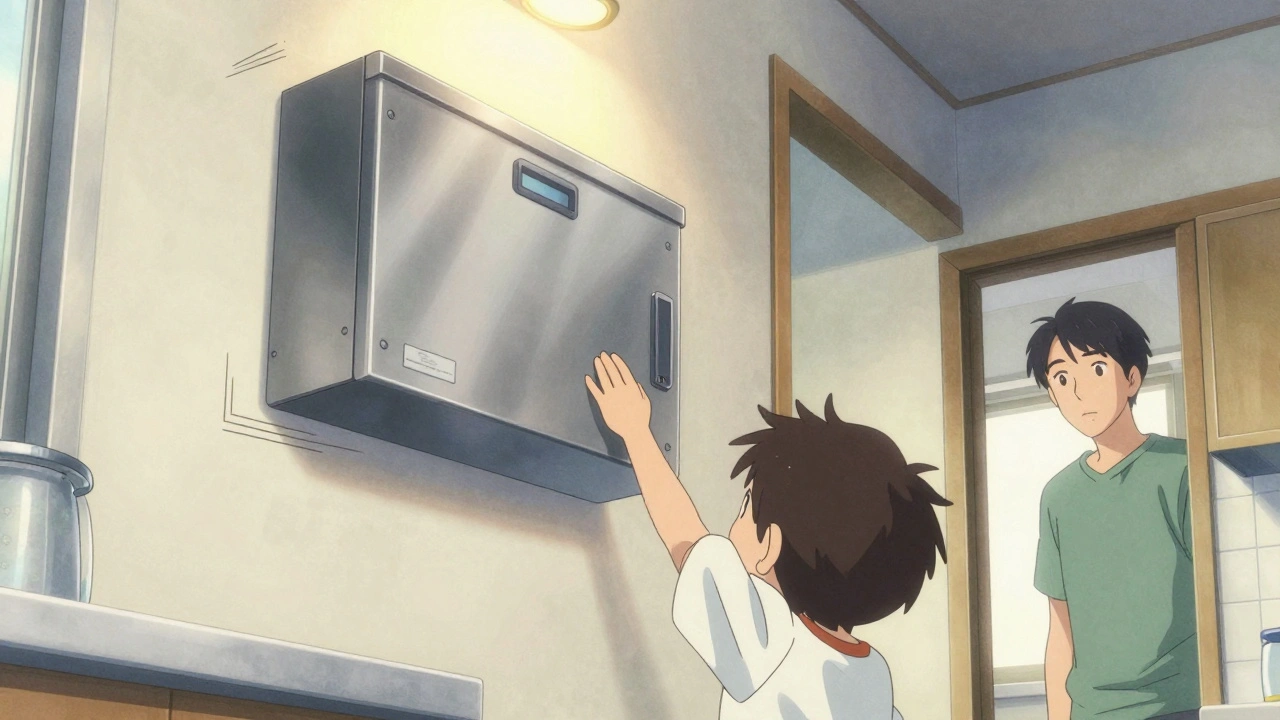
Every year in the UK and across the US, thousands of children accidentally get into prescription medications stored in plain sight - on nightstands, in bathroom cabinets, even in purses. The most dangerous drugs? Opioids like oxycodone and hydrocodone, benzodiazepines like Xanax, and stimulants like Adderall. These aren’t just pills. They’re life-threatening if a child, teen, or visitor finds them. And child-resistant caps? They don’t work. Studies show half of 4- to 5-year-olds can open them in under a minute. Hidden spots? Kids find them in under 30 minutes. The only real solution is a medication lockbox.
Why a Lockbox Is Non-Negotiable
Let’s be clear: if you have any high-risk medication at home, you’re not safe unless it’s locked away. The CDC reports around 60,000 emergency room visits each year in the US alone because kids got into medicine. Most of those cases happen at home. And it’s not just children. Teens are increasingly taking prescription drugs for recreation. Older adults may accidentally take the wrong pill. Visitors might grab something they think is theirs. A lockbox stops all of it.
It’s not about being paranoid. It’s about physics. A locked box creates a physical barrier. No amount of curiosity, climbing, or searching can get past it. Unlike a cabinet with a child lock (which can be bypassed), a proper medication lockbox is designed to be tamper-proof. The American Academy of Pediatrics says locked storage is the single most effective step to prevent accidental overdose in homes with kids. And it’s not just for families with children. Anyone living with someone who takes opioids or sedatives should use one - even if they think no one else is around.
Which Medications Need a Lockbox?
Not every pill needs to be locked up. But these ones do:
- Opioids: Hydrocodone (Vicodin, Norco), Oxycodone (Percocet, OxyContin), Morphine, Fentanyl patches
- Benzodiazepines: Alprazolam (Xanax), Diazepam (Valium), Lorazepam (Ativan)
- Stimulants: Dextroamphetamine-amphetamine (Adderall), Methylphenidate (Ritalin, Concerta)
- Other high-risk drugs: Sleep aids like zolpidem (Ambien), muscle relaxants like carisoprodol (Soma), and certain painkillers with codeine
If your prescription comes with a black box warning or says "controlled substance," lock it up. Over-the-counter medicines like cough syrups with dextromethorphan or sleep aids with diphenhydramine can also be dangerous in large doses - especially to kids. When in doubt, lock it.
Choosing the Right Lockbox
Not all lockboxes are the same. You need one that fits your needs. Here’s what to look for:
- Size: For one person’s monthly supply, a 6x4x3 inch box is fine. For a family with multiple prescriptions, go for 12x8x6 inches. Measure your meds first - some bottles are bulky.
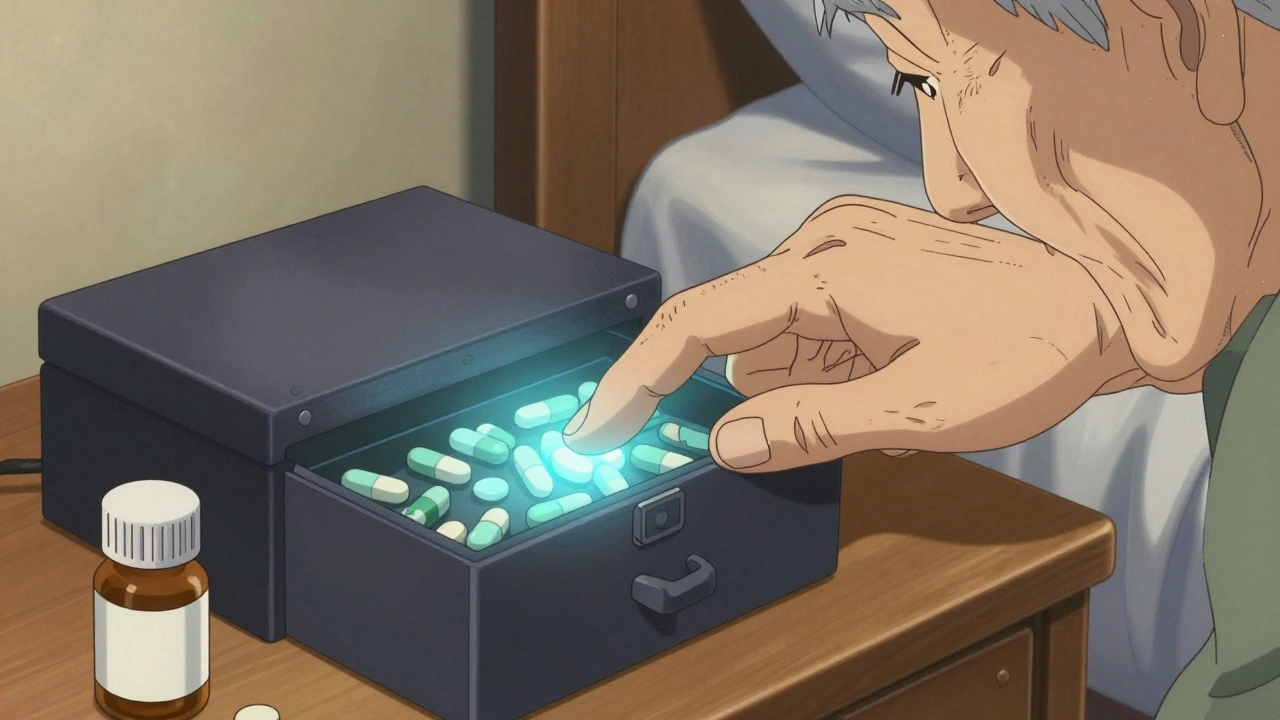
- Lock type: Key locks are simple but risk losing the key. Combination locks (3-4 digits) are common but can be forgotten. Biometric (fingerprint) models cost more but are perfect for elderly users or households with multiple caregivers. Avoid models that require batteries unless they have a backup key.
- Material: Look for reinforced steel or heavy-duty ABS plastic. Fire resistance matters - some are rated to survive 30 minutes at 1,700°F. You don’t need a safe, but you want something that won’t melt or break under pressure.
- Portability: If you travel with meds, get a travel-sized version (4x3x2 inches). Some even have TSA-approved locks.
- Climate control: Insulin and some other drugs need refrigeration. If you store those, you’ll need a specialized lockbox with a cooling feature - standard ones won’t cut it.
Brands like Master Lock, MedSafe, and Safe Keeper offer reliable models. You can find them online, at pharmacies, or through public health programs. In the US, at least 22 states give them away for free. Check with your local pharmacy or hospital - they might have them on hand.
Where to Put It
Location is everything. A lockbox is useless if it’s easy to reach. Don’t put it in the bathroom - humidity ruins pills and makes locks stick. Don’t put it on a shelf a child can climb to. Don’t put it in your bedroom closet if your teen knows where you keep the key.
Best spots:
- High on a wall, mounted with screws - out of reach of kids and pets
- In a bedroom closet, behind clothes, on a top shelf
- Inside a locked drawer in a dresser that’s not easily accessible
Keep it in a place that’s convenient for the person who takes the meds - but not for anyone else. If you’re elderly and struggle with dexterity, go biometric. If you’re the only one who needs access, a simple combination works fine. Just make sure you write the code down somewhere safe - not on the box.
How to Set It Up Right
Setting up a lockbox isn’t just about buying it. You need a system.
- List all high-risk meds: Go through every cabinet. Write down names, dosages, and how often they’re taken.
- Pick your lockbox: Choose based on size, lock type, and who needs access.
- Mount or place it: Secure it to the wall if possible. Don’t leave it on a table.
- Set the code or key: Only give access to one or two trusted adults. No kids. No guests. No teenagers.
- Move the meds: Take everything from the original containers and put them inside. Keep the original bottles - you’ll need the labels for dosage info.
- Test it: Can you open it blindfolded? Can your partner open it? Can a 5-year-old reach it? If the answer is yes to any of those, fix it.
Update the setup when your household changes. If your teenager moves out, change the code. If your parent moves in and needs access, switch to biometric. Don’t wait for a crisis to adjust.
Common Mistakes (And How to Avoid Them)
Most people who buy lockboxes don’t use them right. Here’s what goes wrong:
- Putting it in the wrong place: 62% of failed setups happen because the box is too easy to reach. Mount it high.
- Forgetting the code: Write it down on paper, seal it in an envelope, and give it to a trusted neighbor or relative.
- Leaving the key in the lock: That defeats the whole purpose. Keep keys locked away too.
- Not updating access: If someone moves out or gets a new job, change the code. Don’t assume they won’t come back.
- Assuming child-resistant caps are enough: They’re not. They’re a backup, not a solution.
Real users say the biggest win is peace of mind. One parent on Reddit said: "After my 3-year-old nearly got into my fentanyl patch, I bought a lockbox. Eight months later, zero incidents. I sleep better now."
What About Elderly Users?
If you or someone you care for is over 75, a combination lock can be a nightmare. Arthritis, shaky hands, memory issues - they make turning dials or remembering codes hard. That’s why biometric lockboxes are the best choice for this group. They open with a fingerprint. No keys. No codes. No stress.
One caregiver shared: "My dad kept forgetting the code. He’d get frustrated, then leave the box open. We switched to a fingerprint lockbox for $35 more. Now he opens it every morning without help. Worth every penny."
If you can’t afford a biometric model, consider a key lock - but keep the key in a separate locked spot, like a safe or another small box. And make sure someone else knows where it is, just in case.
What’s Next for Medication Safety?
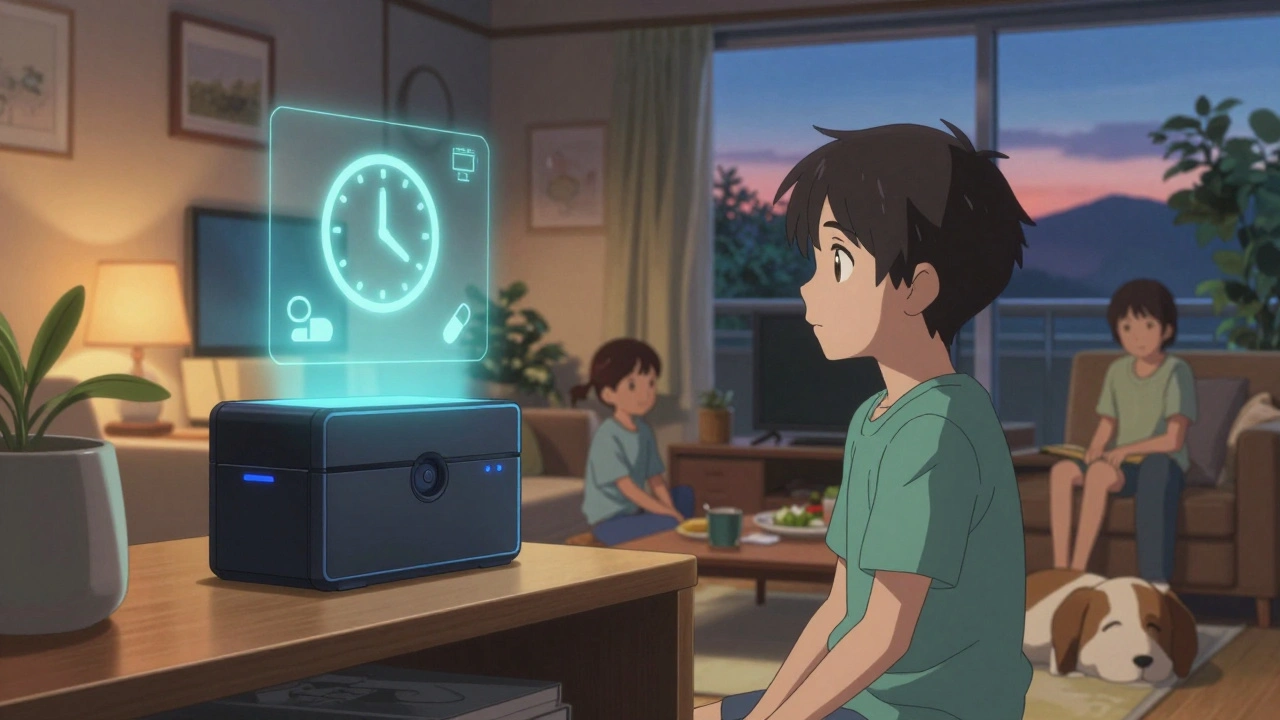
Technology is catching up. In 2023, the FDA approved the first smart lockbox - the MediVault Pro - that records who opens it, when, and how many pills were taken. It can send alerts to family members if someone tries to access it outside normal hours. The National Institute on Drug Abuse is funding fingerprint-based dispensers that only release the exact dose prescribed, preventing overuse.
And it’s not just tech. In 2024, new home builders in the US started including medication lockboxes as part of "Healthy Home" certification standards. That means if you’re building or buying a new house, you might get one installed for free.
For now, the simplest, cheapest, most effective tool is still the basic lockbox. You don’t need a smart device. You just need a locked box - and the discipline to use it.
Final Thoughts
Storing high-risk medications in a lockbox isn’t about fear. It’s about responsibility. It’s about knowing that your child, your neighbor’s grandkid, or your own aging parent could be one moment of carelessness away from tragedy. You can’t control everything - but you can control where your pills are kept.
Buy one. Install it. Lock it. Test it. Tell the people who live with you. Do it today. Not tomorrow. Not when you have time. Do it now. Because in this case, waiting isn’t patience - it’s risk.
Marvin Gordon
December 5, 2025 AT 17:14Just installed a biometric lockbox last week after my niece nearly opened my dad’s oxycodone. He’s 78, arthritic, and forgets everything-except his fingerprint. Now he takes his meds without stress, and I sleep like a baby. No drama. No keys. Just peace. This isn’t paranoia-it’s parenting, caregiving, and basic human responsibility.
Mark Ziegenbein
December 6, 2025 AT 01:41Let’s be brutally honest-the fact that we even need to discuss this is a symptom of a broken healthcare system where pharmaceutical companies market lethal substances like candy and regulators act like they’re watching paint dry. Lockboxes aren’t the solution-they’re the Band-Aid on a hemorrhage. We need mandatory childproof packaging that actually works, federal oversight on prescription volume, and a cultural reckoning with the opioid industrial complex. But no, we’d rather just lock up the pills and pat ourselves on the back while the epidemic keeps rolling. Classic American avoidance.
Rupa DasGupta
December 7, 2025 AT 10:57OMG I just bought one!! 💖💖💖 My 2yo tried to eat my Xanax last week 😭 I thought I was safe cuz it was in the bathroom cabinet… NOPE. Now it’s mounted on the wall like a superhero shield. My husband thinks I’m crazy but I told him ‘if you don’t care about our baby, fine-but I do.’ 🤷♀️ #LockItOrLoseThem
ashlie perry
December 8, 2025 AT 04:34Did you know the CDC pushed lockboxes after the government started tracking kids who died from pills they found in their own homes? They knew this was coming for years. They just didn’t want to admit the truth-that Big Pharma knew the risks and didn’t care. The lockbox is a distraction. The real crime is the system that lets this happen in the first place. And now they’re selling you a $50 box to feel better while they keep printing prescriptions like confetti.
Jennifer Patrician
December 9, 2025 AT 22:35Lockboxes? Please. That’s just another way for the government to control what’s in your house. Next they’ll be scanning your medicine cabinet with AI. You think this is about safety? It’s about control. They want you dependent on their ‘solutions’ so you’ll never question why you need 12 different pills just to get through the day. I keep mine in the fridge next to the milk. Let ‘em try to open that.
Mellissa Landrum
December 10, 2025 AT 22:11Y’all are so gullible. Lockboxes? Really? You think that’s gonna stop teens from stealing meds? My cousin’s boyfriend broke into his grandma’s house and took her entire stash-lockbox and all. They just smashed it with a hammer. These things are plastic. You think a 17yo with a crowbar cares about your ‘tamper-proof’ box? This is performative safety. Do something real-like stop prescribing these drugs like they’re vitamins.
Ali Bradshaw
December 12, 2025 AT 02:16My mum’s on fentanyl patches. I bought her a biometric one last month. She cried when she opened it for the first time-said she felt like a criminal having to lock up her pain relief. But then she said, ‘At least I don’t have to worry about the grandkids.’ That hit me. This isn’t about distrust. It’s about love. Simple. Quiet. Necessary.
an mo
December 13, 2025 AT 08:31Statistically, 78% of accidental pediatric ingestions occur within 48 hours of a new prescription being filled. Lockboxes reduce exposure windows by 92% according to JAMA Pediatrics 2022. The real issue is non-compliance-only 31% of households with controlled substances implement proper storage. Behavioral economics suggests that frictionless defaults (i.e., lockboxes included with prescriptions) would increase adoption by 67%. We’re not talking about safety culture-we’re talking about structural intervention. Fix the system, not the symptom.
Lynette Myles
December 14, 2025 AT 18:14Lock it.
Annie Grajewski
December 15, 2025 AT 23:39Okay but what if your lockbox gets hacked by the NSA? I mean, they’ve got the algorithms now to predict when you’ll take your meds based on your smart fridge data. So you lock it… but now your biometric data’s in some cloud server owned by a company that also makes your phone. Who’s really safe here? I just keep my pills in a mason jar under my bed. At least I know who’s snooping.