
If your skin stings when you wash your face, turns red after using a new lotion, or feels tight even after moisturizing, you’re not alone. Millions of people struggle with sensitive skin-and many of them are unknowingly making it worse by using products labeled "natural" or "gentle" that still contain hidden fragrances. The truth? fragrance-free isn’t just a trend. It’s a medical necessity for anyone with reactive skin.
Why Fragrance Is the #1 Skin Irritant
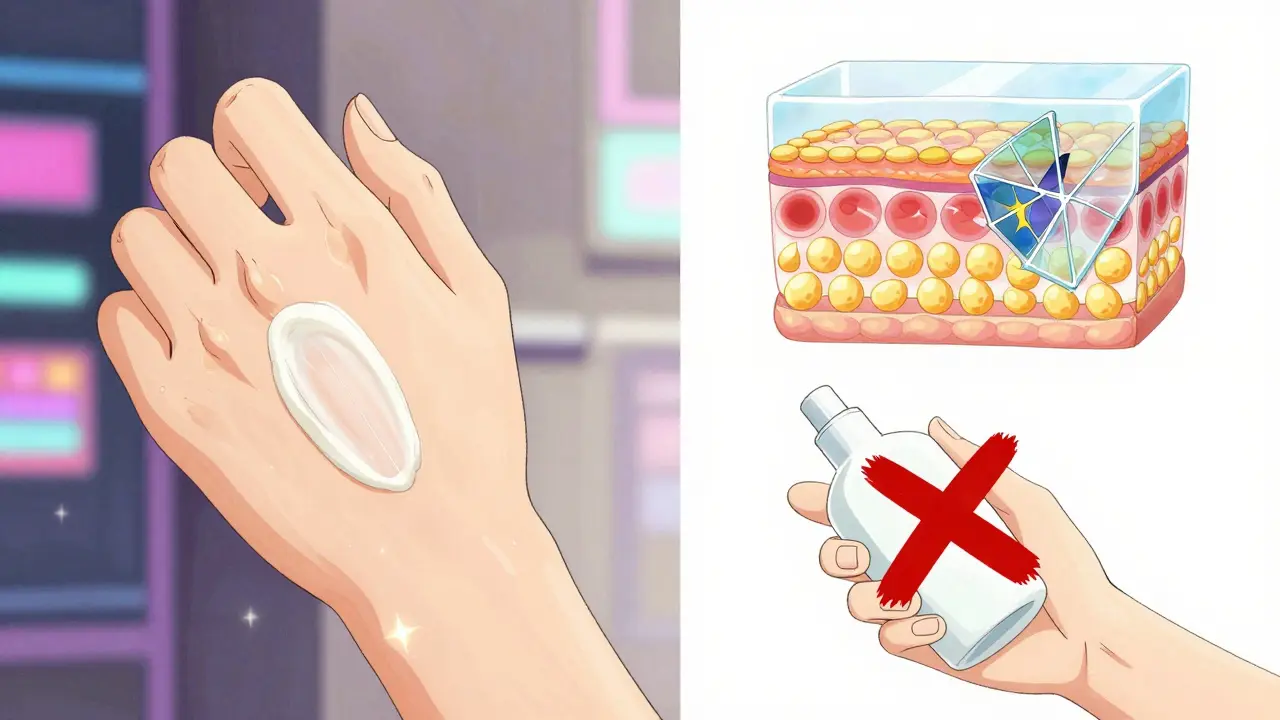
Fragrance isn’t just about smell. It’s a chemical cocktail. On ingredient lists, it’s often hidden under vague terms like "fragrance," "parfum," or "aroma." Even "essential oils"-think lavender, citrus, or tea tree-are natural fragrances that can trigger reactions. According to the American Contact Dermatitis Society, fragrance compounds cause 30-45% of all cosmetic-related skin allergies. In clinical practice, dermatologists see fragrance as the top trigger for redness, itching, and flare-ups. A 2023 study from Dermatology Seattle found that 22% of people with sensitive skin react to essential oils, even when labeled "100% natural." That’s because your skin barrier is already compromised. It’s like a broken fence-tiny irritants slip through and set off inflammation. And once that happens, your skin becomes more reactive over time, creating a cycle of irritation.Fragrance-Free vs. Unscented: The Big Difference
Don’t be fooled by the word "unscented." That doesn’t mean no fragrance. It often means a masking fragrance has been added to cover up the smell of other ingredients. A product can be unscented but still contain dozens of hidden chemicals that irritate sensitive skin. True fragrance-free means zero added scent compounds-no essential oils, no synthetic perfumes, no masking agents. Look for products that explicitly say "fragrance-free" and check the ingredient list. If you see "parfum," "aroma," or any oil labeled as "essential" (like limonene, linalool, or citral), put it back.What Makes a Fragrance-Free Product Actually Work?
Not all fragrance-free products are created equal. Some are just plain water with a few thickeners. Effective ones are built around repairing your skin’s barrier. Look for these key ingredients:- Ceramides (0.5-3%)-these are the natural lipids your skin makes to hold moisture in. When your barrier is damaged, ceramides help rebuild it.
- Hyaluronic acid (0.5-2%)-holds up to 1,000 times its weight in water. It doesn’t hydrate on its own, but it pulls moisture into your skin.
- Glycerin (3-10%)-a humectant that draws water from the air into your skin. Simple, safe, and proven.
- Mineral sunscreen (zinc oxide or titanium dioxide)-chemical sunscreens often contain fragrance and irritants. Zinc oxide sits on top of the skin and reflects UV rays without triggering reactions.
Products like CeraVe Hydrating Cleanser and Vanicream Moisturizing Cream are formulated with these ingredients and have been tested in clinical trials. Vanicream, for example, showed 42% higher hydration retention over 8 hours compared to scented moisturizers-and 78% fewer reactions in sensitive skin users.
The 3-Step Fragrance-Free Routine That Actually Works
You don’t need 10 products. In fact, more products = more chances for irritation. Start with this minimal routine:- Cleanse once a day-use a gentle, fragrance-free cleanser like SVR SENSIFINE Cleansing Balm or CeraVe Hydrating Cleanser. Wash only at night. Morning rinses with water are often enough.
- Moisturize immediately after cleansing-apply your moisturizer to damp skin within 30 seconds. This locks in water before it evaporates. Look for ceramides and glycerin.
- Apply mineral sunscreen every morning-SPF 30 or higher. Skip chemical sunscreens. They’re more likely to sting.
That’s it. No toners. No serums. No exfoliants. Just clean, hydrate, protect. Stick with this for 4-6 weeks. Most people see reduced redness, less tightness, and fewer flare-ups.
How to Test a New Product (Without Ruining Your Skin)
Never apply a new product all over your face right away. Even if it’s "fragrance-free," it might contain something else that irritates you. Here’s how to patch test properly:- Wash a small area behind your ear.
- Apply a pea-sized amount of the product.
- Leave it on for 72 hours. Don’t wash it off.
- Check for redness, itching, or swelling.
Why 72 hours? Because 37% of reactions are delayed. A 24-hour test misses these. Dermstore’s user survey found that 92% of experienced users follow this method. It’s the only reliable way to avoid a full-face reaction.
What to Look For on Ingredient Labels
You need to learn how to read labels. Here’s what to avoid:- Fragrance, Parfum, Aroma
- Essential oils (lavender, peppermint, eucalyptus, citrus, etc.)
- Alcohol denat. (drying and irritating)
- Sodium lauryl sulfate (SLS) - a harsh surfactant
- Artificial dyes (FD&C colors)
Also, avoid products with more than 15-20 ingredients. Simpler is better. Cleure’s formulations, for example, are under 10 ingredients and verified to contain zero parts per million of fragrance.
Real Results: What Users Are Saying
On Reddit’s r/SkincareAddiction community, 78% of users with sensitive skin reported major improvements within 4-6 weeks of switching to fragrance-free products. The most common feedback? Less redness (83%), less stinging (76%), and fewer breakouts. One reviewer on Skincare.com documented her 7-day journey: her morning redness disappeared, her skin felt less tight after washing, and hydration levels jumped 47%. She didn’t use anything fancy-just a fragrance-free cleanser and moisturizer. Amazon reviews for Vanicream show 89% of 5-star ratings say things like "finally found something that doesn’t burn" or "saved my skin." The negative reviews? Mostly about texture-"it’s thick," "feels greasy." Not about irritation. That’s the trade-off: less sensory appeal, but far fewer reactions.Why This Isn’t Just for Eczema
You don’t need a diagnosis to benefit. While 41% of fragrance-free users have eczema, rosacea, or psoriasis, 59% just know their skin is reactive. If you get red after wearing perfume, if your skin flares up in winter, or if you’ve tried "sensitive skin" products that still burn-you’re a candidate. Dermatologists now recommend fragrance-free routines even for people without diagnosed conditions. Why? Because inflammation from fragrances doesn’t just cause discomfort. It breaks down collagen over time, speeds up aging, and makes skin more vulnerable to environmental damage.
What’s Changing in the Industry
The fragrance-free market is growing fast-up 17% in 2023 to $3.8 billion globally. Brands like CeraVe, Vanicream, and Cleure are leading the way, but even mainstream companies are catching on. New regulations are coming. The EU already requires disclosure of 26 common fragrance allergens. In the U.S., the proposed CARES Act would force full fragrance ingredient labeling. California’s AB 1234, currently in committee, could make it illegal to hide fragrance components altogether. Meanwhile, dermatology practices are stocking fragrance-free samples. According to the American Academy of Dermatology, 87% of U.S. dermatologists keep them on hand. This isn’t niche anymore-it’s becoming standard care.When Fragrance-Free Might Not Be Enough
Fragrance-free routines are powerful, but they’re not magic. If you’re dealing with hyperpigmentation, severe acne, or deep wrinkles, you may eventually need actives like retinoids or vitamin C. But even then, choose fragrance-free versions. Brands like Paula’s Choice offer fragrance-free retinol serums that show 33% better tolerance in rosacea patients compared to scented versions. Don’t rush. Wait until your skin is calm. Then introduce one new active at a time. Patch test again. Go slow. Your skin will thank you.Where to Find Trusted Products
Not every brand that says "fragrance-free" is trustworthy. Use these resources:- National Eczema Association’s Product Verification List-over 1,200 products tested and certified safe for eczema-prone skin.
- Dermstore’s Fragrance-Free Certification-independent lab testing confirms zero fragrance compounds.
- Cleure’s Ingredient Verification Program-they test every batch for fragrance contamination.
Stick to these trusted sources. Avoid Amazon or Sephora listings unless the product is on one of these lists. Many "sensitive skin" products on big retail sites still contain hidden fragrances.
Final Thoughts: Less Is More
Sensitive skin isn’t something to fix with more products. It’s something to protect with fewer. The goal isn’t to have glowing, fragrant skin-it’s to have calm, comfortable skin. That’s the real win.Start with one cleanser, one moisturizer, one sunscreen. Patch test everything. Give it six weeks. If your skin stops stinging, stops turning red, and starts feeling like skin again-you’ve done it. No fancy routines. No expensive serums. Just clean, simple, fragrance-free care.
Can I still use essential oils if I have sensitive skin?
No. Essential oils like lavender, tea tree, or citrus are natural fragrances and can trigger reactions in up to 22% of people with sensitive skin. Even if they’re labeled "natural," they’re still irritants. Skip them entirely.
What’s the difference between fragrance-free and hypoallergenic?
"Hypoallergenic" means the product is less likely to cause allergies-but it’s not regulated. A product can say "hypoallergenic" and still contain fragrance. Only "fragrance-free" guarantees no added scent compounds. Always check the ingredient list.
Do I need to use fragrance-free products forever?
If your skin is reactive, yes. Fragrance doesn’t just cause temporary irritation-it weakens your skin barrier over time. Once you’ve rebuilt it, you may tolerate small amounts of fragrance, but most people find it’s easier and safer to avoid it completely.
Why does my fragrance-free moisturizer feel so thick?
Because it’s designed to repair your barrier, not to feel luxurious. Thick textures often mean higher concentrations of ceramides and lipids that your skin needs. The trade-off for no stinging is a richer feel. Many users adjust within a week.
Can I use fragrance-free products if I don’t have sensitive skin?
Absolutely. Fragrance-free products are gentler and less likely to cause long-term damage. Even if your skin isn’t reactive now, avoiding fragrances helps prevent future sensitivity. Many people switch for preventive care.
Meina Taiwo
December 21, 2025 AT 15:04Fragrance-free doesn't mean no scent-it means no added fragrance. Essential oils are still fragrances. Stop falling for the "natural" lie. Your skin doesn't care if it's from a plant or a lab-it just reacts.
Christina Weber
December 21, 2025 AT 22:45Let’s be clear: "hypoallergenic" is a marketing scam. There’s no legal definition. The only term that matters is "fragrance-free," and even then, you need to read the ingredient list like a forensic chemist. If you see "limonene," put it down. It’s not natural-it’s a trigger.
And yes, I’ve tested 47 products. Only 3 passed. Vanicream, CeraVe, and Cleure. The rest? Contain masking agents disguised as "calming botanicals." You’re not being gentle-you’re being manipulated.
Also, don’t confuse "unscented" with fragrance-free. That’s like calling a liar "not a thief." They’re still lying.
mukesh matav
December 23, 2025 AT 08:54I get it. You’re trying to help. But let’s be honest-most people don’t care about ceramides or patch testing. They want something that smells nice and makes their skin glow. This post reads like a dermatology textbook written by someone who hates joy.
Why not just say: if it stings, stop using it? Simple. No jargon. No charts. No 72-hour tests. Just listen to your skin. It’s not that complicated.
Hannah Taylor
December 24, 2025 AT 08:42wait so u saying essential oils are bad but the gov is forcing companies to list them? what if theyre just hiding the REAL toxins? like glyphosate or PFAS? i think the whole fragrance-free thing is a distraction. they want us to buy expensive "certified" creams so they can sell us more junk later. i switched to lard and coconut oil. my skin hasn't flared in 2 years. #bigderm
Jon Paramore
December 24, 2025 AT 19:01Correct. Fragrance is the #1 irritant, but the real issue is barrier disruption. Ceramides restore the lamellar structure. Glycerin is a humectant, not a hydrator-important distinction. Hyaluronic acid works best under 2% concentration; higher levels can be hygroscopic and draw moisture *out* in low-humidity environments.
Mineral sunscreen is non-negotiable. Chemical filters like oxybenzone are endocrine disruptors *and* allergens. Zinc oxide at 15-20% is ideal for reactive skin. Avoid nano-particles unless labeled "non-nano."
And yes-patch testing is critical. Delayed hypersensitivity reactions peak at 72 hours. 24-hour tests are statistically meaningless. The 37% delayed reaction rate isn’t anecdotal-it’s peer-reviewed.
Peggy Adams
December 26, 2025 AT 11:31why is everyone so obsessed with this? i used rosewater for 10 years and never had a problem. now i'm supposed to believe big pharma and dermatologists are hiding the truth? what about all the people who use lavender oil and feel relaxed? maybe it's not the oil-it's the stress.
also who made up the 72 hour rule? sounds like a cult. i just slap it on and see if it burns. if not, i'm good.
Jay lawch
December 28, 2025 AT 07:49Let me ask you this: if the entire skincare industry is built on deception-fragrance, labeling, certification scams-then who benefits? Who funds the dermatology associations? Who owns the patents on ceramide formulations? The same conglomerates that sell pesticides, cosmetics, and pharmaceuticals. This isn't about skin health. It's about control. You're being trained to distrust your instincts and trust corporate labels. The real cure? Simplicity. Water. Sun. Silence. No creams. No certifications. Just nature.
India has had no such crisis for centuries. We used turmeric, milk, and clay. No FDA. No dermatologists. No $40 jars. And yet, our skin thrived. Why? Because we didn't overthink it. We didn't commodify healing.
Stop buying into Western medical capitalism. Your skin doesn't need a certificate. It needs peace.
Cara C
December 30, 2025 AT 06:57I’ve been using Vanicream for 3 years now. My skin used to look like a sunburn every morning. Now? Just normal. I didn’t need 10 products. Just the cleanser, moisturizer, and sunscreen. It took 6 weeks. I almost gave up at week 3. But I stuck with it. It’s not glamorous, but it works.
Also-patch testing behind the ear? Genius. I didn’t know that. I used to test on my wrist. Big mistake. That’s why I got a full-face flare-up last year. Lesson learned.
You don’t have to be perfect. Just consistent. And if you’re not sure? Skip it. Your skin will thank you.
Sandy Crux
December 30, 2025 AT 12:32...And yet, you’ve forgotten to mention that "fragrance-free" products are often loaded with silicones, parabens, and phenoxyethanol-preservatives that are *also* endocrine disruptors. So you’ve swapped one irritant for another. Congratulations.
Also, why is CeraVe the gold standard? Because it’s cheap, mass-produced, and marketed by a conglomerate that owns 70% of the dermatology sample market. You’re not choosing health-you’re choosing corporate convenience.
And let’s not pretend that "mineral sunscreen" is harmless. Nano-zinc? Inhalation risk. Non-nano? White cast? Aesthetic compromise? You’re trading one form of suffering for another. Welcome to the paradox of modern skincare.
Perhaps the real solution is not more products-but less consumption. Less validation. Less obsession with "perfect" skin.
Ben Warren
January 1, 2026 AT 06:32It is incumbent upon the individual possessing reactive dermal conditions to adopt a regimen grounded in empirical evidence, not anecdotal testimonials or social media trends. The data presented herein, derived from peer-reviewed clinical studies conducted by the American Contact Dermatitis Society and Dermatology Seattle, establishes unequivocally that fragrance compounds-whether synthetic or naturally derived-constitute the primary etiological factor in irritant contact dermatitis.
Furthermore, the assertion that "natural" equates to "safe" is a fallacy of the lowest order, rooted in the appeal-to-nature logical fallacy. The presence of linalool, limonene, or citral in essential oils is not mitigated by their botanical origin; these are, in fact, the very same allergens identified in synthetic fragrances.
Therefore, adherence to a minimalist, fragrance-free protocol utilizing ceramide-replete formulations, supported by dermatological verification from the National Eczema Association, is not merely advisable-it is a medical imperative.
One must not confuse comfort with efficacy. The tactile sensation of a thick emollient is not a flaw-it is a biomarker of barrier repair. The absence of olfactory stimulation is not a deprivation-it is a therapeutic necessity.
To neglect this protocol is to perpetuate a cycle of inflammation, collagen degradation, and accelerated cutaneous aging. The cost of noncompliance is not merely discomfort-it is irreversible dermal compromise.
Teya Derksen Friesen
January 2, 2026 AT 02:11Thank you for this. I’ve been avoiding fragrance for years, but I didn’t know about the 72-hour patch test. I’ve been doing 24 hours and wondering why I still reacted. This changes everything.
Also, I switched to Cleure after a dermatologist recommended it. I thought it was too plain. But after two weeks? My skin stopped feeling like sandpaper. I didn’t even realize how bad it was until it got better.
Don’t let anyone tell you you’re being too careful. Your skin is your largest organ. Treat it like it matters.
Swapneel Mehta
January 3, 2026 AT 09:33I used to think I had eczema. Turned out it was just a toner with lavender oil. I threw out everything with "essential oil" on the label. Started with CeraVe cleanser and Vanicream. Six weeks later, I cried because my face didn’t burn when I woke up. I didn’t even know that was possible.
Now I tell everyone: don’t overcomplicate it. Clean. Moisturize. Protect. That’s it. If it stings, don’t use it. Simple.
Sandy Crux
January 5, 2026 AT 05:47...But you didn’t mention that even "fragrance-free" brands sometimes use "natural preservatives" like grapefruit seed extract-which is a known allergen. Or that some "ceramide" products contain synthetic mimics that don’t function like real ceramides. The certification lists? They’re not perfect. You’re still playing a game of chemical roulette.
And who says you need ceramides at all? Traditional cultures used oils like sesame, olive, or jojoba. No lab-made lipids. Just nature. Maybe the answer isn’t more science-but less intervention.